



2015 Top 100 Transit Bus Fleets Survey
While ridership continues to grow across the industry, many transit agencies are focused on ways to grow millennial usage, including the addition of USB charging stations, Wi-Fi, and real-time bus arrival technologies, as well as targeted advertising and marketing campaigns.
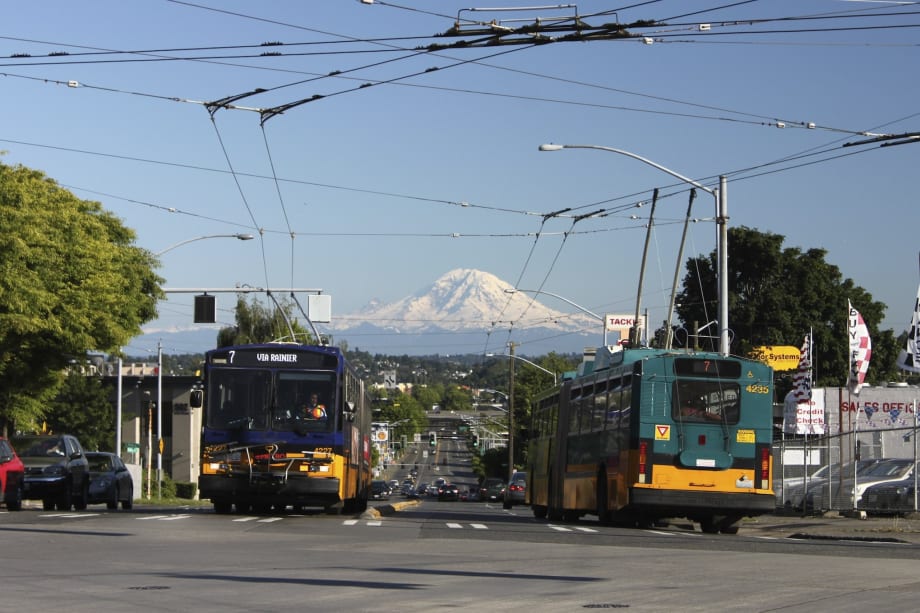
Oran Viriyincy
Oran Viriyincy
With public transportation usage growing around the nation, many agencies are looking at ways to attract millennials, who are looking for more options and driving less and less, according to respondents of METRO’s Top 100 Bus Fleets survey.
The Metropolitan Transportation Authority’s (MTA) New York City Transit/MTA Bus Co. tops this year’s list with 5,759 total vehicles. Showing some movement this year, the Los Angeles County Metropolitan Transportation Authority (2,378), New Jersey Transit (2,233), Seattle’s King County Metro Transit (1,882) and the Toronto Transit Commission (1,869) round out this year’s top five, which collectively totals 14,121 vehicles, or 21% of this year’s overall 66,056 total vehicles — down slightly compared to 2014, although last year’s list ranked the Top 110 bus fleets.
With 404 total vehicles, Halifax Metro Transit lands right in the center at No. 50, while Massachusetts’ Pioneer Valley Transit Authority rounds out the Top 100 with 183 total vehicles reported. Although there are technically no new additions to this year’s list, Oceanside, Calif.’s North County Transit District (No. 92) and Concord, Calif.’s Central Contra Costa Transit Authority (No. 98-Tie) make their way from the Top 110 last year to this year’s Top 100.
To view the complete list, click here.
Sustainable alternatives
Despite less transit agencies participating than last year, this year’s alternatively-fueled vehicle totals increased by 393 to 17,357 vehicles, with natural gas still being the go-to fuel, followed closely by hybrid-electrics, making up 53% and 43% of the total vehicles reported, respectively.
When asked which sustainable sources they are looking at down the road, transit agencies are reporting they are interested in vehicles using either electricity or hydrogen to add to their fleets.
Meanwhile, public transportation agencies continue to take the lead in sustainability in the communities they serve, with several launching new alt-fuel vehicle initiatives.
In Santa Monica, Calif., No. 95 Big Blue Bus (BBB) became one of the country’s first municipal transit authorities to convert its fleet to renewable natural gas.
Launching in July, BBB worked with Clean Energy Fuels Corp. to transition its supply of liquefied natural gas (LNG) to the company’s Redeem™ renewable LNG, which is non-fracked methane harvested from organic waste in landfills.
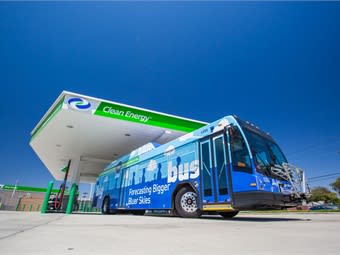
No. 95 Big Blue Bus
With the announcement, BBB unveiled a new bus ad campaign called “Bigger, Bluer, Skies” to emphasize the lower emissions and sustainability of their new fuel type.
Indianapolis’ IndyGo (No. 85) found an interesting way to introduce electric vehicles to its fleet, by contracting with Complete Coach Works to add 21 refurbished electric buses by the end of this year, featuring the company’s Zero Emission Propulsion System, which will make it the largest electric bus fleet in the industry.
The first of the new electric vehicles began running in early June, with performance exceeding 130 miles on a single four-hour charge of the buses 12 Lithium-Ion batteries.
In addition to the electric buses, IndyGo is currently installing a one megawatt solar panel system on its garage roof, thanks to a $3 million State of Good Repair Grant. Once installed, the solar panels will help offset the cost to charge the electric buses, further reducing operating costs.
Meanwhile, King County Metro introduced its first completely new, state-of-the-art New Flyer electric trolleys in nearly 30 years in August.
The first five of 174 replacement trolley buses went into service August 19, with the remaining trolleys phased in over the next two years. The new trolleys will use up to 30% less electricity than the current fleet and will significantly reduce operating costs.
Additionally, King County is expecting delivery of three 40-foot prototype heavy-duty Proterra electric buses with fast-charging batteries in the next four to six months.
Adding Millennials
The millennial generation, those born between 1982 and 2004, are the largest generation in history and the most diverse. This generation is having a great impact on today’s and tomorrow’s local transportation system because they are driving less and open to exploring multiple transportation options, according to several reports.
When asked what they are doing to get more millennials on-board their transit systems, many agencies reported adding Wi-Fi and USB charging stations, as well as real-time bus information, which is available via the agency’s website or apps like NextBus. Many are also engaging riders via social media, via Twitter and Facebook, to provide information on delays or other issues the agency may be experiencing throughout the day.
In Washington state, Spokane Transit (No. 77) reported that they are tailoring radio and television ads for both the millennial and Baby Boomer generations, as well as holding events downtown targeted at each, including concerts, live painting demonstrations and barber shop quartets. The agency is also working with local schools to promote bus ridership, with efforts including demonstrations on both how to use the transit system and how to load bikes onto the vehicles.
Many other agencies, including N.Y.’s Rochester Genesee Regional Transportation Authority (No. 46) and West Covina, Calif.’s Foothill Transit (No. 63-Tie), report that working with local colleges and universities to provide either free or discounted rides in and around campus has been a beneficial way to grow millennial ridership.
Other initiatives reported include rebranding to increase visibility in the communities they serve and exploring relationships with Transportation Network Companies, including Uber and Lyft.
The numbers
A closer look at the numbers reveals 47,527 buses are 35 feet or longer, making up 72% of the total vehicles reported, with 12,252, or 18%, of vehicles 35 feet and under.
Nearly 79% of the vehicles reported are fixed-route, with 13% of that number contracted, while demand-response vehicles make up nearly 15% of the total, with 66% of that number contracted.
Overall, this year’s respondents report that they intend to order 5,492 vehicles in the next year, down slightly from last year’s number. A good number of those planned purchases include electric buses, though on a small scale. When asked who those new purchases will be with, New Flyer, Gillig, BYD and Proterra were the suppliers most mentioned.
With all the budget and staff cuts going on around the nation, METRO would especially like to thank all of the transit agencies for participating this year. If you know a fleet that belongs on this list or have suggestions on how to improve our future lists, please let us know.
More Bus

New York MTA Plans Largest Bus Fleet Upgrade in More Than a Decade
The agency is seeking manufacturers for 650 new CNG buses to replace aging vehicles, improve reliability, and advance its broader fleet modernization strategy.
Read More →
Building a Flexible Path to Transit Electrification
John Hroncich discusses BAE Systems’ modular and scalable approach, lessons learned from decades of real-world operations, and how agencies can identify electrification strategies that fit their fleets.
Read More →
Bus Tech Talk: Keeping Transit Technicians Ahead of the Technology Curve
LA Metro’s Obed Mejia discusses technician training, evolving maintenance technology, fleet replacement, and strategies for getting the most out of today’s transit fleets.
Read More →
Biz Briefs: RIPTA Unveils New Frontrunners, Clevland RTA Adds New Siemens, and More
In METRO's latest installment, we take a look at recent news from Siemens, Prevost, Dodge, and more partnerships making headlines across the transportation sector.
Read More →
People Movement: Holly Arnold Joins Transdev and More
In this edition, we also cover recent appointments and announcements at Pace, CamTran, MCI, and more, showcasing the individuals helping to shape the future of transportation.
Read More →
The High Cost of Transit Buses: Industry Leaders Look to Procurement Reform
Transit leaders and policymakers examine how standardized bus designs, streamlined procurement, and predictable funding could help agencies stretch budgets and deliver better service.
Read More →
The Business Voice Behind Public Transportation
As chair of APTA’s Business Members Board of Governors, Ray Melleady explains how more than 850 business members are partnering with transit agencies to advance funding, innovation, and industry-wide collaboration.
Read More →
From Surviving to Thriving: Building Stronger Transportation Organizations
Bus Business Consultants founder Brian Dickson shares lessons on leadership, organizational health, and creating options for long-term success in a changing transportation industry.
Read More →
Finding the ‘Happy Medium’: Optimizing Maintenance Without Sacrificing Reliability
The key to maintenance optimization isn’t doing less work—it’s doing the right work at the right time on the right assets.
Read More →
LA Metro, City of West Hollywood, and Partners Advance Smarter Bus Lane Enforcement
The award-winning partnership combines AI-powered detection with human oversight to improve bus reliability, accessibility, and enforcement efficiency.
Read More →