



2016 Top 100 Bus Fleets Survey: Stepping Up to Solve First Mile, Last Mile Issue
Agencies are providing real-time bus information and mobile apps, as well as partnering with ride-, car- and bike-sharing groups to help customers better plan multimodal trips.
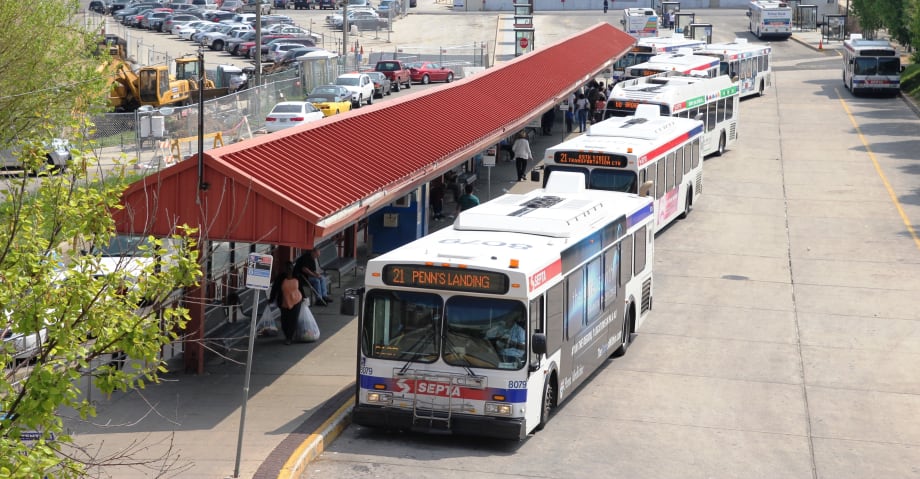
SEPTA
SEPTA
Although public transportation systems seemingly have to do more with less, they are not skimping on the implementation of programs and solutions to increase efficiency and improve service, according to respondents of this year’s METRO Top 100 Bus Fleets Survey.
A popular technology addition for agencies are computer-aided dispatch and automatic vehicle location systems, which help agencies increase efficiency and provide real-time bus arrival, departure information to customers via mobile apps, or directly on their websites — which are also being implemented and upgraded by agencies to make trip planning easier for customers.
Additional technologies added by agencies since last year, include passenger Wi-Fi, mobile surveillance systems, improved fare collection systems and the implementation of new fueling infrastructure for alternative fuels.
Once again, the Metropolitan Transportation Authority’s (MTA) New York City Transit/MTA Bus Co. tops this year’s list with 5,852 total vehicles. Showing some movement this year, New Jersey Transit (2,825), the Los Angeles County Metropolitan Transportation Authority (2,304), Chicago’s Pace Suburban Bus (1,980) and Seattle’s King County Metro Transit (1,928) round out this year’s top five, which collectively totals 14,889 vehicles, or 22% of this year’s overall 67,287 vehicles. This year’s total fleet showed an increase of 1,145 vehicles from last year.
With 410 total vehicles, the Milwaukee County Transit System lands right in the center at No. 50, while Bremerton, Wash.’s Kitsap Transit re-enters and rounds out the Top 100 with 180 total vehicles reported. Ohio’s Toledo Area Regional Transit Authority also re-joins the Top 100 at No. 96, with a fleet of 191 vehicles.
Solving first mile, last mile
New to this year’s survey, we asked transit agencies what they are doing to help customers reach their final destination, commonly known as the first mile, last mile issue.
In California, Santa Monica’s Big Blue Bus (No. 92) completed a series of significant service changes to realign its system to better serve the L.A. Metro’s popular Expo Light Rail Line, which opened in May. The service changes, which increased service by 11% to meet additional demand, took place in three phases, from August 2015 to June 2016.
In Portland, Ore., TriMet (No. 30) partners with many local community connectors to create first and last mile options. Additionally, TriMet riders now have the ability to connect with other transportation options as part of a new feature in its TriMet Tickets mobile app, called RideTap, developed by moovel North America (formerly GlobeSherpa).
TriMet is the first U.S. transit agency to pilot the RideTap feature that enables riders to tap into nearby transportation options from one app to help close trip gaps. Initially, RideTap included ridesharing service Lyft and carsharing service car2go, but has added more options recently including the BIKETOWN bikesharing service.
Partnering with ridesharing services like Uber and Lyft have also continued to increase. In Clearwater, Fla., the Pinellas Suncoast Transit Authority (No. 91) and Uber forged a partnership for a one-year pilot program — TD Late Shift — which will offer disadvantaged residents in Pinellas County free, on-demand rides when the regular bus service ends.
The $300,000 grant-funded pilot demonstration — PSTA’s second partnership with Uber — is aimed at helping low-income, unemployed residents overcome transportation barriers to employment. With this new program, riders can request up to 23 free rides per month between the hours of 9 p.m. and 6 a.m. Rides must be to a place of employment or residence.
Other solutions being implemented include, forging partnerships with bikesharing companies and increasing the capacity for bicycles onboard buses and at bus stations, as well as the addition of flex routes in some service areas.
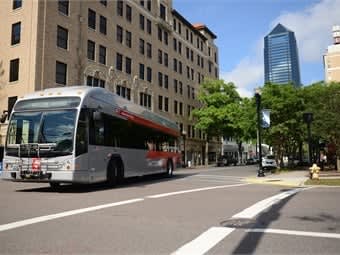
This year’s overall fleet totals grew by 1,145 vehicles compared to 2015, with Fla.’s Jacksonville Transportation Authority increasing its fleet by 18 vehicles to land in the No. 68 spot.
Protecting operators
We also asked respondents about another critical issue — what are you doing to protect your all-important bus operators?
In Tucson, Ariz., Sun Tran (No. 55) forged a partnership with G4S to provide security services at all transit centers and entrances of both their yards, as well as providing Fare Enforcement Officers to ride various bus routes. Fare Enforcement Officers help handle fare disputes and difficult passengers and can issue citations that may result in fines ranging from $100 to $2,500, depending on the severity and number of offenses. The new partnership has helped Sun Tran keep buses on time when issues arise, helps assure all passengers pay their fares, and most importantly, increased the safety of both passengers and operators, according to officials.
To further enhance operator safety, Sun Tran also installed various bus partition models for evaluation during fiscal year 2016, with the agency currently weighing operator feedback on the various models. The next steps for Sun Tran will be to determine which partition is best, and if bus partitions will be integrated in part or all of its bus fleet.
Meanwhile in San Antonio, VIA Metro Transit (No. 32) actively utilizes its surveillance system onboard buses and transit facilities and trains operators de-escalation techniques, as well as how to deal with difficult situations. The agency also has a “See Something, Say Something” campaign that encourages the reporting of suspicious activity before situations occur, as well as both plain-clothed and uniformed patrols onboard buses.
Overall, the majority of respondents reported that they are installing mobile surveillance systems and installing, or considering the installation of, driver partitions to increase operator safety. Increasing police presence and security and improved training were also popular answers.
The numbers
A closer look at the numbers reveals 48,130 buses are 35-feet or longer, making up 71% of the total vehicles reported, with 12,466, or 19%, of vehicles 35-feet and under.
Nearly 87% of the vehicles reported are fixed-route, with 13% of that number contracted, while demand response vehicles make up nearly 13% of the total.
Overall, this year’s respondents report that they intend to, or have on order 5,208 vehicles in the next year. A good number of those planned purchases include electric buses, though on a small scale. When asked who those new purchases will be with, New Flyer, Gillig, BYD and Nova Bus were the suppliers most mentioned.
METRO would especially like to thank all of the transit agencies for participating this year. If you know a fleet that belongs on this list or have suggestions on how to improve our future lists, please let us know. (info@metro-magazine.com)
More New Mobility

From Hardware to Digital Partner: Luminator Charts Its Next Chapter
CEO Magnus Friberg discusses Luminator’s shift toward becoming a digital partner, the growing importance of software and interoperability, and how AI can help agencies improve operations and passenger experience.
Read More →
Biz Briefs: Alstom Lands Canadian Contract, LYT to Supply California TSP, and More
In METRO's latest installment, we take a look at recent news from Complete Coach Works, Beep, FlixBus, and more partnerships making headlines across the transportation sector.
Read More →
CharterUP’s Armir Harris on Technology, AI, and the Future of Group Mobility
In a recent episode of METROspectives, CharterUP Founder/CEO Armir Harris discussed the company’s evolution from an online charter bus marketplace into a technology platform supporting public- and private-sector mobility and much more.
Read More →
Jacksonville’s NAVI Project Charts a New Course for Autonomous Public Transportation
Through its NAVI program, JTA is showing how autonomous vehicles, intelligent infrastructure, and coordinated operations can work together to deliver everyday public transportation.
Read More →
Biz Briefs: Luminator Marks Milestone and More
From manufacturers and suppliers to transit agencies and motorcoach operators, these updates offer a snapshot of the projects, partnerships and business moves driving the industry forward.
Read More →
New Tricks for Old Bureaucracies: Joshua Schank on Making Transit Innovation Stick
Former LA Metro Chief Innovation Officer Joshua Schank discusses why good ideas aren't enough, how transit agencies can overcome resistance to change, and why today's challenges demand more innovation.
Read More →
How DART's GoPass Is Redefining Regional Mobility
Serving 14 transit agencies, GoPass simplifies multimodal travel by allowing riders to plan, pay for, and manage an entire trip through one app.
Read More →
Biz Briefs: OCTA Taps Clean Energy for Hydrogen Station, Stadler to Supply Via Rail Vehicles, and More
From manufacturers and suppliers to transit agencies and motorcoach operators, these updates offer a snapshot of the projects, partnerships and business moves driving the industry forward.
Read More →CharterUP Expands Into New Mobility and Autonomous Transportation
Vice President of New Mobility Stephen Joos discusses how CharterUP is leveraging its nationwide transportation network, technology platform, and autonomous vehicle partnerships to expand into workforce mobility, campus shuttles, and transit solutions.
Read More →
METRO Magazine Announces 2026 Innovative Solutions Awards Winners
Projects Recognized for Advancing Mobility Through Technology, Accessibility, Workforce Innovation, and Operational Excellence
Read More →