



ABC Companies Stays Strong by Being Nimble
The coach distributor has used the extra time provided by pandemic disruptions to embrace change and delve into new business realms, including electrification.
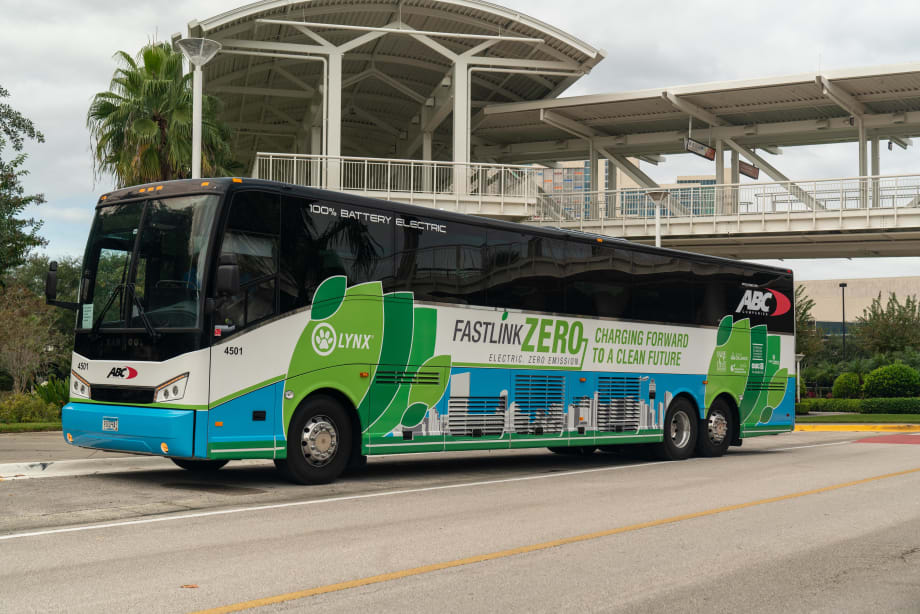
The pandemic provided ABC with the opportunity to look at and streamline a number of business processes.
Photos courtesy ABC Companies
It’s not just the COVID-19 pandemic that’s bringing about change. As demand for electric bus options increases, ABC Companies is pivoting to ensure they are ready to provide what both transit authorities and private motorcoach companies need to keep up with rapidly changing rules driven by climate change initiatives. Here, Roman Cornell, president and CCO at ABC Companies, delves into how the company’s various partnerships are enabling it to be there for its customers as times evolve.
Moving into Transit
ABC Companies looked at a variety of companies to partner with for its move into the transit market and selected New England Wheels, Turtle Top, Coach & Equipment, and Vicinity Motor Corp., along with EV charger suppliers ABB and ChargePoint. This expanded product portfolio was developed for organizations of all sizes and fleet composition.
“This portfolio is built around organizations who share ABC’s passion for delivering superior products in their respective categories that place the same value on aftersales support that has been the hallmark of ABC’s long-term success,” Roman Cornell, ABC Companies president and CCO, explains.
“ABC is in a unique position as a dealer distributor, as we can partner with one or more suppliers per category that we feel best meet the current and evolving market needs, rather than being limited to selling what we can currently manufacture. This approach means our needs are, by design, intertwined with the customers we service. Duplicating this business model for deployment in the transit and evolving electric vehicle markets was the logical next step,” Cornell continues.
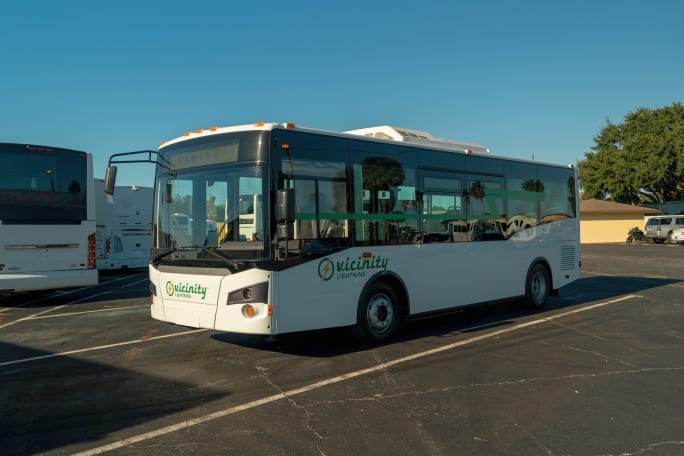
Cornell marvels at how rapidly ABC has gotten up to speed with the electric side of the market.
Committed to an Electric Future
Cornell marvels at how rapidly ABC has gotten up to speed with the electric side of the market. While transit has dabbled in EVs in various forms for a while, it's certainly a newer concept in the private motorcoach and mini-bus world.
“As we entered a mature market with some strong and entrenched competitors, we had to find areas that were under-served or needed a new level of support. We identified mini-buses up to medium-sized heavy-duty transit buses. Throw in the fact we've had multiple successful rollouts of electric vehicles, and everything started to line up,” he states.
With products like Vicinity’s Lightning 28-foot, low-floor, all-electric transit bus, the Ford E450 based electric Turtle Top powered by Proterra, and ABC’s “Repowered” diesel to electric retrofit program for single and double-deck buses, it’s clear ABC is fully committed to making its mark on the EV space.
ABC’s long-standing relationship with Van Hool has also evolved to support ABC’s growing portfolio of electric vehicles. As the company was preparing to launch its new electric Van Hool CX45E, it was clear there would quickly be more demand than supply. Therefore, it started looking at other options to help companies start to electrify their fleets.
“ABC has a history of refurbishment and repowering. It wasn't unusual for us to take a motorcoach that was still in great shape, replace the engine, and give it new life. We realized we could do the same thing, but on the electric side,” Cornell stated.
This drove development of ABC’s “Repowered” program under its new SVT (Specialty Vehicles and Technologies) division. ABC has repowered single- and double-deck Van Hool motorcoaches for customers expanding options within the ABC EV portfolio.
“Even if someone wanted to be all-electric, they're not going to scrap the entire fleet and bring in EVs overnight. It won't work that way. Even if they did, they still have to build out the infrastructure, train their drivers and technicians…there's a lot involved in onboarding someone to move into the EV space,” he explains.
ABC received its first double-deck Van Hool TDX25E shipment in February, which it’s excited about because there aren’t many premium double-deck buses in the market, and even fewer that are electrified. These buses have become popular for employee shuttle programs because they can move more passengers with fewer drivers, and fewer monthly payments than a fleet of traditional single-deck coaches.
Pandemic Refocusing
The pandemic provided ABC with the opportunity to look at and streamline a number of business processes. With the inevitable slowdown in business, the company was also able to diversify its product and service offerings to maneuver with changing customer needs.
“We launched a program called CLEANS (Contact Limitation & Eradication of Airborne Noxious Systems) where we packaged commercial solutions for sanitization, and optimized all of our current support processes, but also really figured out what is it people needed to continue to do business,” Cornell explains.
From there, ABC helped customers promote the cleanliness of their buses, including providing promotional materials and information videos so they could sell the benefits and explain how effectively the buses circulate air.
Working with customers to assist them in navigating a rapidly changing environment, meant ABC became involved in a variety of issues that were previously outside their traditional scope of business. The company became deeply involved in helping bus operators achieve government support, and found, particularly in the private motorcoach arena, there's a lot of smaller operators that needed help in getting their voices heard.
Even before the pandemic hit, the company was already observing market trends, particularly in the arena of microtransit, transportation as a service, and on-demand transportation.
“We had already been looking to diversify our portfolio with a healthy mix of both public and private transportation,” Cornell states. “The slowdown allowed us to accelerate that by giving us time to properly understand these trends.”
According to Cornell, ABC then saw the thread connecting all of these trends: Electrification. Many public transit authorities are trying to figure out how to electrify their fleets. A lot of microtransit opportunities involve short runs and fixed routes, and vehicles are based in a depot making them ripe for electrification. While electrifying long distance motorcoaches might not be the best solution today, many are beginning to operate in new idle-free zones.
“We have many corporate customers who've made the decision to pursue zero carbon or carbon reduction initiatives. Therefore, we had this electric platform touching each of those businesses. We were finding we needed a solution not only for the traditional market, but for those looking to reduce emissions as well,” he says.
Overall, the pandemic helped ABC accelerate the development of a product portfolio that met the needs of a rapidly changing market while delivering the customer support ABC has been built around.
“As we looked at opportunities to assist our customers, it was clear we needed to expand our offering. As an example, we saw coach operators starting to move much smaller groups of people and we needed to be able to give them solutions that in some cases were more economical than a 35- or 45-foot motorcoach,” he states.
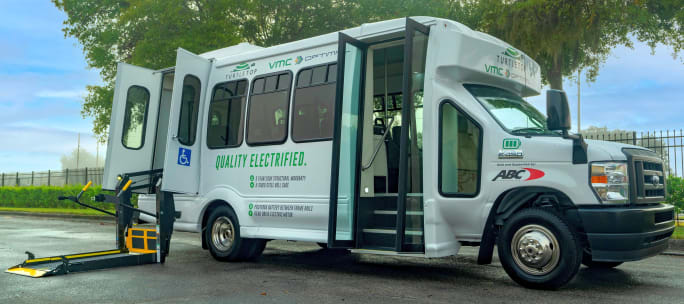
Even before the pandemic hit, the company was already observing market trends, particularly in the arena of microtransit, transportation as a service, and on-demand transportation.
Bounce Back?
Thankfully, motorcoach business is beginning to return. Despite hiccups thanks to COVID-19 variants, the good news is ABC is seeing customers, and their customers’ customers, looking for solutions to continue doing business.
“We are definitely seeing a slow and steady rebound. So much so that one of the challenges we will likely face is having enough inventory and availability. A lot of it will depend upon the rider’s comfort level in returning to motorcoach travel,” Cornell says.
Despite short term optimism, there are many questions surrounding when motorcoach business will return to pre-pandemic levels. The current guestimate is 2024-2025.
However, there is hope, as the need is still there as people yearn to regain a feeling of normalcy.
“You have to travel for school, sports teams have to be moved around, the government has to move troops, and people need to be evacuated in the case of a disaster. It’s more leisure and optional trips that will likely take a longer time to come back, unfortunately,” Cornell explains.
Additional reporting by Alex Roman
More Bus

New York MTA Plans Largest Bus Fleet Upgrade in More Than a Decade
The agency is seeking manufacturers for 650 new CNG buses to replace aging vehicles, improve reliability, and advance its broader fleet modernization strategy.
Read More →
Building a Flexible Path to Transit Electrification
John Hroncich discusses BAE Systems’ modular and scalable approach, lessons learned from decades of real-world operations, and how agencies can identify electrification strategies that fit their fleets.
Read More →
Bus Tech Talk: Keeping Transit Technicians Ahead of the Technology Curve
LA Metro’s Obed Mejia discusses technician training, evolving maintenance technology, fleet replacement, and strategies for getting the most out of today’s transit fleets.
Read More →
Biz Briefs: RIPTA Unveils New Frontrunners, Clevland RTA Adds New Siemens, and More
In METRO's latest installment, we take a look at recent news from Siemens, Prevost, Dodge, and more partnerships making headlines across the transportation sector.
Read More →
People Movement: Holly Arnold Joins Transdev and More
In this edition, we also cover recent appointments and announcements at Pace, CamTran, MCI, and more, showcasing the individuals helping to shape the future of transportation.
Read More →
The High Cost of Transit Buses: Industry Leaders Look to Procurement Reform
Transit leaders and policymakers examine how standardized bus designs, streamlined procurement, and predictable funding could help agencies stretch budgets and deliver better service.
Read More →
The Business Voice Behind Public Transportation
As chair of APTA’s Business Members Board of Governors, Ray Melleady explains how more than 850 business members are partnering with transit agencies to advance funding, innovation, and industry-wide collaboration.
Read More →
From Surviving to Thriving: Building Stronger Transportation Organizations
Bus Business Consultants founder Brian Dickson shares lessons on leadership, organizational health, and creating options for long-term success in a changing transportation industry.
Read More →
Finding the ‘Happy Medium’: Optimizing Maintenance Without Sacrificing Reliability
The key to maintenance optimization isn’t doing less work—it’s doing the right work at the right time on the right assets.
Read More →
LA Metro, City of West Hollywood, and Partners Advance Smarter Bus Lane Enforcement
The award-winning partnership combines AI-powered detection with human oversight to improve bus reliability, accessibility, and enforcement efficiency.
Read More →