



Advanced Train Control Possible With Developments in Telecommunication
Fiber-optics allows more information to be gathered and tracked by rail agencies, improving operations management and scheduling.
Since its inception, the rail industry has been inseparably bound to telecommunications. Railroads were the first to use the telegraph for keeping track of trains and schedules. As ridership increases and lines are extended, the need to constantly track the location of trains, effectively manage operations and provide the public with reliable schedule information is more critical than ever. Data, voice and video communications play integral roles in the operation of modern rail transit systems. But, the need for rapidly gathering data and disseminating timely information throughout the transit enterprise has outgrown the capabilities of the existing copper cable-based telecommunications infrastructure. Fortunately, there are solutions to these problems. Rail transit agencies can upgrade their communications systems from copper-based to fiber-optics, which will allow the implementation of advanced high-capacity technologies. In addition, agencies’ greatest asset, the right-of-way (ROW), has value beyond delivering passengers to their destinations. It produces revenue from leasing excess capacity to third-party telecommunications providers. The older communications systems were built using copper. Before electronics, every channel of data needed its own pair of wires, which were required to interconnect essential information. Because of construction costs, the number of wires was kept to a minimum and used only for relaying the most critical pieces of information required to maintain train control. Electronics introduced coding and multiplexing systems that carried more information on a single pair of wires. In the 1970s and 1980s, there was a strong trend toward information systems built around the computer. Information was transmitted digitally over a pair of wires or through some copper cable type of telecommunications system. Changes in the line The state of the industry has changed dramatically in the past few years as rail agencies build new systems and expand existing lines. Much of this expansion is made possible by the tremendous growth and innovation in telecommunications. In a fiber-optic cable, light signals are transmitted through thin fibers of plastic or glass, from light-emitting diodes or semiconductor lasers, by means of internal reflection. The advantages of fiber-optic cables over conventional coaxial cables include low material cost, high transmission capacity, low signal attenuation, data security, chemical stability and immunity from electromagnetic interference. Multiplex equipment integrates far more voice, data and video information channels onto one optical fiber than was ever possible on a copper wire. Fiber-optic systems are more reliable and also have far greater capacity than traditional copper wiring. These characteristics provide a stable conduit for communications and help make some of the more advanced train control technologies feasible. In fact, some of these new advanced train control systems won’t operate using older telecommunications technology. Fiber-optics move information rapidly up the line to the control center, then down the line to the stations’ public address systems and electronic message signs or video displays. From there, programmed equipment automatically makes announcements and updates information displays. These public services require data communications capabilities in both directions to many locations throughout the transit system. To enhance public safety and security, closed-circuit television is used to monitor station platforms. Fiber-optic based communications provide the bandwidth necessary to acquire and distribute the large masses of real-time information needed for these jobs. Fiber-optic communication also supports more comprehensive remote monitoring and control of the various ancillary systems and facilities that rail transit agencies must operate and maintain. This allows maintenance to identify, locate and correct problems faster. The operational data collected provides planners, engineers, supervisors and managers with information for analyzing problems and finding ways to make the transit system run more efficiently and reliably. The future in the present Enhanced communications capabilities aren’t pipe dreams of the future. They are current realities. “BART was the first fully automated railroad, so we’re very dependent on the data communications as well as voice,” says Dave Warwick, group manager of systems engineering of San Francisco’s Bay Area Rapid Transit. “Over the past two years we have gone from copper T1 to fiber-optics. We now gather real-time ticket information as well as gate information so we know when we have gates out of service. We’re then able to direct maintenance more efficiently, not just data communication but the whole process (including the software packages) that goes with it.” BART has done an extensive renovation and retrofit of its entire operation, including the installation of a Supervisory Control and Data Acquisition (SCADA) system for the passenger stations, traction power substations, gap breaker stations, switching stations and remote train control houses. The system performs a number of mission- critical functions, including monitoring station facilities and controlling high- and low-voltage power systems. One of the more significant areas where BART is seeing a return on its investment is using its right-of-way to lease communications capacity (bandwidth) to third-party telecommunications vendors. “Leasing out of bandwidth is the return of an asset we had that was not being utilized. What we saw as our biggest asset is that a company looking to install fiber-optic cable can get 150 miles of prime right-of-way from BART with one-stop shopping,” Warwick says. BART has seen an enormous return from this enterprise. Currently it has a ton of fiber-optic cable in its right-of-way, with more being added every day. “We are gaining multiple billions of dollars in fees for this fiber-optic bandwidth,” he says. On the lighter side Another transit system that finds itself on the cutting edge of technology is the Santa Clara Valley Transportation Authority (VTA) light rail transit system in California. Its Tasman West Light Rail Project constructed an eight-mile extension to the existing 21-mile Guadalupe Corridor line. The Guadalupe line was originally equipped with a T1 copper communications system. The Tasman West extension included a state-of-the-art, fiber-optic communications system to all passenger stations and traction power substations. In a follow-up project, VTA upgraded the Guadalupe Corridor line’s T1 copper communications system to fiber-optics. Overall, more than 21 miles of fiber-optic cable were installed within existing and new ductbanks to stations. This fiber backbone supports the SONET-based transmission system. Each fiber backbone channel can carry 100 times the information that could be carried by a T1 copper backbone channel. The new system has four such channels but can be readily upgraded in speed and spare fibers used to carry many times more information as needed in the future. A new SCADA system was also installed on the Tasman West Project, which displays train positions in real time for all trains operating on the light rail system. The positions for each train are maintained from three perspectives, including planned train position, tracked train position and projected train position. Based on the tracked and projected train positions, the SCADA system determines and transmits destination information to the visual message boards associated with a station’s platform for the next train expected to arrive. “There’s a graphical display and systems people can see what sections are hot and cold and which breakers are open and closed,” says Ramesh Dhingra, systems design manager with VTA. “They can monitor the public address systems, the variable message signs or the ticket vending alarms. All these things facilitate the operation and maintenance of the system. It gives the operator the tools to do a better job at maintaining the system.” Staying flexible As the demand increases for construction and expansion of heavy and light rail transit systems in urban areas, agencies need to make sure their projects stay on track by understanding their current communications needs, as well as trying to anticipate future needs. System designs should be based on standards that allow flexibility to mix equipment from different manufacturers. Also, equipment can be selected with flexibility in mind. Doing so would mean rail agencies would mix and match different types of communications freely and would be expanded readily to accommodate future needs. More basic considerations are also important, like installing spare fibers and leaving room for additional future fiber-optic bundles within cable duct banks. That allows for future augmentation of transit agency-owned communications systems, as well as providing potential revenue from the third-party telecommunications providers looking to add capacity to their own systems. Because of the high data capacity of fiber-optic systems, a relatively modest increase in initial infrastructure investment could provide major benefits down the road, putting the agency in a position to quickly take advantage of new developments in information technology.
More Rail
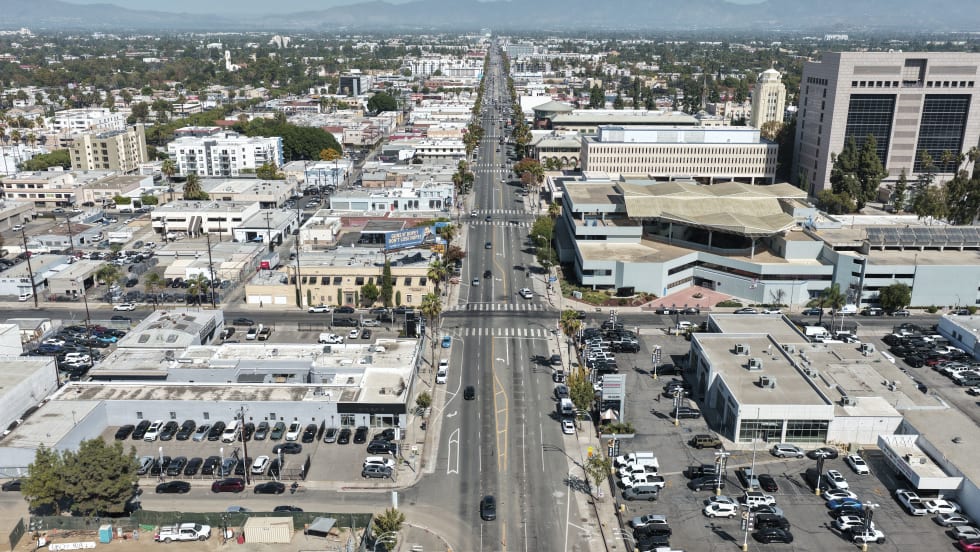
LA Metro Breaks Ground on East San Fernando Valley Light Rail Project
The 6.7-mile line will add 11 stations along Van Nuys Boulevard, expand access to jobs and regional transit connections, and support Metro’s broader efforts to improve mobility as rail ridership grows.
Read More →
CSA Group Releases Climate Resilience Standard for Transit, Passenger Rail
Developed with support from the Standards Council of Canada, CSA D700 guides assessing climate-related risks and planning adaptation measures for transit and passenger rail systems.
Read More →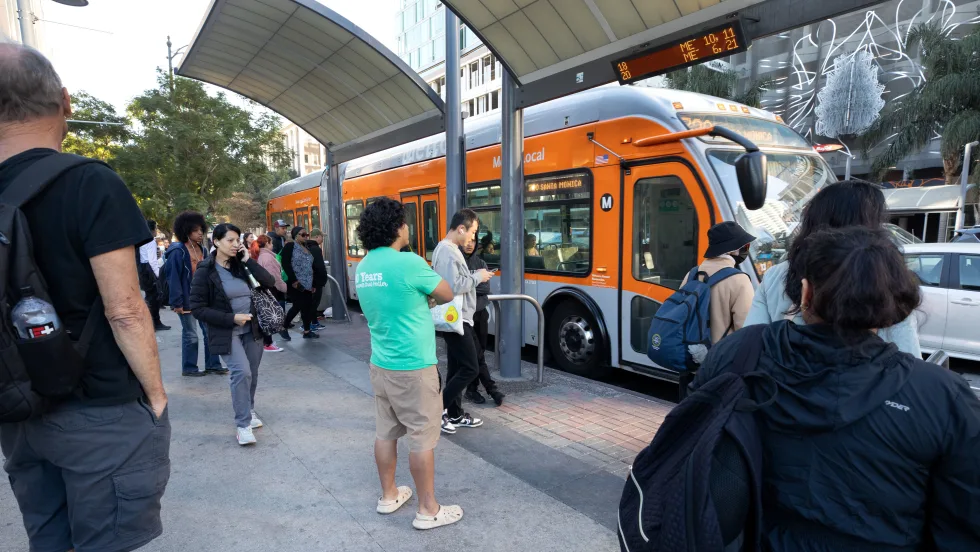
LA Metro September Ridership Climbs 3.9%, Led by Rail Growth
The agency recorded more than 27.2 million boardings, with rail ridership increasing 12.4% year over year and the D Line posting the largest gains.
Read More →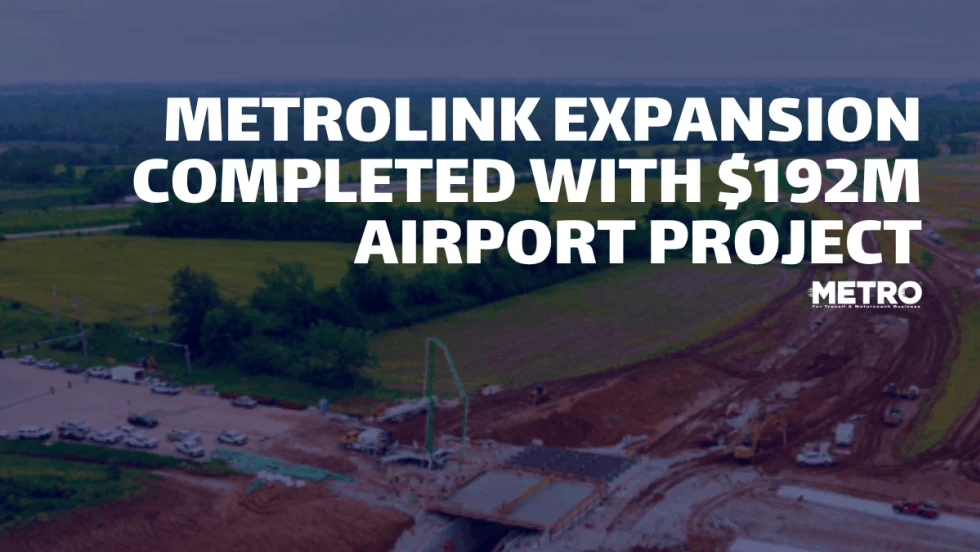
First Full MetroLink Rail Expansion Completed in 20 Years with $192M Airport Project
The project links two St. Louis-area airports by light rail while adding roadway and bike trail connections to improve regional access and mobility.
Read More →
Utilimarc Launches SmartReplace to Optimize Fleet Replacement Decisions
AI-powered SmartReplace helps fleets prioritize vehicle replacements, model budget scenarios, and build more defensible long-term strategies.
Read More →
Scenes from APTA TRANSform & EXPO 2026
Transit leaders, manufacturers, and industry professionals gathered in Chicago to explore new technologies, share ideas, and discuss the future of public transportation.
Read More →
USDOT Awards $416 Million for Florida Rail Crossing Safety Upgrades, New Brightline Station
The projects aim to reduce risks for motorists and pedestrians at rail crossings while expanding passenger rail access along Florida’s Space Coast.
Read More →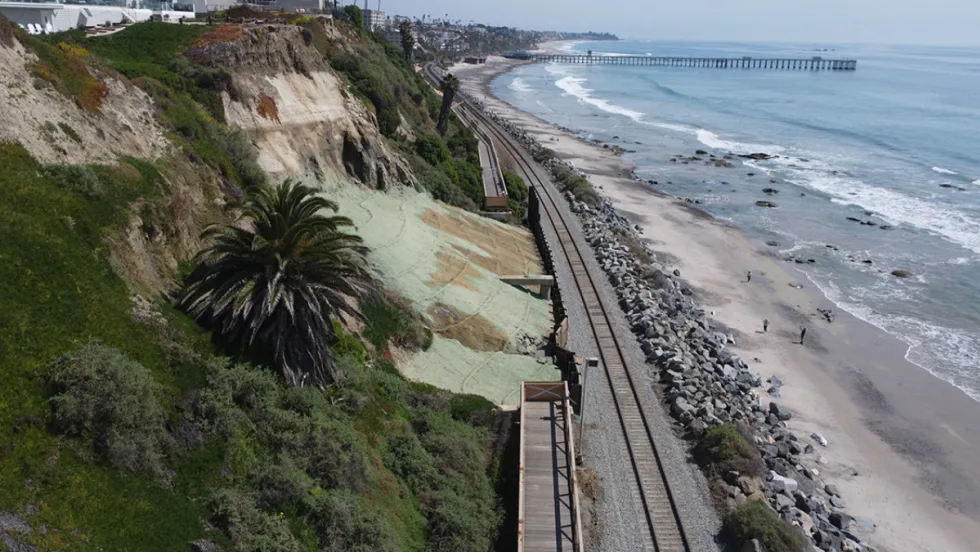
OCTA Declares Emergency to Protect Rail Corridor From Coastal Erosion
The California agency is accelerating shoreline protection and plans to place approximately 690,000 cubic yards of sand along the San Clemente coast to protect a key passenger and freight rail link.
Read More →
More Than a Summer Job: Building the Next Generation of Transit Talent
The Delaware River Port Authority and PATCO have transformed their internship program into a hands-on professional development experience that introduces students to the breadth of transportation careers — and creates a pipeline for future employees.
Read More →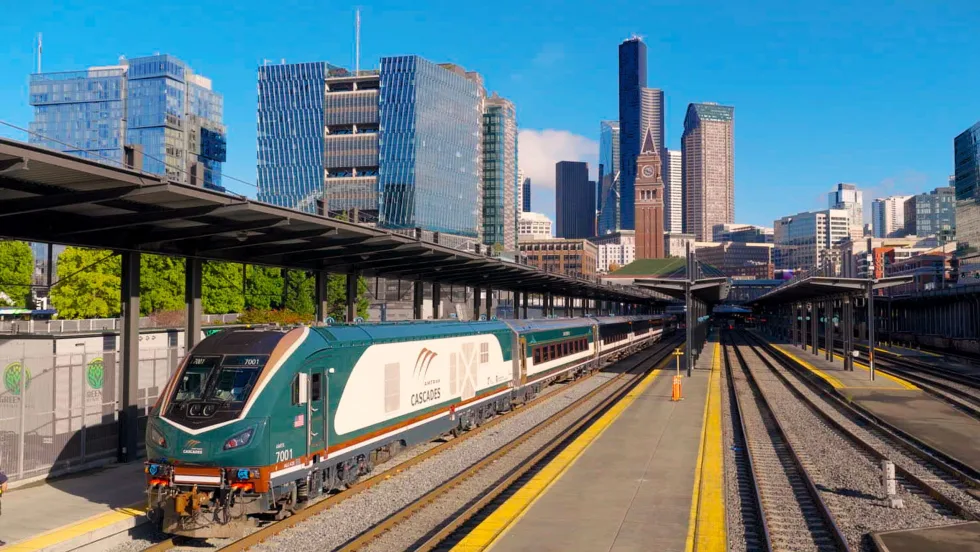
Airo Trains Make Their Amtrak Cascades Debut in the Pacific Northwest
Effective immediately, two cutting-edge Airo trainsets will join the Amtrak Cascades route, operating four daily trips between Vancouver, B.C., Seattle, Portland, and Eugene, Oregon, marking the first introduction of Airo trains into passenger service anywhere in the country.
Read More →