




Related: L.A. Light Rail Transit Project Receives Support from New Team
Arcadis Marks Grand Opening of L.A. Regional Connector
Challenges and adjustments didn’t stop Arcadis from providing Los Angeles with a new 1.9-mile underground light-rail extension that will now support riders with a one-seat journey from downtown L.A. to several communities.
July 3, 2023
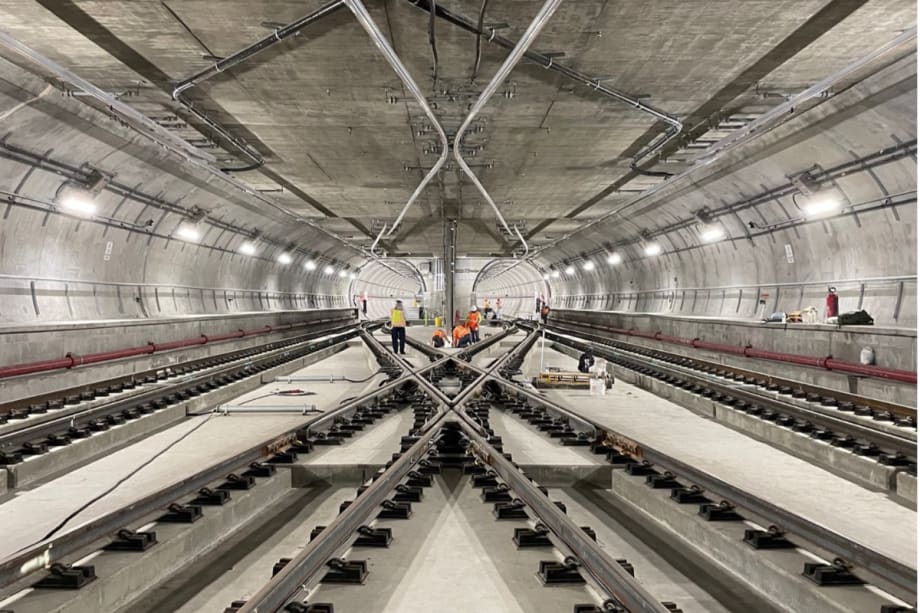
Construction on the Regional Connector began in 2014.
Photo: Arcadis
4 min to read
Arcadis recently marked the grand opening of the new L.A. Regional Connector, having worked with key client Los Angeles County Metropolitan Transportation Authority (L.A. Metro) to provide construction management support services to help drive development since 2014.
The new 1.9-mile underground light-rail extension will now support riders with a one-seat journey from downtown L.A. to the communities of Azusa, Pasadena, East Los Angeles, Santa Monica, and Long Beach.
“To be part of such a historic project is truly exciting,” said Jaydeep Pendse, Regional Connector project manager at Arcadis. “The project literally connected the City’s East and West Light Rail Transit infrastructures to function as one integrated system. Passengers will be able to travel between Azusa and Long Beach, and between East Los Angeles and Santa Monica, without transferring lines. It will improve connections, bringing together the current Metro L (Gold), A (Blue), E (Expo), B (Red), and D (Purple) Lines at the 7th Street/Metro Center Station, and increase opportunities for jobs, education, and essential services.”
Overcoming Early Challenges of Regional Connector
The Regional Connector will provide residents with much-needed access to public transit options and create equitable mobility to some of L.A.’s key business, educational, and cultural hubs, but the process leading to the grand reveal wasn’t always smooth.
“Any large infrastructure project in a dense urban area is likely to face challenges and this project was no different,” Pendse said. “Specific to this project, unknown utility relocations significantly impacted our construction schedule. The entire project team worked tirelessly as a collaborative team to overcome this challenge by re-sequencing construction efforts to offset the utility delays.”
For the efforts to be successful, Arcadis worked closely with the L.A. City family and Utility providers to ensure timely decisions and approvals avoiding further delays.
The project team continued to engage the community through all phases of construction activities and the majority of the community Stakeholders were supportive of the project.
“The project team went above and beyond to ensure compliance with the requirements of the contract which resulted in a favorable judgment for L.A. Metro during the project,” Pendse said.
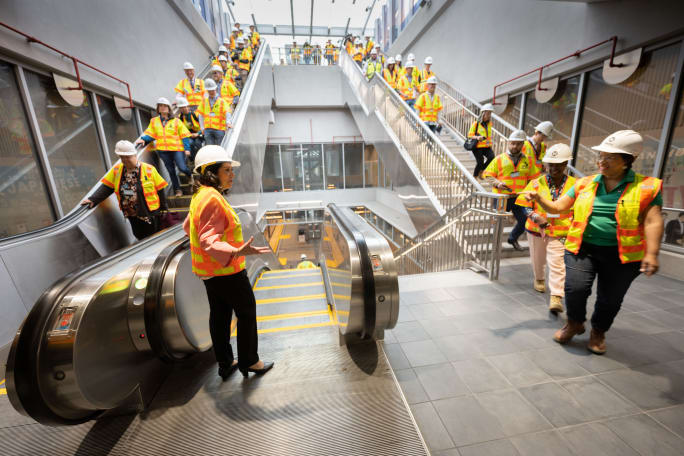
One of the key parts of the project was the strategic use of sequential excavation method mining.
Photo: Arcadis
Construction History, Sequential Excavation Mining
Construction on the Regional Connector began in 2014, with Arcadis drawing on more than 40 years of global experience to provide Construction Management Support Services to drive development.
One of the key parts of the project was the strategic use of sequential excavation method mining (SEM), which is well-suited for tunneling in areas prone to earthquakes, such as Los Angeles, and doesn’t disturb existing building foundations and utilities.
“Sequential Excavation Mining method of mining was utilized to construct the crossover cavern near the Historic Broadway station,” Pendse said. “The SEM cavern was approximately 300 feet long and was constructed after the tunnels were mined. This critical operation required that excavation be performed in a designed sequence, utilizing specialized equipment while the operation was carefully monitored by extensive instrumentation to ensure that there was minimal ground surface movement.”
The actual field data collected from the cavern excavation was almost identical to the theoretical values that were developed during the design process, according to Pendse.
The SEM mining procedures allowed for the construction of the station box to be concurrent with the crossover cavern construction. Only the portion adjacent to the crossover cavern was left to be completed, resulting in time savings to the construction schedule for the Broadway Station Complex.
Digital solutions also played an important role, including the use of a digital traffic model during planning to help understand anticipated traffic patterns and help mitigate disruption during construction.
Arcadis made adjustments to implement the digital traffic model.
“Digital model was developed during the early phase of the project to visualize how the construction will impact the actual traffic flow along Flower Street, a key artery that feeds Los Angeles downtown,” Pendse said. “Further adjustments were made to the traffic control plans that reduced traffic impacts due to construction activities within the area.”
In addition, detailed phasing plans were also developed to ensure access to downtown parking structures.
Pendse said Arcadis is looking forward to working with L.A. Metro in the future.
“It was an honor to support Metro during the construction of the Regional Connector project,” he said. “The experience gained by our team over the past several years is being applied to other transit projects throughout LA county and California. Arcadis remains committed to partnering with Metro, to deliver responsible transportation solutions which improve the quality of life for Angelenos.”
Subscribe to Our Newsletter
More Rail

New York MTA Advances Final Contract for Second Avenue Subway Expansion
Contract Four is the largest in the Second Avenue Subway Phase 2 project and includes construction of station infrastructure, tracks, and signals for the subway expansion, MTA officials said. Work on Contract Four will begin in 2027.
Read More →
San Diego MTS Breaks Monthly Trolley Ridership Record
Agency officials said July’s ridership indicates MTS’s continued recovery from the pandemic.
Read More →
Report Examines NJ TRANSIT Reliability, Funding Challenges
The Garden State Initiative analysis examines the roles of Amtrak infrastructure, fleet management, and agency operations while recommending a more performance-based approach to improving reliability.
Read More →
Stadler, CapMetro Sign Long-Term Rail Fleet Support Agreement
Beginning in 2027, Stadler will provide on-site technical expertise, spare parts support, training, and obsolescence management to help extend the reliability and longevity of CapMetro’s GTW fleet.
Read More →
Biz Briefs: Alstom Lands Canadian Contract, LYT to Supply California TSP, and More
In METRO's latest installment, we take a look at recent news from Complete Coach Works, Beep, FlixBus, and more partnerships making headlines across the transportation sector.
Read More →
CATS Gold Line Marks 5 Years of Service, 2.8M Passenger Trips
With a six-mile expansion planned, the Charlotte streetcar is positioned to connect more neighborhoods and major transit hubs across the region.
Read More →
Why Simulating Pedestrian Movement Has Become Essential for Modern Rail Stations
Pedestrian microsimulation is helping rail planners identify bottlenecks, test station designs, and prepare complex transit hubs for growing passenger volumes.
Read More →
Amtrak Begins Major Construction at New York’s Sunnyside Yard
The new maintenance facility will support Amtrak’s Airo trainsets while improving maintenance efficiency and turnaround times in New York.
Read More →
Chicago Leaders Unveil Plans for O’Hare Airport Express Train
The privately developed project would offer a 15-minute trip between downtown and O’Hare’s Terminal 2, with trains operating every 15 minutes on a dedicated track. The service would use battery-electric trains and three existing freight rail rights-of-way.
Read More →
OCTA Maps Out 30-Year Strategy to Protect Coastal Rail Corridor
The draft feasibility report identifies strategies to protect the coastal rail line for decades as the agency continues near-term stabilization and sand placement efforts.
Read More →