



As Mobile Ticketing Makes Strides, E-fare Tech Ramps Up
More agencies are going mobile with fares. As many others plan to replace aging fare collection equipment, they take steps such as open fare and closed-loop payment systems while planning for mobile ticketing.

Mobile ticketing, the process of buying fare on a mobile phone app, has rapidly gained popularly in the last couple of years. It can reduce the need for infrastructure, because riders already have the payment equipment in their smartphones, cut cost and the time riders spend waiting in line, as well as risk, and gather valuable rider data. Recently, Boston’s Massachusetts Bay Transportation Authority (MBTA), Portland, Ore.-based TriMet, North County (Calif.) Transit District and Dallas Area Rapid Transit all rolled out ticketing apps.
While more transit systems are adopting mobile ticketing, at least a dozen or more agencies in the U.S. have implemented or are in the process of incrementally rolling out a combination of mobile payment and advanced fare payment smart card technologies, but are at different stages.
For example, Chicago Transit Authority’s (CTA) account-based open payment system, Ventra, is fully operational; Utah Transit Authority began offering a pre-paid, reloadable electronic fare card in October; and Philadelphia’s Southeastern Pennsylvania Transportation Authority as well as the Washington Metropolitan Area Transportation Authority plan to implement open fare payment systems, allowing credit and debit cards, soon.
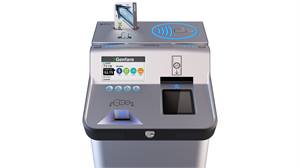
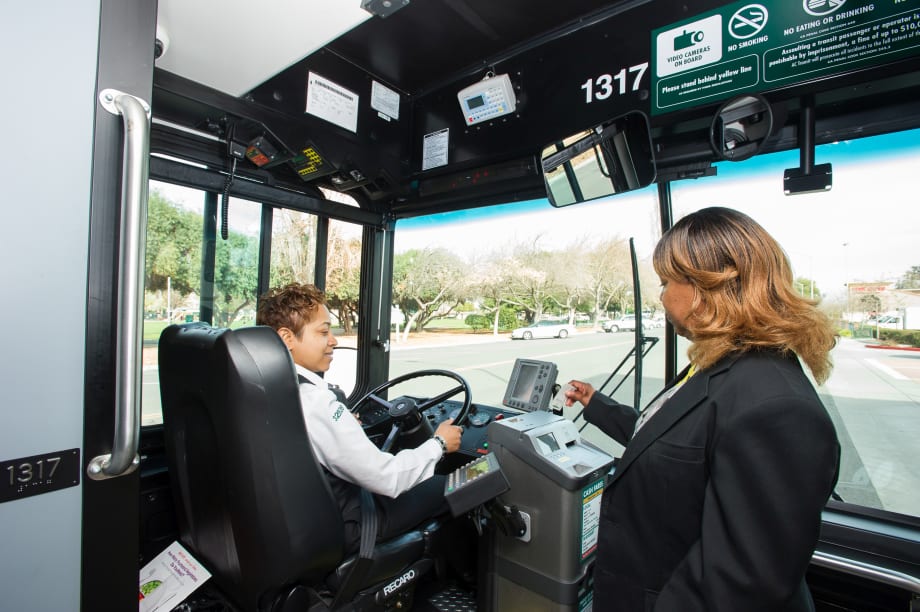
AC Transit has installed SPX’s new farebox, Fast Fare, a standalone electronic fare media processor, on its buses, allowing it to process mobile payments, smart cards,
cards and magnetic cards.
Adoption challenges
Even as new fare payment technologies roll out in large cities throughout the U.S., there are still questions as to which will be adopted by mid- and small-sized agencies, Kim Green, president, SPX Genfare, says.
Near Field Communications (NFC), a mobile device technology that allows the device to pass payment data to a reader using radio frequency technology, similar to how contactless fare cards allow passengers to tap the card and ride, could be a future prospect for many, he adds, but only after all phone companies adopt NFC and security technologies.
One of the challenges transit systems of all sizes face is that fare collection and payment processing is a major cost of operation, Randy Vanderhoof, executive director, Smart Card Alliance, points out.
Rob Schupp, director of marketing and communications, San Diego Metropolitan Transportation System (MTS), which recently rolled out a mobile ticketing pilot, agrees. Transit agencies are looking at the next generation of fare collection and ways to implement it that reduce capital costs, he says.
“Ticket vending machines are very expensive. A lot of agencies [have equipment] that is nearing the end of its useful life,” he explains. “We’re all exploring what the next technology is going to look like in the next 10 years.”
Part of the solution, he believes, is smartphones: 55% of MTS’ riders have them and that’s only going to grow.
However, because transit agencies are limited in enhancing their infrastructure, such as the readers on the buses or turnstiles, changing their fare systems to accommodate some of the new technologies can take a long time, Vanderhoof says. Consequently, agencies are looking at mobile solutions that can complement their existing systems, while implement changes to their traditional fare payment collection methods over a longer period of time.
“There’s not one preferred solution, but a combination that addresses different parts of the ridership to add value to the riders, more efficiency and lower the cost to the agency,” he adds.
Mac Brown, director of communications for mobile ticketing platform provider GlobeSherpa, the company that designed TriMet’s app, TriMet Tickets, says that transit systems are not in the business of taking risk, so they want to deploy proven technologies.
“We’re seeing agencies building pieces to lead to a longer-term mobile ticketing solution, such as a trip planning application,” he says.
Meanwhile, as this technology is evolving at a quicker pace than it has in the past, transit systems’ need for equipment that can quickly adapt is even more urgent.
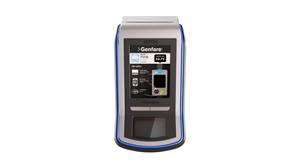
SPX’s new reader, the portable Fast Fare-e, offers all the benefits of a traditional farebox with the exception of cash acceptanc
New payment offerings
Last year, SPX introduced new products to help transit systems move to electronic fare collection as well as mobile ticketing, including a new farebox, Fast Fare, a standalone electronic fare media processor; a new reader, the portable Fast Fare-e, which offers all the benefits of a traditional farebox with the exception of cash acceptance; and e-fare, a Web-based fare collection system that allows riders to use smart cards or other electronic forms of e-media to buy and add value to existing tickets. Genfare’s mobile payment solution is accepted on both the Fast Fare farebox and e-reader.
This year, SPX also plans to put a significant amount of back-end processing in the cloud for more convenient fare data storage.
SPX’s Fast Fare has been the most widely adopted product, Green says, primarily due to its ability to replace legacy Genfare equipment along with the significant technological advances of the farebox. Fast Fare is designed for agencies of all sizes due to its ability to offer a wide range of media options and adapt to different payment methods as an agency does.
With SPX’s e-Fare, clients can order smart cards online from transit systems, which then mail the cards. Riders can decide whether to establish an account online and receive additional benefits, such as registering or un-registering the card to their personal account or registering family members to the account; name their cards for reference; report any of the cards lost or stolen; check card usage and value; and enable an auto-replenish feature, which establishes an auto renewal for cards, Green says.
As AC Transit moves toward new fare payment options, such as mobile ticketing, it is updating its collection system by installing SPX Genfare’s Fast Fare farebox in all 569 of its buses giving it the capability to process mobile payments, smart cards, credit cards and magnetic cards.
At 14 years old, the transit system’s fareboxes had become obsolete in many respects and had to be repaired often, Clarence Johnson, media affairs manager, AC Transit, says.
The old fareboxes, he explains, would not distinguish between different coins or paper. The new fareboxes make it easier to calculate fares and for passengers to see and hear their fares being processed, he explains.
“We think it will really improve our reliability, security and accuracy and position us better for future fare collection [methods], making accounting easier,” Johnson says. “We also think it will reduce our boarding times because it will eliminate some confusion at the farebox for our customers.”
Additionally, Cubic Transportation Systems provides fare solutions that deliver new payment technologies for mobile phones and open payment with contactless bank cards, as well as supporting legacy fare media, including closed-loop smart cards and magnetic-stripe fare cards.
Cubic also provides business support services. One of its most recent solutions, NextWave, is a mobile services platform that supports payment and ticketing through apps that interact with agency back offices and a variety of NFC features in contactless cards and mobile phones, David deKozan, VP, strategic initiatives, Cubic, says.
These technologies are supported by NextFare, its fare collection enterprise management system. For account-based systems, NextFare is complemented by its NextAccount fare processor. Cubic’s back-end systems manage fare processing, multi-agency clearing and settlement, customer service support and asset management.
Mobile ticketing sees success
Ben Whitaker, CEO of transit app developer Masabi, which created JustRide mTicket for MBTA, and a successful pilot for San Diego’s MTS, says the popularity of mobile ticketing apps indicates the public is “over-ready” for mobile ticketing, since they are already using their phones to access or pay for nearly everything else.
“If you ever look on a commuter bus or train, you’ll see everybody’s got their phones out,” he says. “Turning it into a ticket is a very obvious way of getting out of the pain of doing traditional ticket purchasing.”
This is especially true as new phone technology has moved across all demographic barriers, or, as Whitaker puts it, “not just [to] young hipsters.”
According to Whitaker, MBTA was able to save money by choosing to rollout the app instead of extending its smart card, the Charlie Card, to its commuter rail system.
“The cost that was being quoted to roll out smart card systems onto the commuter rail was $70 million to $100 million,” he explains, since the majority of the 140 stations were not equipped with ticket vending machines. They opted for JustRide mticket, saving them most of that money.
Masabi rolled out the MTS mTicket app pilot even faster than the seven months for MBTA’s pilot and launch, taking only about two weeks, Whitaker says.
The pilot focused on special events mobile ticketing for San Diego Chargers football games to prevent long waits in line, Schupp says. The initial phase ran on the trolleys for special events: Chargers and San Diego State Aztecs football games. MTS supplemented those ticket sales with ticket booths that sold paper day passes.
“We can’t sell tickets fast enough at the ticket vending machines,” Schupp says. “It’s too cumbersome, takes too long and customers get anxious.”
The positive response was overwhelming, Schupp says. “[Riders said] ‘This is where you guys need to go. This makes it so much easier.’”
MTS Plans to test the app on the trolleys and buses at the upcoming Comic-Con International, a major annual event in the city.
Meanwhile, TriMet jumped right into mobile ticketing with its TriMet tickets app for rail and buses, despite having operated a paper-based fare collection system for decades.
Chris Tucker, manager of fare revenue at TriMet, says that mobile ticketing presented a good opportunity to embrace new, innovative technology that is convenient and user-friendly because the agency had never adopted fare technology such as tokens, magnetic stripe or smart cards.
TriMet entered into discussions with GlobeSherpa about three-and-a-half years ago. The agency was hoping to cut costs by reducing its reliance on ticket vending machines and fareboxes, decreasing the amount of cash in the system, wear and tear on the machines, and the need for paper tickets and manufacturing and distribution.
This was also a first step to shift early technology adopters to electronic fares and get public feedback, Tucker says.
They embraced it with open arms. After the app had been available for about five months, TriMet surpassed its anticipated number of downloads of approximately 30,000 by January, hitting more than 60,000.
Taking into consideration its riders who do not use smartphones, TriMet is developing a comprehensive plan for an electronic fare system that will accept mobile tickets and contactless credit, debit and bank cards.
“[Mobile] technology is ready for many agencies out there that don’t have electronic fare technology, whether they’re small- or medium-sized,” Tucker says. “It’s an inexpensive technology that riders love, [needs] no infrastructure and you can migrate to it much quicker than your traditional electronic fare project.”
More Bus

New York MTA Plans Largest Bus Fleet Upgrade in More Than a Decade
The agency is seeking manufacturers for 650 new CNG buses to replace aging vehicles, improve reliability, and advance its broader fleet modernization strategy.
Read More →
Building a Flexible Path to Transit Electrification
John Hroncich discusses BAE Systems’ modular and scalable approach, lessons learned from decades of real-world operations, and how agencies can identify electrification strategies that fit their fleets.
Read More →
Bus Tech Talk: Keeping Transit Technicians Ahead of the Technology Curve
LA Metro’s Obed Mejia discusses technician training, evolving maintenance technology, fleet replacement, and strategies for getting the most out of today’s transit fleets.
Read More →
Biz Briefs: RIPTA Unveils New Frontrunners, Clevland RTA Adds New Siemens, and More
In METRO's latest installment, we take a look at recent news from Siemens, Prevost, Dodge, and more partnerships making headlines across the transportation sector.
Read More →
People Movement: Holly Arnold Joins Transdev and More
In this edition, we also cover recent appointments and announcements at Pace, CamTran, MCI, and more, showcasing the individuals helping to shape the future of transportation.
Read More →
The High Cost of Transit Buses: Industry Leaders Look to Procurement Reform
Transit leaders and policymakers examine how standardized bus designs, streamlined procurement, and predictable funding could help agencies stretch budgets and deliver better service.
Read More →
The Business Voice Behind Public Transportation
As chair of APTA’s Business Members Board of Governors, Ray Melleady explains how more than 850 business members are partnering with transit agencies to advance funding, innovation, and industry-wide collaboration.
Read More →
From Surviving to Thriving: Building Stronger Transportation Organizations
Bus Business Consultants founder Brian Dickson shares lessons on leadership, organizational health, and creating options for long-term success in a changing transportation industry.
Read More →
Finding the ‘Happy Medium’: Optimizing Maintenance Without Sacrificing Reliability
The key to maintenance optimization isn’t doing less work—it’s doing the right work at the right time on the right assets.
Read More →
LA Metro, City of West Hollywood, and Partners Advance Smarter Bus Lane Enforcement
The award-winning partnership combines AI-powered detection with human oversight to improve bus reliability, accessibility, and enforcement efficiency.
Read More →