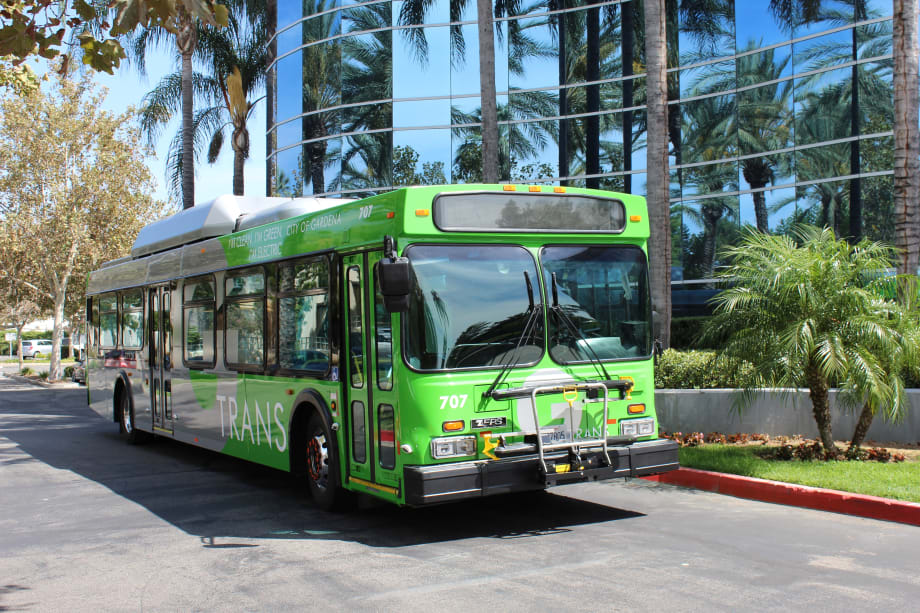
With global fuel prices soaring in recent months, composites can provide bus operators with much-needed savings by providing improved integrated design possibilities and reducing lifetime maintenance costs.
by Patrick Loock
December 27, 2023
Composite profiles, in this case fiberglass, can be integrated in most sections of a bus or coach where aluminum profiles are usually found.
Photo: CCW
3 min to read
Traditionally, bus and coach manufacturers favor using traditional materials like extruded aluminum profiles over composite profiles because of the lower upfront cost and force of habit.
However, with global fuel prices soaring in recent months, composites can provide bus operators with much-needed savings by providing improved integrated design possibilities and reducing lifetime maintenance costs.
Ad Loading...
Here, we will discuss the key benefits of using composite profiles in bus and coach manufacturing compared to aluminum profiles.
Using a Composite Profile in the Manufacturing Process
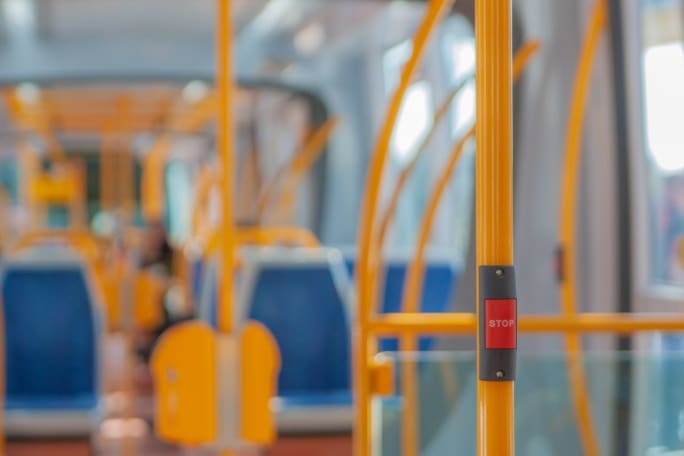
Composite profiles, in this case fiberglass, can be integrated in most sections of a bus or coach where aluminum profiles are usually found. This includes internal profiles, such as handrails, luggage supports, and air ducts, and external profiles, such as cant rails, skirts, and paneling.
Replacing traditional material profiles used in bus and coach manufacturing with composite profiles provides several key advantages, resulting in a reduced total cost of ownership for businesses, despite sometimes having a higher upfront cost.
Continuous manufacturing processes, such as pultrusion and pull-winding, are well suited for high-quality, high-volume production that is cost-effective for customers.
Photo: Pexels/Will Mu
Reducing Cost of Ownership for Businesses
Composites do not have the same maximum width issues as aluminum, meaning composite bus panels can be produced in one continuous profile as opposed to multiple narrower panels joined together to reach the same width.
Composite profiles can be up to 63 inches wide, while aluminum profiles are more limited in size. This means installation, replacement, and maintenance of composite panels is a faster, simpler, and a less labor-intensive process compared to using aluminum.
Ad Loading...
Composite profiles come with enhanced design flexibility options in terms of their profile geometry compared to traditional metal profiles. This allows manufacturers to produce a single complex profile that incorporates the functions of multiple traditional aluminum parts, resulting in a more elegant design that is simple to produce, requires less assembly work. and provides less opportunities for human error during installation.
Furthermore, composites also bring the additional benefit of being corrosion and rust resistant, meaning they can withstand pollution or salty road conditions unlike aluminum surfaces, which corrode over time and require regular maintenance.
Fiberglass composite profiles are also significantly lighter in weight than comparative metal profiles, which means buses and coaches fitted with composite parts have an opportunity to increase fuel efficiency and, thus, lower carbon emissions.
The weight saving is particularly beneficial after recent increases in global fuel prices, particularly for diesel, as this leads to increased fuel efficiency and lower overall fuel costs for businesses. Furthermore, as the industry moves away from fossil fuels toward electrification, the weight savings will also support longer electrical autonomy in buses and coaches.
Replacing traditional material profiles used in bus and coach manufacturing with composite profiles provides several key advantages, resulting in a reduced total cost of ownership for businesses, despite sometimes having a higher upfront cost.
Photo: MCI
Using Continuous Manufacturing Processes
Continuous manufacturing processes, such as pultrusion and pull-winding, are well suited for high-quality, high-volume production that is cost-effective for customers. These processes enable manufacturers to provide large composite profiles that have consistent production quality batch-to-batch and are highly repeatable.
Ad Loading...
In the pultrusion process, strands of glass or carbon fibers, mats, and/or technical fabrics are pulled together; saturated with resin; and then pulled into guides that feed into a heated die to cure the composite in a process called thermosetting. The profile can then be cut to the desired length, which allows manufacturers to add additional reinforcement fibers to only one part of the profile where it is needed, so there is no wasted fibers or unnecessary additional weight.
All these advantages mean fiber reinforced composites could hold the key for forward-thinking bus and coach manufacturers looking to construct lighter, more efficient vehicle bodies that offer long service lives and reduce ongoing maintenance costs.
About the Author:Patrick Loock is segment business owner for transportation at Exel Composites
The agency is seeking manufacturers for 650 new CNG buses to replace aging vehicles, improve reliability, and advance its broader fleet modernization strategy.
John Hroncich discusses BAE Systems’ modular and scalable approach, lessons learned from decades of real-world operations, and how agencies can identify electrification strategies that fit their fleets.
LA Metro’s Obed Mejia discusses technician training, evolving maintenance technology, fleet replacement, and strategies for getting the most out of today’s transit fleets.
In METRO's latest installment, we take a look at recent news from Siemens, Prevost, Dodge, and more partnerships making headlines across the transportation sector.
In this edition, we also cover recent appointments and announcements at Pace, CamTran, MCI, and more, showcasing the individuals helping to shape the future of transportation.
Transit leaders and policymakers examine how standardized bus designs, streamlined procurement, and predictable funding could help agencies stretch budgets and deliver better service.
As chair of APTA’s Business Members Board of Governors, Ray Melleady explains how more than 850 business members are partnering with transit agencies to advance funding, innovation, and industry-wide collaboration.
Bus Business Consultants founder Brian Dickson shares lessons on leadership, organizational health, and creating options for long-term success in a changing transportation industry.
The award-winning partnership combines AI-powered detection with human oversight to improve bus reliability, accessibility, and enforcement efficiency.