



Why Transit Leaders Require Better Tools for Operational Clarity In Today’s Tech-Fragmented Environment
Across North America and beyond, transit agency officials are contending with a perfect storm of operational headaches and strategic challenges that hamper daily service and long-term progress.

According to sector-wide reports, agencies without modern real-time monitoring tools face moderate financial losses (48% of agencies surveyed) and, for 20%, significant economic impacts.
Photo: METRO
- Transit leaders face a mix of operational and strategic challenges that affect daily services and hinder long-term development.
- The complexity of the current tech landscape contributes to these challenges, creating a fragmented operational environment.
- Improved tools are necessary for transit agencies to achieve greater operational clarity and efficiency.
*Summarized by AI
Across North America and beyond, transit agency officials are contending with a perfect storm of operational headaches and strategic challenges that hamper daily service and long-term progress.
Recent trends capture these struggles in the experiences of transit professionals, spotlighting the gaps in technology, data, and workforce capability that must be addressed if the sector is to truly modernize and deliver for communities in 2025 and beyond.
Frustrations with Existing Technology and Data Tools
In light of these trends, transit agencies are forced to navigate fragmented, unintuitive systems every day. Two-thirds of respondents described their system and operational dashboards as somewhere between “moderately user-friendly with frustrations” and “somewhat challenging.”
For most officials, these tools don't just provide a workforce inconvenience; they actively impede situational awareness, decision-making, and responsiveness on the ground.
The data shows the problems run deeper: 43% named the lack of real-time data accuracy and the need to merge information across platforms as their top frustration manually.
Every extra manual step for staff means slower reaction times, missed opportunities, and, in many cases, costly errors. Fragmentation further compounds the issue; 44% said information silos moderately restrict their visibility into operations, while nearly a third identified this fragmentation as a significant barrier to good management.
The result is a disconnect between what agency teams need (instant insight, fast action) and what their tools currently deliver.
Consequences: Lost Efficiency, Financial Strain, and Emergency Risks
These technology woes have direct, sometimes severe, consequences.
According to sector-wide reports, agencies without modern real-time monitoring tools face moderate financial losses (48% of agencies surveyed) and, for 20%, significant economic impacts. Without integrated visibility and automation, routine issues — like driver shortages or vehicle breakdowns — can trigger cascading delays, last-minute rerouting, fines, and burnout among both frontline staff and managers.
Emergency response is another critical area. More than half of respondents (58%) said that a connected, user-friendly dashboard would significantly enhance their ability to respond to emergencies. In public transit, where incidents can escalate rapidly, the difference between fragmented and unified information systems can determine the outcome for passengers and personnel alike.
Inefficient tools make everything more complicated: real-time shift adjustments, a top investment priority for agencies, have become essential not just for productivity but also for supporting mental health and reducing absenteeism.
Photo: METRO
Workforce Issues Compound the Pressure
Behind the data challenges lies a workforce under strain. Transit driver recruitment and retention is now the single greatest challenge for transit agencies, according to 49% of industry leaders. Agency staff are often stretched thin and must juggle scheduling, driver safety, well-being, and compensation disputes alongside operational pressures.
Inefficient tools make everything more complicated: real-time shift adjustments, a top investment priority for agencies, have become essential not just for productivity but also for supporting mental health and reducing absenteeism.
Safety also remains a significant theme. Not only are agencies investing in monitoring and in-cab safety technology, but regulatory requirements, such as advanced emergency braking and blind-spot detection, are raising the bar for operational oversight and, in turn, demanding better-integrated tech platforms.
The Call for Change: What Agencies Want
This data strips away the idea that frustration is acceptable or inevitable. A clear majority of 53% were “very likely” to consider new solutions if they offered more straightforward, more accessible ways to share and act on data.
The appetite for change is no longer talk; it’s driving agencies to explore connected platforms that streamline workflows, unite multiple functions, and deliver actionable intelligence instantly.
Sector-wide, real-time monitoring now ranks as the top investment priority. Agencies are actively planning upgrades, but they want more than dashboards — they want solutions with real staying power: cloud-based, easy to implement, compatible with existing infrastructure, and scalable as needs grow.
Building a Solution: The Modern Agency Platform
The benchmarks for a new era of agency tools are clear: One connected platform is required. Transit, public safety, and public works functions must be integrated to eliminate redundancies, break down information silos, and put actionable data at every staff member’s fingertips.
An effective dashboard prioritizes the user: clean interfaces, clear menus, and intuitive map views reduce training time and minimize costly mistakes.
Real-time reporting is now considered foundational. With live tracking and instant event logging, agencies transform how they manage routes, prioritize incidents, and optimize resource allocation. These improvements mean less manual work, fewer missed signals, and faster deployment when community needs spike, whether for major emergencies, winter storms, or routine service issues.
More importantly, solutions today must respect existing investments. Cloud-based systems and open integration with legacy infrastructure mean agencies do not have to upend current operations to modernize. They can phase in new features, start with transit operations, and expand to emergency vehicles or municipal works as needs evolve, without significant capital outlays or disruptive hardware installs.
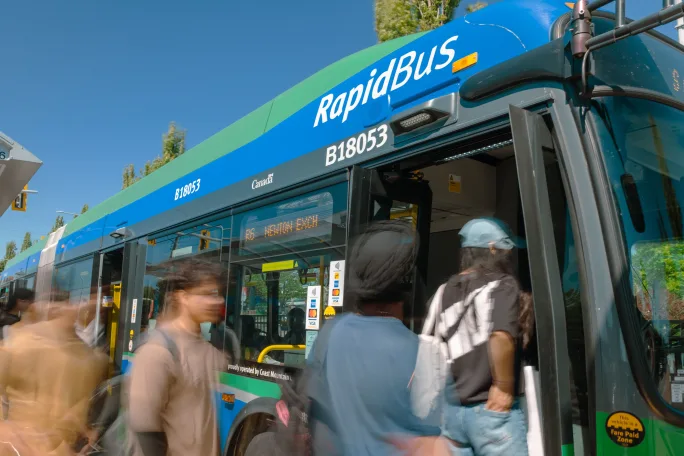
Transit agencies are forced to navigate fragmented, unintuitive systems every day.
Photo: TransLink
Looking Ahead: Opportunity Born from Frustration
For transit agencies, 2025 is the year when operational clarity and user-first design move from an industry wish list to necessity.
Recent trends serve as a wake-up call, showing that staff and leaders are no longer willing to accept fragmented, outdated systems that obstruct progress and undermine public service.
The opportunity ahead is to build solutions that connect, clarify, and empower — where technology becomes a transparent, unified extension of the work agencies do every day for their communities.
Ridership growth and even expanded funding opportunities depend on agencies that can leverage this type of forward-looking operation.
Quick Answers
Transit leaders are dealing with a convergence of operational and strategic challenges that impact both daily service and long-term planning.
*Summarized by AI
More Blog Posts
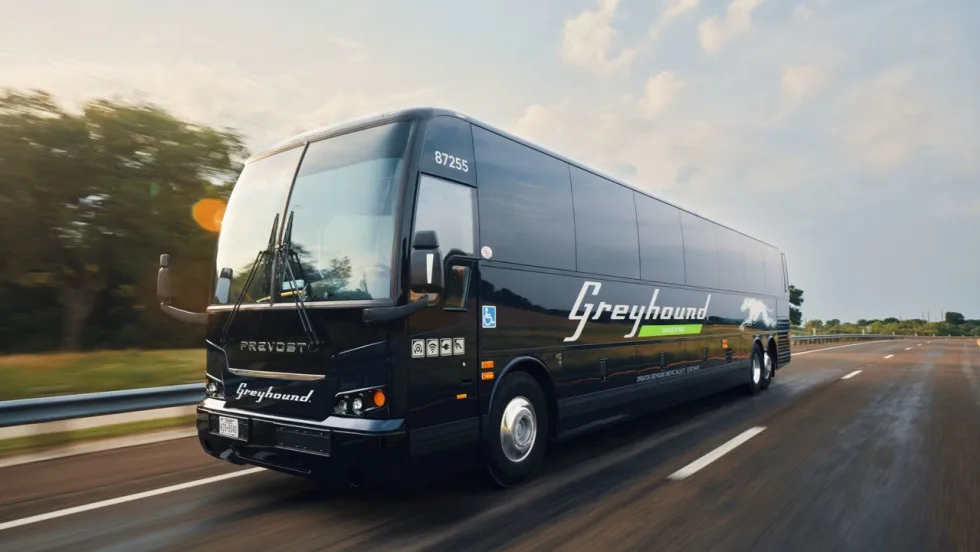
Five Years Later: What’s Changed at Greyhound
Five years after Flix acquired it, Greyhound reflects on fleet modernization, operational improvements, employee empowerment, and a renewed focus on customer experience.
Read More →
Building a Winning FTA Grant Proposal: Why Propane Autogas is the Pragmatic Choice for Fleet Resilience
With $610 million available through the FY 2026 Buses and Bus Facilities Competitive Program and the Low or No Emission Grant Program, agencies must build a compelling case before the September 21 deadline that balances environmental compliance with operational feasibility.
Read More →
Velo-city Conference 2026: Latest Trends in Cycling as Part of Urban Mobility
The global cycling conference highlighted how cities are integrating bicycles into multimodal transportation networks, expanding cycle tourism and reshaping urban mobility.
Read More →
Kindness Isn’t Soft...It’s Strategic.
Mike Bismeyer — often known as “The Kindness Guy” — has spent more than 17 years in public transit and mobility, serving in industry leadership roles, speaking across North America, and advocating for stronger workplace cultures. But his message doesn’t come from theory. It comes from lived experience.
Read More →
Inside ITF 2026: Transport Reacts to A Challenging World
Transport leaders from around the world gathered in Leipzig, Germany, for the 2026 International Transport Forum to discuss resilience, climate impacts, supply chains and the future of sustainable mobility.
Read More →
Every Ride Tells a Story — But You’re Not Just Selling the Ride
You’re selling the moment, the meaning, and the emotion behind it.
Read More →
How Digital Signage is Reshaping the Traveler Experience at Transportation Hubs
What was once a landscape of static signs has evolved into a responsive, immersive environment powered by real-time visual communication.
Read More →
Latest Trends in Urban Mobility from Polis Conference 2025
Polis comprises cities and regions, as well as corporate partners, from across Europe, promoting the development and implementation of sustainable mobility. This year’s event had over a thousand attendees across various policy forums and an exhibition.
Read More →
The Powerless Brokers: Why California Can’t Build Transit
It is no secret that transit in the U.S. is slow and expensive to build.
Read More →
Why Transport Sustainability Should Focus on People Instead of Cars
Simply incentivizing electrification is not enough to make a meaningful impact; we must shift our focus toward prioritizing public transportation and infrastructure.
Read More →