



California high-speed rail line would reduce congestion, boost economy, study says
Report by the California High-Speed Rail Authority outlines the advantages.

A new environmental impact report states that a high-speed rail linking California’s major cities would be less expensive and more environmentally friendly than building out highways and airports. According to the 2,000-page document released Jan. 27 by the California High-Speed Rail Authority (CHSRA), as many as 68 million riders would use high-speed trains by 2020, significantly reducing congested freeways, improving air quality and boosting the state’s economy. The report compares the 700-mile network option with two other scenarios. Under the first scenario, the state would only complete or build already approved transportation projects. The second one would opt for building more highways and airport gates at a cost of nearly $82 billion. “The basic conclusion of this report is that the high-speed train is the best solution for California’s intercity travel needs,” CHSRA Executive Director Mehdi Morshed stated in a Los Angeles Times article. The network would eventually link San Francisco, Sacramento, Fresno, Los Angeles and San Diego with trains reaching speeds up to 220 mph. At an estimated cost as high as $37 billion, the system is half as expensive as adding 2,970 miles of new highway lanes, nearly 60 airport gates and five runways. However, the cost of the project has risen since 1999, when the high-speed rail authority estimated the bullet-train network at $25 billion. The first leg of the route from Los Angeles to San Francisco could be funded through a $9.95 billion bond on the November ballot. But considering the state’s budget deficit, Governor Arnold Schwarzenegger proposed to postpone the bond measure until 2006.
More Management
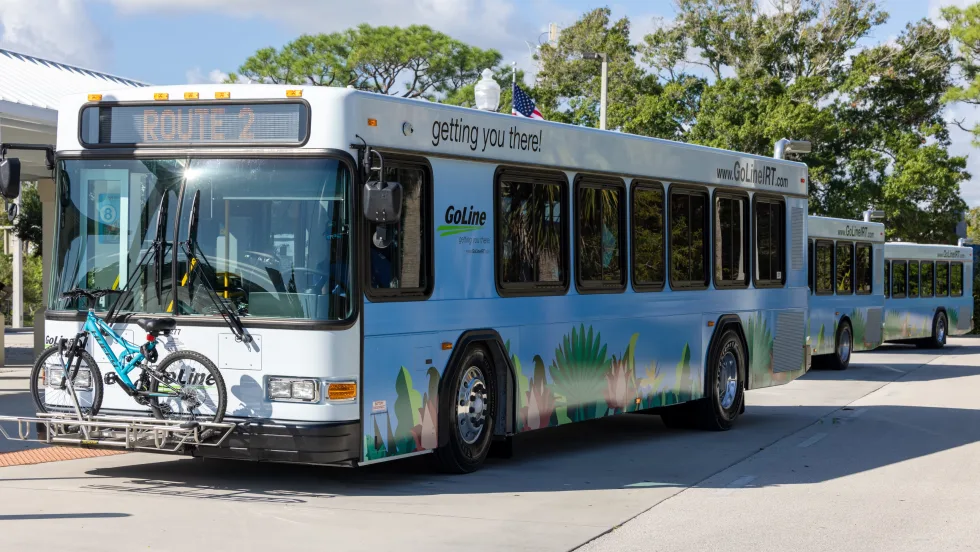
Indian River Transit’s Community-Focused Approach Earns National Recognition
Named APTA’s 2026 Outstanding Public Transportation System in its size category, Florida’s Indian River County transit system continues to grow ridership through fare-free service and a focus on evolving community needs.
Read More →
ENC Lands MATA Contract and More in Biz Briefs
In this edition of Biz Briefs, we spotlight the latest developments shaping the future of mobility.
Read More →
From Surviving to Thriving: Building Stronger Transportation Organizations
Bus Business Consultants founder Brian Dickson shares lessons on leadership, organizational health, and creating options for long-term success in a changing transportation industry.
Read More →

Everett Transit, Community Transit Outline Consolidation Agreement
The proposed agreement calls for a 50% increase in bus service in Everett, a new microtransit zone, continued paratransit service, and the transfer of Everett Transit operations to Community Transit.
Read More →
Strada360’s Steve Lassey on Turning Transit Data Into Better Decisions
From breaking down data silos to preparing for AI, Strada360 CEO Steve Lassey discusses how transit agencies can use technology to improve operations, customer information, and long-term decision-making.
Read More →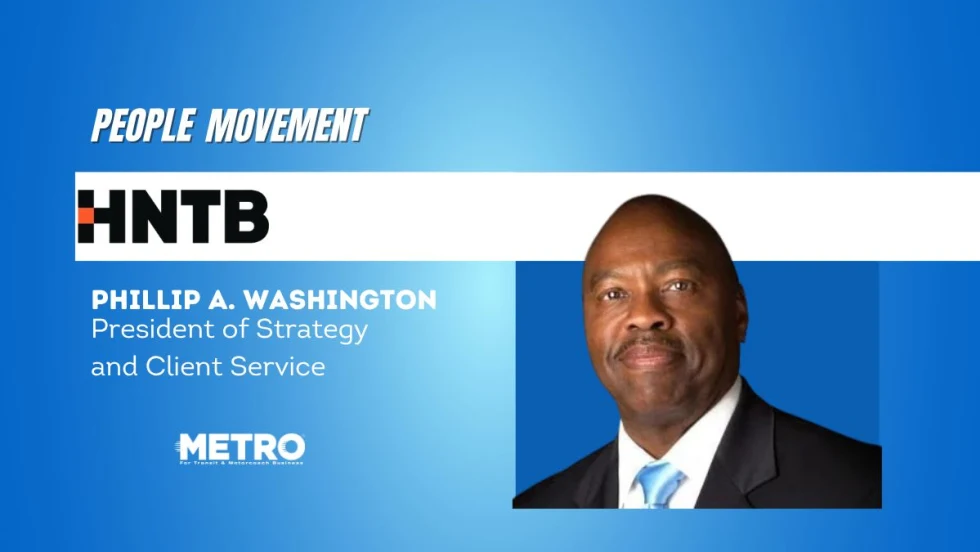
People Movement: Phil Washington Joins HNTB, Denver RTD Launches CEO Search, and More
In this edition, we also spotlight recent personnel moves at STV, the Eno Center for Transportation, and more, highlighting the people taking on new roles across the transportation industry.
Read More →
SEPTA Details Accelerate Vision for Transit System
The plan outlines investments in trolley modernization, new Metro and Regional Rail vehicles, accessible stations, and more frequent bus and rail service.
Read More →
FTA Ends Direct Oversight of MBTA Safety Actions
The federal agency closed its remaining special directive to the Massachusetts Department of Public Utilities following a safety review that began in 2022.
Read More →
Report: Transit Bus Manufacturing Supports 34,100 Jobs, $5.1B in GDP
The “Buses Mean Business” report examines the transit bus manufacturing industry’s economic footprint, supply chain, and rising demand for vehicle replacements.
Read More →
LIT Marks 10-Year Milestone at Annual Summit
Hosted by the COTA from September 10 to 13, the Summit carried the theme “Celebrating 10 Years of Excellence, Leadership, and Impact,” with every part of the program honoring the people, agencies, and partners who built LIT over its first decade.
Read More →