



California's high-speed dream
A look at the potential high-speed rail system that is set to be on the November 2008 ballot.
The aspirations of America’s most populous and prosperous state could yet again be a bellwether for the rest of the country in the next two elections. November 2008 is the ballot target date for the California High Speed Rail Authority’s key referendum on funding. If it’s successful, the state will have the nation’s first world-class high-speed rail network. It will also provide a major boost to urban rail projects in California.
Some might be too quick to dismiss these ambitions as another dream in a land of dreamers. After all, Californians, like Texans and Floridians, have had high-speed rail studies since back in the late 1970s. Yet as will be pointed out below, the California approach might hold lessons for other high-speed aspirants.
The authority has already received environmental clearance at a project level for its network, the first for a high-speed rail system in the U.S. Recently, it named its program management team, and has begun the first of the next four phases, getting ready for preliminary engineering and further environmental approval for each of the six regional segments of the 700-mile statewide network.
Firsts for U.S., if successful
True, the Northeast Corridor was the first application of high-speed rail in the U.S., but the California project would be the first “very high-speed” system, like those of Spain, France, Germany and Japan, among others. The system will have a top commercial speed of 220 mph, serving the major metropolitan centers of the San Francisco Bay Area, Sacramento, Los Angeles and San Diego, as well as points in between. Studies have estimated that the system could carry as many as 68 million passengers each year by 2020.
The plan is based on proven high-speed steel wheel/steel rail technology long in use in Asia and Europe without serious accident (the recent accident in Germany was a maglev test train), even in earthquake-prone Japan, Taiwan and Korea. To achieve these speeds, the lines would operate on a mostly dedicated, fully grade-separated track with security fencing, surveillance systems and intrusion detection.
Because the program will provide a level of rail service technology not yet available in the U.S., many components of the project will require departures from existing American standards. Moreover, the project will incorporate international rolling stock, control systems, special structural design techniques and project delivery techniques that will need the approval of state and federal regulators. Last, but perhaps most difficult, the authority will need voter approval for a $10 billion bond issue that helps fund the project price tag, which could run as much as $40 billion over the next three decades.
Officials know these are huge challenges and that key to sustaining and building the political support needed for a successful bond measure two years from now will be racking up progress that shows immediate benefits. Like urban rail projects, future build-outs are politically more feasible when the first segments are successful.
Accordingly, the authority plans to make immediate alignment upgrades that will benefit existing commuter and inter-city rail service to improve safety and relieve corridor congestion through signaling and other improvements. Then, the project will work with local authorities again to upgrade electrification of existing commuter and inter-city rail service to improve air quality, increase speed and also to be compatible with full 220 mph high-speed service.
By deploying an implementation strategy that uses the experience of similar programs around the world — successes as well as mistakes — the California authority hopes to minimize project and political risk while showing measurable progress. The plan calls for environmental “records of decision” on all six of the regional segments of the system by the end of 2009. And because work will be performed concurrently throughout the state, some segments will likely be completed earlier than others. Immediately after the November 2008 bond referendum is passed, the authority will be ready to go with several “early construction packages” on segments that received earlier environmental clearance.
Thus, in this way, California’s high-speed program will be not only a triumph of fast technology but a lesson in fast-tracking complex projects with regional synergies. It will build incrementally the political buy-in as it constructs the system.
More Rail
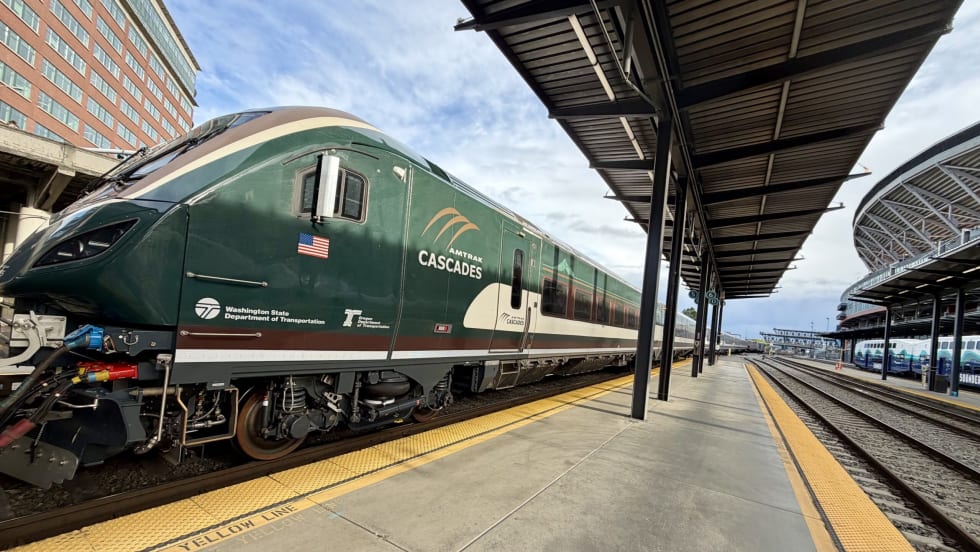
FRA Announces $5.3B in Rail Investments, Including $2B for Amtrak
Funding will support grade-crossing improvements, infrastructure upgrades, and new Amtrak equipment in 23 states.
Read More →
Finding the ‘Happy Medium’: Optimizing Maintenance Without Sacrificing Reliability
The key to maintenance optimization isn’t doing less work—it’s doing the right work at the right time on the right assets.
Read More →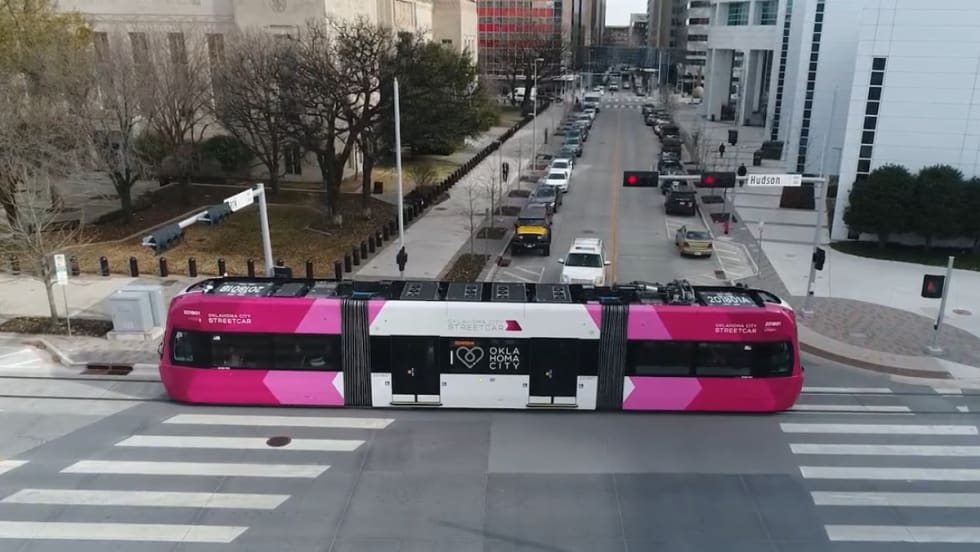
OKC Streetcar Makes Zero-Fare Service Permanent
Ridership increased an average of 71% compared with the same period a year earlier during the fare-free pilot.
Read More →
DART Customer Satisfaction Reaches Six-Year High
Overall satisfaction rose to 74.9%, while the agency’s Net Promoter Score reached a record 33.7.
Read More →
How DART's GoPass Is Redefining Regional Mobility
Serving 14 transit agencies, GoPass simplifies multimodal travel by allowing riders to plan, pay for, and manage an entire trip through one app.
Read More →
Amtrak Board Advances Plan to Restructure Organization, Seeks Public Input
The proposal, developed by Amtrak management and approved by the board for further consideration, is intended to modernize the organization's structure while improving accountability, operational efficiency, and customer service.
Read More →
Biz Briefs: STV teams with Amtrak, Motorcoach Operators Boost Fleet and Land Contracts, and More
From manufacturers and suppliers to transit agencies and motorcoach operators, these updates offer a snapshot of the projects, partnerships and business moves driving the industry forward.
Read More →
Metra Celebrates 100 Years of Electric Rail, Looks to the Future
The event was also a celebration of recent reforms to public transportation in the Chicago area, changes that could be as transformative in the future as the major civic achievement a century ago, said officials.
Read More →
LA Metro Marks Banner Year, Sets Ambitious Goals for New Fiscal Year
Incoming LA Metro Board Chair and Los Angeles Mayor Karen Bass joined outgoing Board Chair Fernando Dutra and LA Metro CEO Stephanie Wiggins to review accomplishments from fiscal year 2026, which included the opening of new rail extensions, advancement of major transit projects, expanded safety programs, and new rider amenities.
Read More →
DART Taps Nathaniel P. Ford Sr. as Next President/CEO
Since 2012, Ford has served as the CEO of the Jacksonville Transportation Authority
Read More →