



Central Arkansas weathers recession with budgeting, stimulus funding
Using $5.4 million in stimulus funding it received, the Central Arkansas Transit system purchased four paratransit vehicles and eight fixed-route buses. As a result, Executive Director Betty Wineland said that for the first time in more than 33 years, the agency will have no buses in its fleet that exceed the recommended 12-year retirement age.
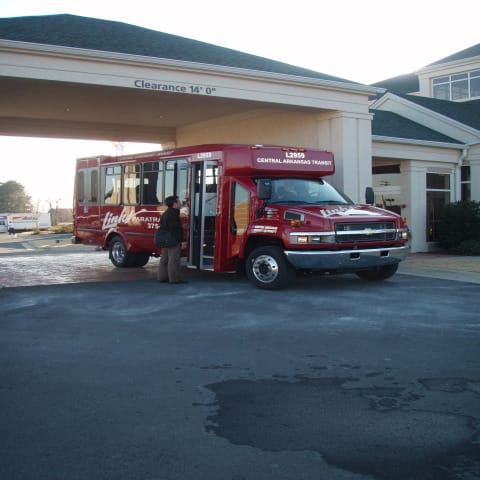
[IMAGE]cat-1.jpg[/IMAGE]Central Arkansas Transit (CAT), which provides fixed route, paratransit and streetcar transportation services to Little Rock and surrounding areas in Pulaski County, is weathering the economic recession with practical budgeting and stimulus funding.
Although the recession has impacted CAT's financial picture for 2010, Executive Director Betty Wineland said the agency has not allowed budgetary concerns to affect paratransit services with reductions in service. "In fact, we have added [operators] at times when we had to cut other bus service," she said. "In our 2010 budget, we are using some money out of reserves to keep our fixed routes intact until the local governments that actually subsidize our operations are able to get through this crisis. So many cities, counties and the state are seeing a decrease in sales tax revenue."
With the $5.4 million in stimulus funding the agency received, Wineland said four paratransit vehicles and eight fixed route buses were purchased. "For the first time in more than 33 years, we will have no buses in our fleet that exceed the recommended 12-year retirement age, and that's a real plus for us," she added.
In addition, plans are in the works to build a platform stop for the downtown streetcar line, and the agency will also use stimulus funds to purchase new fareboxes. "Without dedicated funding, we do play catch-up," Wineland said. "Our technology has not reached the level we'd like it to be; in fact, we're hoping with our new fareboxes that we'll be able to sell day passes both off the streetcars and fixed routes buses for the first time and that will help with convenience to our customers."
CAT operates 47 vehicles in peak hour service, and ridership averages at 9,000 on weekdays, Wineland said. The 3.4-mile River Rail electric streetcar line has been in operation for five years and connects passengers to museums, restaurants and the Clinton Presidential Library in downtown Little Rock, as well as the Verizon Arena in North Little Rock.
CAT's Links Paratransit service provides curb-to-curb transportation according to ADA requirements using ElDorado National Aero Elite cutaway vehicles that are equipped with mobile data terminals.
The 19,500 GVWR vehicles feature a Chevrolet 5500 chassis, 6.6 Duramax diesel engine and Allison transmission, and are set up for seven wheelchair stations with fold-away seats. In addition, the vehicles feature a raised floor, stainless steel door frames, LED lights, and the Hawkeye rear bumper backing assistance system.
Links provides 72,000 trips annually, Wineland said, at $5.40 for a round-trip ticket. Once eligibility has been established, customers can reserve a ride by phone, and trip scheduling is handled in the agency's office through a computerized system. CATS employs 22 paratransit operators and has plans to hire two more. "We're hoping with the new operators that it's going to help us because, as many other transit systems do, particularly those without dedicated funding, we have to struggle to meet the demand," Wineland said.
"We count a lot on being able to provide good customer service," she added. "Where we may lack frequency or broader coverage on our fixed-route service, if you are within our service area, we want to make sure you get quality service and that's what we try to do."
More Paratransit

Biz Briefs: RIPTA Unveils New Frontrunners, Clevland RTA Adds New Siemens, and More
In METRO's latest installment, we take a look at recent news from Siemens, Prevost, Dodge, and more partnerships making headlines across the transportation sector.
Read More →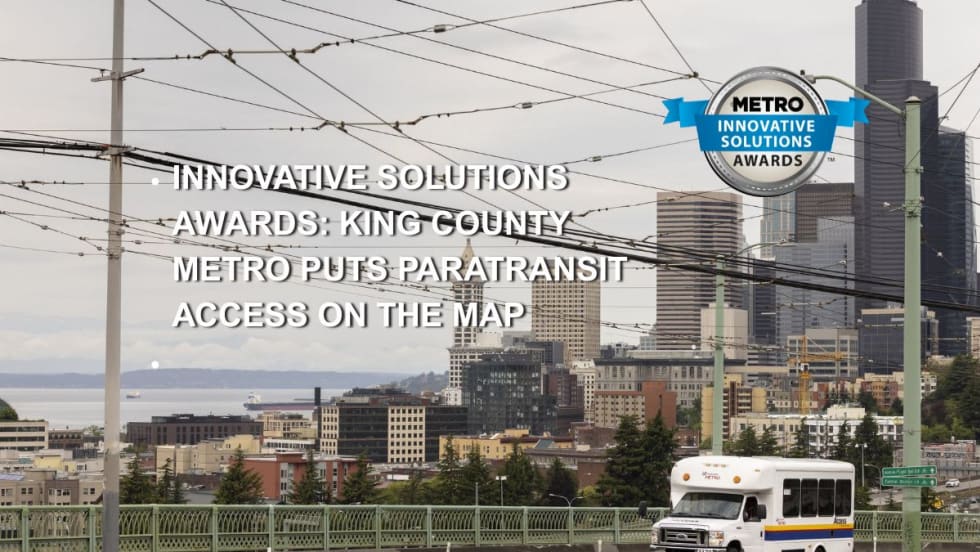
King County Metro Makes ADA Paratransit Easier to Navigate
METRO's Innovative Solutions Award winner replaces complex service-area descriptions with an accessible, interactive map that puts paratransit information directly in customers’ hands.
Read More →
Jacksonville’s NAVI Project Charts a New Course for Autonomous Public Transportation
Through its NAVI program, JTA is showing how autonomous vehicles, intelligent infrastructure, and coordinated operations can work together to deliver everyday public transportation.
Read More →
Driving Smarter Paratransit
John Hanlon shares how AlphaRoute is leveraging AI-powered technology to help paratransit providers optimize operations, support frontline staff, and enhance the rider experience.
Read More →
METRO Magazine Announces 2026 Innovative Solutions Awards Winners
Projects Recognized for Advancing Mobility Through Technology, Accessibility, Workforce Innovation, and Operational Excellence
Read More →
Biz Briefs: STV teams with Amtrak, Motorcoach Operators Boost Fleet and Land Contracts, and More
From manufacturers and suppliers to transit agencies and motorcoach operators, these updates offer a snapshot of the projects, partnerships and business moves driving the industry forward.
Read More →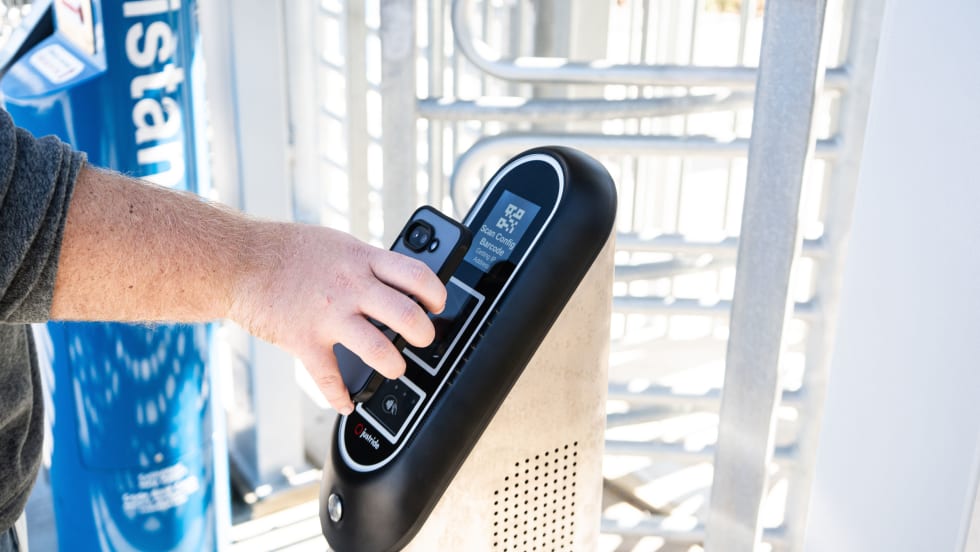
Biz Briefs: Masabi Teams with St. Louis Metro and More
In METRO's latest installment, we take a look at recent news from Transdev, Hitachi, and more partnerships making headlines across the transportation sector.
Read More →
New York MTA Leverages Zoning Program to Advance Station Accessibility
Accessibility enhancements at Nevins St Station will be financed through a development agreement tied to the MTA's Zoning for Accessibility initiative.
Read More →
Reinventing Fleet Maintenance with Real-time Visibility and AI
Transit leaders need to know what needs fixing, where to look, who is responsible, when work is completed, and what it costs without having to chase information across disconnected systems.
Read More →
SamTrans Sets Priorities for Potential Connect Bay Area Revenue
The board-approved framework allocates future funding to maintaining service, rider improvements, equity initiatives, and infrastructure repairs.
Read More →