



Central Florida holds emergency preparedness workshop
The tragic earthquake in Haiti last January was still fresh in the minds of those who attended the Connecting Communities emergency preparedness workshop in Orlando, Fla.
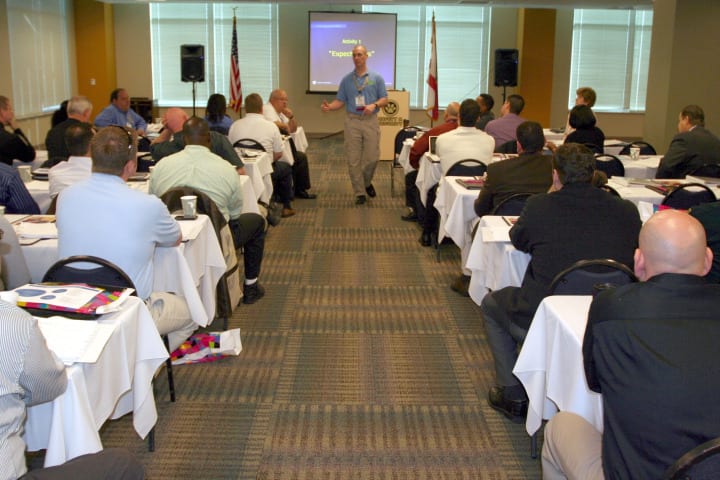
[IMAGE]LYNX-1.jpg[/IMAGE]With the tragic earthquake in Haiti fresh in many minds, Central Florida Emergency Management agencies got together recently to discuss best practices for emergency disasters.
The Connecting Communities Public Transportation Emergency Preparedness Workshop was facilitated by New Jersey's Rutgers University and hosted by the Central Florida Regional Transportation Authority (LYNX) in conjunction with the Federal Transit Administration (FTA), which funds the national program.
"There was a sign in the room that said an emergency is a bad time to exchange business cards, and that really is true," said Matt Friedman, manager, media relations, for LYNX.
The two-day workshop uses a combination of presentations, facilitators, interactive group discussions and scenario-based activities so those in the emergency services and emergency management sectors gain a better understanding of what public transit and transportation entities can bring to the table during a natural disaster, such as an earthquake, hurricane or flood.
"We're not going in there to help them fill in all the blanks in two days," said one of the facilitators of the workshop Chris Kozub, associate director, Rutgers University. "We are there to try to help them to understand what the blanks should be, and then how to identify who to work with to get those filled in to move toward having a plan that is workable and functional in a time of crisis."
To gain that better understanding, the Connecting Communities workshops bring together local participants from various agencies including sheriff's offices, police, firefighters, emergency management, public schools, colleges, emergency response organizations and theme parks.
The workshops are held about 10 to 12 times a year around the nation, Kozub said. In three years, Rutgers University facilitators have held close to 30 such workshops in various parts of the U.S., from dense urban centers to smaller rural areas.
The course is based on the framework of the National Incident Management System (NIMS), which emphasizes the four phases of the Emergency Management Process: response, recover, mitigation/prevention, and preparedness.
"If you're not prepared, you're going to have horrible response and recovery times, and being prepared helps you prevent incidents or incidents within those incidents," said Friedman. "You can't necessarily plan for a hurricane, but you can know how you are going to react when one hits."
During the Haiti relief efforts, Orlando became an important hub for various entities, including the military and various social services organizations.
"To this point, there have been more than 80 flights that have landed and 7,500-plus people, and we work with these folks to assist people at a time of need," Friedman said. "A key point of the workshop is that you have to be able to help people in a disaster, whether they are in your community or not, as well as be able to carry on your day-to-day operations."
To conduct a workshop in their area, transit systems can either request one through the FTA, which tries to select applicants based on several criteria including size and region, or apply for a grant through the Transportation Security Administration.
"Continually, we have found that anybody who is leaving these sessions has really found it valuable," said Kozub. "Some of that has to do with us not trying to go in there and tell them what to do, but instead teaching the necessary questions to ask when making an emergency plan."
More Bus

New York MTA Plans Largest Bus Fleet Upgrade in More Than a Decade
The agency is seeking manufacturers for 650 new CNG buses to replace aging vehicles, improve reliability, and advance its broader fleet modernization strategy.
Read More →
Building a Flexible Path to Transit Electrification
John Hroncich discusses BAE Systems’ modular and scalable approach, lessons learned from decades of real-world operations, and how agencies can identify electrification strategies that fit their fleets.
Read More →
Bus Tech Talk: Keeping Transit Technicians Ahead of the Technology Curve
LA Metro’s Obed Mejia discusses technician training, evolving maintenance technology, fleet replacement, and strategies for getting the most out of today’s transit fleets.
Read More →
Biz Briefs: RIPTA Unveils New Frontrunners, Clevland RTA Adds New Siemens, and More
In METRO's latest installment, we take a look at recent news from Siemens, Prevost, Dodge, and more partnerships making headlines across the transportation sector.
Read More →
People Movement: Holly Arnold Joins Transdev and More
In this edition, we also cover recent appointments and announcements at Pace, CamTran, MCI, and more, showcasing the individuals helping to shape the future of transportation.
Read More →
The High Cost of Transit Buses: Industry Leaders Look to Procurement Reform
Transit leaders and policymakers examine how standardized bus designs, streamlined procurement, and predictable funding could help agencies stretch budgets and deliver better service.
Read More →
The Business Voice Behind Public Transportation
As chair of APTA’s Business Members Board of Governors, Ray Melleady explains how more than 850 business members are partnering with transit agencies to advance funding, innovation, and industry-wide collaboration.
Read More →
From Surviving to Thriving: Building Stronger Transportation Organizations
Bus Business Consultants founder Brian Dickson shares lessons on leadership, organizational health, and creating options for long-term success in a changing transportation industry.
Read More →
Finding the ‘Happy Medium’: Optimizing Maintenance Without Sacrificing Reliability
The key to maintenance optimization isn’t doing less work—it’s doing the right work at the right time on the right assets.
Read More →
LA Metro, City of West Hollywood, and Partners Advance Smarter Bus Lane Enforcement
The award-winning partnership combines AI-powered detection with human oversight to improve bus reliability, accessibility, and enforcement efficiency.
Read More →