



Controversial London rail, bus master plan still up in air
The fate of the proposed integrated transport strategy for metropolitan London remains undecided as officials await the outcome of an important court case and the mayor's final strategic plan.

The fate of the proposed integrated transport strategy for metropolitan London remains undecided as officials await the outcome of an important court case and the mayor's final strategic plan. Both are due later this summer -- and both were overdue at press time. Meanwhile, some aspects of the strategy dealing with buses are being implemented unchallenged --so far. The initial court date of the London regional government's challenge to the British government's Public Private Partnership (PPP) plan for substantial increases in private investment in the London Underground was postponed to July. Both sides in the dispute agreed that London Transport Commissioner Bob Kiley needed more time to negotiate with PPP bidders. "If those negotiations do not succeed in modifying the PPP to accommodate the requirements which Mr. Kiley has advised are essential for safety and efficiency, then we remain committed to challenging the [whole] PPP [plan] in court," warned Ken Livingstone, mayor of London and chairman of the board of Transport for London (TfL), the regional body responsible for setting and implementing transport policy for the capital. The basis of Kiley's and Livingstone's legal case is that the PPP as currently conceived is unlawful as it is in conflict with the mayor's Transport Strategy, which by law is to set the integrated framework for transport in London. However, the strategy has not been finalized, so the central government has been prodding Livingstone and TfL with threats of various fiscal and legal sanctions in order to force them to implement the PPP. Livingstone has said that improving the quality of public transport in London and reducing congestion is one of his 10 highest priorities. He said that progress on those objectives will be monitored formally in his annual reports, the first of which was issued in June. In it, he put in the "already achieved" category the appointment of former New York City Transit head Kiley as commissioner for transport; secured a three-year $5 billion funding package for spending; and froze bus fares and tube fares in real terms. Bus passengers have enjoyed nearly $10 million in fare savings from reforms launched in late May. Single journey bus fares have been cut from £1 ($1.40) to just 65p (90 cents) with the introduction of a new pack of six Saver tickets. And for the first time, a one-day bus pass offers travel across the whole of London for only £2 ($2.80). TfL is also planning a series of service improvements for later this year designed to improve the reliability of bus services and increase bus ridership. However, officials in the Greater London Assembly, the legislative body recently reconstituted for local issues such as transport, has called the mayor's bus policy "all show and no go." Those officials released a comprehensive report criticizing TfL's management and calling on it to step up improvements, including: better enforcement of bus lanes and extending their hours of operation, increased ticket sales facilities, improved pay and conditions for bus staff to encourage recruitment and retention and more express bus and limited stop services. The report also strongly criticized the mayor's draft Transport Strategy as lacking measurable targets and not providing a coherent vision for the whole of London. In response, Peter Hendy, who runs TfL's London Buses, came up with a 31 point action plan to overhaul services, giving TfL a greater role to play in setting higher quality standards for bus services. "Light rail and tram systems are constantly promoted as high status and reliable and there is a clear challenge to bus service providers to show that they can do the same. They are committed to this, but the mayor has missed a real opportunity to transform the perception and status of bus services in London. It's all very well recruiting bus conductors and posing for photo-opportunities, but there are greater priorities on which the mayor should be focusing his attention," said John Biggs, the assemblyÕs chair of the bus priorities issues investigative committee. Transport in the British capital is an extremely important and contentious issue to residents. According to an opinion survey of 2,000 Londoners conducted by the British polling organization MORI, transport is second only to tackling crime as a priority for London. Livingstone said: "These results show London wants strong action to tackle the transport crisis. In particular there is massive support for my plans for unified management of the Underground. Londoners have also backed my proposal for a congestion charge zone in central London." Eighty percent of those polled support Livingstone's strategy for dealing with the Underground, which calls for more public-sector investment than prescribed in the British government's PPP. The MORI opinion poll also reveals that tackling traffic congestion is rated as the most important transport priority. Improving Underground services comes a close second and improving bus services third.
- Cliff Henke
More Management
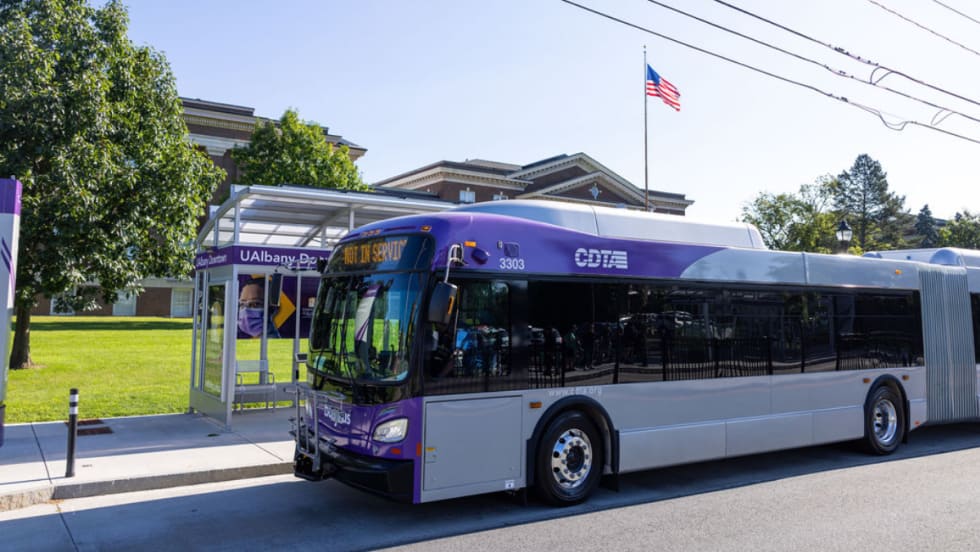
New York’s CDTA Service Rebalancing Boosts Productivity, On-Time Performance
Despite a slight dip in ridership, the agency’s FY2026 results show its service rebalancing strategy is helping the agency carry more riders per service hour while improving reliability.
Read More →
People Movement: ABC Names John Walsh as Chief Commercial Officer
In this edition, METRO also covers recent appointments and announcements at the DART, STV, and more, showcasing the individuals helping to shape the future of transportation.
Read More →
From Surviving to Thriving: Building Stronger Transportation Organizations
Bus Business Consultants founder Brian Dickson shares lessons on leadership, organizational health, and creating options for long-term success in a changing transportation industry.
Read More →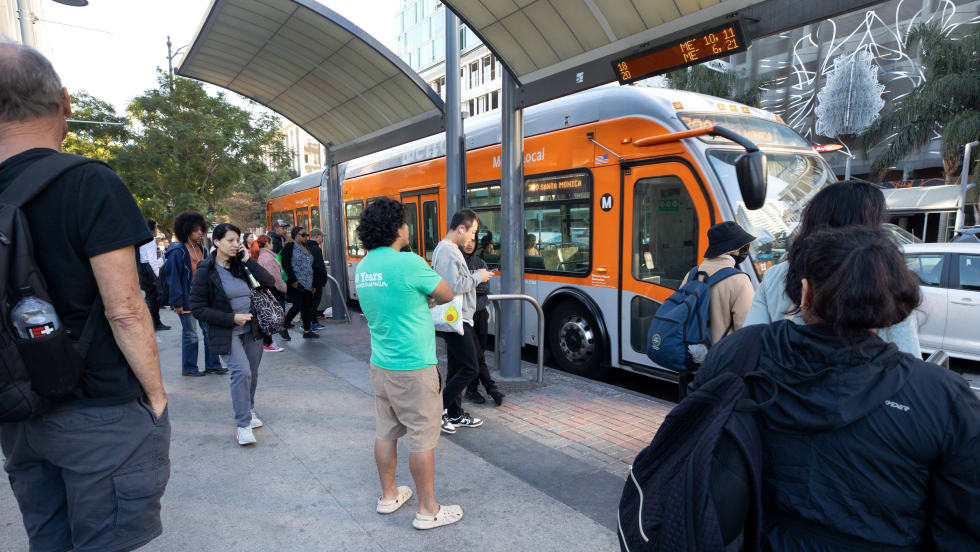
LA Metro Ridership Continues Growth as Rail Gains Accelerate
New rail connections and major events help drive continued ridership gains, with Metro recording its eighth consecutive month of year-over-year rail growth.
Read More →
TransDASH Summit Focuses on Measuring What Matters in Transit
Transit agencies unveil a national performance platform designed to benchmark customer experience, safety, community value, and other outcomes.
Read More →
Jacksonville’s NAVI Project Charts a New Course for Autonomous Public Transportation
Through its NAVI program, JTA is showing how autonomous vehicles, intelligent infrastructure, and coordinated operations can work together to deliver everyday public transportation.
Read More →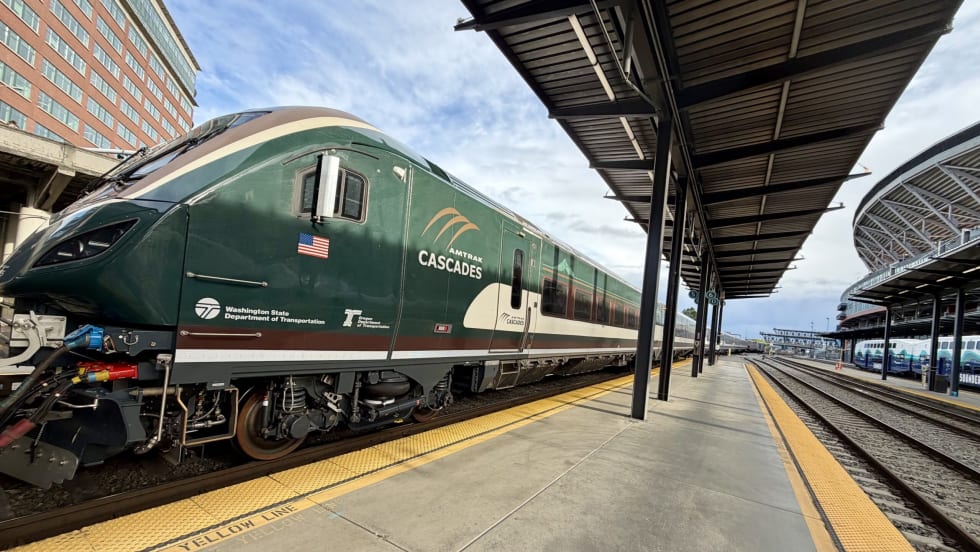
FRA Announces $5.3B in Rail Investments, Including $2B for Amtrak
Funding will support grade-crossing improvements, infrastructure upgrades, and new Amtrak equipment in 23 states.
Read More →
Finding the ‘Happy Medium’: Optimizing Maintenance Without Sacrificing Reliability
The key to maintenance optimization isn’t doing less work—it’s doing the right work at the right time on the right assets.
Read More →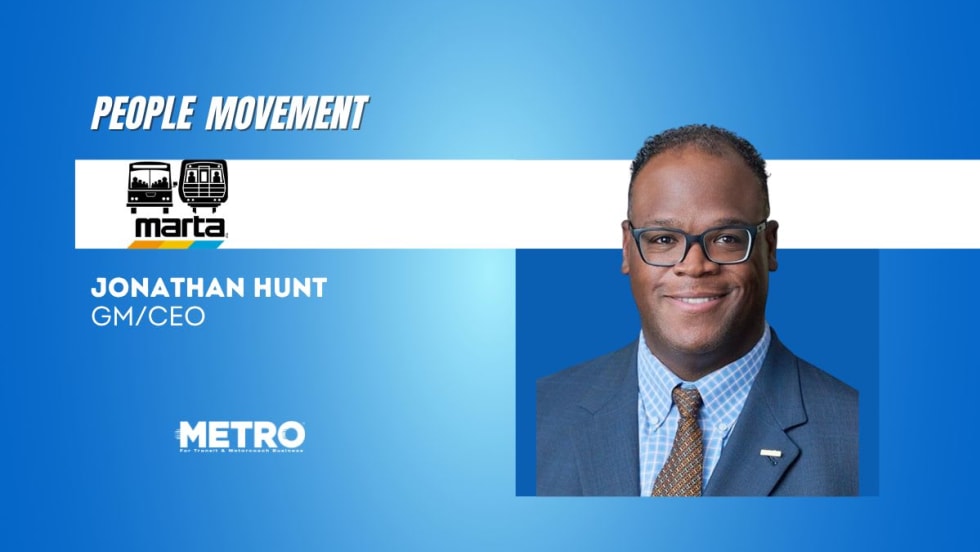
People Movement: MARTA Drops Interim Tag on GM/CEO Hunt and More
In this edition, METRO covers recent appointments and announcements at the FMCSA, HDR, SilverRide, and more, showcasing the individuals helping to shape the future of transportation.
Read More →
VIA Metropolitan Transit Reports 2 Million More Passenger Trips as Better Bus Plan Gains Momentum
San Antonio's transit agency said accelerated service improvements are driving ridership growth, offering another example of how increased frequency and workforce investments can translate into stronger transit performance.
Read More →