The project aims to provide a seamless, car-free travel option and will be evaluated upon completion for broader applicability.
Photo: Denver RTD
5 min to read
The Regional Transportation District (RTD) is trialing the integration of trip planning and fare payment for multiple transportation services within the Denver metro region into a single mobile application — the Transit app.
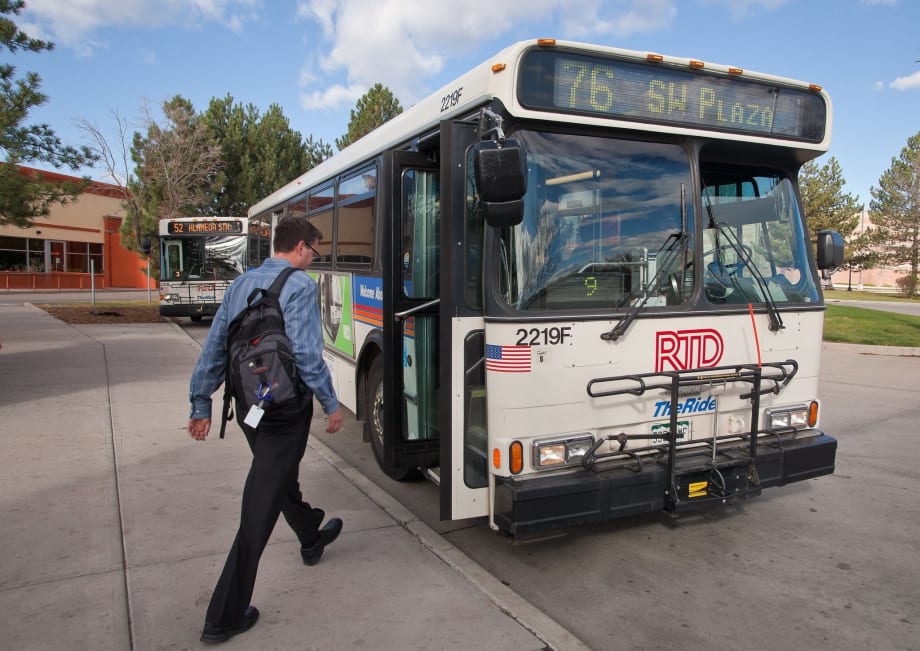
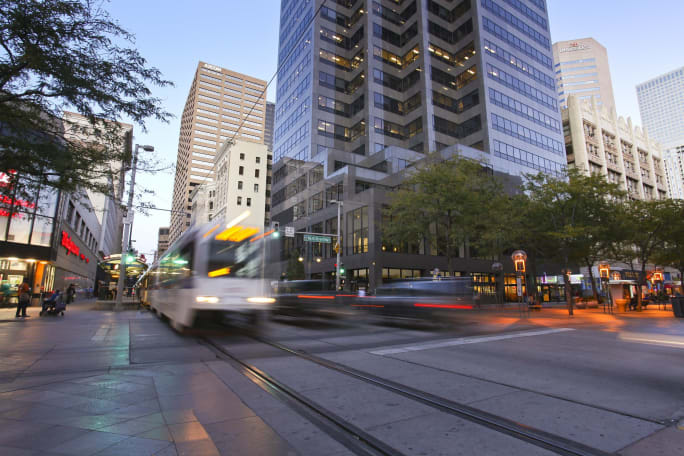
The pilot project allows users to plan trips, view fares, and purchase tickets for various transit options — including RTD buses and trains, Colorado Department of Transportation’s Bustang, Lone Tree Link, Boulder BCycle, and Lyft scooters — all within a single mobile app for the first time.
Ad Loading...
“Through this project, RTD, governmental, and commercial partners wanted to solve the issues of customers having to use multiple apps to plan a trip in the region and to pay for each trip segment through disparate systems,” explains Monika Treipl-Harnke, RTD’s sr. manager, revenue. “In addition to the success of introducing a planning option that covers multiple mobility providers, including bike and scooter-shares, the trip planning screen includes selection buttons for purchase of RTD and Bustang tickets, which creates a more streamlined customer experience.”
RTD’s Fare Payment Pilot
The pilot, launched in partnership with Masabi and the Transit app, began in March 2024 and will run through February 2026.
The Federal Transit Administration's Accelerating Innovative Mobility (AIM) program is funding the project.
The system is innovative in its ability to streamline travel by reducing the need for multiple apps and simplifying the payment process, thereby enhancing the user experience with increased convenience and access to multiple transit options.
The project aims to provide a seamless, car-free travel option and will be evaluated upon completion for broader applicability.
Ad Loading...
The primary goal of the program is to provide seamless integration that will reduce friction and make public transit a more attractive option for commuters.
“RTD, Transit, and Masabi have collaborated for five and seven years, respectively; initially on a white-label RTD mobile ticketing app on Masabi’s Justride platform, then on the integration between Transit and Masabi to sell RTD mobile tickets in the Transit app,” Treipl-Harnke. “Based on the ongoing collaborative relationship, all partners were confident going into this project that the they would be able to overcome any challenges and deliver a successful implementation. This provided the foundation for the success of this project.”
By tracking how users plan and execute their trips, RTD can gather critical information on travel patterns, peak usage times, and popular routes.
Photo: Denver RTD
Goals and Successes of the Program
While not a goal of this project specifically, the simplification of the trip planning and payment process is also likely to lead to an increase in ridership, since when public transit is easier to use, more people are inclined to choose it over personal vehicles, according to RTD and its supplier partners.
Furthermore, the integration of services such as bike-share and scooter-share into the Transit app encourages multimodal transportation, allowing users to combine different forms of transit for a single trip. This flexibility can attract a broader user base, including those who might otherwise rely solely on cars for their commutes.
From an operational standpoint, the integrated system provides RTD with valuable data insights.
Ad Loading...
By tracking how users plan and execute their trips, RTD can gather critical information on travel patterns, peak usage times, and popular routes. This data can inform more efficient scheduling, better resource allocation, and targeted service improvements.
Additionally, the collaboration with various partners under the AIM program fosters a comprehensive mobility ecosystem that supports coordinated operations and strategic planning across different transit services.
This project is the first of its kind in the U.S., setting a new standard for how public transit systems can be integrated and modernized.
The user-centric design of the Transit app, which consolidates multiple services into a single platform, represents a significant leap forward in making public transportation more accessible and user-friendly.
The pioneering approach not only simplifies the user experience but also serves as a model for other transit agencies across the country, and potentially around the world, according to Masabi.
Ad Loading...
“Our partnerships are based on mutual trust, open communication, and shared goals, and this collaborative approach has allowed us to work to create a solution that we think will enhance travel across Colorado and help people leave their cars at home,” says Ashleigh Primm, account manager at Masabi. “The result has been the delivery of a seamless and efficient fare payment system that enhances the rider experience across agencies in Colorado and between different modes of transit.”
Program Benefits
By promoting the use of public transit and shared mobility options, the project also contributes to broader environmental and social goals.
Increased use of public transit reduces carbon emissions, traffic congestion, and reliance on fossil fuels.
Moreover, the project enhances mobility for residents who may not have access to private vehicles, promoting greater social equity, and access to essential services and opportunities.
The program, running from March 2024 to February 2026, is designed not only to test and refine the integrated system but also to pave the way for future scalability.
Ad Loading...
The lessons learned and best practices identified during the pilot can inform similar initiatives in other regions. The project's potential to be replicated and adapted in different contexts highlights its innovative potential and far-reaching impact.
For all this and more, RTD’s partnership with Transit and Masabi earned it a METRO Innovative Solutions Award for Customer Experience.
“RTD is honored that our strong partnership with Transit and Masabi contributed to receiving this award,” says Treipl-Harnke. “The agency is most pleased by the fact that this is benefiting customers and improving the customer experience by streamlining transit planning and fare payment.”
“We are thrilled and honored to receive this award with RTD, Transit, and our regional partners. It is a testament to the hard work and dedication of our team and the collaboration and trust our partners and clients have placed in Masabi,” adds Primm.
CEO Magnus Friberg discusses Luminator’s shift toward becoming a digital partner, the growing importance of software and interoperability, and how AI can help agencies improve operations and passenger experience.
Reliability-Centered Maintenance helps transit agencies move beyond routine checklists to focus limited resources on the assets and failures that have the greatest impact on safety, reliability, and service.
More than 1,500 buses now feature upgraded technology designed to improve arrival predictions and provide free Wi-Fi, with deployment expected to reach nearly 2,000 buses by the end of 2026.
John Hroncich discusses BAE Systems’ modular and scalable approach, lessons learned from decades of real-world operations, and how agencies can identify electrification strategies that fit their fleets.
In METRO's latest installment, we take a look at recent news from Complete Coach Works, Beep, FlixBus, and more partnerships making headlines across the transportation sector.
What if transit leaders could ask any operational question and get a trusted answer in seconds? Conversational AI is transforming how agencies use their data.
More than $191 million in federal funding will help three transit agencies replace aging rail vehicles and support a new autonomous shuttle service in Chattanooga.
LA Metro’s Obed Mejia discusses technician training, evolving maintenance technology, fleet replacement, and strategies for getting the most out of today’s transit fleets.
In METRO's latest installment, we take a look at recent news from Siemens, Prevost, Dodge, and more partnerships making headlines across the transportation sector.
Pedestrian microsimulation is helping rail planners identify bottlenecks, test station designs, and prepare complex transit hubs for growing passenger volumes.