As a result of multiple trends and life shaping events, such as the COVID pandemic, the way we live, work, and spend leisure time has been forever changed in our urbanized settlements.
Scott Shepard・Head of Policy & Government Affairs, Drover.Ai
As a result of multiple trends and life shaping events, such as the COVID pandemic, the way we live, work, and spend leisure time has been forever changed in our urbanized settlements.
What initially started as an experimental venture prior to the pandemic, namely shared mobility in the form of e-bikes, e-scooters, ridehail, carshare, and an increased emphasis on integration with public transport through mobility as a service (MaaS), has only gained further strength in the post pandemic era.
Ad Loading...
In parallel with these market forces and consumer trends, cities and municipalities have taken notes. They have restructured their public policies and urban mobility plans with a newfound emphasis on shared and active modes.
The policies are giving further prominence to decarbonization of the transport sector and ameliorating the poor urban planning decisions made during the 20th century.
European Green Deal and Transport
According to the European Commission, with transport contributing around 5% to EU GDP and employing more than 10 million people in Europe, the transport system is critical to European businesses and global supply chains.
At the same time, transport is not without costs to our society: greenhouse gas and pollutant emissions, noise, road crashes, and congestion.
Today, transport emissions represent around 25% of the EU's total greenhouse gas emissions, and these emissions have increased over recent years.
Ad Loading...
The commission’s goal of being the first climate-neutral continent by 2050 requires ambitious changes in transport.
A clear path is needed to achieve a 90% reduction in transport-related greenhouse gas emissions by 2050.
The European Commission adopted a set of proposals to make the EU's climate, energy, transport, and taxation policies fit for reducing net greenhouse gas emissions by at least 55% by 2030, compared to 1990 levels.
Sustainable Urban Mobility Plans (SUMPs)
According to the European Commission, Sustainable Urban Mobility Plans (SUMPs) are the cornerstone of European urban mobility policy.
The European Commission strongly recommends European towns and cities of all sizes embrace the concept of SUMPs. These can improve the overall quality of life for residents by addressing major challenges related to for example congestion, air/noise pollution, climate change, road safety, and parking.
Ad Loading...
SUMPs also provide a framework for innovation and the integration of new mobility services.
A sustainable urban mobility plan is a strategic plan designed to satisfy the mobility needs of people and businesses in cities and their surroundings for a better quality of life.
It builds on existing planning practices and takes due consideration of integration, participation, and evaluation principles.
A SUMP should cover the entire functional urban area (a city and its commuting zone), taking into account real traffic flows.
A SUMP should foresee cooperation and synergies between all levels of government, local, regional, national, and across different policy areas.
Ad Loading...
It should be prepared in partnership with local residents and stakeholders. It ensures a variety of sustainable transport options for the safe, healthy, and fluid passage of people and goods, with all due consideration for fellow residents and the urban environment.
Photo: Pixabay/Surprising_SnapShots
Car Free City Centers
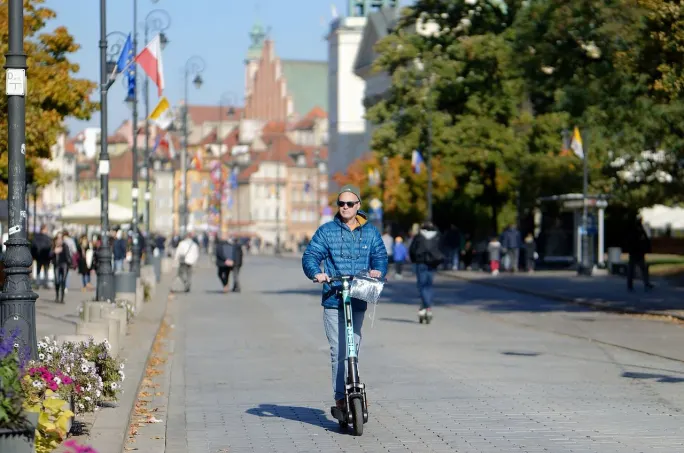
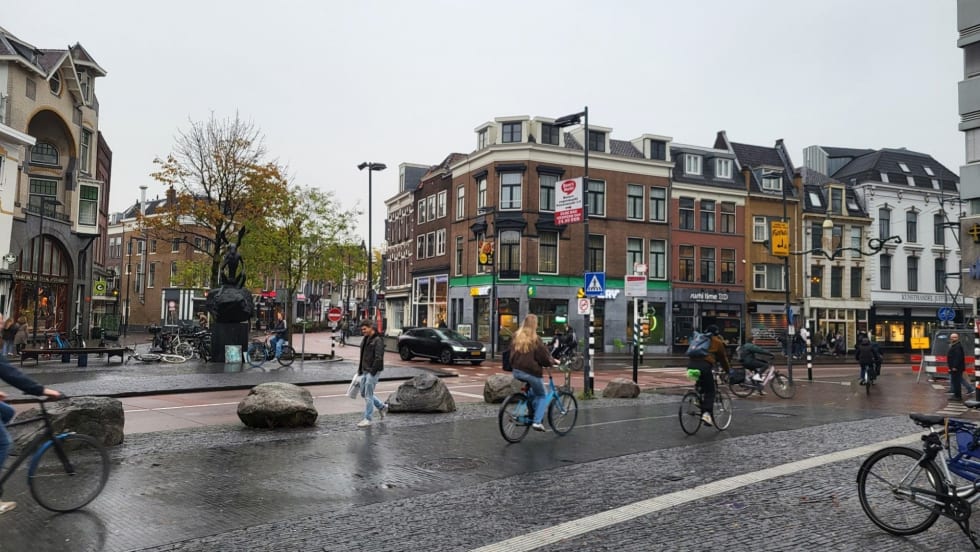
One of the most obvious ways in which global cities (especially in Europe) are transforming their public spaces and providing for a sustainable modal shift is through the provision of car free city centers.
Schemes such as these have been in the planning process for years but have recently taken off during the pandemic era.
What began as an initial experience over 20 years ago as a pedestrianized zone in Pontevedra, Galicia, Spain has been implemented all across the European continent to promote walking, cycling, and public transport usage.
Car-free city centers provide numerous benefits, such as congestion reduction, lower pollution levels, and improved public health.
Ad Loading...
Typically developed as concentric rings emanating outside of the city center, these zones restrict vehicles based upon classification, weight, axes, and size depending on the municipal regulations.
In addition, the restrictions may be time based or permanent. Similar zones have been implemented as LEZs (low emissions zones) in London, and recently in Rome and other European cities.
However, what is currently lacking is the proper enforcement of newly introduced car-free city centers and LEZs.
Urban Tolling Project Concept
A project concept has been developed to realize the ambitions of European cities and municipalities in their reduction of CO2 emissions, urban congestion, and sustainable mode shift from single occupancy automobiles to shared and greener modes of transport.
The concept consists of a phased pilot project to be introduced in one of several European cities, using a combination of hardware and software technologies.
Ad Loading...
The integrated technologies will be used to support a framework of “carrots and sticks," to on one hand incentivize and nudge users to shared and greener modes, and on the other hand tax single car users for traveling on urban roadways based upon time of day, zone, vehicle classification, etc.
The zone used to deploy hardware and software technologies for the project concept will ideally be a dense city center or outlying neighbourhood district with good public transport and shared mobility options.
The zone will be identified by the city project sponsor and will align with SUMP policy goals and sustainable mode shift.
Existing car-free city centers lacking perimeter-based vehicle enforcement are ideal candidate locations for the project concept.
Baseline data will be captured before, during, and after project completion to track emissions reduction and other KPI metrics relevant to the EU Green Deal and Sustainable Urban Mobility Plans (SUMPs).
Ad Loading...
Photo: Pixabay/ignartonosbg
Off The Shelf Tolling Technologies
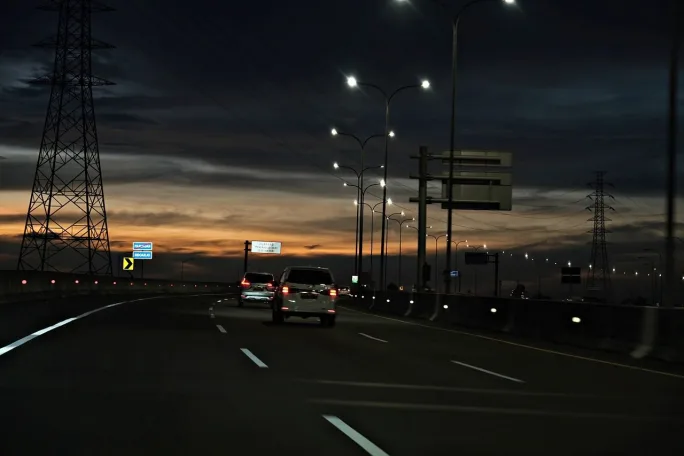
The different tolling technologies range from transponder-based tolling to Automatic Number Plate Recognition (ANPR) camera systems.
Transponder technologies are primarily used in Multi-Lane Free Flow (MLFF) environments with associated equipment located on overhead gantries, or in the case of Global Navigation Satellite System (GNSS) transponders, it uses satellite data to determine the position of the vehicle.
ANPR systems require cameras and fixed infrastructure to read a vehicle’s number plate. ANPR systems typically link to a vehicle registration database to determine the owner of the vehicle.
The tolling systems can be used as a congestion or emissions charge, or as a road user charge.
Latest Tolling & ITS Innovations
GNSS-based tolling has evolved so far that the GNSS transponders have reduced in size, and this is the more attractive solution for authorities that want to toll a large road network, which significantly reduces the need for overhead gantry infrastructure.
Ad Loading...
GNSS solutions provide the added benefit of determining the real distance and route driven by a vehicle, together with the option to charge higher tariffs for higher density zones, thus determining a more equitable toll charge.
Toplan Experience
Tolplan has been involved in tolling since 1982 and has assisted authorities in selecting the most optimum toll solution for their needs.
Tolplan has provided a full range of services for both conventional toll plazas and Open Road Tolling, also known as Multi-Lane Free Flow (MLFF).
Tolplan, for example, did the feasibility study, generated the specifications and tender documentation, and supervised the roll-out of the Gauteng Open Road Toll network for the South African National Roads Agency.
Tolplan further has experience in Freeway Management and Automatic Fare Collection (AFC) systems and employs civil, industrial, electrical, and electronic engineers together with financial and information technology professionals.
Ad Loading...
Car-Free City Centers, Sustainability on the Rise
Car-free city centers, European Green Deal finance, and Sustainable Urban Mobility Plans are now commonplace across the European continent.
What is currently lacking is the ability to effectively nudge users to shared and green modes, in combination with a mechanism to penalize users for choosing less desirable modes.
The project concept addresses both the carrot and stick of nudge theory, which has been proven as the most effective way to realize the ambitions of transport decarbonization public policy at the local and regional levels across Europe.
With $610 million available through the FY 2026 Buses and Bus Facilities Competitive Program and the Low or No Emission Grant Program, agencies must build a compelling case before the September 21 deadline that balances environmental compliance with operational feasibility.
The global cycling conference highlighted how cities are integrating bicycles into multimodal transportation networks, expanding cycle tourism and reshaping urban mobility.
Mike Bismeyer — often known as “The Kindness Guy” — has spent more than 17 years in public transit and mobility, serving in industry leadership roles, speaking across North America, and advocating for stronger workplace cultures. But his message doesn’t come from theory. It comes from lived experience.
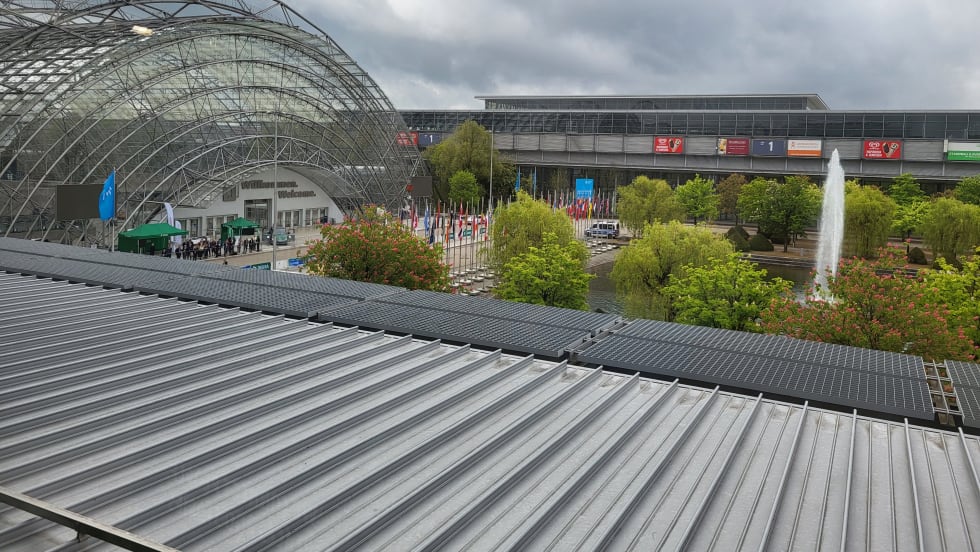
Transport leaders from around the world gathered in Leipzig, Germany, for the 2026 International Transport Forum to discuss resilience, climate impacts, supply chains and the future of sustainable mobility.
Polis comprises cities and regions, as well as corporate partners, from across Europe, promoting the development and implementation of sustainable mobility. This year’s event had over a thousand attendees across various policy forums and an exhibition.
Across North America and beyond, transit agency officials are contending with a perfect storm of operational headaches and strategic challenges that hamper daily service and long-term progress.
Simply incentivizing electrification is not enough to make a meaningful impact; we must shift our focus toward prioritizing public transportation and infrastructure.