



Funding Glitches Impact Top Rail Projects
With a decline in projects comes a $1 billion decline in 2007's overall project purse for a total of $59 billion. MTA New York City Transit holds on to the top spot, while Canada's Greater Vancouver Transportation Authority and Virginia's Hampton Roads Transit make their debuts.
The "greatest city in the world" is still the top dog for this year’s Top Rail Projects survey, with MTA New York City totaling $7.54 billion in project costs. The agency also recently broke ground on its Second Avenue Subway project — the city’s first new subway line to be built in more than 70 years — which will connect the east side of Manhattan.
While New Jersey Transit (No. 3) jumped up 25 slots from 2006, there was little movement up top overall, with Santa Clara Valley Transportation Authority (No. 2) in San Jose, Calif., Seattle’s Sound Transit (No.4) and the Regional Transportation District (RTD) (No. 5) in Denver rounding out the top five. However, last year’s No. 4, N.C.-based Charlotte Area Transit System (CATS), tumbled 22 slots to No. 26 this year.
This year’s $59 billion total project purse is a $1 billion decrease compared to both 2005 and 2006, with a couple of notable projects hitting some major roadblocks.
Not exactly 50
While this survey is usually known as the "Top 50 Rail Projects," completion of some projects and the cancellations of others played a large part in the inability to reach the magic number.
One of the most notable project cancellations occurred in Ottawa, Ontario, where OC Transpo, which was listed at No. 24 last year, had its $653 million light rail project terminated by the City Council last December. The council cited the project’s inability to meet the necessary federal funding and property acquisition conditions that were set in the project agreement. The agreement was conditional on matching contributions by both the federal and provincial governments.
Another noticeable omission is N.C.-based Triangle Transit Authority’s (No. 18 in 2006) $809 million project, which was in final design but was ultimately not constructed because of its now well-publicized inability to secure full funding.
Additionally, St. Louis-based Metro and Pompano Beach, Fla.’s South Florida Regional Transportation Authority completed the projects they had listed last year.
Sustainable steps
With many agencies taking various sustainability steps to help lessen environmental impact, "going green" is a hot topic in this year’s survey.
Denver’s RTD has put in place a highly successful recycling program at its administration buildings, as well as a recycling program at all of its stations. In addition, the agency is also beginning work with its local energy provider on an audit to determine areas where energy can be conserved.
To mitigate its capital projects’ environmental footprint, North Carolina’s CATS has begun using solar lighting and rain gardens in its park-and-ride lots, and plans to use LEED Certification for the building of all future facilities.
Additionally, aside from its Corona rail maintenance shop and car wash facility that was recently launched in Queens, N.Y. ("Setting a Green Standard for Rail Facilities," May 2007, Pg. 38), MTA New York City Transit has recycled up to 85% of demolition waste on certain projects and began a research project to analyze the potential use of "green" building materials. Also, following a successful program that saw the agency sink 1,200 retired "Red Bird" subway cars in offshore waters to form artificial reefs in Virginia, Georgia, South Carolina, Delaware and New Jersey, the agency is considering the possible sinking of an additional 2,600 cars over the next 10 years.
Projects at a glance
There are a couple of new projects making it to this year’s list, including Virginia’s Hampton Roads Transit (No. 34) and Vancouver, B.C.’s Greater Vancouver Transportation Authority (TransLink) (No. 8).
Hampton’s $231.5 million project includes the proposed 7.4-mile extension of Norfolk Light Rail Transit from the Eastern Virginia Medical Center through downtown Norfolk. Eleven station stops will be constructed as part of the project, with the system using a combination of an existing railroad corridor and city streets.
Vancouver has a $2.7 billion project in the works, including the 12-mile, 16-station Canada Line light rail system, which is slated to open prior to the 2010 Winter Olympic Games. The agency is also in the design stage of its 6.3-mile Evergreen Line light rail system that is expected to open parallel with the Canada Line.
Other projects of note include Austin, Texas-based Capital Metro’s (No. 39) $90 million, 32-mile urban commuter rail project that will stretch from Leander to downtown Austin. The project includes nine stations with parking and circulator bus service that will work in unison with the light rail system. According to Capital Metro officials, the $3 million-per-mile system is one of the most cost-effective commuter rail projects in the country and is being funding by existing sales tax revenues and fares.
Meanwhile in Oceanside, Calif., the North County Transit District’s (No. 25) Sprinter light rail system is about 80% complete and moving on schedule to begin full operations by December of this year.
If you know an agency with plans for the future, but was omitted from this year’s survey, please let us know so that we can include it next year. Also, special thanks to all of the agencies for taking the time to fill out our surveys and continuing to participate in this annual feature.
More Rail
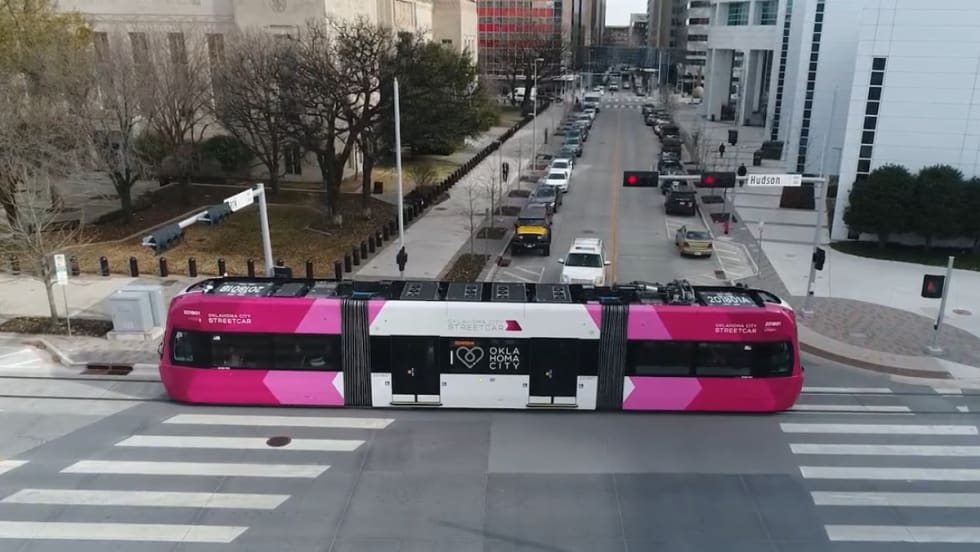
OKC Streetcar Makes Zero-Fare Service Permanent
Ridership increased an average of 71% compared with the same period a year earlier during the fare-free pilot.
Read More →
DART Customer Satisfaction Reaches Six-Year High
Overall satisfaction rose to 74.9%, while the agency’s Net Promoter Score reached a record 33.7.
Read More →
How DART's GoPass Is Redefining Regional Mobility
Serving 14 transit agencies, GoPass simplifies multimodal travel by allowing riders to plan, pay for, and manage an entire trip through one app.
Read More →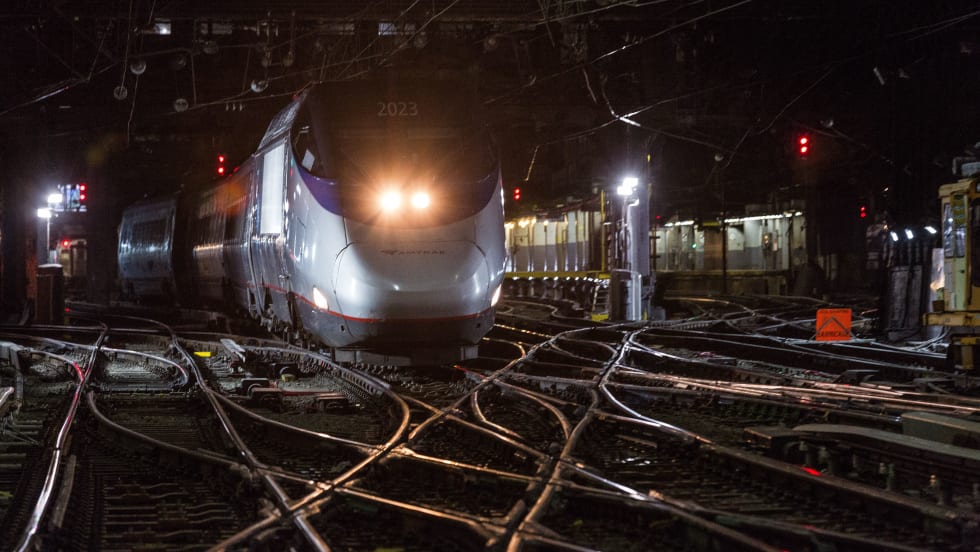
Amtrak Board Advances Plan to Restructure Organization, Seeks Public Input
The proposal, developed by Amtrak management and approved by the board for further consideration, is intended to modernize the organization's structure while improving accountability, operational efficiency, and customer service.
Read More →
Biz Briefs: STV teams with Amtrak, Motorcoach Operators Boost Fleet and Land Contracts, and More
From manufacturers and suppliers to transit agencies and motorcoach operators, these updates offer a snapshot of the projects, partnerships and business moves driving the industry forward.
Read More →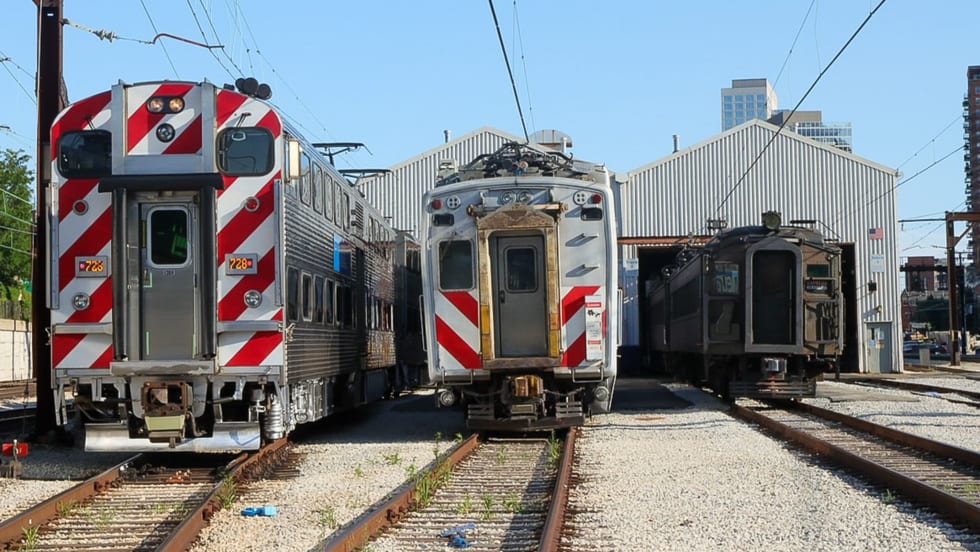
Metra Celebrates 100 Years of Electric Rail, Looks to the Future
The event was also a celebration of recent reforms to public transportation in the Chicago area, changes that could be as transformative in the future as the major civic achievement a century ago, said officials.
Read More →
LA Metro Marks Banner Year, Sets Ambitious Goals for New Fiscal Year
Incoming LA Metro Board Chair and Los Angeles Mayor Karen Bass joined outgoing Board Chair Fernando Dutra and LA Metro CEO Stephanie Wiggins to review accomplishments from fiscal year 2026, which included the opening of new rail extensions, advancement of major transit projects, expanded safety programs, and new rider amenities.
Read More →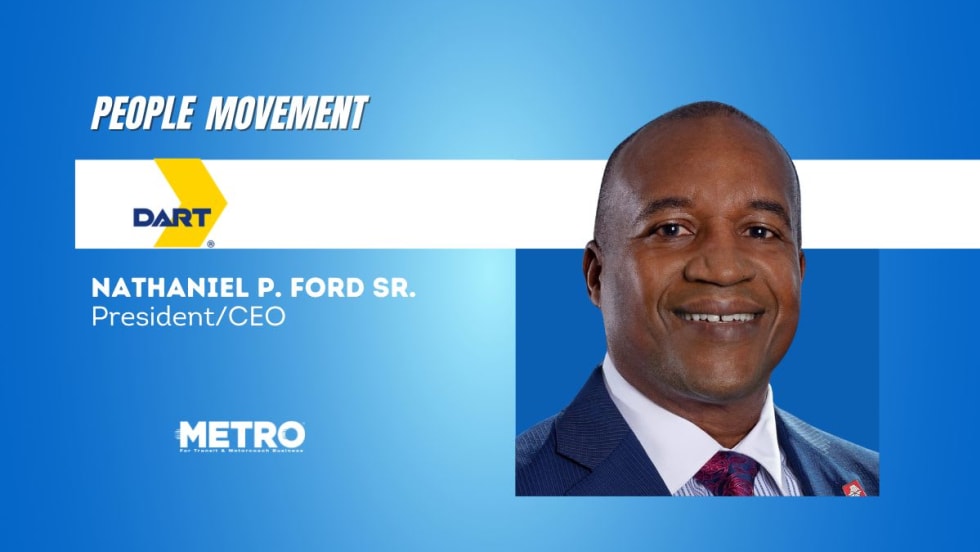
DART Taps Nathaniel P. Ford Sr. as Next President/CEO
Since 2012, Ford has served as the CEO of the Jacksonville Transportation Authority
Read More →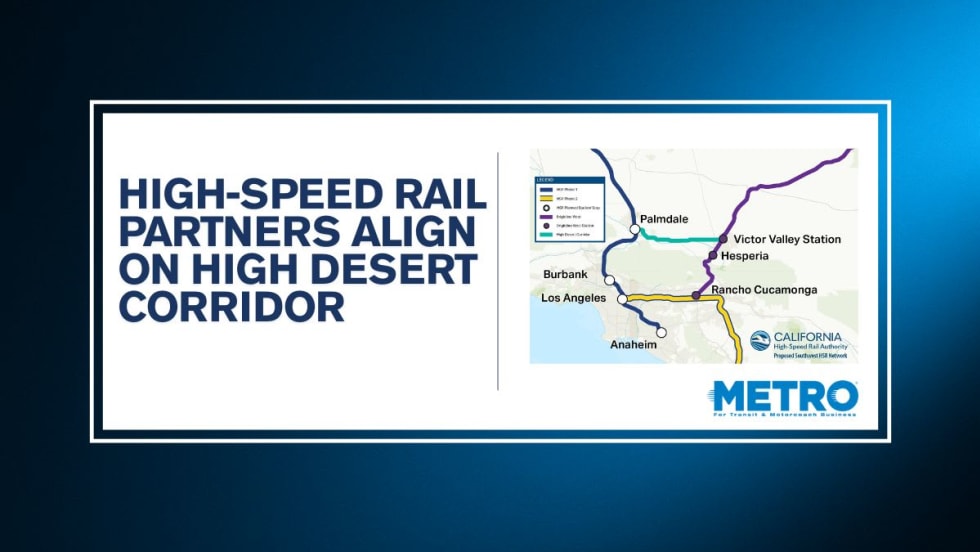
California High-Speed Rail Authority Signs MOU to Advance High Desert Corridor
The agreement deepens collaboration between the California High-Speed Rail Authority and the High Desert Corridor Joint Powers Agency, supporting design integration, cost savings, and faster delivery of a key Southern California rail link.
Read More →
Building the Next Generation of Transit Technology
In this edition of METROspectives, Luminator CEO Magnus Friberg discusses the company's transformation, the growing role of AI and software, and what's next for transit technology.
Read More →