



Future of APMs in U.S. Remains Uncertain
Annual conference on automated peoplemovers reports progress in Europe and Asia, but modicum of movement in the United States.
To view the future of rapid transit projects, look no further than the fully automatic Orestad mini-metro line being built in Copenhagen, Denmark. This was one perspective shared with the approximately 400 transit professionals who attended the eighth International Conference on Automated People Movers held in San Francisco this summer. A whole new urban district is being developed around the Orestad line (www.m.dk). Scheduled for a 2002 opening, this 21st century metro will operate around the clock, offering service every 90 seconds. Construction costs are largely paid for by tapping the future value it will bring to development sites near its stations through the sale of land. Fares should cover most operating expenses. Copenhagen’s new metro will be elegant in its simplicity, for which Scandinavia is so well known. Evident at the APM conference was the energy and confidence of the international community of suppliers, contractors and consultants who have matured in their abilities to deliver automated peoplemover projects in airports, leisure and institutional settings and as urban mass transit. “We have come a long way since the first APM conference in Miami in 1985,” said APM01 chair Bob Griebenow, a senior project manager at the engineering firm of Berger/ABAM. He should know. He heads a consulting team that is rethinking transit development for the Seattle area. The dismal economics of a light rail project have been exposed, killing the project and opening the way for an APM solution. Back in 1985, the APM circulator in downtown Miami had not yet opened, nor had Vancouver’s driverless SkyTrain. There were only a handful of small prototype APMs in operation. Now, the Miami Metromover (a downtown circulator) and the SkyTrain (a 20-mile line-haul corridor) both have been carrying passengers for 15 years. In total, 99 APMs around the world carry 3.5 million passengers on a regular basis. In BART’s back yard San Francisco’s modern downtown, site of the APM01 conference, grew up around BART—the Bay Area Rapid Transit system. BART trains still have drivers despite their advanced system controls. This holds back the economics of delivering modern, more frequent, more reliable and safer transit services. Many of the professionals who attended APM01 would delight in using growing APM experience to introduce the benefits of full automation onto BART’s super-long trains and gigantic stations. But this won’t happen for another decade; BART is nowhere near such a decision. Many bright examples for the future of BART and metro operations around the world were, in fact, presented at APM01. There was much talk of the progressive stance that the small Asian island nation of Singapore has taken. A few years ago Singapore’s prime minister challenged transit officials to deliver an APM project every year. One opened last year and four more are underway, including the third rapid transit line. Supplied by France’s Alstom, the North East Line will be driverless when it opens next year. The Association of Consulting Engineers Singapore (ACES), in fact, will host the next APM conference in 2003. Some success stories Despite gloomy economic conditions in Japan, there was word in San Francisco of success with the driverless Astramline that opened in 1994 and was recently extended in Hiroshima. Its service reduced street congestion and led to economic revitalization around stations. Richard Jarsaillon of Matra Transport International (owned by Germany’s Siemens) described continuing improvements and expansions of the VAL system in Lille, France. The first section opened in 1983 as the world’s first driverless metro. Its length and ridership have grown over the years. Two long lines are now a vital part of metropolitan life there, carrying more than 200,000 daily passengers. The historic city center has been revived, and similar VALs have been built in Paris; Toulouse, France; and Taipei, and are underway in Rennes, France, and Turin, Italy. Several Canadian officials outlined comparable progress on the Vancouver SkyTrain. The original line has grown to a length of 20 miles with 20 stations. The 12-mile Millennium Line, with 13 stations, being equipped by Bombardier, is now in construction and will eventually feed into the original line. Plans for a third Vancouver line serving the airport are advancing. A driverless metro project in Thessaloniki, Greece, is also in final negotiations with the new giant of the APM and overall rail industries. Bombardier has extensive metro manufacturing and system integration experience, both driverless and conventional, and intends to expand into operation and maintenance services. Airport projects abound At APM01, there was also much to hear about many smaller-scaled but more numerous airport APMs. Around the world, smart inter-terminal links have become routine when distances too long for moving walkways need to be traversed. There were presentations on two replacement APMs (Dallas-Ft. Worth and Paris-CDG) and a dozen current projects. Airport and transit planners now collaborate to use APMs to connect to remote rail stations. Such projects are underway in Birmingham, England; Dusseldorf, Germany; New York (JFK); Newark, N.J.; Oakland, Calif.; and Providence, R.I. Some of those also will serve airport rental car facilities. An entire session was devoted to the Dallas-Ft. Worth project’s truly Texan dimensions — five-mile, two-way guideway with 12 stations and 64 vehicles. The APM system contract with Adtranz (now Bombardier) is for $193 million. The total project cost, including five years of operation and maintenance, is estimated to be $742 million. This is part of an even larger $2.6 billion airport expansion program. Like its counterpart at Atlanta Hartsfield Airport, Dallas-Ft. Worth’s APM will carry more passengers than most U.S. metropolitan bus operations when it opens in 2005. These airport projects have direct implications for public transport. They have produced a real transit marketplace outside the public transit industry. Five airport APM procurements were actively underway in early July when the conference took place. Another dozen were in advanced planning and engineering. From a commercial standpoint, this airport market is an economic base on which APMs are maturing. The U.S. has no driverless metro in operation or construction except for the private monorail expansion in Las Vegas that will become fully automated. Projects with potential The APM community was energized by deliberations and speculations about the future. This was particularly evident at a session that examined two transit projects in advanced planning. Dean Hurst of Jakes Associates described their work exploring the feasibility of an underground APM to serve the world famous Mayo Clinic in Rochester, Minn., and also serve as a mini-metro for this city of 120,000. This is part of a growing trend for hospitals to invest in an APM for their internal circulation and parking needs. In Rochester, Mayo is the dominant employer and often works in close cooperation with the city. Its APM plans may extend in true intermodal fashion to Rochester’s small airport, which will be used as a reliever for the Minneapolis-St. Paul airport when a planned high-speed rail line is implemented. Sweden has long studied APMs — especially more advanced PRT (personal rapid transit) versions —but has yet to build one, even of a more conventional kind. The breakthrough may happen in a small university town. Peter Eklund of Uppsala’s transit agency described the results of their tests with a generic APM hardware design and plans to install it to serve their area. Detailed functional requirements, particularly those that relate to passenger feelings of insecurity and other anxiety, have been developed, with recommendations for special operating staff to address these matters, much like the roving passenger attendants who have direct contact with passengers on the Vancouver SkyTrain and Lille VALs. For more information The APM01 Proceedings will be available this fall. For information, go to www.asce.org. A preconference primer workshop provided basic background information, status and prospects of APMs. Compiled by William Sproule, professor at Michigan Technological University, this 50-page notebook can be purchased for $20. Sproule can be contacted at wsproule@mtu.edu. A postconference seminar organized by Trans.21 discusses APM emerging projects and dynamics and dimensions of submarkets. Materials can be ordered for $100 by contacting lfabian@compuserve.com.
More Rail
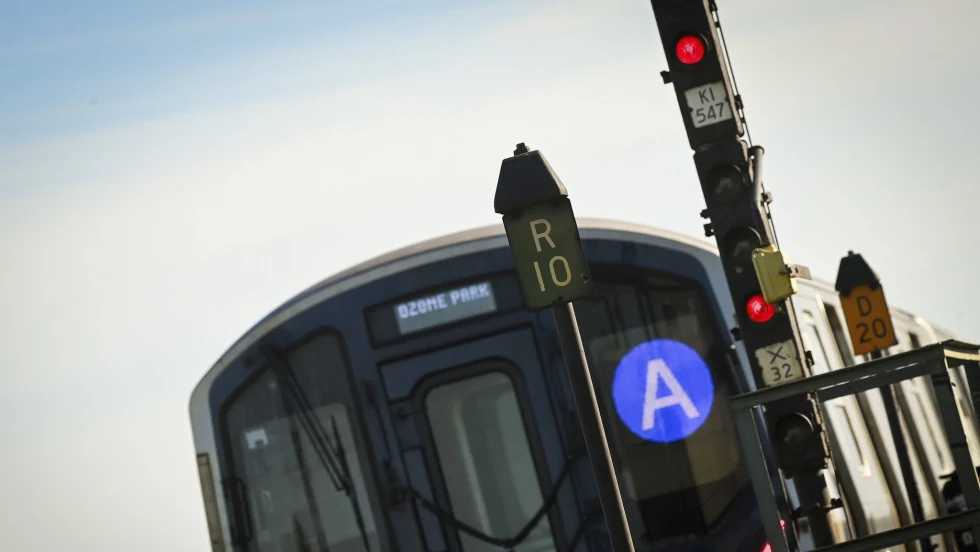
New York MTA Launches Historic $1.9B Signal, Track Modernization Project
Funded in part by congestion pricing revenue, the project will replace nearly century-old signals along the A and C lines in Brooklyn and Queens.
Read More →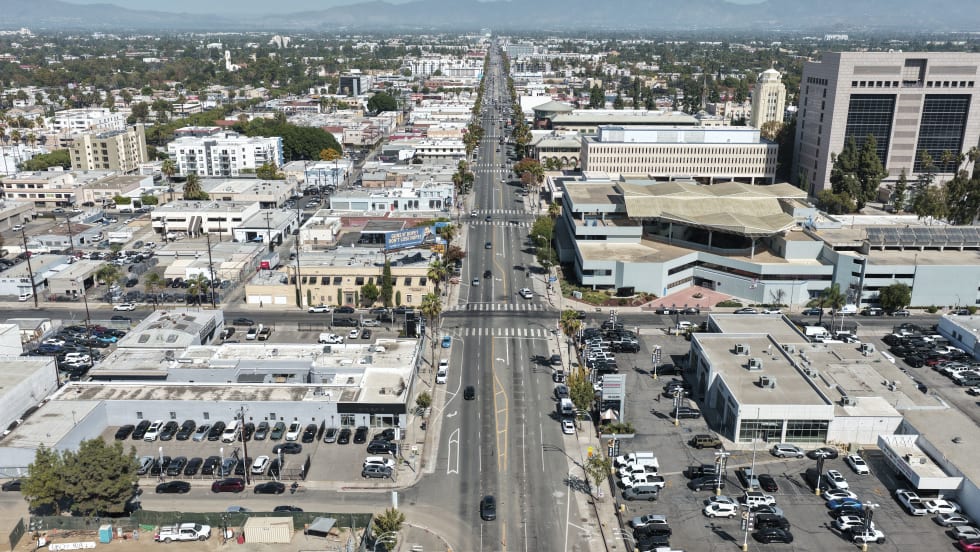
LA Metro Breaks Ground on East San Fernando Valley Light Rail Project
The 6.7-mile line will add 11 stations along Van Nuys Boulevard, expand access to jobs and regional transit connections, and support Metro’s broader efforts to improve mobility as rail ridership grows.
Read More →
CSA Group Releases Climate Resilience Standard for Transit, Passenger Rail
Developed with support from the Standards Council of Canada, CSA D700 guides assessing climate-related risks and planning adaptation measures for transit and passenger rail systems.
Read More →
LA Metro September Ridership Climbs 3.9%, Led by Rail Growth
The agency recorded more than 27.2 million boardings, with rail ridership increasing 12.4% year over year and the D Line posting the largest gains.
Read More →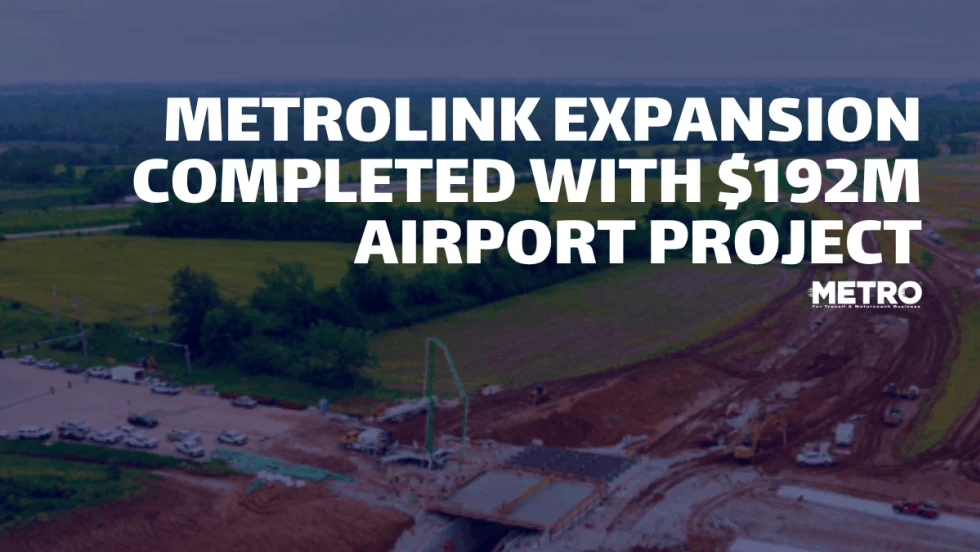
First Full MetroLink Rail Expansion Completed in 20 Years with $192M Airport Project
The project links two St. Louis-area airports by light rail while adding roadway and bike trail connections to improve regional access and mobility.
Read More →
Utilimarc Launches SmartReplace to Optimize Fleet Replacement Decisions
AI-powered SmartReplace helps fleets prioritize vehicle replacements, model budget scenarios, and build more defensible long-term strategies.
Read More →
Scenes from APTA TRANSform & EXPO 2026
Transit leaders, manufacturers, and industry professionals gathered in Chicago to explore new technologies, share ideas, and discuss the future of public transportation.
Read More →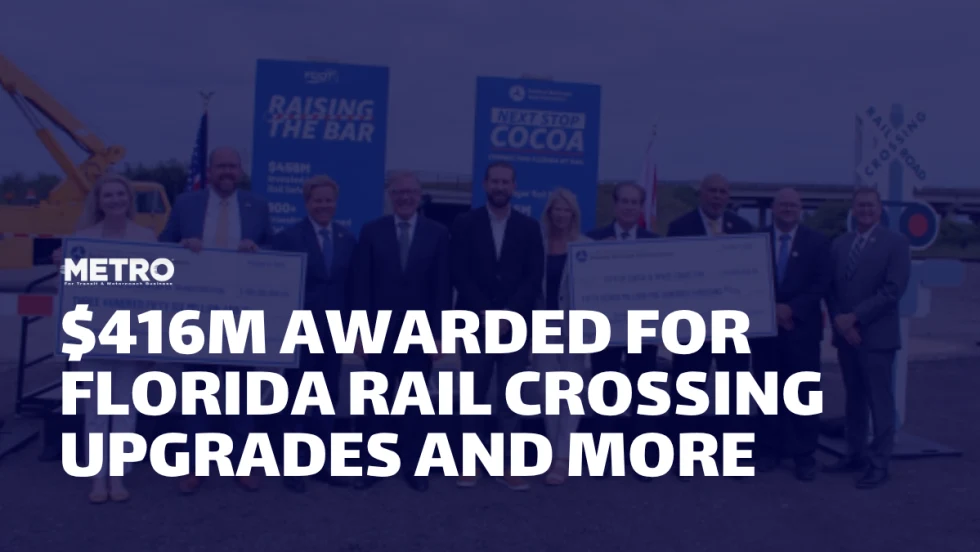
USDOT Awards $416 Million for Florida Rail Crossing Safety Upgrades, New Brightline Station
The projects aim to reduce risks for motorists and pedestrians at rail crossings while expanding passenger rail access along Florida’s Space Coast.
Read More →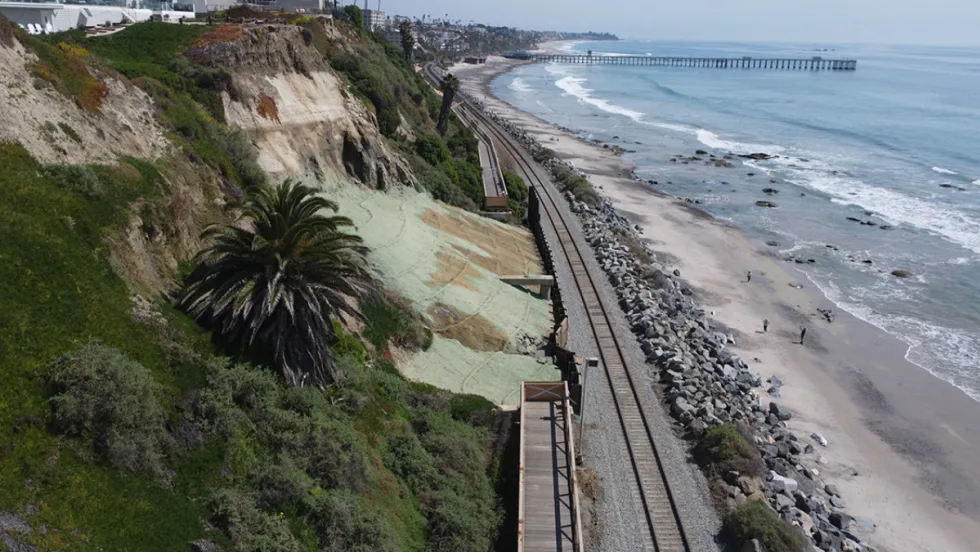
OCTA Declares Emergency to Protect Rail Corridor From Coastal Erosion
The California agency is accelerating shoreline protection and plans to place approximately 690,000 cubic yards of sand along the San Clemente coast to protect a key passenger and freight rail link.
Read More →
More Than a Summer Job: Building the Next Generation of Transit Talent
The Delaware River Port Authority and PATCO have transformed their internship program into a hands-on professional development experience that introduces students to the breadth of transportation careers — and creates a pipeline for future employees.
Read More →