



Got Wheels?
Award-winning fixed-route service meets needs of California city’s younger population by improving access to community programs.
A fixed-route system that has given youths in Burbank, Calif., greater access to after-school and summer community programs has been piling up awards and generating strong interest from other Southern California transportation agencies. The program, called Got Wheels! Youth Transportation Program, furnishes 10- to 18-year-olds with free rides to 28 community sites, including schools, parks and libraries. Transportation is provided by 13-passenger paratransit vehicles retired from regular service, but plans are in the works to acquire new buses. Got Wheels! was created in the summer of 1999 after the Burbank City Council lobbied for funds to enhance after-school programs and school security resources. The city conducted a survey that indicated that transportation around town was a significant problem for young people. “The genesis of this was a number of issues—one of which was having kids get access to community-type programs like the Boys and Girls Club or the YSA after school,” says Andrew Carrasco, Burbank’s transportation coordinator. “Another catalyst was the Columbine situation and other school violence, which are unfortunately becoming a too-common occurrence.” In response, the city established Got Wheels! as the first program of its kind in Southern California. The project is financed by the city’s general fund because there are no existing qualifying funds or grants for aged-based programs of this type. It is marketed directly to schools, parks and recreational centers through promotional posters and route information. The success of the Got Wheels! program has not gone unnoticed. Last year, at the annual conference of the California Parks and Recreation Society, Got Wheels! received three awards, including the Award of Excellence for Community Programs and the VIP Award for Vision, Insight and Planning. Carrasco says there are additional advantages of the program that can’t be measured with awards. “These kids know how to read a map, are confident and aren’t afraid of the transit system,” he says. “Since they are successful now, under a controlled environment, we are raising new transit riders for the future.” The project also serves as a model for transportation departments in other cities. The city of Whittier recently began a similar program complete with the Got Wheels! official logo. Several other transportation authorities in the Southern California area are considering the idea as well. Got Wheels! is the only fixed bus route in Burbank. The city does have programs for disabled persons and the elderly, and it has access to Los Angeles County Metropolitan Transportation Authority routes. However, there is no fixed-route circulator available exclusively to the general population of Burbank. To be eligible for the Got Wheels! program, participants must register with a parent or guardian and sign the waivers and rules. There is no fare or service charge to sign up. After registration, they are issued a photo identification card and are permitted to ride anywhere on the route any time the buses are running. Got Wheels! is separated into a school and summer term during the year. The hours of operation are 3 p.m. to 6:30 p.m. during the school year program and 10 a.m. to 6:30 p.m. during the summer vacation program. Entering its third year, the program is widely used and growing rapidly. It now has about 1,500 registered riders on its summer service—up from 345 in 1999 and 1,240 in 2000—and provides about 200 daily trips. The monthly ridership is about 4,000 total trips, and the current average number of passengers per hour is estimated at 12.3. That's up from 2.59 passengers per hour in 1999 and 5.44 in 2000.
More Management

Bus Tech Talk: Keeping Transit Technicians Ahead of the Technology Curve
In this episode of Bus Tech Talk, Complete Coach Works’ Business Development Manager Mark Hollenbeck and METRO’s Executive Editor Alex Roman sit down with Obed Mejia, Senior Technical Trainer for Bus Maintenance, at LA Metro to discuss how rapidly evolving bus technology is changing the maintenance shop — and the skills technicians need to keep pace.
Read More →
Michael Schneider Joins Paslay Group to Expand Transportation Practice
The longtime transportation executive will help Paslay Group grow its advisory and program management work across transit, highway, and other infrastructure sectors.
Read More →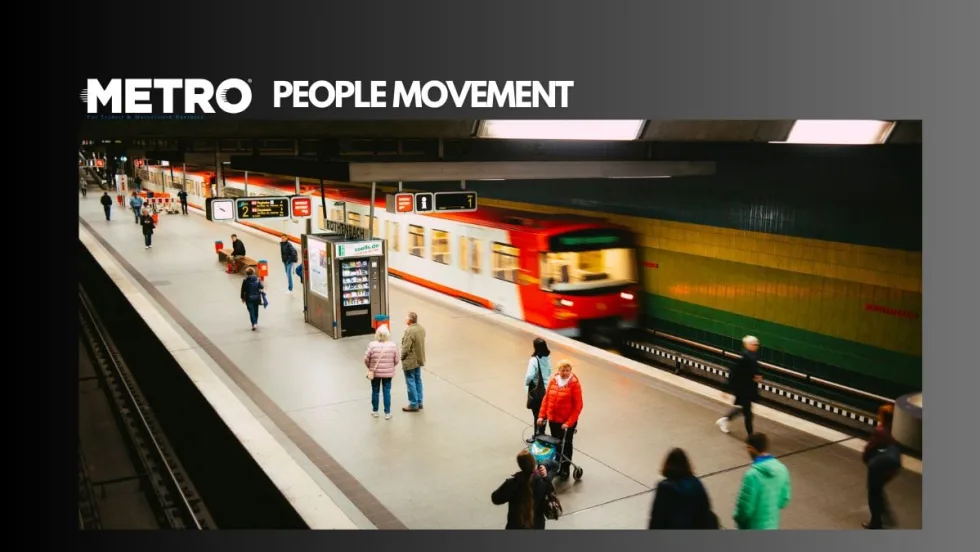
People Movement: Connectpoint Expands Leadership Team, Stadler Names New Group CEO, and More
In this edition, we also spotlight recent personnel moves at Burns, UZURV, and more, highlighting the people taking on new roles across the transportation industry.
Read More →
More Than a Summer Job: Building the Next Generation of Transit Talent
The Delaware River Port Authority and PATCO have transformed their internship program into a hands-on professional development experience that introduces students to the breadth of transportation careers — and creates a pipeline for future employees.
Read More →
LA Metro Board Awards 220 Battery-Electric Bus Contract to ENC
The contract, which is the largest base award of battery-electric buses by a U.S. transit agency, will be built in Southern California, sustaining good jobs as LA prepares to welcome the world in 2028
Read More →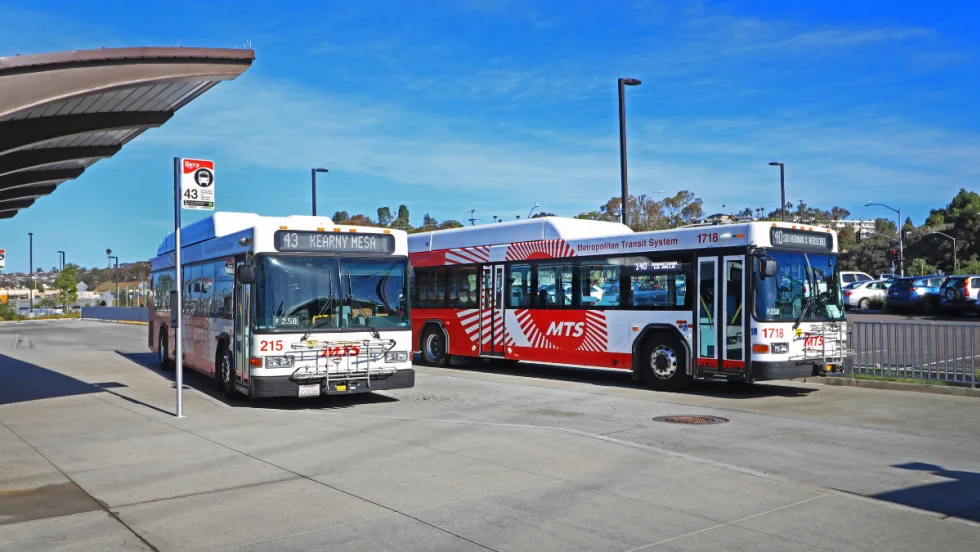
What’s Behind San Diego MTS’s Award-Winning Transit Strategy
Named one of APTA’s 2026 Outstanding Public Transportation Systems with 50 million or more annual passenger trips, California’s San Diego Metropolitan Transit System points to gains in ridership, safety, technology, and reliability as foundations of its success.
Read More →
Public Transit Conference Returning to GFX in 2027, Call for Papers Now Open
The Call for Papers is now open, allowing transit agency professionals and industry experts to help shape the PTC educational program by submitting session ideas for consideration.
Read More →
Indian River Transit’s Community-Focused Approach Earns National Recognition
Named APTA’s 2026 Outstanding Public Transportation System in its size category, Florida’s Indian River County transit system continues to grow ridership through fare-free service and a focus on evolving community needs.
Read More →
ENC Lands MATA Contract and More in Biz Briefs
In this edition of Biz Briefs, we spotlight the latest developments shaping the future of mobility.
Read More →From Surviving to Thriving: Building Stronger Transportation Organizations
Bus Business Consultants founder Brian Dickson shares lessons on leadership, organizational health, and creating options for long-term success in a changing transportation industry.
Read More →