



High-Speed Rail Projects Remain Beyond U.S. Grasp
With many states predicting their populations to double in the next 30-plus years, many are looking for ways to ease traffic congestion and make getting around town as easy and environmentally friendly as possible. Adding freeway lanes, especially in metropolitan areas, is rarely an option, and even when viable, it is costly and could possibly increase traffic during the time the new lanes are being built. Some airports, likewise, would become even more overcrowded than they are now.
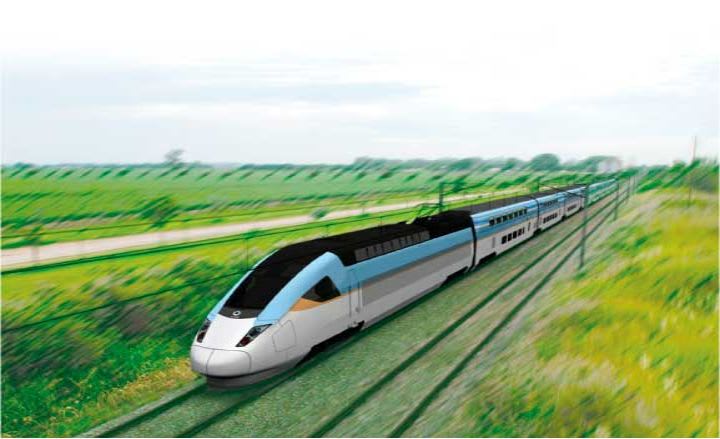
Argentina is set to develop the first high-speed line in Latin America. Alstom will supply the trains for the 441-mile line linking to Buenos Aires.
[IMAGE]MET6pg28newsite-1.jpg[/IMAGE]
With many states predicting their populations to double in the next 30-plus years, many are looking for ways to ease traffic congestion and make getting around town as easy and environmentally friendly as possible. Adding freeway lanes, especially in metropolitan areas, is rarely an option, and even when viable, it is costly and could possibly increase traffic during the time the new lanes are being built. Some airports, likewise, would become even more overcrowded than they are now.
Enter high-speed rail projects, which promise to make travel easy, affordable and ecologically-friendly, as well as increasing the possibility that a nationwide high-speed rail network may one day become a reality. While the U.S. decides whether it will invest in these projects, high-speed systems are flourishing around the globe with projects in China, Korea, Taiwan, Spain and France. In January, it was announced that Argentina would develop the first high-speed line in Latin America. This 441-mile line will link Buenos Aires and Cordoba, with Alstom supplying the trains.
Back in the States, there are several high-speed rail projects in the planning stages, many of which face the possibility of never coming to fruition because the federal government has no funding mechanism in place.
There are a few projects gaining ground, most notably in California where citizens will be able to vote for a $9.95 billion referendum in November that would fund about one-third of the project. Still, others languish without funding, forcing many to go back to the drawing board.
The Midwest
Aside from California, many other states and pacts of states are planning projects that they hope will get off the ground soon.
The Midwest Regional Rail Initiative is a plan to implement a 110-mph passenger rail network in the Midwestern U.S., including 3,000 miles of track, using Chicago as a primary hub. Routes would stretch across several major cities throughout the Midwest, including Minneapolis, St. Louis, Kansas City, Mo., Cincinnati, Cleveland, Detroit and Green Bay, Wis.
“The planning work is far enough along that if they actually committed to doing it, it could be done fairly quickly,” explains Rick Harnish, assoc. executive director for the Midwest High Speed Rail Association. “The state of Illinois has actually done a test section of about 120 miles to make sure the tracks are good for 110 mph.”
Bridges in that stretch have also been rebraced and the grade crossings made safe, but a new signaling system that was being piloted would not work, says Harnish.
Existing Amtrak routes would probably be upgraded as part of this plan, which has been in development since 1996. Michigan has begun upgrading track and signals, already resulting in increased service speeds for Amtrak’s Wolverine service. At this point, however, the project has yet to get any closer to completion.
Florida
In November 2000, Florida voters approved an amendment to the constitution mandating the construction of a high-speed rail transportation system that would operate at speeds in excess of 120 mph and would be separated from motor vehicle traffic. The first phase would have connected Orlando to Tampa. Later phases might have extended the network to several major Floridian cities, including Miami. In March 2001, the Florida Legislature enacted the Florida High Speed Rail Authority Act, which mandated a nine-member board made of the three appointments each by the governor, speaker of the Florida House and President of the Florida Senate. The Florida High Speed Rail Authority (FHSRA) was created as well.
Today, the FHSRA is in limbo thanks to a then-Gov. Jeb Bush-endorsed effort to repeal the 2000 amendment that was approved by Florida voters in 2004.
“FHSRA hasn’t had a meeting in three years, so it’s kind of hard to ascertain where and what they are going to do,” says Nazih Haddad, manager, passenger rail development at the Florida Department of Transportation (FDOT). “But, it’s important to note that they are still in existence. Who knows what can happen in the future.”
Meanwhile, FDOT has pushed ahead with an incremental approach to building intercity rail, but is mainly focused on commuter rail, including a 61-mile system in the Orlando area.
Virginia, North Carolina
The Commonwealth of Virginia is working on a high-speed rail project that would extend the Northeast Corridor from Washington, D.C., to Richmond, Va., which would then connect to North Carolina’s proposed Southeast High Speed Rail (SEHSR) project to go from Richmond to Raleigh, N.C.
Virginia is working on a Tier I Environmental Impact Study (EIS) that is looking at connecting Hampton Roads Transit’slight rail line with Richmond, while a Tier II EIS on the connection between Raleigh and Richmond is being studied by North Carolina. Funds for the studies are coming from Virginia’s Rail Enhancement Fund, a dedicated source of funding that provides about $36 million a year for the improvement of rail infrastructure in the state.
“What we did first is figure out what plausible ways you could take to get from Charlotte to Washington by rail, then we figured out how we would do it,” says Pat Simmons, director of the North Carolina Department of Transportation. “With the Tier II EIS, we’re taking the level of engineering between Raleigh and Richmond to the 30 percent level of engineering.”
Simmons adds that the project expects to have a Tier II Record of Decision by 2010, which enable the states to do several things in parallel, such as build the organization to do the final design and build and proceed with right-of-way acquisition. Both states are working on improving the infrastructure to be sure that the rail lines can accommodate vehicles traveling in excess of 90 mph.
Texas
In Texas, a high-speed rail plan in the 90s, known as the Texas Triangle, was met with opposition from Southwest Airlines, which, with the help of lobbyists, made it difficult to move forward on the project, eventually forcing Texas to pull the plug on the idea in 1994.
Today, high-speed rail plans are taking on new legs. Now known as the Texas T-Bone, the proposed high-speed rail project would connect the major metropolitan cities of San Antonio, Houston and the Dallas/Fort Worth, as well as Austin and Fort Hood, which has a large military base.
“We’re trying to generate interest among people in the corridor for the idea by looking at the people who opposed it before and trying to get them to address their concerns to get them onboard,” says Robert Eckels, chairman of the Texas High Speed Rail Transportation Corporation (THSRTC). “We’ve gotten together with the airlines and, while they are not fully embracing the system, they have joined and been generally supportive of us linking the airports, which is part of the plan.”
Eckels adds that the THSRTC’s approach has been to build support from the ground up, rather from the top down as it did last time when the plan failed. The efforts, he says, have been successful to this point.
California
The most high profile of all the projects, the proposed California High Speed Rail plan, would essentially run from the San Francisco Bay Area in the Northern part of the state to San Diego in the south, with trains that would reach speeds as high as 220 mph. A trip from San Francisco to Los Angeles would take approximately 2.5 hours and be cheaper than flying.
Phase 1 of the project identified by the California High-Speed Rail Authority (CHSRA) to be built is a route from Anaheim to Los Angeles that would continue through the Central Valley into San Francisco.
“What we’re talking about is something comparable to the finest high-speed rail services in Europe and Asia, where you have major stretches with maximum speeds of 220 mph through most of the route except for urban areas,” explains Dan Leavitt, asst. deputy director at CHSRA.
The project is poised for a major step forward if California voters are in favor of a $9.95 billion referendum that would sink $9 billion of those funds into high-speed rail and provide what the CHSRA believes to be about one-third of the funding necessary for completion of the project.
Major hurdles
While there are many logistical problems that still need to be addressed to get these high-speed rail projects off of the ground, the major hurdles at this point appear to be generating interest amongst citizens for a form of transportation they are unfamiliar with, and, more importantly, funding.
“Where the fundamental problem has been in the U.S., is that we haven’t sufficiently educated the public of the benefits of high-speed rail to the level and urgency that would allow federal representatives to feel comfortable in making funding decisions,” says Mark Walbrun, vice president, passenger rail transit, for TranSystems.
“There are very high initial capital costs, so economics plays a big part,” adds Eckels. “There are a lot of people who want to invest in infrastructure projects in the U.S. today, but they want to invest in proven projects; projects with cash flow.”
There are steps being taken toward creating a federal funding program, including legislation, such as additional funding for Amtrak and the recently announced findings of the National Commission on Surface Transportation, which calls for improving the national surface transportation system and increasing intercity passenger rail programs.
“With any transportation project of this magnitude it all comes down to funding,” says Daniel L. Plaugher, executive director at Virginians for High Speed Rail. “Virginia can barely fund its roads or anything else, so that’s where the problem lies. That and there’s never really been a federal pot of money for such projects, they’ve always dumped money into the roads but rail has never had a matching type fund and, hopefully, they are addressing that now.”
Most high-speed rail projects have some type of public-private partnership (PPP) component, yet will still be faced with the difficult chore of attaining federal funding.
“There seems to be a lot more public acceptance of private financing because projects don’t exist today without significant tax support short of private investment,” says Eckels. “What we’re trying to do is build a structure that will attract private capital to help build the system.”
Walbrun adds that finding the right formula combining federal, state and private funding will take time, but could just be around the corner.
“All of those plans that have been proposed have always expected some component from the feds,” he says. “My expectation of what will happen is that somebody at some point will develop enough political [guts] that they are able to shove through a specific funding formula for a specific project and simply get one of them through.”
Critical vote
While the U.S. has languished in trying to get high-speed systems off the ground, Europe could be about ten years away from implementing a seamless network that allows travelers the ability to easily get around the continent, according to Walbrun. He also adds that while the U.S. has been spinning its wheels, countries like China have taken huge steps toward developing nationwide systems. High-speed rail is also very close to making its first appearance in the Western Hemisphere with initiatives in Argentina, Brazil and Mexico picking up steam.
With the rest of the world bypassing the U.S., many high-speed rail advocates point to the upcoming November vote in California as being vital.
“The most important thing that’s going to happen in 2008 is when California has a chance to vote for or against high-speed rail in California,” says Harnish. “That really is a critical vote. We really need to do at least one high-speed rail project in this country and that’s the only one that is far enough along.”
“All of us with an interest in high-speed rail in Texas are watching to see what the California solution to its issues are, and how we can look for a solution here that will work in our market and within our cost structure,” says Eckels. “Hopefully, we’ll also be able to support each other as we look at a national plan to see what works for both of us.”
The vote may also have vital national impacts in addition to just transportation, according to CHSRA’s Leavitt. “This is not just a California issue, it is something that is also of national significance to help this country develop transportation systems that reduce CO² emissions, dependency on foreign oil and help us develop in ways that are more sustainable,” says.
Acting slowly to implement high-speed rail in California and the nation could be extremely costly in the long run, he says. “The problem is that every year we wait the cost goes up approximately $2 billion,” Leavitt says. “It probably goes up even higher than that, because if you look at the cost of delay it’s not just inflation, it’s also lost opportunity. The more we develop without this system, the cost goes up because it will get harder and harder to implement.”
More Rail
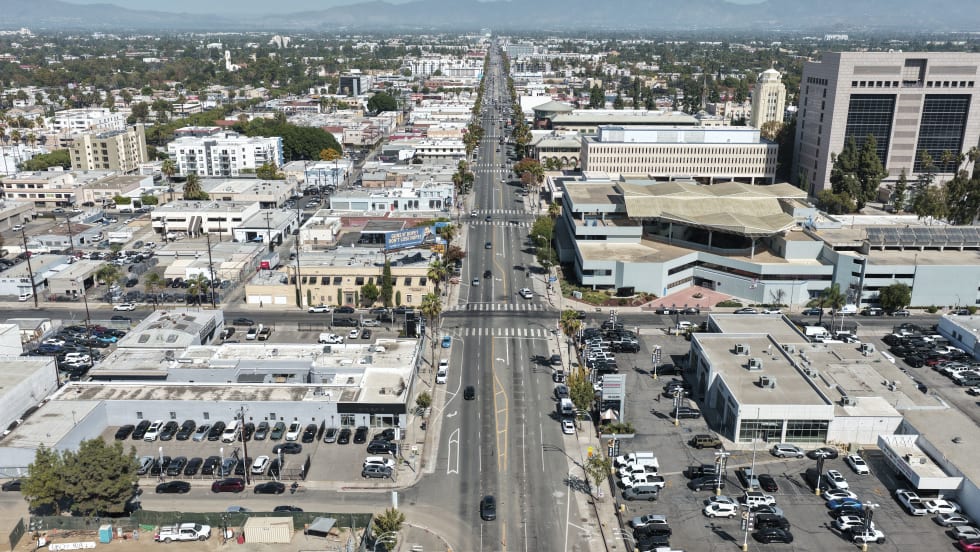
LA Metro Breaks Ground on East San Fernando Valley Light Rail Project
The 6.7-mile line will add 11 stations along Van Nuys Boulevard, expand access to jobs and regional transit connections, and support Metro’s broader efforts to improve mobility as rail ridership grows.
Read More →
CSA Group Releases Climate Resilience Standard for Transit, Passenger Rail
Developed with support from the Standards Council of Canada, CSA D700 guides assessing climate-related risks and planning adaptation measures for transit and passenger rail systems.
Read More →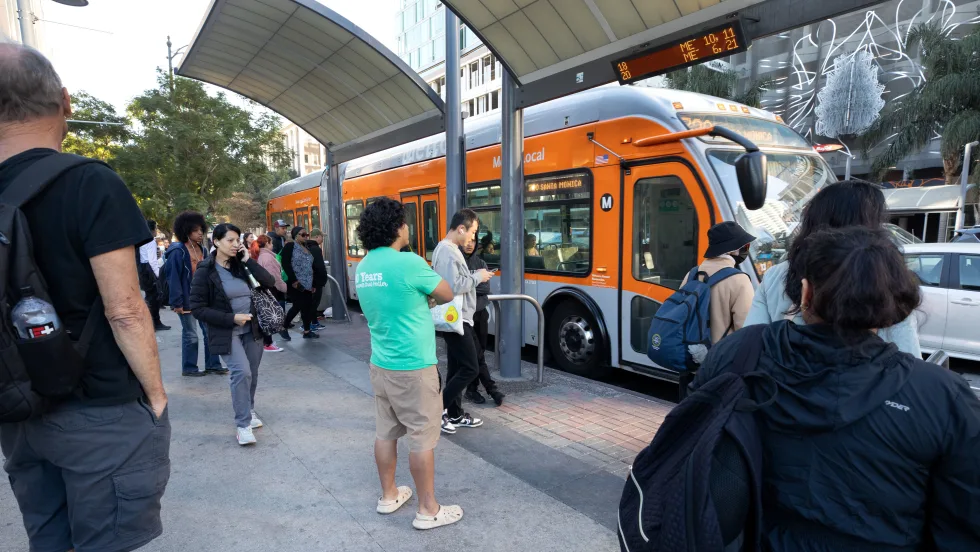
LA Metro September Ridership Climbs 3.9%, Led by Rail Growth
The agency recorded more than 27.2 million boardings, with rail ridership increasing 12.4% year over year and the D Line posting the largest gains.
Read More →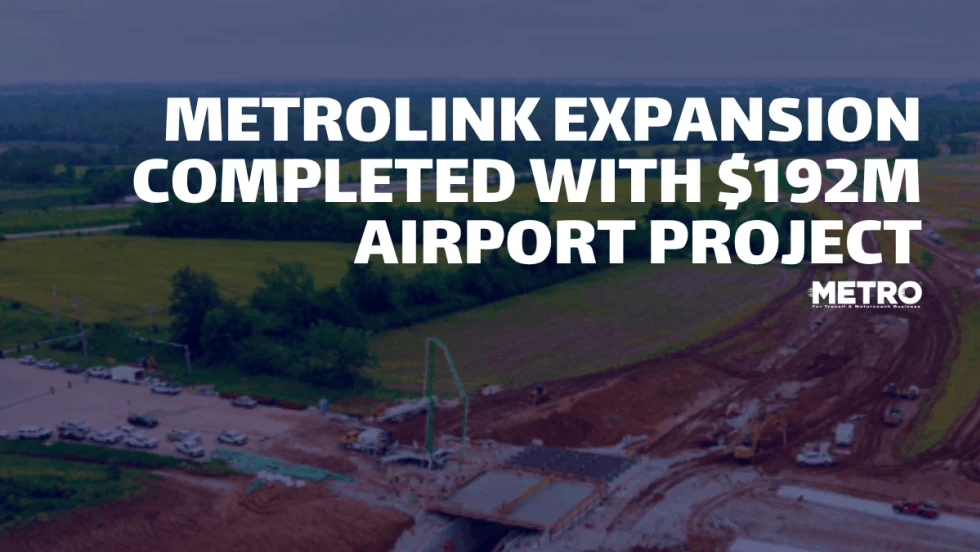
First Full MetroLink Rail Expansion Completed in 20 Years with $192M Airport Project
The project links two St. Louis-area airports by light rail while adding roadway and bike trail connections to improve regional access and mobility.
Read More →
Utilimarc Launches SmartReplace to Optimize Fleet Replacement Decisions
AI-powered SmartReplace helps fleets prioritize vehicle replacements, model budget scenarios, and build more defensible long-term strategies.
Read More →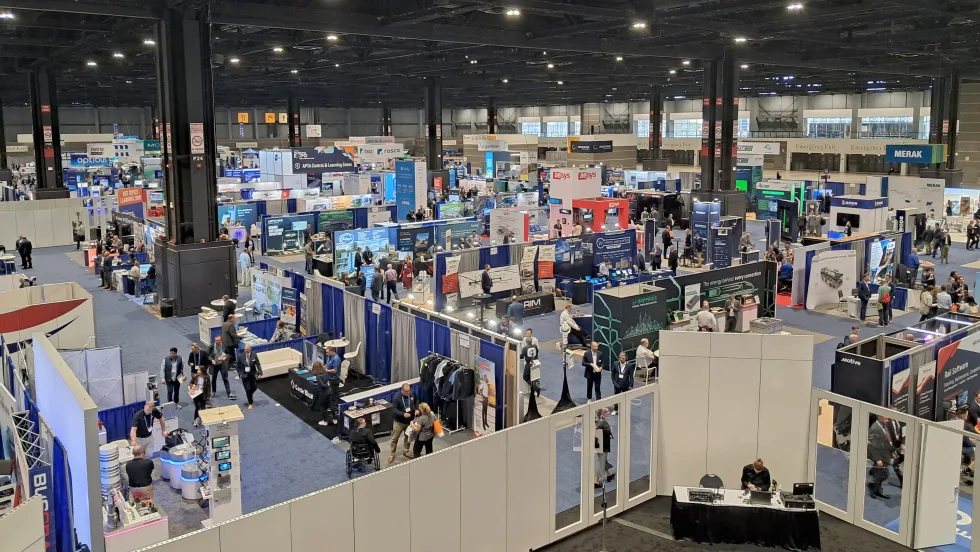
Scenes from APTA TRANSform & EXPO 2026
Transit leaders, manufacturers, and industry professionals gathered in Chicago to explore new technologies, share ideas, and discuss the future of public transportation.
Read More →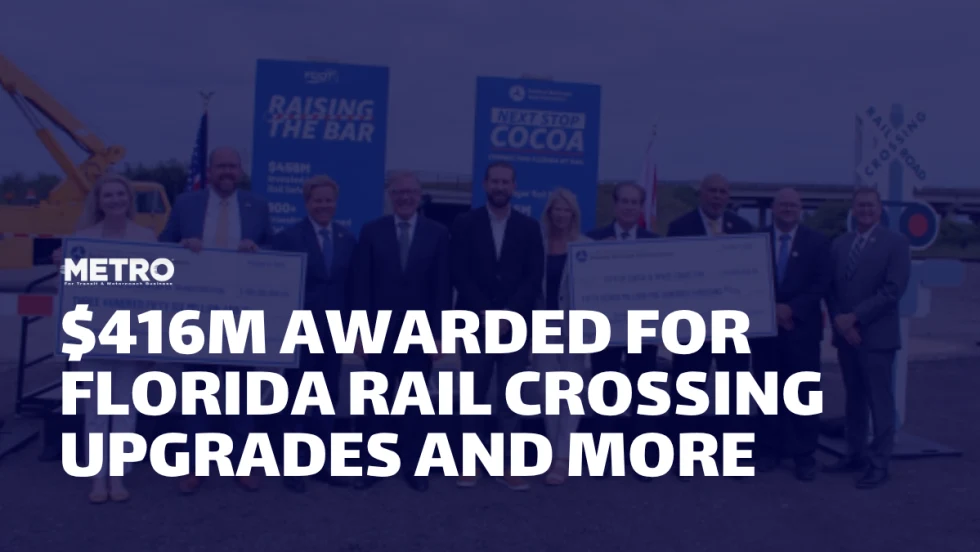
USDOT Awards $416 Million for Florida Rail Crossing Safety Upgrades, New Brightline Station
The projects aim to reduce risks for motorists and pedestrians at rail crossings while expanding passenger rail access along Florida’s Space Coast.
Read More →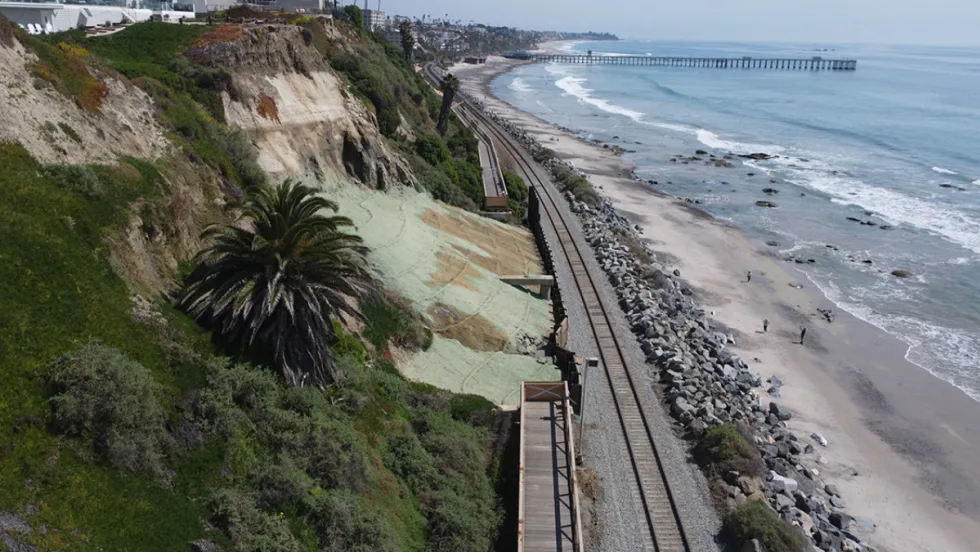
OCTA Declares Emergency to Protect Rail Corridor From Coastal Erosion
The California agency is accelerating shoreline protection and plans to place approximately 690,000 cubic yards of sand along the San Clemente coast to protect a key passenger and freight rail link.
Read More →
More Than a Summer Job: Building the Next Generation of Transit Talent
The Delaware River Port Authority and PATCO have transformed their internship program into a hands-on professional development experience that introduces students to the breadth of transportation careers — and creates a pipeline for future employees.
Read More →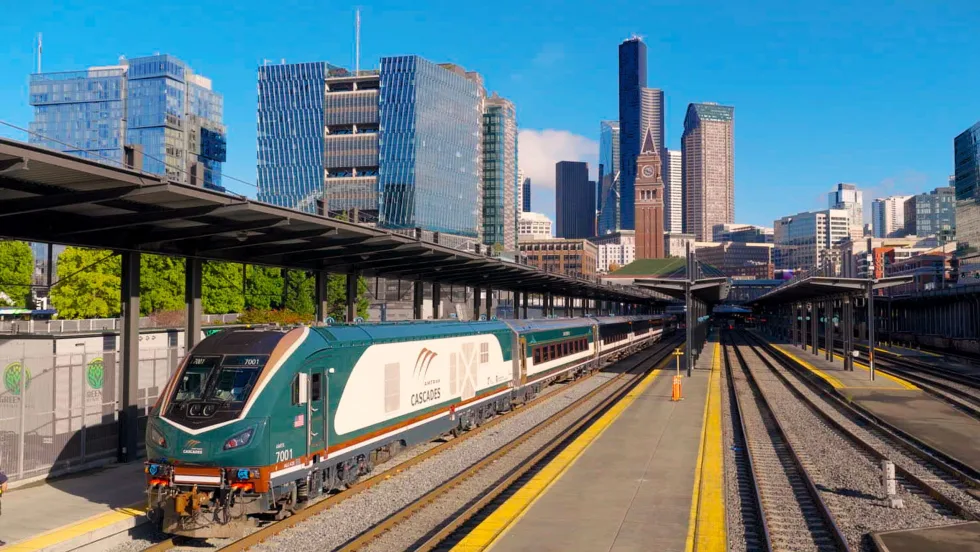
Airo Trains Make Their Amtrak Cascades Debut in the Pacific Northwest
Effective immediately, two cutting-edge Airo trainsets will join the Amtrak Cascades route, operating four daily trips between Vancouver, B.C., Seattle, Portland, and Eugene, Oregon, marking the first introduction of Airo trains into passenger service anywhere in the country.
Read More →