



High-Speed Success Overseas Hasn't Come to the U.S.
With high-speed rail projects springing up all over the world, will the United States be forced to forever play catch-up? Although corridor proposals are plentiful, U.S. projects are mired in funding quandaries, face stringent safety standards and an aging rail infrastructure.
High-speed rail usually conjures images of a bullet train rocketing through the countryside — a blur of color. But high-speed rail has different meanings throughout the world: In the United States, it means a train traveling at speeds faster than 79 mph, whereas in Europe or Japan it means speeds of up to 200 mph. The only high-speed service in the U.S. is Amtrak’s Acela Express, which can travel at speeds up to 150 mph, but it only achieves that speed on 18 miles of the 452-mile Northeast Corridor between Boston and Washington, D.C. That uneven performance is due to trains running on existing 100-year-old track, which still requires new equipment to sustain higher speeds. New equipment costs money, and finding money to maintain aging rail infrastructure as well as for the development of high-speed rail projects is one of the many hurdles the U.S. faces in developing rail projects. Making tracks At one time, train tracks spread across the U.S. like a spider web, bringing with them a glorious rail revolution that garnered nationwide praise. However, a cultural and technological shift brought the automobile into prominence as the primary means of transportation. Next on the scene was increasingly accessible air travel, which put passenger rail service out to pasture, where it has languished ever since. Rail service is slowly trying to make a comeback in the form of a high-speed system. Witness the aforementioned Acela, which began service at the end of 2000. Although it is not running at its fullest potential because of infrastructure restrictions, Amtrak’s Acela is becoming a competitive mode, with about 45% of the market of traffic between D.C. and Boston. “It’s like having a Ferrari if you are only going to be doing city driving,” says Patrick Moore, transportation co-chair of the Sierra Club’s Loma Prieta Chapter. High-speed trains must sustain a minimum speed to generate trip time reduction that is meaningful, says Moore. Time is of the essence if trains want to be an attractive alternative and compete with the airlines. “The case for high-speed rail has not been made in the U.S. because it has not been completed,” says Jean-Marie Aubriot, Alstom vice president of system division. “I think once people in this country ride a train going 200 mph, then the old picture of rail will change.” Development hurdles Why do countries other than the U.S. appear to be more successful at developing and building high-speed rail systems? The demographics are different in other countries, such as Germany, where major cities are closer together. In addition, train travel has remained strong in Europe because lines are dedicated to high-speed service, unlike the U.S. where passenger service lines share track with freight. “Amtrak, everywhere outside the Northeast Corridor, operates by lease agreement or track-use agreement with the freight railroads,” says Federal Railroad Administration (FRA) spokesman Warren Flatau. Stringent safety standards are another hurdle met by the U.S. in its quest to develop high-speed rail. In order to run high-speed service at a minimum, the FRA has determined a number of steps that have to be taken to ensure safety, says Flatau. “The U.S. has the most stringent safety standards for rail equipment and infrastructure of any nation in the world,” he says. For example, passenger equipment in Europe does not meet the same crashworthiness standards that U.S. equipment does, he says. The European advantage to developing high-speed rail was the vast improvement to its infrastructure after World War II as part of the Marshall Plan. On the opposite end of the spectrum, U.S. railroads suffered decades of deferred maintenance by the mainline railroads that kept passenger service going before they were relieved by Amtrak. Europe already had a very successful passenger network in place to build upon, which led it to create premium service high-speed lines like the Train a Grande Vitesse (TGV) in France. France introduced a whole new level of service in 1981 with the TGV, which runs from Paris to Lyons. The TGV, traveling at a top speed of 167 mph, quickly overtook the market for the once-heavy air corridor. High-speed rail has become its own mode because it goes beyond conventional rail and competes in 300 to 500 mile corridors with air service, says Al Engel, president and CEO of Systra Consulting Inc. As a rule, Europe invests more state money into infrastructure and development of these corridors. “It is good to invest in infrastructure because there is a return on the investment in a broader sense,” says Engel. Maybe the railroad cannot recover all the capital and operating expense, but there is a tremendous economic multiplier for the states through taxes from real estate development and other revenue, he says. The U.S. has a much narrower view in regards to passenger service, where passenger rail is expected to be profitable. “I think it’s a big stretch to expect Amtrak to be profitable, especially when you look at the dilapidated system that it inherited,” says Engel. There is a mentality that exists in the U.S. that passenger rail should also be self-supporting. “Why do we hold the railroad to a different standard than anything else?” says Engel. Money matters In order to make rail transportation more viable to compete for federal funding, society needs to change its rhetoric in regards to investment. “When we put money into highways, airports and transit systems we call it an investment. When we put it into Amtrak it’s a subsidy,” says Mark Dysart, president of the High Speed Ground Transportation Association (HSGTA). Highways get approximately $33 billion a year from the federal budget, whereas the airlines receive $17 billion and passenger rail is given nearly half a billion, which goes to Amtrak. In its entire history, Amtrak received a total of $23.6 billion, of which $14.1 billion was used for operating expenses. The bail out bill for the aviation industry post-September 11 alone was $15 billion. “We just don’t have enough of a voice yet in Congress to swing people to invest real dollars in high-speed rail,” says Engel. The HSGTA is trying to raise its voice in Congress by creating a set of principles that explain what they expect in legislation for high-speed rail. The association’s guidelines propose $71 billion, with 70% in the form of tax-exempt bonds and federal credit supports and the remaining 30% in federal grants, for the development of a network of high-speed train corridors. “The idea is to have a dedicated source of funding, so we are not scrambling year to year to get a very small amount of money,” says HSGTA’s Dysart. If the plight of passenger rail had been pushed to the background it has seen an urgent reprise after the tragic events of September 11, when grounded flights forced people to turn to the rails, which were still in service, in order to get home. “After September 11, people realized that this country cannot rely on one transportation system,” says Alstom’s Aubriot. Project updates in U.S. … Despite the challenges involved in developing high-speed rail in the U.S., there are plenty of promising projects in the works. Here are updates on some projects in the U.S. and overseas. The project in development for California can be defined as “true high-speed rail,” capable of speeds in excess of 200 mph on dedicated, fully graded separated tracks with state-of-the-art safety, signaling and automated train control systems. The project, with an estimated cost of $25 billion, is a 700-mile system linking all of California’s major metropolitan areas from San Francisco to Los Angeles to San Diego. A formal environmental review process for the project is underway, with completion anticipated by 2003. Once the document is completed, the California High Speed Rail Authority (CHSRA) will have the ability to preserve right-of-way and create an implementation plan on what appropriate phasing for the project should be, says Dan Leavitt, CHSRA deputy director. Completion of the system, which is projected to carry 32 million intercity passengers and transport 10 million commuters, is slated for 2020. In Florida, voters approved a high-speed ground transportation amendment in November 2000 that required the state to proceed with the development of a system of dedicated track that would operate at speeds in excess of 120 mph. Construction of the first leg of the system, running from Tampa to Orlando with an estimated cost of $1.2 billion to $6 billion, will begin by November 1, 2003, per the amendment. The Florida High Speed Rail Authority recommended that the second leg of the system run from St. Petersburg to Tampa, with a proposed construction date of 2005. Midwest corridor beckons Another corridor project is the Midwest Regional Rail Initiative, which consists of a system centered in Chicago as the hub-city with lines branching out to several major cities, including Detroit, St. Louis, Cleveland and Milwaukee. For the Chicago-St. Louis line track, which is expected to be completed this year, upgrades were funded for the track portion between Joliet and Springfield, where crews are bringing the track up to Class 6 standards to prepare it for speeds up to 110 mph. Environmental work for extending the service from Milwaukee to Madison has been completed, but progress is at a standstill as the extension awaits funding. Until the issue of using Amtrak, which is not in a position to provide the service or growth needed in the Midwest, is taken care of, there won’t be any real progress here, says Rick Harnish, executive director of the Midwest High Speed Rail Association. “Right now the main focus is trying to get Congress to take up the issue of Amtrak this year, instead of putting it off,” says Harnish. To that end, he urges people to write to Congress as well as to prompt the involvement of mayors and chambers of commerce. … and overseas Last June saw the introduction of France’s Mediterranean TGV, a 155-mile line between Valence and Marseille, with Alstom TGV trains travelling at speeds of up to 186 mph. The $3.3 billion project, which cut journey time between Paris and Marseille by an hour-and-a-half down to three hours, took 12 years to complete. Nearly 500 structures were built for the system, including seven viaducts varying in length from 0.2 miles to 1.1 miles, two tunnels and three new stations. A few days prior to the opening of the Mediterranean line, a TGV train broke a world high-speed endurance record traveling 621 miles in three hours and nine minutes at an average speed of 197 mph. South Korea is getting in on the action with a high-speed rail corridor linking Seoul to Pusan, with trains set to begin running in 2003. Studies for the project began in the early ’80s and construction commenced in the Ch’onan-Taejon region in 1992. The route length totals 256 miles, with almost half (46%) of the track running in tunnels. An additional 25% will course over 148 viaducts or bridges. More than 500 passengers per day are expected to travel from South Korea’s capital to Pusan. The trip will take less than two hours. The train fleet is composed of 46 TGV-designed trainsets, built under a technology transfer agreement with Alstom. One of the higher-profile projects underway is the Jinghu high-speed rail line in China. The proposed system, a separated passenger line that includes 24 stations with costs estimated at $12 billion, will cover 812 miles connecting Beijing and Shanghai. Trains are expected to operate at speeds of 155 to 186 mph if traditional track is adopted.
More Rail
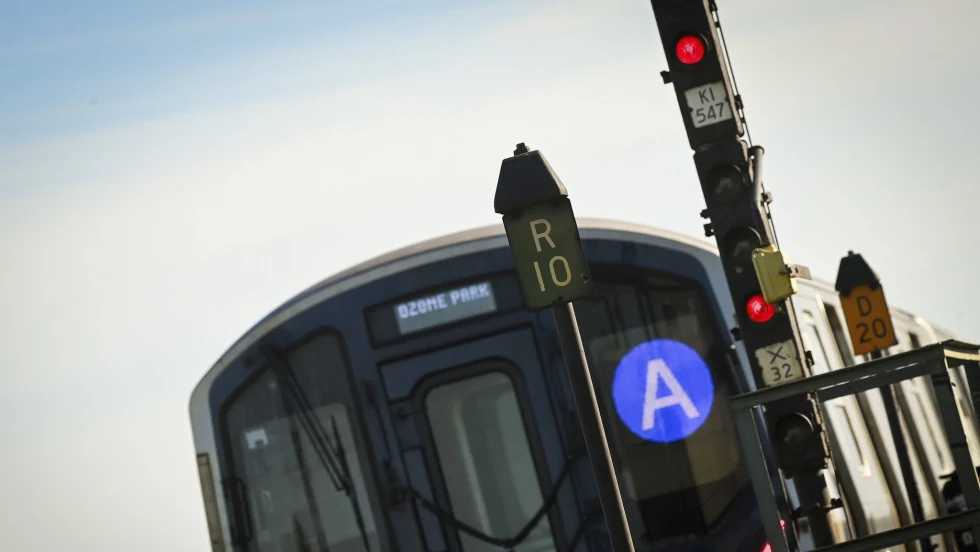
New York MTA Launches Historic $1.9B Signal, Track Modernization Project
Funded in part by congestion pricing revenue, the project will replace nearly century-old signals along the A and C lines in Brooklyn and Queens.
Read More →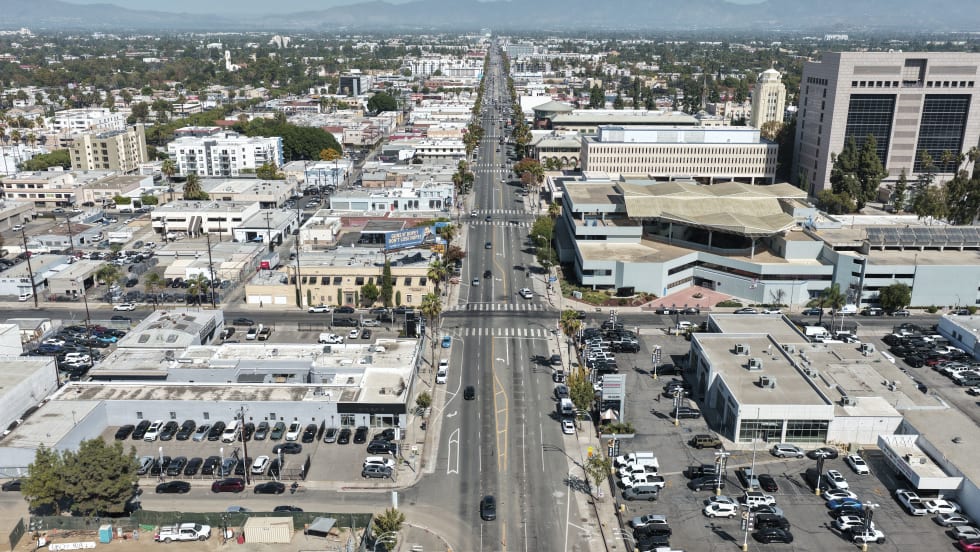
LA Metro Breaks Ground on East San Fernando Valley Light Rail Project
The 6.7-mile line will add 11 stations along Van Nuys Boulevard, expand access to jobs and regional transit connections, and support Metro’s broader efforts to improve mobility as rail ridership grows.
Read More →
CSA Group Releases Climate Resilience Standard for Transit, Passenger Rail
Developed with support from the Standards Council of Canada, CSA D700 guides assessing climate-related risks and planning adaptation measures for transit and passenger rail systems.
Read More →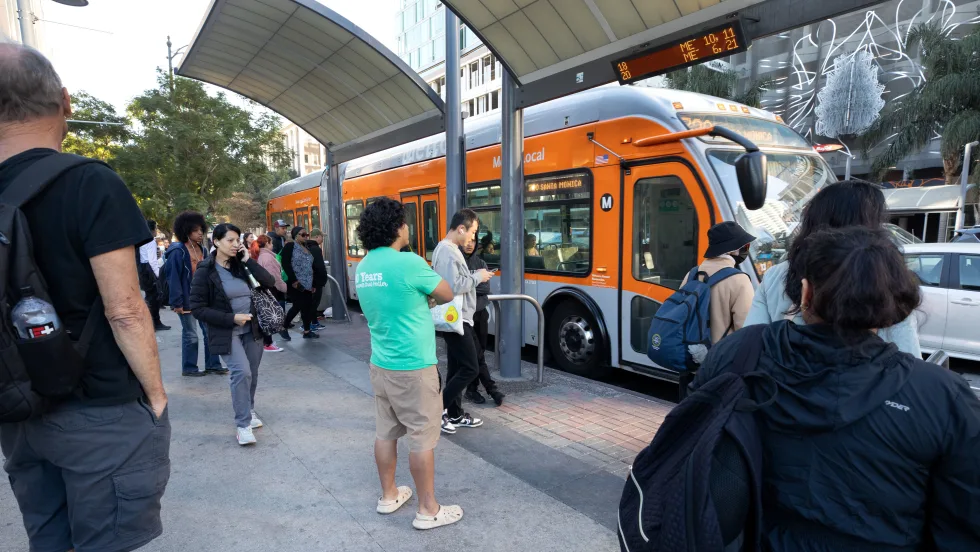
LA Metro September Ridership Climbs 3.9%, Led by Rail Growth
The agency recorded more than 27.2 million boardings, with rail ridership increasing 12.4% year over year and the D Line posting the largest gains.
Read More →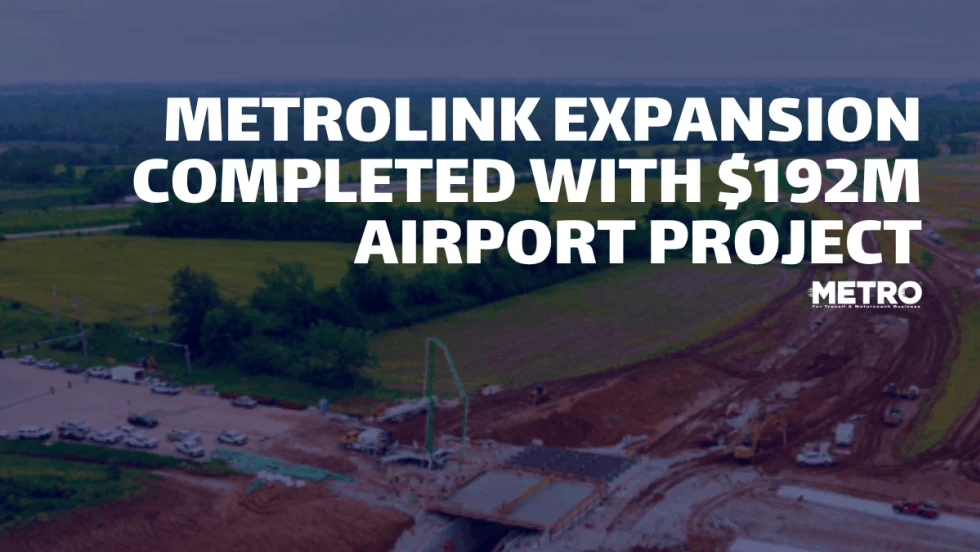
First Full MetroLink Rail Expansion Completed in 20 Years with $192M Airport Project
The project links two St. Louis-area airports by light rail while adding roadway and bike trail connections to improve regional access and mobility.
Read More →
Utilimarc Launches SmartReplace to Optimize Fleet Replacement Decisions
AI-powered SmartReplace helps fleets prioritize vehicle replacements, model budget scenarios, and build more defensible long-term strategies.
Read More →
Scenes from APTA TRANSform & EXPO 2026
Transit leaders, manufacturers, and industry professionals gathered in Chicago to explore new technologies, share ideas, and discuss the future of public transportation.
Read More →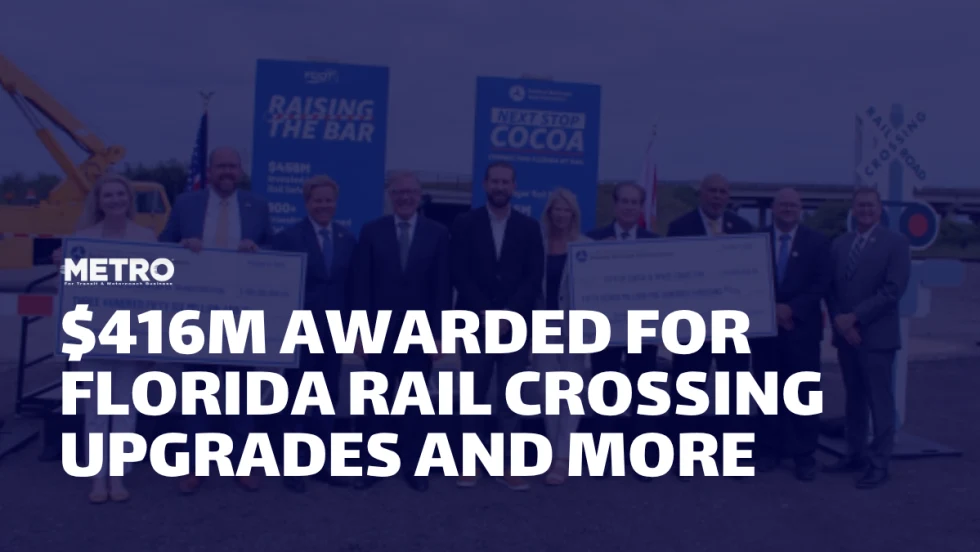
USDOT Awards $416 Million for Florida Rail Crossing Safety Upgrades, New Brightline Station
The projects aim to reduce risks for motorists and pedestrians at rail crossings while expanding passenger rail access along Florida’s Space Coast.
Read More →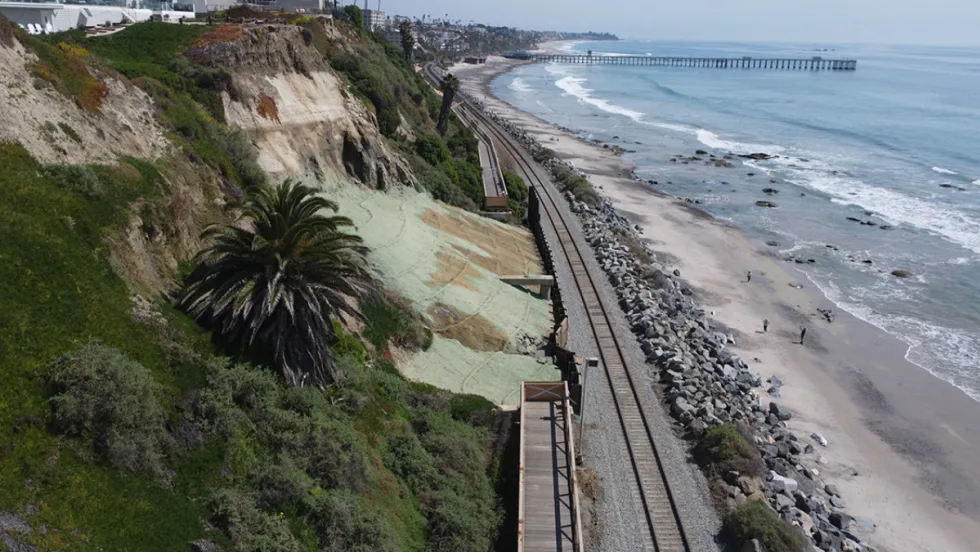
OCTA Declares Emergency to Protect Rail Corridor From Coastal Erosion
The California agency is accelerating shoreline protection and plans to place approximately 690,000 cubic yards of sand along the San Clemente coast to protect a key passenger and freight rail link.
Read More →
More Than a Summer Job: Building the Next Generation of Transit Talent
The Delaware River Port Authority and PATCO have transformed their internship program into a hands-on professional development experience that introduces students to the breadth of transportation careers — and creates a pipeline for future employees.
Read More →