



D Line Expansion Fuels Growth Across LA Metro's Rail System
Weekend rail ridership was especially strong, soaring 18% as riders embraced expanded access to jobs, entertainment, dining, and cultural destinations, said the agency. Total system ridership for May, including bus and rail, was 26,966,657.

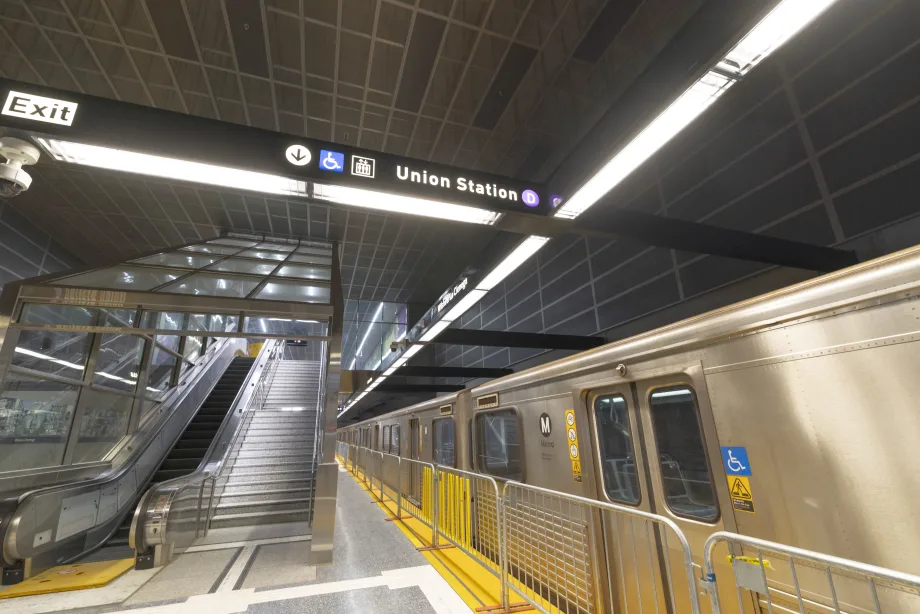
The opening of the three new D line stations helped boost ridership, even though they were not open for the entire month. In addition, the L.A. County Fair, Jazz at LACMA, and the Demi Lovato concert at the Kia Forum contributed to the increase, said officials.
LA Metro
- Weekend rail ridership increased by 18%, reflecting greater access to jobs, entertainment, dining, and cultural destinations.
- The Los Angeles Metro agency reports a total system ridership of 26,966,657 for May, which includes both bus and rail services.
- The expansion of the D Line has contributed to significant growth in the usage of the LA Metro's rail system.
*Summarized by AI
Los Angeles is choosing Metro rail more than they have in over six years, with the agency reporting that ridership on the mode has increased 9.5% compared to the same period last year, driven by a remarkable 62% jump on the D line following the opening of three new stations in early May.
Weekend rail ridership was especially strong, soaring 18% as riders embraced expanded access to jobs, entertainment, dining, and cultural destinations, said the agency. Total system ridership for May, including bus and rail, was 26,966,657.
"The opening of the new D Line stations is already making a meaningful difference, connecting more Angelenos to jobs, educational opportunities, entertainment, and cultural destinations across our region,” said Fernando Dutra, Metro board chair. “These ridership numbers show that when we invest in fast, reliable, and convenient transit, people respond. Seeing rail ridership reach its highest levels in more than six years — and continue to grow for a sixth consecutive month — is a strong sign that Metro's investments are delivering real value to the communities we serve.”
Strong Rail Ridership
During May, rail ridership totaled 6,472,058. The new D Line stations added 8,000 to 10,000 new riders per day, and overall, weekday rail ridership rose 8%, while weekend ridership rose 18%.
The opening of the three new D line stations helped boost ridership, even though they were not open for the entire month. In addition, the L.A. County Fair, Jazz at LACMA, and the Demi Lovato concert at the Kia Forum contributed to the increase, said officials.
Rail ridership highlights include:
- Ridership increased 11.3% on the A line, continuing its strong performance and also experiencing strong growth on weekends, including 21.3% on Saturdays and 18.5% on Sundays.
- A 7% increase on the B line, with the biggest gains on Saturdays and Sundays.
- The D line increased by 62%, with especially high growth on weekends, at nearly 80%.
- A 4% increase on the E line, which represents a continued growth streak.
- A significant 48% increase on the K line, with weekends seeing the highest increases at 62.7% and 60.5% for Saturdays and Sundays, respectively.
“Tens of thousands more people each day are choosing Metro rail because — frankly — it provides a better alternative than sitting in traffic, especially when you look at the D Line, which cuts commute times in half,” said Metro CEO Stephanie Wiggins. “We expect the rail numbers to increase as more people discover the convenience as well as the cost and time savings of using the system.”
Bus Ridership Down
Meanwhile, LA Metro officials reported that bus ridership decreased 4.9% year-over-year, resulting in an overall ridership decrease of 1.8%.
Route 720 saw a 6.5% year-over-year decrease in ridership, largely driven by the expansion of the D line, which largely follows the same route along Wilshire Boulevard.
Bus ridership still makes up most of Metro’s numbers, with ridership at 20,494,599 for the month.
Quick Answers
The D Line expansion has resulted in an 18% increase in weekend rail ridership, as more riders utilize the system for access to jobs, entertainment, dining, and cultural destinations.
*Summarized by AI
More Management

METRO Opens Submissions for 2026 Motorcoach Awards
Nominations are now being accepted for METRO Magazine’s Operator of the Year and Innovative Operator of the Year awards.
Read More →
New York MTA Advances Final Contract for Second Avenue Subway Expansion
Contract Four is the largest in the Second Avenue Subway Phase 2 project and includes construction of station infrastructure, tracks, and signals for the subway expansion, MTA officials said. Work on Contract Four will begin in 2027.
Read More →
Transit Agencies Highlight Safety Gains at National Summit
Leaders from 15 major transit systems shared crime-reduction results and safety initiatives while discussing the role of continued federal support.
Read More →

NITA Names New Leadership, Expands Reduced-Fare Program at First Board Meeting
The new regional transit authority appointed its first board chair and interim executive director while extending reduced fares across CTA, Metra, and Pace for eligible riders.
Read More →
Beyond the Checklist: A Structured Approach to Transit Maintenance
Reliability-Centered Maintenance helps transit agencies move beyond routine checklists to focus limited resources on the assets and failures that have the greatest impact on safety, reliability, and service.
Read More →
APTA 2026 Nominating Committee Selects Leadership Slate, Names Chair and Vice Chair Nominees
Leadership changes will help shape the association’s priorities and its representation of the transportation industry during the 2026–2027 term.
Read More →
DART Launches Major Security, Fare Enforcement Initiative
The 90-day demonstration will deploy coordinated security teams at five light rail stations while testing controlled access and gathering data to guide future investments.
Read More →
Advancing Fare Collection Through Technology and Innovation
Learn about delivering 1300 gates at 91 stations while managing fare evasion. Explore the large scale deployment, solution customization and real-world results that affect the region. Prepare for deployment in your region now.
Read More →
Game Day in Motion: Moving Millions During the 2026 World Cup
Between packed transit stations and team motorcoaches, see how agencies and operators across North America tackled the transportation demands of the 2026 FIFA World Cup.
Read More →
Surface Transportation Extension Averts Shutdown, Leaves Transit Funding Gap
The stopgap keeps federal transportation programs moving, but missing advance funding could complicate the transit and rail projects agencies are planning next.
Read More →