



Penn Station Transformation Advances with Design Unveiling
The historic redesign will transform the busiest transit hub in the Western Hemisphere from the tracks to the street level, creating a more efficient, cleaner, and functional experience for more than 600,000 daily commuters and millions of visitors.

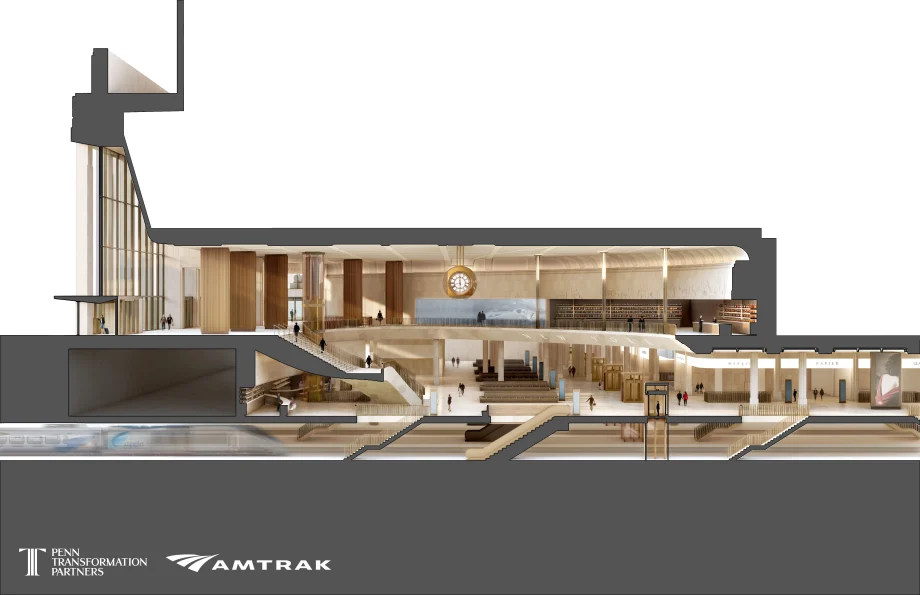
The U.S. Department of Transportation took control of Penn Station’s transformation in April 2025, and Secretary Sean Duffy provided Amtrak with $43 million in federal grant funding to jumpstart an aggressive schedule.
Amtrak
- The redesign of Penn Station aims to transform it into a more efficient and functional transit hub.
- The renovation will improve conditions for over 600,000 daily commuters and millions of visitors.
- The project spans from the station's tracks to street level, ensuring a cleaner and more organized space.
*Summarized by AI
US Department of Transportation Secretary Sean P. Duffy, Special Advisor to the Amtrak Board Andy Byford, and Penn Transformation Partners (PTP) unveiled the design renderings for the redevelopment of New York Penn Station. PTP — a joint venture led by Halmar and Skanska — will serve as the master developer for the project.
The historic redesign will transform the busiest transit hub in the Western Hemisphere from the tracks to the street level, creating a more efficient, cleaner, and functional experience for more than 600,000 daily commuters and millions of visitors. PTP’s vision will make the station safer, more spacious, and better connected, while elevating it into a modern civic landmark.
Madison Square Garden will remain in place, and throughout construction, the arena and all railroads will continue to operate. Breaking ground by the end of 2027, the transformation of Penn Station will be 100% union-built, creating thousands of jobs and supporting local and regional economic activity.
The Penn Station Transformation
The U.S. Department of Transportation took control of Penn Station’s transformation in April 2025, and Secretary Sean Duffy provided Amtrak with $43 million in federal grant funding to jumpstart an aggressive schedule.
In May 2026, Penn Transformation Partners was selected as the master developer, and the Department invested an additional $200 million to support critical design and permitting work.
The completed station will transform the commuter and visitor experience at Penn Station with a design that reduces congestion, eliminates dead ends, improves visibility, and expands waiting areas evenly throughout the Station.
Once completed, the visitor experience at Penn Station will be dramatically improved in every way, whether you’re a New Jersey or Long Island resident commuting to work daily, a fan heading to Madison Square Garden, an Amtrak traveler visiting the city for the first time, or simply a neighbor wanting a safer, more pleasant pedestrian experience around Penn Station, officials said.
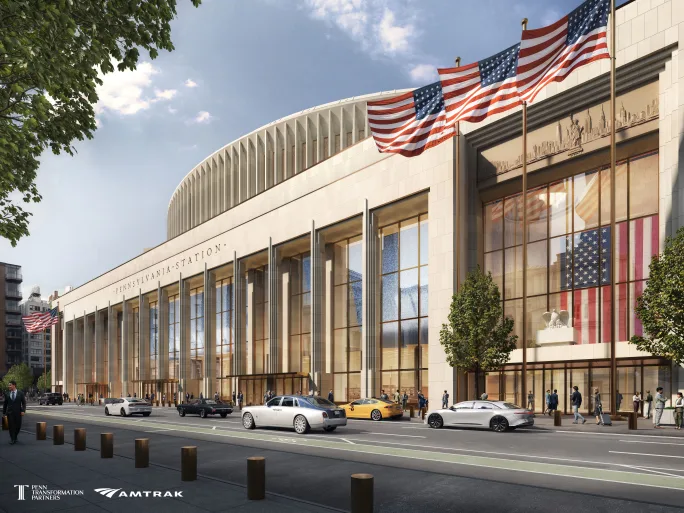
Madison Square Garden will remain in place, and throughout construction, the arena and all railroads will continue to operate.
Amtrak
Benefits of the Renewed Penn Station
The single-level, ADA-compliant concourse of stone and bronze with soaring ceilings will consolidate all public activity on a single level above the platforms. It will feature best-in-class amenities, bars and restaurants, shops, and customer services on one clear, accessible level.
Specifically, the transformation of New York Penn Station will:
- Construct a grand entrance on Eighth Avenue to a new train hall.
- Replace cramped, decrepit walkways with open, beautiful concourses.
- Expand track capacity, including the introduction of at least limited through-running on the regional rail network.
- Enable new retail, better wayfinding, and other passenger-experience improvements, all while maintaining the iconic Madison Square Garden with a new cladding that preserves its classic look.
- Improve the station’s existing subterranean structure.
“We named this project Penn Station Transformation for the exact reason depicted in these renderings; a world-class, beautiful, and modern train station is coming to New York City,” said Byford. “With the continued support of the President and USDOT, and the expertise of Halmar, Skanska, and the rest of our partners, we are continuing to drive momentum and meet more milestones to get shovels in the ground next year and turn these renderings into reality.”
Quick Answers
The purpose of the Penn Station redesign is to create a more efficient, cleaner, and functional experience for commuters and visitors.
*Summarized by AI
More Rail

New York MTA Advances Final Contract for Second Avenue Subway Expansion
Contract Four is the largest in the Second Avenue Subway Phase 2 project and includes construction of station infrastructure, tracks, and signals for the subway expansion, MTA officials said. Work on Contract Four will begin in 2027.
Read More →
San Diego MTS Breaks Monthly Trolley Ridership Record
Agency officials said July’s ridership indicates MTS’s continued recovery from the pandemic.
Read More →
Report Examines NJ TRANSIT Reliability, Funding Challenges
The Garden State Initiative analysis examines the roles of Amtrak infrastructure, fleet management, and agency operations while recommending a more performance-based approach to improving reliability.
Read More →
Stadler, CapMetro Sign Long-Term Rail Fleet Support Agreement
Beginning in 2027, Stadler will provide on-site technical expertise, spare parts support, training, and obsolescence management to help extend the reliability and longevity of CapMetro’s GTW fleet.
Read More →
Biz Briefs: Alstom Lands Canadian Contract, LYT to Supply California TSP, and More
In METRO's latest installment, we take a look at recent news from Complete Coach Works, Beep, FlixBus, and more partnerships making headlines across the transportation sector.
Read More →
CATS Gold Line Marks 5 Years of Service, 2.8M Passenger Trips
With a six-mile expansion planned, the Charlotte streetcar is positioned to connect more neighborhoods and major transit hubs across the region.
Read More →
Why Simulating Pedestrian Movement Has Become Essential for Modern Rail Stations
Pedestrian microsimulation is helping rail planners identify bottlenecks, test station designs, and prepare complex transit hubs for growing passenger volumes.
Read More →
Amtrak Begins Major Construction at New York’s Sunnyside Yard
The new maintenance facility will support Amtrak’s Airo trainsets while improving maintenance efficiency and turnaround times in New York.
Read More →
Chicago Leaders Unveil Plans for O’Hare Airport Express Train
The privately developed project would offer a 15-minute trip between downtown and O’Hare’s Terminal 2, with trains operating every 15 minutes on a dedicated track. The service would use battery-electric trains and three existing freight rail rights-of-way.
Read More →
OCTA Maps Out 30-Year Strategy to Protect Coastal Rail Corridor
The draft feasibility report identifies strategies to protect the coastal rail line for decades as the agency continues near-term stabilization and sand placement efforts.
Read More →