



RELATED: Seattle's Floating Bridge is High-Tech Light Rail Link
How Alternative Delivery is Helping Build Seattle's Rail Project
The trend of embracing alternative delivery is evident in Sound Transit’s delivery of their East Link corridor.
by James Fillis
February 20, 2019
WSP USA is involved in two East Link segments using alternative project delivery. The firm is providing design/build project management services for the Downtown Redmond Link Extension project.
WSP USA
5 min to read
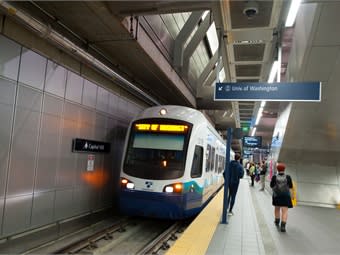
WSP USA is involved in two East Link segments using alternative project delivery. The firm is providing design/build project management services for the Downtown Redmond Link Extension project.
WSP USA
The Seattle area is growing at a fast pace and therefore its infrastructure market is booming. To keep up with the needs in the region and provide a world-class transportation system for the public, transit projects are becoming larger and using alternative project delivery methods, such as design/build, as a preferred method of delivering projects faster. The trend of transportation agencies embracing alternative delivery is evident in Sound Transit’s East Link project, which will place 14 miles of light rail track and construct 10 stations by 2023. East Link is using alternative project delivery to construct four of the seven corridor segments.
WSP USA is involved in two East Link segments using alternative project delivery. The firm is providing design/build project management services for the Downtown Redmond Link Extension (DRLE) project, a 3.4-mile light rail segment connecting the Redmond Technology Center station with downtown Redmond; and final design services for the Seattle-to-South Bellevue segment (E130) that consists of two stations and seven miles of track beginning in Downtown Seattle and ending in South Bellevue.
Managing project risk
■ The DRLE project, which includes two stations and a 1,400-car parking garage in addition to the track work, is a turnkey project that features all civil and systems work necessary to start revenue operations. WSP is currently providing pre-construction services as part of the design/build contractor selection for DRLE.
“Using design/build for the Downtown Redmond Link allows the contractor to have more control and better management of project risk, which is advantageous to delivering projects on or ahead of schedule,” said Stephen Kambol, WSP’s project manager. “The double-track alignment travels across both elevated and at-grade sections adjacent to the SR 520 freeway, and along the perimeter of a large regional park. The last mile utilizes a converted railroad right-of-way that also incorporates a major regional trail before arriving at the terminal station in downtown Redmond. The decision to use design/build provides the innovation necessary in providing the best solutions to these challenges.”
During procurement, Sound Transit will be reviewing alternative technical concepts from the shortlisted design/build firms to identify additional opportunities for innovation. The new line is expected to begin revenue service in 2024, and will provide the final light rail connection between Seattle and downtown Redmond.
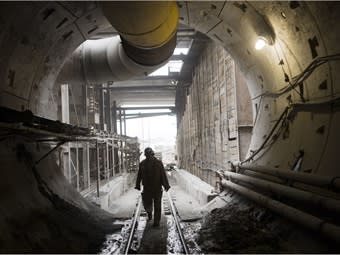
GC/CM delivery intends to provide more cost certainty and reduced risk of change orders.
David Sailors
Sound Transit initially used design/build to construct light rail on the 1.6-mile South 200th Link Extension and parking garage, which opened for revenue service in 2016, a project for which WSP also provided project management services. Sound Transit has subsequently elected to use design/build on 11 projects. “We are seeing design/build procurement used more and more by large transportation agencies, including Sound Transit, to efficiently construct projects that provide relief to the tense pressure placed on Western Washington’s existing transportation systems,” Kambol said.
Evaluating constructability, cost
■ Sound Transit also uses other alternative delivery options, such as general contractor/construction manager (GC/CM) procurement. Authorized by the Washington State Legislature, a GC/CM is procured through a multi-part selection process that includes consideration and evaluation of the GC/CM bidder qualifications and experience together with some cost elements. The GC/CM is selected early in design phase to assist the owner in evaluating constructability and cost as the design progresses, which is intended for better budget control, fewer change orders, and schedule improvement.
GC/CM was selected as the contracting method for the seven-mile Seattle-to-South Bellevue segment (E130) because of the advantages that contractor feedback could potentially bring to the design. Nearly all of the E130 alignment is located between the travel lanes of Interstate 90 — including the 1.1-mile Homer Hadley Floating Bridge — that presented unique design challenges. WSP led and managed a multidisciplinary team for the design of the Seattle-to-South Bellevue segment (E130), with team members that included the University of Washington and the Transportation Technology Center Inc.
Because the bridge is a floating structure, it will flex and move in six directions depending on the water surface elevation, ambient temperature, and wind and wave loading. Accommodating these deflections into the track design required extensive modeling, including a customized 5,000-foot test track simulating the track alignment crossing the bridge. The WSP team’s solution, formally called the Curved Element Supported Rail (CESuRa) system, works through the interaction of curved and rotating track supports, which automatically adjust for multi-directional movements of the supporting bridge deck.
“Feedback from the contractor was especially helpful on the 'D2' portion of the alignment where track was placed on an elevated section of the I-90 roadway,” said WSP Final Design Manager Audrey Moreland. “Additional seismic reinforcement was necessary for the I-90 structures to withstand seismic loads due to track and train cars. Meeting collaboratively with the contractor led to positive suggestions regarding constructability that were ultimately incorporated into the final design.”
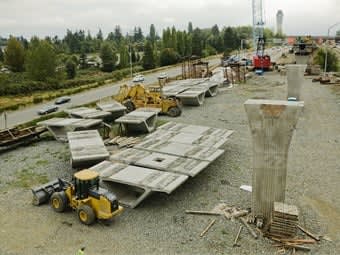
The trend of transportation agencies embracing alternative delivery is evident in Sound Transit’s East Link project.
David Sailors
Leveraging private money
■ Moreland added, “Other alternative delivery strategies, such as Transit Oriented Joint Development (TOJD), are becoming more prevalent, especially where private money can be leveraged for public infrastructure projects, such as BART’s Silicon Valley Phase II.” Although not often used, it could be only a matter of time before transit agencies begin releasing more projects using similar strategies.
As transportation agencies in Washington State become more experienced with using alternative delivery, certain methods are beginning to be selected more often. “We see design/build projects with more regularity,” said Dave Warner, WSP Northwest area manager, echoing Kambol’s observations. “The design/build model appears to be gaining more momentum over other methods, which may be a result of on-time program delivery becoming a necessity in the eye of agencies and the public. GC/CM is still being used, but the trend we see are projects being advertised using design/build delivery more often.”
James Fillis is a Senior Construction Manager with WSP USA.
Subscribe to Our Newsletter
More Rail
Trinity Metro Breaks Ground on $270M TEXRail Extension
The 2.1-mile extension will connect Fort Worth’s Medical District and Near Southside to downtown, surrounding communities, and Dallas-Fort Worth International Airport.
Read More →
Bringing Austin’s First Light Rail System to Life
Austin Transit Partnership CEO Greg Canally discusses the city's nearly 10-mile light rail project, its collaborative approach to project delivery, the importance of community engagement, and the milestones ahead as construction approaches in 2027.
Read More →
Metra Draft Plan Outlines Costs, Service Improvements for Regional Rail
The Systemwide Network Plan identifies infrastructure needs and potential investments to expand all-day, bidirectional rail service across the Chicago region.
Read More →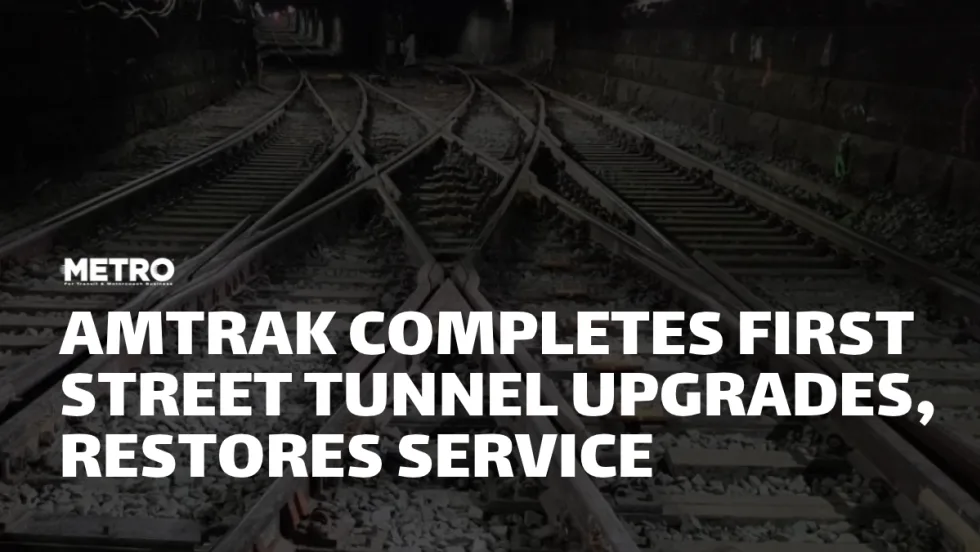
Amtrak Completes First Street Tunnel Upgrades, Restores Service
The nine-day construction project included replacing aging track infrastructure and modernizing switch systems near Washington Union Station.
Read More →
FRA Announces $2.3B for Passenger, Freight Rail Projects Nationwide
The CRISI Grant Program funding will support rail infrastructure improvements, safety upgrades, and projects aimed at improving freight and passenger rail service across 45 states and Washington, D.C.
Read More →
Caltrain’s Electrification Drives a New Era of Ridership Growth
The railroad’s shift to electric service has brought more frequent trains, stronger customer satisfaction, and increased ridership, earning it APTA’s Outstanding Public Transportation System award.
Read More →
FTA Advances $164M Broward County Commuter Rail Project
The proposed 10.5-mile commuter rail extension would connect Fort Lauderdale and Aventura, expanding passenger rail options in South Florida.
Read More →
New York MTA Launches Historic $1.9B Signal, Track Modernization Project
Funded in part by congestion pricing revenue, the project will replace nearly century-old signals along the A and C lines in Brooklyn and Queens.
Read More →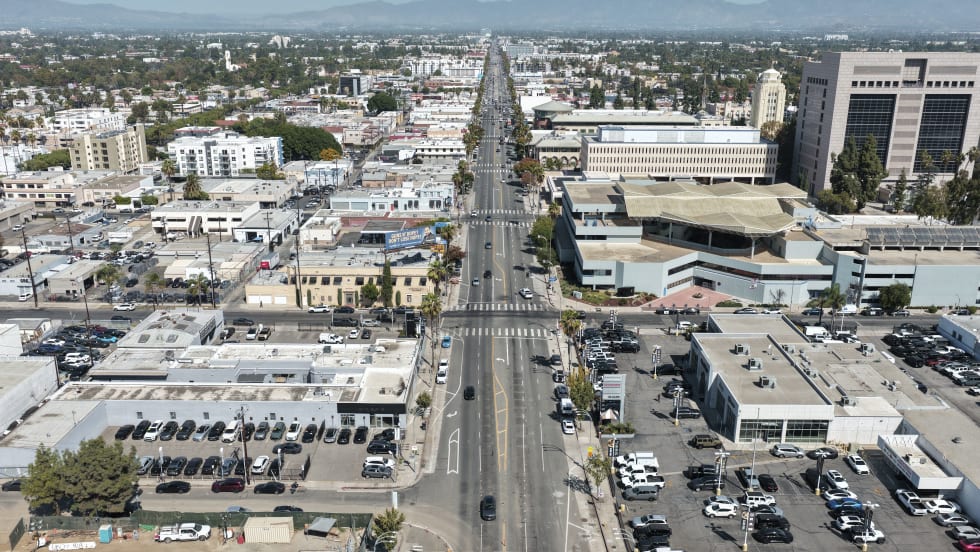
LA Metro Breaks Ground on East San Fernando Valley Light Rail Project
The 6.7-mile line will add 11 stations along Van Nuys Boulevard, expand access to jobs and regional transit connections, and support Metro’s broader efforts to improve mobility as rail ridership grows.
Read More →
CSA Group Releases Climate Resilience Standard for Transit, Passenger Rail
Developed with support from the Standards Council of Canada, CSA D700 guides assessing climate-related risks and planning adaptation measures for transit and passenger rail systems.
Read More →