



How Smaller Agencies Size Up Security System Needs
For evaluating and filling security gaps, small and medium-sized transit agencies lean on both traditional methods and tips from other industries.
While it is mostly big-city transit operations that fall into the high-risk category of vulnerability to terrorist attacks, post-9/11 fears are still a valid concern for some smaller transit systems.
“People look at us as a small agency, but we operate a good part of our service into downtown Los Angeles — a major terrorism target,” says Allan Pollock, director of Montebello Transit. Montebello, Calif., is 8 miles east of downtown Los Angeles. “I don’t know if a terrorist is going to distinguish between a Montebello bus and an MTA bus if they’re going to wreak havoc.”
After 9/11, the Capital District Transportation Authority (CDTA) in Albany, N.Y., took several steps to strengthen its security program. It set up a security emergency response team, started conducting periodic training exercises for many divisions and began doing routine risk assessments. The agency established a code of conduct for the general public in its facilities and increased local law enforcement’s presence in the rail stations. Sensitive areas of the rail stations were more tightly secured by access card control systems.
But according to Ray Melleady, CDTA’s executive director, the agency is primarily concerned with the mundane challenges of being — like all transit organizations — an open, accessible system.
Pollock of Montebello Transit agrees. “When you’re dealing with a customer base of 10 million people, incidents happen, and whether it’s a disruption to a customer or an employee, we want to make sure they feel safe,” he says. “We talked to several small and medium transit agencies about the process for assessing security system needs and making enhancements, and they shared their approaches and best practices with us.”
Always under attack
Ben Flores, transit safety supervisor for Montebello Transit, operates under the assumption that the system is always under some sort of attack. “There’s somebody out there today attacking our system,” he says. “That could be by boarding the bus and not paying, being rude to the driver, seeing how far they can go, pedestrians going into the gateway building without signing in … it may be minor, but our systems are being attacked for weaknesses.
“If you sit down and think about how many people are avoiding the fare, that could be thousands of dollars every day,” Flores adds. “So our security plan isn’t just about terrorism; it will cover customer service, safety, graffiti and so on.”
To proactively counter these daily threats, Flores conducts weekly security evaluations. He also performed the first system-wide security vulnerability assessment in December 2006. It resulted in a 45-page document covering everything from hiring practices to securing the perimeter of the site to policies and procedures. Flores expects to conduct these comprehensive assessments biannually.
One of the recommendations that came out of the assessment was to install technology similar to the blue light emergency phones on college campuses in the facility’s underground parking lot. “The lighting is pretty good in the parking lot, but in the evening there are still dead spots,” Flores explains.
Outside-the-box perspective
Flores is getting ideas for security not only from universities but from private-sector industries, which are often steps ahead of transit in terms of technology and procedures. He’s gained this perspective from taking security and safety classes for the general industry at a state college and researching how institutions such as hospitals protect their facilities. In fact, Montebello’s facility evacuation plan was modeled after the evacuation strategy for a Universal Studios theme park.
“There are a lot of resources out there, and sometimes we’re just focused on what’s glamorous — to get training from FTA or TSA — and we wait around until it rolls into our area,” Flores offers.
By taking advantage of the more readily available offerings at local colleges, transit employees can learn a lot of the same principles of security training sooner rather than later, with less cost. “Some of the instructors are ex-police chiefs and security consultants, and if we asked one of them to come in and do an assessment for Montebello, it would probably cost $10,000,” Flores says. “If we go and get the training, we can get the forms and learn the theory for free.”
In addition, Flores meets security professionals from other industries at the college classes and gets ideas from these conversations. Networking with other security professionals, and other transit agencies, has proved indispensable for Montebello. Flores even spearheaded a regional forum for transit security managers to meet and discuss best practices.
A systematic approach
At the CDTA, annual security assessments are conducted at the beginning of the year with the safety department, risk manager, local law enforcement, supervisors and other relevant parties. The agency prioritizes the areas that need improvement and develops an action plan. It also gives a quarterly security update to its board of directors.
Last year, CDTA saw the need for a single-platform surveillance system that would integrate cameras for both its facilities and vehicles.
“We developed a needs and purpose analysis, we developed a technical proposal and then we went out to evaluate proposals based on a number of categories and took a very broad-based approach to addressing various needs throughout the system,” Melleady explains.
The agency requested a mobile digital video recorder (MDVR) system with equipment for three garage facilities and six Gillig 40-foot low-floor buses. The RFP was sent out in November 2006 and the project was awarded in January 2007 to March Networks Corp. of Ottawa, Ontario.
According to Melleady, the high cost of technology has not been a roadblock to CDTA’s security efforts. The agency allocates money every year for security enhancements. Many times, security upgrades double as facility improvements, and Melleady estimates that, each year, these upgrades cost about $1 million to $1.5 million, or 2% of CDTA’s operating budget.
Event-driven assessments
For smaller agencies, security improvement projects often aren’t planned or expected. New building construction or hearing about a new technology creates an opportunity to upgrade such items as access control or facility surveillance systems.
Santa Clarita Transit in California opened a state-of-the-art, Gold LEED- (Leadership in Energy and Environmental Design) rated building about a year ago, and took advantage of the occasion to outfit the entire facility with video surveillance cameras and an electronic access control system that uses card readers. The security technology RFPs were issued as part of the RFPs for the whole facility.
“Prior to this, we operated out of a public works facility that had virtually little in place for security, let alone for operating a transit system,” says Transit Manager Jeff O’Keefe.
The new, 22,000-square-foot transit operations center is also getting equipped to be the redundant backup operations command center for Santa Clarita City Hall. This process involves developing backup computer servers, securing the server room and installing a backup radio communications system.
When Montebello Transit constructed a new operations building and Metrolink station about 10 years ago, it also built a new security system into the facility design. The system includes video surveillance cameras covering the facility, inside and out, as well as gate control. This led Montebello to look at other security improvements.
“That kind of snowballed into working at bus security,” Pollock explains. The agency piloted a video camera system, with seven cameras each on a few of its vehicles. The test went well, prompting the agency to retrofit the rest of the fleet and require cameras on all new buses they purchased.
While reviewing proposals for an intelligent transportation system that integrates automatic vehicle location, computerized dispatch, the phone system and more, Pennsylvania-based York County Transit Authority began to wonder if there was a similarly integrated security system they could acquire that provided more “bang for the buck,” according to Dwight Huntington, operations manager. York County doesn’t have cameras at its operations center and only about half of its fixed-route buses have surveillance cameras. The downtown transfer center has a low-quality closed-circuit camera system.
Huntington is gathering information about systems other agencies are using and doing research before he puts together an RFP. “What we’re looking for is something a little more comprehensive,” he explains. “We don’t want to buy one thing for the buses and have another vendor for the vehicles. Before we spend more money buying bits and pieces, we want to get an idea for how people have approached a systemic kind of security plan.”
Security improvements are often made in response to an incident that exposes weaknesses in the system. “I’ll get a request from a manager or there will be a security breach and I’ll do a review,” says Flores of Montebello Transit.
For example, at the Montebello facility there was an incident where a man, who seemed to be under the influence, entered the facility and posed a threat. The receptionist got frightened and locked the doors, and that triggered a reevaluation of building access and what it means to be a public building. To prevent similar incidents, Flores developed a new lockdown procedure that will be implemented in April.
Technology supports people
The smaller transit agencies’ diligence to stay informed of the latest technology available for security spotlights technology’s importance. But in the end, their perspective is that technology is simply a tool for employees, who remain the first line of defense.
The employees at Santa Clarita Transit are being cross-trained to operate the different security systems so that a system’s operation is not solely dependent on one individual or group. The personnel for maintenance, planning and operations all have some level of training in the technologies.
Montebello Transit is going through a process of educating each agency employee to be attentively involved in safety and security, according to Flores. He wants to foster a culture where it is common practice for employees to report anything suspicious.
“Our heaviest reliance is on our people,” Pollock says. “Security is being alert and having your eyes and ears open to the unusual. We use technology to support that. Technology is a good support for the people.”
More Management

ENC Lands MATA Contract and More in Biz Briefs
In this edition of Biz Briefs, we spotlight the latest developments shaping the future of mobility.
Read More →
From Surviving to Thriving: Building Stronger Transportation Organizations
Bus Business Consultants founder Brian Dickson shares lessons on leadership, organizational health, and creating options for long-term success in a changing transportation industry.
Read More →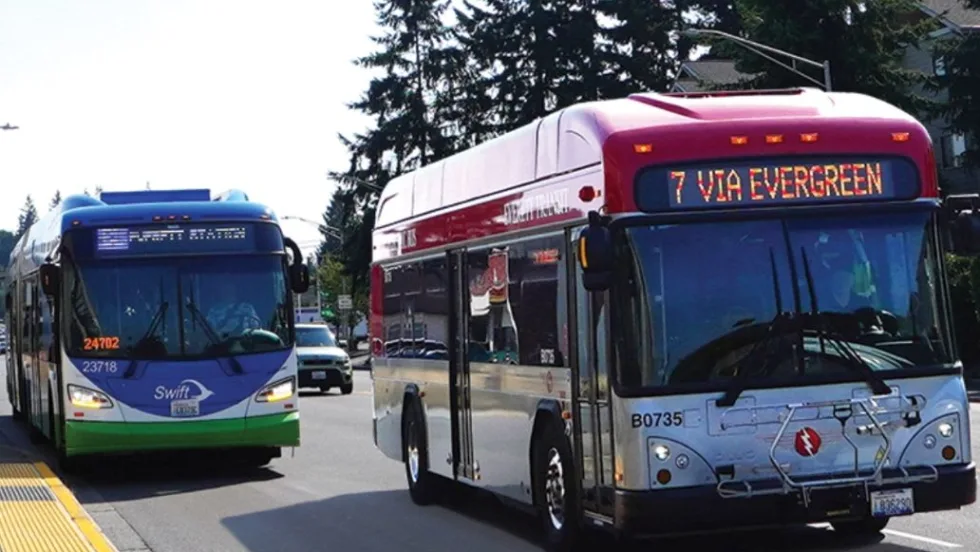
Everett Transit, Community Transit Outline Consolidation Agreement
The proposed agreement calls for a 50% increase in bus service in Everett, a new microtransit zone, continued paratransit service, and the transfer of Everett Transit operations to Community Transit.
Read More →

Strada360’s Steve Lassey on Turning Transit Data Into Better Decisions
From breaking down data silos to preparing for AI, Strada360 CEO Steve Lassey discusses how transit agencies can use technology to improve operations, customer information, and long-term decision-making.
Read More →
People Movement: Phil Washington Joins HNTB, Denver RTD Launches CEO Search, and More
In this edition, we also spotlight recent personnel moves at STV, the Eno Center for Transportation, and more, highlighting the people taking on new roles across the transportation industry.
Read More →
SEPTA Details Accelerate Vision for Transit System
The plan outlines investments in trolley modernization, new Metro and Regional Rail vehicles, accessible stations, and more frequent bus and rail service.
Read More →
FTA Ends Direct Oversight of MBTA Safety Actions
The federal agency closed its remaining special directive to the Massachusetts Department of Public Utilities following a safety review that began in 2022.
Read More →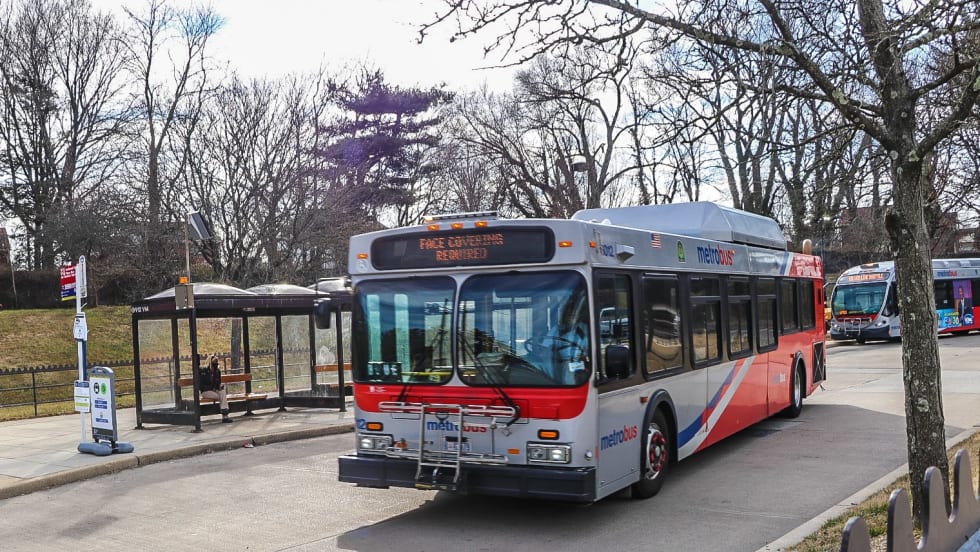
Report: Transit Bus Manufacturing Supports 34,100 Jobs, $5.1B in GDP
The “Buses Mean Business” report examines the transit bus manufacturing industry’s economic footprint, supply chain, and rising demand for vehicle replacements.
Read More →
LIT Marks 10-Year Milestone at Annual Summit
Hosted by the COTA from September 10 to 13, the Summit carried the theme “Celebrating 10 Years of Excellence, Leadership, and Impact,” with every part of the program honoring the people, agencies, and partners who built LIT over its first decade.
Read More →
People Movement: Dan Dipert Coaches Adds Third-Generation Leader, Keolis Names New Valley Metro VP/GM, and More
In this edition, we also cover recent appointments and announcements at the Wabtec, SilverRide, HNTB, and more, showcasing the individuals helping to shape the future of transportation.
Read More →