



RELATED: How to Develop a Successful Transit Facility Project (Part 2)
How to Develop a Successful Transit Facility Project
Part one of a two-part series, this article discusses some factors that should be considered — funding sources, feasibility and site viability — before an organization issues a Request for Qualifications or a Request for Proposal.
by Fred Gilliam and Ken Anderson
May 22, 2013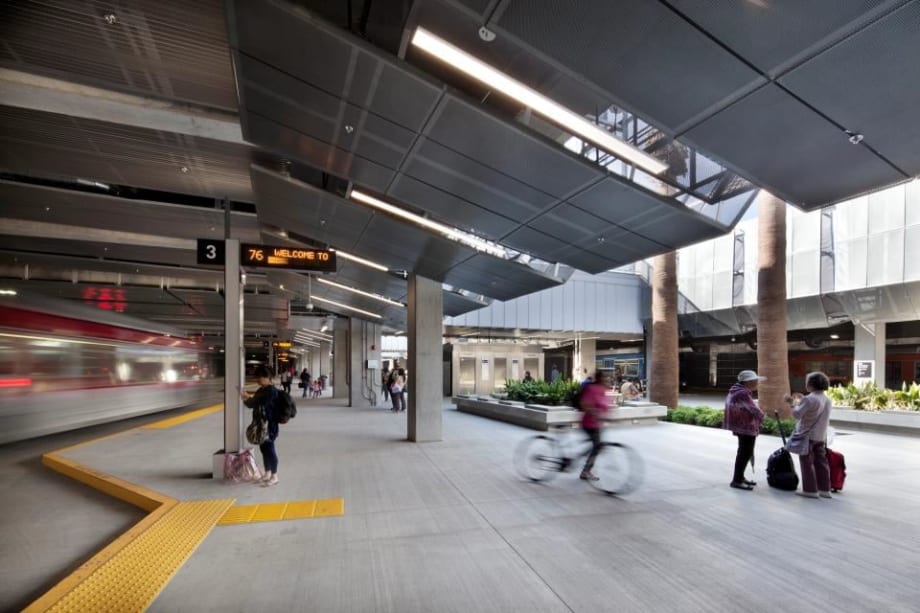
Los Angeles Metro’s El Monte Transit Center in El Monte, Calif.
5 min to read
Planning for new, expanded or renovated transit facilities begins years in advance. Whether an organization has a formal 20- or 25-year plan, in addition to their five-year Transportation Improvement Program (TIP), administrators understand looking at future facility/program needs and the resources required to meet those needs is key to a successful project. Part one of a two-part series, this article discusses some factors that should be considered before an organization issues a Request for Qualifications (RFQ) or a Request for Proposal (RFP).
The need for new or expanded facilities often follows the enlargement of an organization’s service area; simple growth and evolution of ridership demand; the creation of a high density location intercept — such as a park-and-ride facility or an increase in express service to a particular location — or other factors.
As agency heads understand, the TIP is designed to make certain that federal funds, as well as other sources of funding, are used in the most efficient way possible for the benefit of the region. In putting together a TIP and identifying funding sources, it is important to look to several factors.
Identify funding sources
First, are there direct grants or funding sources — for example, funds designated to promote cleaner air, energy conservation or decongestion — for which an agency’s situation is particularly applicable? Second, will the funding of a new project create jobs? A job creation analysis can often be obtained from a local agency, such as the Chamber of Commerce, and may provide for additional sources of funding. Third, is there an experienced third party from whom a project evaluation can be obtained? Frequently, this type of review process helps organizations avoid pitfalls, particularly in the design stage, through the sharing of lessons learned. Because of the success of this type of review process, expenses are typically eligible for reimbursement through a project’s capital grant.
Conduct feasibility study
Armed with these preliminary details, agencies next focus on conducting a feasibility study. By incorporating more stakeholders in this feasibility process, the agency and project designers develop a detailed and comprehensive program in the early planning stages. An agency can then establish an accurate facility size estimate, evaluate expansion needs and understand the type of project parcel that will best accommodate those needs. This analysis should include location deadhead, visibility, and other intangibles that could alter the project location or budget.
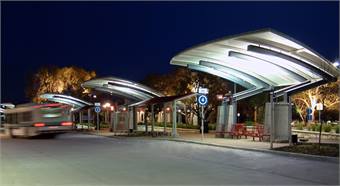
As seen in the Austin Lakeline Park & Ride Project, designed and engineered by MWM Design, when highway expansion demanded the relocation of the system’s current high-volume park-and-ride, staff service and consultants, on behalf of Capital Metropolitan Transportation Authority (Capital Metro), evaluated current and future capacity needs to identify several candidate sites. The characteristics of each candidate site were organized into a matrix and analyzed by all stakeholders. Every criterion for each candidate site was assigned a score and an optimal site was identified based upon these scores.
Los Angeles Metro’s El Monte Transit Center in El Monte, Calif.
Determine site viability
Once a detailed feasibility study is conducted, the planning focus turns to a specific property site’s viability. The physical site has a huge impact on the project budget — from availability and efficiency of location, to cost of construction and lifetime operating costs. A specific project location may require condemnation proceedings, environmental remediation or rezoning action. For example, if federal funding is being pursued, an agency should complete an environmental assessment, in compliance with the National Environmental Protection Act. This was done for the East Valley Bus Operations and Maintenance Facility in Tempe, Ariz., a project designed by RNL and completed in 2007.
“Because of the commitment of local partner agencies to sustainable practices, the East Valley project garnered substantial federal and local funds,” Robert Yabes, principal planner for the City of Tempe, says.
Through a project cost analysis, including the project site factors discussed above, a project team can create a detailed submission for the Policy Support Board, federal funding or other capital funding sources. The more information that an organization is able to gather, the wider the available funding opportunities.[PAGEBREAK]
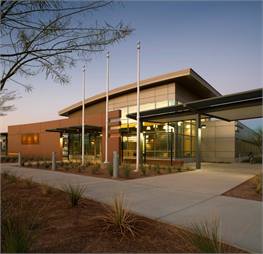
The 250-bus East Valley Bus Operations and Maintenance Facility in Tempe, Ariz., designed by RNL and completed in 2007, features a highly-reflective roofing membrane for flat roofs; oil/water separator to filter storm water run-off; metal canopies over buses to reduce heat island effect; drought-resistant native landscaping; and a bus washer that reclaims and reuses 100% of available water.
Connect with community
When funding for the project is secure and a project location has been confirmed, it is imperative the project team successfully connect with the community located around the new or renewed facility site. Communities have valid concerns about transportation facilities in their neighborhoods.
These include circulation, street safety, noise and lighting levels as well as inconveniences that might be caused during construction.
Often the most unnerving aspect of a new facility for surrounding communities is the unknown. In many cases funds can be allocated within the project scope to engage a communications professional. Or, as was the case for the RNL-designed Los Angeles County Metropolitan Transportation Authority’s (Metro) El Monte Transit Center in El Monte, Calif., in-house professionals can organize fruitful exchanges between the agency and neighbors.
“Being proactive when communicating with the community allows the team to thoughtfully address concerns before they impede a project’s schedule or scope,” says Tim Lindholm, director, capital projects, for Metro.
Consider LEED design
Whether to seek a Leadership in Energy and Environmental Design (LEED) rating from the U.S. Green Building Council (USGBC) is often evaluated at this stage.
“The decision to pursue LEED certification is one of both policy and practicality,” says John Hodges, VP, capital projects & real estate, for Capital Metro. “All design decisions should respond to and reflect the political ethic of the organization. And, as a transit authority has a long-term time horizon and not that of a short-term merchant builder, every design decision, whether in the framework of LEED certification or not, should be made in the context of lifecycle costs.”
RNL, a design firm with more than 120 transit/fleet facilities to their credit, anticipates a 10% to 50% increase in operating efficiency when a new facility is built as a result of new technologies and updated heating/cooling equipment.
Although certainly not a complete list of the myriad of factors that must be examined when moving forward with a new or expanded facility, the above are some of the most important factors to keep in mind when an agency seeks to plan, fund and design a facility for their community. Part two of “How to Develop a Successful Project” will discuss the design and implementation process as well as post project analysis.
Fred M. Gilliam, RNL’s transportation group business development lead, is a 48-year transportation-industry veteran. He retired as president/CEO of Capital Metropolitan Transportation Authority in Austin, Texas, in 2009.
Ken J. Anderson, AIA, LEED AP BD+C, associate principal and Washington, D.C., office lead, has been with RNL for more than 12 years. As a project manager and architect he leads transportation work for the East Coast and Southwest regions.
Subscribe to Our Newsletter
More Rail
New York MTA Launches Historic $1.9B Signal, Track Modernization Project
Funded in part by congestion pricing revenue, the project will replace nearly century-old signals along the A and C lines in Brooklyn and Queens.
Read More →
LA Metro Breaks Ground on East San Fernando Valley Light Rail Project
The 6.7-mile line will add 11 stations along Van Nuys Boulevard, expand access to jobs and regional transit connections, and support Metro’s broader efforts to improve mobility as rail ridership grows.
Read More →
CSA Group Releases Climate Resilience Standard for Transit, Passenger Rail
Developed with support from the Standards Council of Canada, CSA D700 guides assessing climate-related risks and planning adaptation measures for transit and passenger rail systems.
Read More →
LA Metro September Ridership Climbs 3.9%, Led by Rail Growth
The agency recorded more than 27.2 million boardings, with rail ridership increasing 12.4% year over year and the D Line posting the largest gains.
Read More →
First Full MetroLink Rail Expansion Completed in 20 Years with $192M Airport Project
The project links two St. Louis-area airports by light rail while adding roadway and bike trail connections to improve regional access and mobility.
Read More →
Utilimarc Launches SmartReplace to Optimize Fleet Replacement Decisions
AI-powered SmartReplace helps fleets prioritize vehicle replacements, model budget scenarios, and build more defensible long-term strategies.
Read More →
Scenes from APTA TRANSform & EXPO 2026
Transit leaders, manufacturers, and industry professionals gathered in Chicago to explore new technologies, share ideas, and discuss the future of public transportation.
Read More →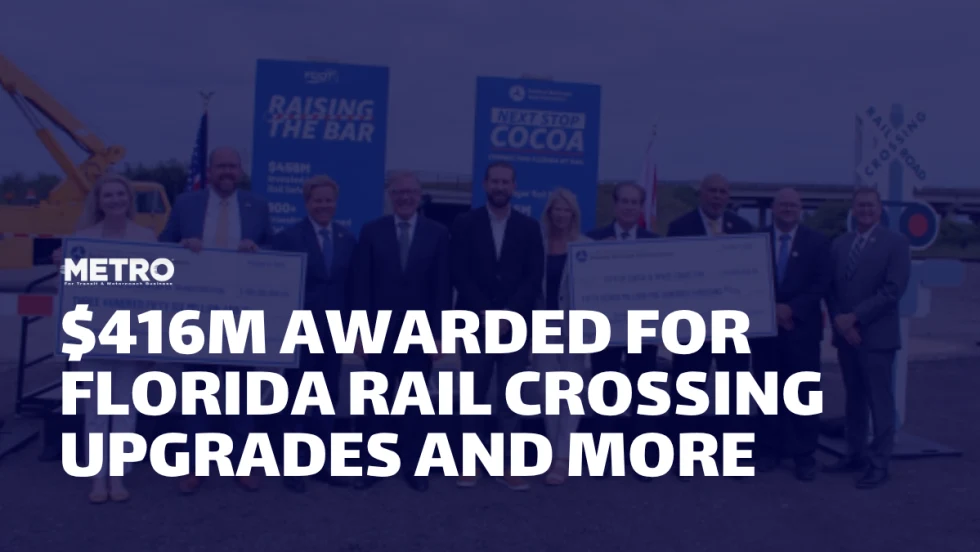
USDOT Awards $416 Million for Florida Rail Crossing Safety Upgrades, New Brightline Station
The projects aim to reduce risks for motorists and pedestrians at rail crossings while expanding passenger rail access along Florida’s Space Coast.
Read More →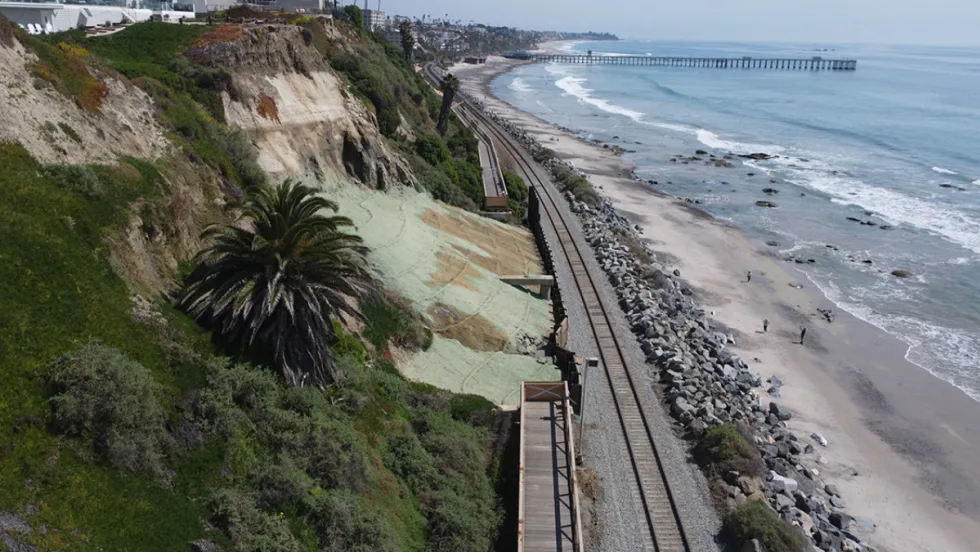
OCTA Declares Emergency to Protect Rail Corridor From Coastal Erosion
The California agency is accelerating shoreline protection and plans to place approximately 690,000 cubic yards of sand along the San Clemente coast to protect a key passenger and freight rail link.
Read More →
More Than a Summer Job: Building the Next Generation of Transit Talent
The Delaware River Port Authority and PATCO have transformed their internship program into a hands-on professional development experience that introduces students to the breadth of transportation careers — and creates a pipeline for future employees.
Read More →