



Industry Fuels Up for Environmental, Economic Benefits of Natural Gas
Natural gas providers design, build and maintain fueling stations and cover the capital costs up front. Fuels offered include CNG, LNG and a blend of hydrogen and CNG.
With the increased focus on the environment, use of natural gas-powered vehicles is on the rise. Transit buses equipped with model year 2004 compressed natural gas (CNG) engines produced 49 percent lower nitrogen oxide emissions and 84 percent lower particulate matter emissions versus transit buses equipped with model year 2004 diesel engines, according to U.S. Department of Energy statistics. Nitrogen oxides and particulate matter are the primary emissions of concern for heavy-duty vehicles.
In addition to the environmental argument, the other driving force behind the use of natural gas is economics. With the costs of oil hitting more than $100 a barrel these days, and talk of “peak oil,” where supply will no longer meet demand, is becoming more prevalent, natural gas can be seen as a more stable resource. “Oil is a globally priced commodity and natural gas is a locally priced commodity,” says John Somers, director, transit business development for Clean Energy.
Founded in 1997 as Pickens Fuel Corp., Seal Beach, Calif.-based Clean Energy, supplies both CNG and liquefied natural gas (LNG) to a broad customer base in the refuse, transit, shuttle, taxi, intrastate and interstate trucking, airport and municipal fleet markets in the U.S. and Canada. The company fuels 3,300 transit buses a day, and works with more than 20 major transit agencies across the country. Clients include the Massachusetts Bay Transportation Authority, San Diego’s Metropolitan Transit System and Oceanside, Calif.-based North County Transit District.
CNG versus LNG
CNG is natural gas compressed to 3,600 pounds per square inch, while LNG is a cryogenic fuel that is cooled to negative 265 degrees Fahrenheit. “When building a CNG station, you are essentially tapping into the existing gas pipeline that you use to heat your homes or to cook with,” says Somers. “It’s the same gas.”
For transit, making the choice between CNG and LNG is dependent on where you are in the country. “You might want LNG if you aren’t on the pipeline,” Somers says. “We have several transit customers that we actually supply LNG to and they vaporize it off for their CNG buses because they aren’t on the pipeline. When warmed, LNG returns to vapor form.”
California-based Santa Cruz Metro is one such customer that follows this method. The operation currently runs 26 CNG-fueled buses and plans on expanding the fleet to 63 by June. Clean Energy supplies the operation with LNG because the agency’s local distribution system could not provide pipeline gas to produce CNG in a quantity sufficient to meet the anticipated future demand of the growing fleet.
Hydrogen blend
In addition to providing CNG and LNG, Clean Energy partnered with Translink (Greater Vancouver, B.C. Transportation Authority) to develop a fueling facility that blends hydrogen and CNG. “It is waste hydrogen from a bleach factory,” Somers says. “They had this discarded hydrogen that they wanted to deal with, so they thought blending made sense.”
For its part of the project (Integrated Waste Hydrogen Utilization Project), Clean Energy expanded its existing high-volume CNG fueling station at the agency’s Port Coquitlam Transit Centre by adding a new hydrogen station to dispense a blended hydrogen/CNG (HCNG) fuel.
The facility features a newly designed dispenser, which enables a wide range of blends from 100 percent CNG to 100 percent hydrogen. The project utilizes a blend of 20 percent hydrogen and 80 percent CNG. This formulation offers a pollution reduction benefit similar to those anticipated for pure hydrogen, but also is compatible with today’s CNG-fueled vehicles.
TransLink converted two of its CNG-powered public transit buses to run on HCNG, and placed them into regular passenger service. The operation plans to convert two more CNG buses to HCNG and evaluate all four in revenue service over the next several months.
Existing stations
As well as designing and building new stations for customers, Clean Energy can take over an existing station for a transit operation. Salt Lake City-based CNG provider, Trillium, also offers this service. Founded in 1994, Trillium fuels more than 1,750 transit buses per day, displacing more than 20 million gallons of diesel every year. Customers include Los Angeles Metro, Orange County (Calif.) Transportation Authority, New York’s MTA Bus and New York City Transit (NYCT).
NYCT was one of those customers that contracted the company to take over an existing station. In 2001, Trillium assumed responsibility for the operation and maintenance of the Jackie Gleason Bus Depot in Brooklyn, N.Y. According to the company, this was the first instance of a performance-based takeover of an existing large-scale CNG station.
In addition to maintenance responsibilities, Trillium was charged with improving overall performance of the station, which required an extensive overhaul of major CNG components. The depot had four compressors, capable of an output of 1,200 SCFM each. Bus fill times averaged about six minutes with all four compressors typically running. Maintenance had been performed by the local gas company, but the system had not been optimized to meet the demands of the transit operation.
A variety of technical modifications and equipment upgrades were implemented for the station’s CNG fueling system. The work was designed to improve reliability and efficiency of the facility. Changes included upgrades to the computer controls, a drastically simplified valve system and radically improved compressor skid accessibility.
Prior to the takeover, the bus depot served a fleet of 150 buses, with a six-minute fill time average. Since the takeover, the station serves a fleet of 300 buses and completes fills within an average of 3.5 minutes.
Station building
Both Clean Energy and Trillium are turnkey operations, offering design/build, maintenance and operational services for natural gas fueling stations. Stations are essentially comprised of a compressor, fuel storage tanks and a dispenser. “It’s a small footprint,” says Clean Energy’s Somers. For a fleet of 25 buses, costs for building a station start at $1.1 million, he says.
If transit properties do not have the ability to cover the capital costs of the station infrastructure, both companies cover the costs up front by coupling it with a fueling contract. “We would pay the capital and lock the customer into a long-term deal at a very competitive price,” says Somers. “This ranges anywhere from 50 cents to one dollar below diesel.”
Fueling contract pricing is dependent upon the size of the property, says Trillium President Mark Barton. “The largest transit properties are in the 15 cent to 20 cent a gallon range.”
Grant opportunities
While some operations may view the idea of shifting their fleet to natural gas as unrealistic, it may be more of a possibility with the availability of funding for emission reduction technologies, according to Somers. Clean Energy has a dedicated grants department that works with customers, including public entities, to obtain grant funding for natural gas applications. “We have people who’ve gotten over a $100 million in grants for customers,” he says.
Transportation grants related to clean air are gaining widespread support. The Texas Emission Reduction Plan (TERP), introduced in 2001, is expected to be extended until 2013. The program, which supports diesel engine emission reduction, has awarded more than $336 million in grants. With nearly 900 projects funded, a reduction of more than 75,500 total tons of NOx is projected. The funding total is expected to reach $670 million by 2009, according to the Diesel Technology Forum.
Another money-saving opportunity for natural gas users is a federal tax credit based on 50 cents per gallon, says Barton. “That creates a huge differential between natural gas and diesel. Anyone looking really closely at that will see the value.” Looking forward, Barton expects to see an increased demand for CNG.
End user perspective
Trillium customer Los Angeles Metro was one of the first transit properties in the U.S. to dedicate most of its fleet to CNG. “It’s taken us almost ten years to transition, but we are in the final stages,” says Richard Hunt, general manager, San Fernando Valley service sector. “CNG wasn’t the first time we tried alternative fuels.” The operation experimented with methanol and ethanol fuels, as well as diesel additives, which weren’t as productive.
“At the time, we were limited to what was available, so we tried natural gas,” Hunt says. “We tried LNG and CNG, but found that CNG appeared to be more viable for us.”
After deciding on CNG as the fuel of its choice, Metro designed and built its own stations, but found them unreliable. This led them to develop public private partnerships with firms such as Trillium. Doing so enabled the agency to focus on operating the system, Hunt says. “Fuel station uptime has been a nonissue now.”
Despite the significant infrastructure costs, he says the agency doesn’t regret its decision. “Looking in the long term, the reliability of the fuel, the availability of the fuel, we don’t have to worry if we are going to have fuel tomorrow, and what the price would be,” Hunt says.
To maximize the agency’s return on investment, it recently entered into a natural gas hedging agreement. “We hedge about 95 percent of our total use,” Hunt says. “With the rise of commodity prices, it’s turning out we’ll probably save $3 million to $4 million dollars.”
More Management
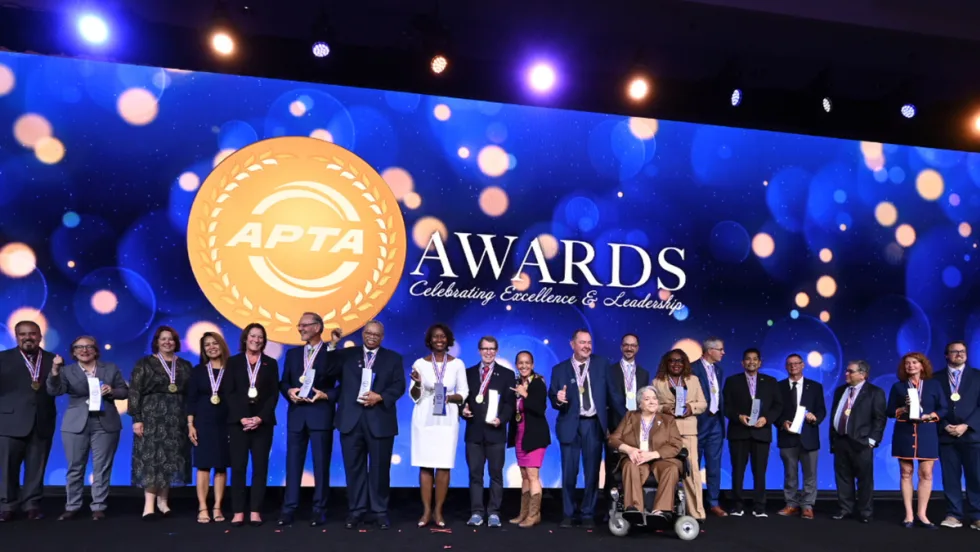
APTA Honors 2026 Award Winners, Hall of Fame Inductees at TRANSform & EXPO
Innovations in autonomous and zero-emission transportation, standout transit systems, and industry leadership took center stage among this year's honorees.
Read More →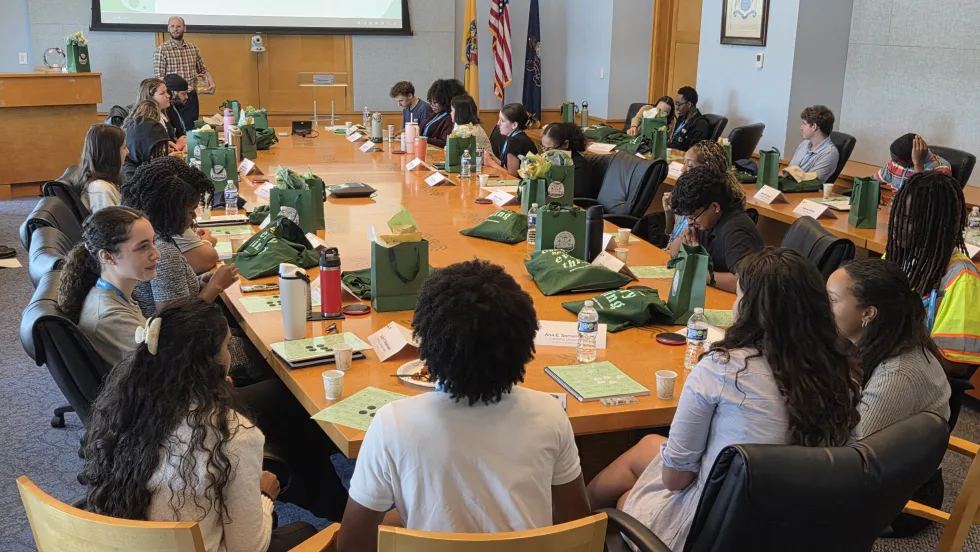
7 Ways to Build a Better Transit Internship Program
Lessons from DRPA/PATCO’s approach to creating a meaningful internship experience—and developing the next generation of transportation professionals.
Read More →
Scenes from APTA TRANSform & EXPO 2026
Transit leaders, manufacturers, and industry professionals gathered in Chicago to explore new technologies, share ideas, and discuss the future of public transportation.
Read More →
Building Stronger Leaders, More Resilient Transit Teams
Dr. Carol Parker Walsh discusses leadership development, employee retention, workplace culture, and preparing transit’s workforce for AI and automation.
Read More →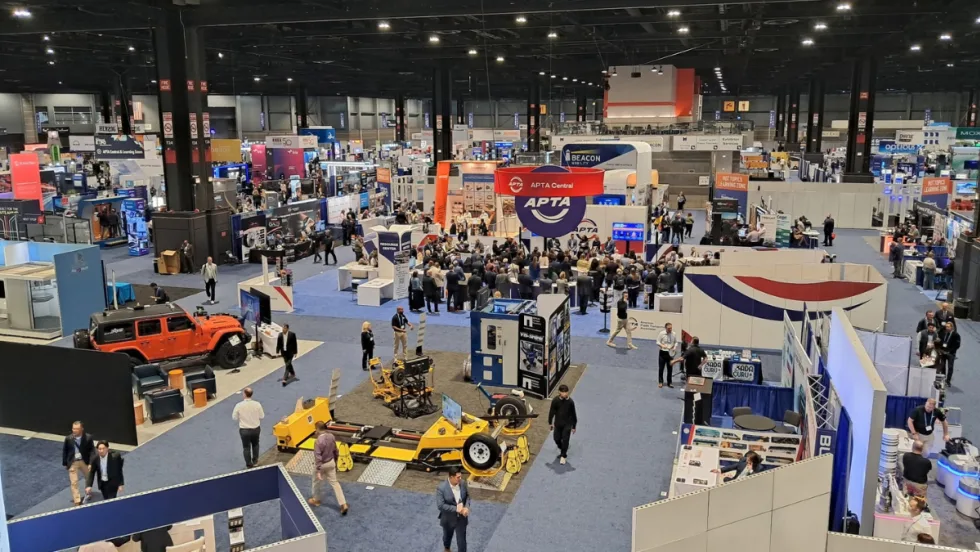
APTA 2026 TRANSform & EXPO Kicks Off in Chicago
After 45 years, APTA returns to Chicago with a focus on next-generation fleets, AI, connected transit networks, and the funding strategies shaping public transportation’s future.
Read More →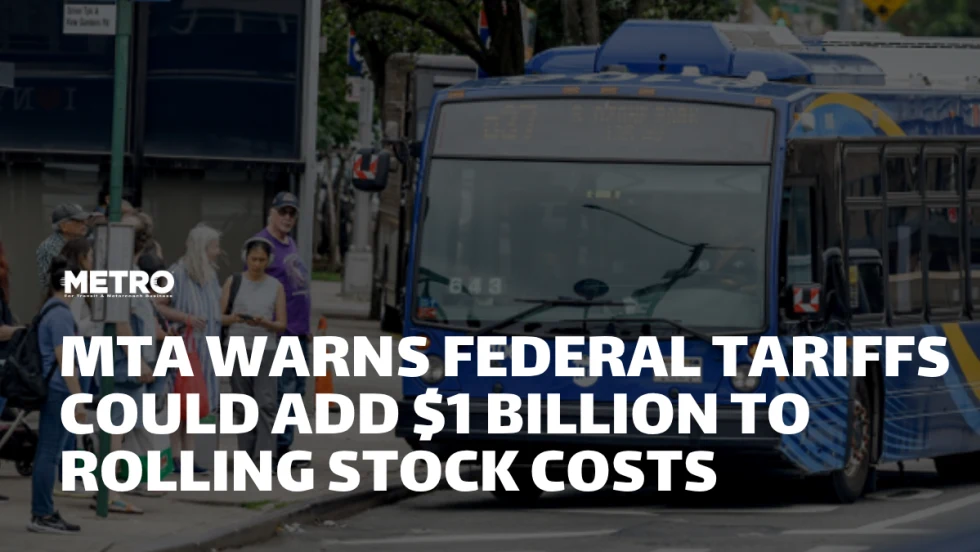
New York MTA Warns Federal Tariffs Could Add $1 Billion to Rolling Stock Costs
The agency said tariffs on specialized imported components could reduce the purchasing power of its $23 billion investment in new subway cars, railcars, and buses.
Read More →
From the Show Floor: What Happened at APTA TRANSform & EXPO 2026
See the latest product launches, partnerships, technology updates, and transit industry announcements from APTA TRANSform & EXPO in Chicago.
Read More →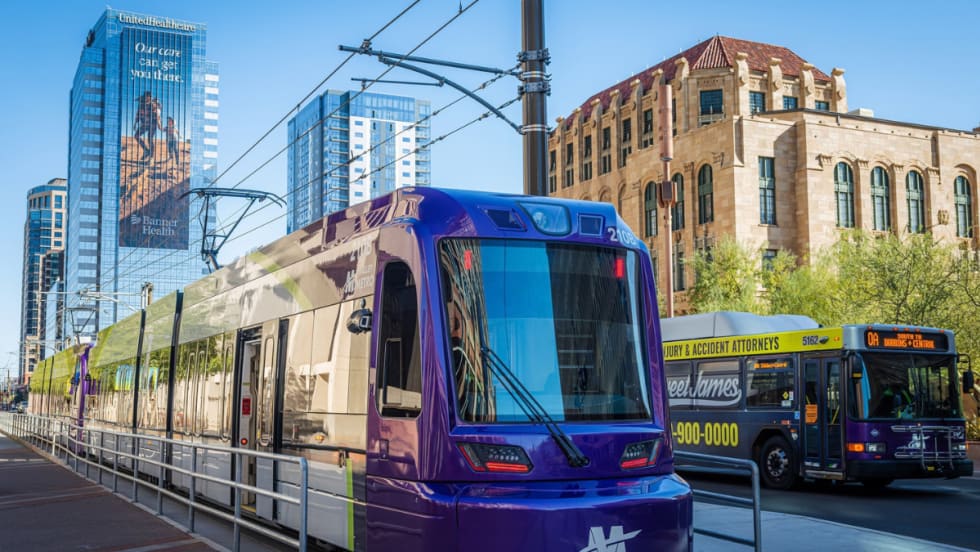
How Valley Metro Is Balancing Transit Growth With the Rider Experience
The APTA award-winning agency is pairing rapid system expansion with investments in workforce, safety, technology, and the fundamentals of transit service.
Read More →
Bus Tech Talk: Keeping Transit Technicians Ahead of the Technology Curve
In this episode of Bus Tech Talk, Complete Coach Works’ Business Development Manager Mark Hollenbeck and METRO’s Executive Editor Alex Roman sit down with Obed Mejia, Senior Technical Trainer for Bus Maintenance, at LA Metro to discuss how rapidly evolving bus technology is changing the maintenance shop — and the skills technicians need to keep pace.
Read More →
Michael Schneider Joins Paslay Group to Expand Transportation Practice
The longtime transportation executive will help Paslay Group grow its advisory and program management work across transit, highway, and other infrastructure sectors.
Read More →