



Industry's Procurement Challenges Create Need for Collaborative Strategies
Transit properties increasingly are taking advantage of collaborative efforts, such as joint procurements, piggyback orders and buying off state contracts, to meet their vehicle acquisition needs.
While the transit industry struggles to simplify, streamline and standardize bus procurement practices, many transit properties have embraced practical, cost-effective methods of acquiring their rolling stock by collaborating with other agencies as well as the manufacturing community. The key, according to transit officials and manufacturers, is to create partnerships that transform linear supply chains into parallel collaborative communities that result in economies of scale, design and engineering efficiencies and better sharing of knowledge about the product and the market, both upstream and downstream. Examples of these alliances include joint procurements, piggyback orders and the use of state-administered procurements. Still in early development, the role of the Internet in building an e-community of buyers and sellers is being explored (see sidebar at end of article). The supplier community can also benefit from the partnering of transit properties during procurement, although some manufacturers contend that the economies of scale can be exaggerated. For example, if all three participating agencies request numerous options in a joint procurement, the end result can be three orders of 10 buses rather than one order of 30 buses. The power of many At the Greater Cleveland Regional Transit Authority (RTA), a joint procurement with a smaller agency, Butler County Regional Transportation Authority in Hamilton, Ohio, provides an example of a partnership that was mutually beneficial. As a start-up agency two years ago, Butler County needed a fleet of paratransit buses, quickly. Rather than start from scratch, Butler officials decided to fall in with the RTA in a joint procurement. The RTA already had detailed performance specs for the vehicle. With minimal drama, the agencies put together a bid solicitation for 46 paratransit buses (28 for the RTA and 18 for Butler County). "Butler County was a dream to work with," says Greg Van Ho, senior contract administrator for the RTA. "Essentially, they needed what we needed." Working with the RTA provided the fledgling agency with a measure of clout that they might not otherwise have enjoyed. "We may not be the 800-pound gorilla, but we're at least a 400-pound gorilla," says Van Ho. "We're big enough that bus manufacturers want to go after our business." Another advantage to Butler County was the use of the RTA's staff to oversee the inspection process at the manufacturing plant. "Some of the smaller authorities have to go out and hire inspectors," says Van Ho, adding that RTA inspectors remained at the plant during the building of Butler County's buses. In return for its assistance during the procurement process, the RTA enjoys some dividends after the buses are delivered. If, for some reason, a bus part is back-ordered at the factory, the RTA may be able to obtain it from Butler County. Rail procurements also can provide opportunities for partnerships that can produce greater efficiencies. The San Diego Metropolitan Transit Development Board (MTDB) is working on a project with Denver Regional Transit District and the Salt Lake Transit District to procure 52 low-floor rail vehicles. The process was started last November and was expected to be advertised in July, according to Jay Sender, project manager for light-rail transit systems at MTDB. Sender says he sees two benefits in the plan. First, with three agencies operating the same equipment, they can share their experiences to create a steep learning curve and, in a pinch, they can also exchange spare parts. Second, they can share design costs. "Typically, designs for new vehicles range from $3 million to $10 million," he says. "We're dividing that cost three ways, which saves us a lot of money." Piggyback riders Another form of joint procurement that is being used successfully is piggybacking. Although the Federal Transit Administration (FTA) has strict guidelines on piggybacking, agencies that manage to successfully navigate the restrictions can benefit greatly. For example, the Orange County Transportation Authority (OCTA) in Orange, Calif., needed to expand capacity along key routes to meet increasing demand. The best solution, they determined, was to operate higher-capacity vehicles, such as 60-foot articulated buses. The problem was that they needed the buses in a hurry and a standard procurement could take as long as 21/2 years for delivery. "We found a transit system that already had a procurement in place for 60-foot artics," says David Armijo, OCTA's director of operations, "and they had excess capacity." The other agency was willing to assign OCTA the extra capacity on their fixed price contract. "It worked out great," says Armijo. "We saved from 18 months to two years on the schedule." The downside, according to Jim Ortner, OCTA's manager of transit technical services, is that Orange County was extremely limited in the options that it could order. "Basically, we had to take the bus that they spec'd," he says. "The only latitude we had was a different farebox." Affairs of state Purchasing vehicles from state-administered contracts can help transit agencies save time and money. Typically, state procurements involve smaller vehicles, especially those used for paratransit and other non-revenue service. Armijo says the OCTA recently purchased 58 22-foot buses off a contract administered by the California Department of Transportation. The only compromise that the OCTA made when it acquired these vehicles was that they had to accept an "off-the-shelf" vehicle. "It's a Chevy, not a Cadillac," Armijo says. In Florida, the state has been organizing and administering statewide contracts for vehicle procurement since 1996 through the Florida Vehicle Procurement Program (FVPP), a joint partnership between the Florida Department of Transportation (FDOT) and the Center for Urban Transportation Research at the University of South Florida. Over the past five years, nearly 1,000 vehicles have been bought off the state's contracts, according to Ed Coven, manager of the FDOT's Office of Public Transit. "The program does exactly what we had in mind when we proposed it years ago," Coven says. "We get better, longer-lasting vehicles for the agencies at better prices and without the paperwork and hassle of each agency having to go through its own competitive procurement process." A study of the program from 1996 through 1998 revealed that 440 vehicles were purchased at a cost of $17.3 million, with an estimated savings of $4.1 million (or $9,318 per vehicle). Successfully negotiated Although not necessarily viewed as a partnership, the relationships between transit properties and manufacturers that arise from negotiated procurements typically are more mutually beneficial than the low-bid process. That's a key reason why the FTA has encouraged transit agencies to use negotiated procurements. And many transit officials and vehicle manufacturers believe negotiated procurements produce a stronger buyer-seller relationship without compromising the pricing. "Over the long haul, using a negotiated procurement costs us less over the life of the bus," says the RTA's Van Ho. Manufacturers can build buses that will last a dozen years, he says, if they're not forced to economize on components. Brian MacLeod, senior vice president of Gillig Corp. in Hayward, Calif., says he has seen a notable increase in the use of negotiated procurements in the past few years. "It does have a better end result," he says. "The customer gets the best value for his dollar." The pricing of vehicles in negotiated bids is on par with the low-bid process, MacLeod asserts, because manufacturers are highly motivated to secure the order after they've invested significant time and emotion in the negotiation process. Procurement reform Although the aforementioned strategies can help to make vehicle procurement more manageable, the transit industry still faces severe challenges in improving the procurement process. Efforts are being made to confront highly complicated issues. Last October, the FTA gathered transit officials, government and association representatives, suppliers and industry consultants in Washington, D.C., for Bus Summit 2000, a forum for discussion of procurement, standardization, technological innovations and the need for collaborative partnerships. Meanwhile, the American Public Transportation Association (APTA) has expended considerable energy toward procurement reform. Earlier this year, an APTA task force commissioned a survey through the Transit Cooperative Research Program to take a broader look at the relationship between transit properties and their suppliers. At press time, the report had not been released to the media. Although this article was not intended to explore industry concerns relating to procurement, future articles will discuss some of the more salient issues:
Product standardization
Revision of standard bus procurement guidelines
Building greater lead times into the procurement process
Buy America certification
Reconsideration of the 12-year useful life standards ****************************************** E-Procurement Evolves Slowly The use of the Internet to streamline the procurement process is a reality, but it's a limited reality. On the whole, the industry has not availed itself of information technology that could shorten communication cycles and enable partnerships for joint procurements, piggybacking and other cooperative arrangements. Some transit agencies list their procurement documents at their Websites and accept electronically transmitted bids. This provides greater exposure for its solicitations, which could help to generate collaborative procurements. Meanwhile, the American Public Transportation Association (APTA) has ambitious plans to build a digital marketplace. This initiative, called TransportMAXª, has generated "an enormous amount of interest," according to Tony Kouneski, APTA's vice president of member services. He says eight transit agencies have signed up for a pilot program that will be launched in September. "The idea is to have a neutral central marketplace for the exchange of goods and services," Kouneski says, adding that e-procurement for large purchases such as rolling stock is not in the offing. "Initially, we're going to focus on the small purchases," he says. One commercial Website already has had success in brokering e-procurements for the rail industry, including freight and passenger transportation. The site, iRail.com, serves as an industry portal and helps to enhance and enable cooperation and efficiency, says Michael Monteferrante, senior vice president of the Parsippany, N.J.-based company. (A sister site, iBusexchange.com, was launched earlier this year for the transit bus industry.) Monteferrante emphasizes that iRail.com, which has been online since early 2000, is a live commerce site, not a static information-only venue. Buyers and sellers can engage in real-time negotiations, such as auctions and reverse auctions. "We're the only Internet market that's here and now," he says. "I think the transit authorities and the suppliers see the advantages." According to Monteferrante, iRail.com has more than 2,000 registered buyers and sellers in the rail and bus industry. One believer in the future of e-procurement is Bob Wislowski, manager of data management and control at the Southeastern Pennsylvania Transportation Authority (SEPTA). Wislowski says his agency wants to pursue e-procurement but isn't sure whether to use a commercial service such as iRail.com, to build its own procurement interface on the SEPTA Website or to wait for APTA to get its e-commerce initiative off the ground. On a pilot basis, SEPTA tested iRail.com by authorizing a reverse auction for 6,000 fluorescent tubes for the transit facility. "It was very successful," Wislowski says. Although the deal has not been finalized, the agreed-upon price was "very favorable," he says. For comparative purposes, he also provided his regular suppliers with the opportunity to bid. The online reverse auction, which drew half a dozen bids, provided the better deal. "We're convinced that e-procurement can save us money," Wislowski says. However, some suppliers are concerned that these savings, plus the e-portal commissions, will come out of their already too-meager profits and that the winners of these auctions will either fail due to poor costing or supply inferior products. Covisint, the auto industry's e-business supply chain venture with the highest capitalization, is having problems getting off the ground -- a bad omen for the low-volume transit industry.
More Management
CATS Launches West Charlotte Microtransit Zone, Expands Transit Services
The new microtransit zone connects residents to key destinations as Charlotte Area Transit System rolls out the first phase of its 2055 Transit System Plan.
Read More →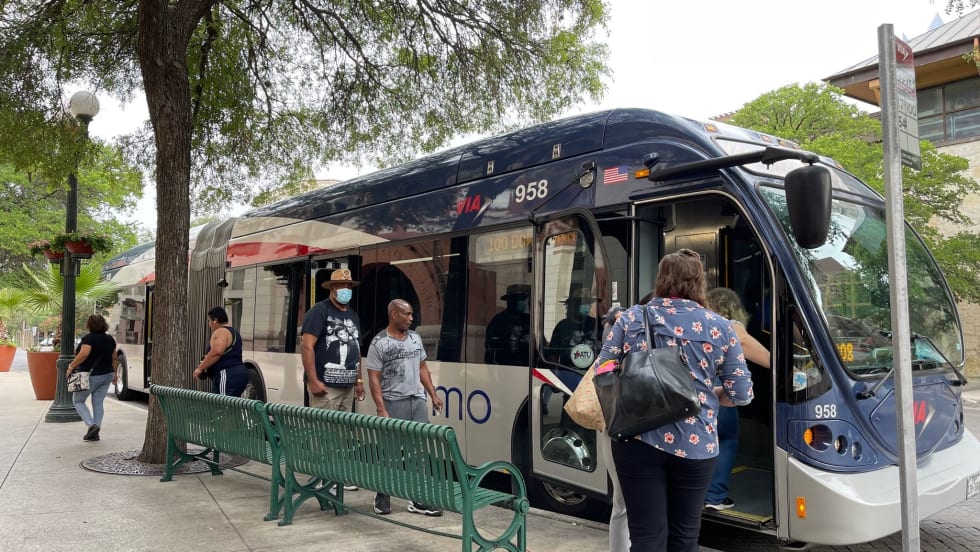
VIA Bus Ridership Grows 10.1% Through August 2026
San Antonio's VIA Metropolitan Transit reported the highest bus ridership growth among major Texas transit systems. Federal Transit Administration data ranked it second among the nation's 50 largest transit systems.
Read More →
CSA Group Releases Climate Resilience Standard for Transit, Passenger Rail
Developed with support from the Standards Council of Canada, CSA D700 guides assessing climate-related risks and planning adaptation measures for transit and passenger rail systems.
Read More →
ETA CEO John Maglio on Transit Technology, Innovation, and Building Agency Trust
ETA founder and CEO John Maglio explores the evolution of transit technology, the importance of reliable systems, and how stronger partnerships can help agencies improve operations and the passenger experience.
Read More →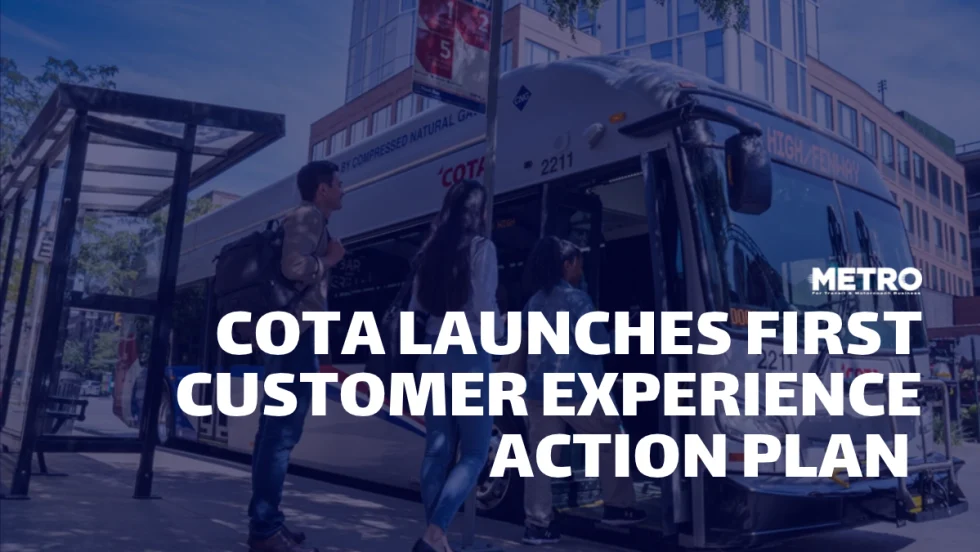
COTA Launches First Customer Experience Action Plan to Improve Transit Service
The new plan outlines improvements to service reliability, accessibility, communication, and the overall rider experience across Central Ohio's transit system.
Read More →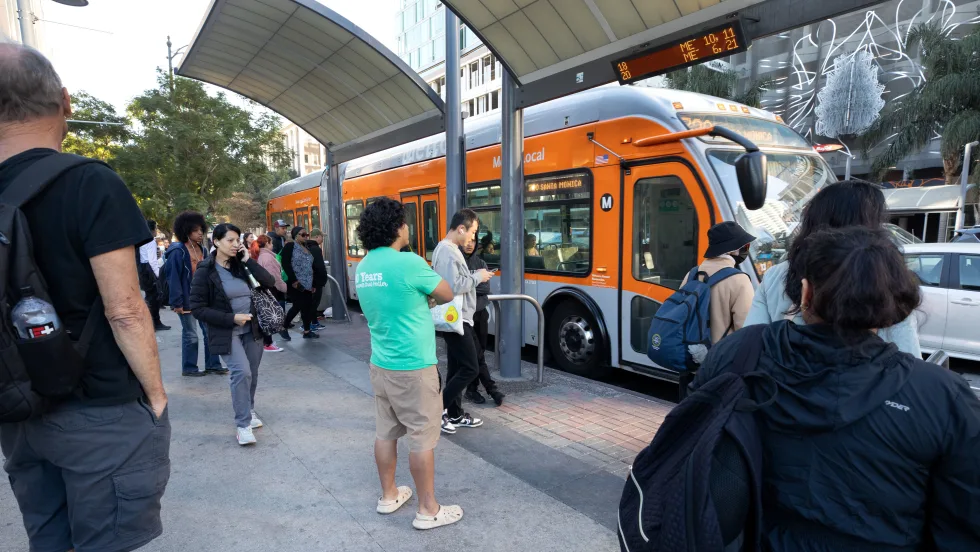
LA Metro September Ridership Climbs 3.9%, Led by Rail Growth
The agency recorded more than 27.2 million boardings, with rail ridership increasing 12.4% year over year and the D Line posting the largest gains.
Read More →
Utilimarc Launches SmartReplace to Optimize Fleet Replacement Decisions
AI-powered SmartReplace helps fleets prioritize vehicle replacements, model budget scenarios, and build more defensible long-term strategies.
Read More →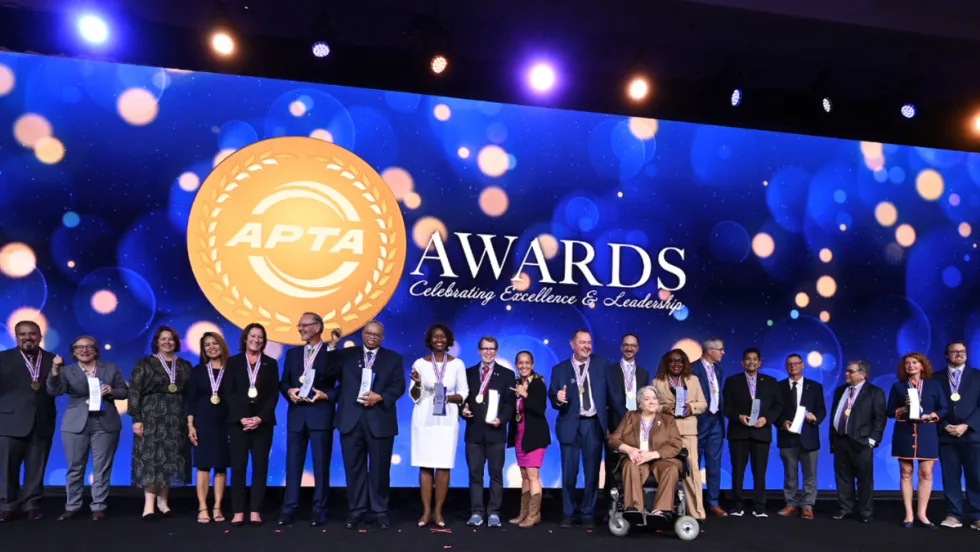
APTA Honors 2026 Award Winners, Hall of Fame Inductees at TRANSform & EXPO
Innovations in autonomous and zero-emission transportation, standout transit systems, and industry leadership took center stage among this year's honorees.
Read More →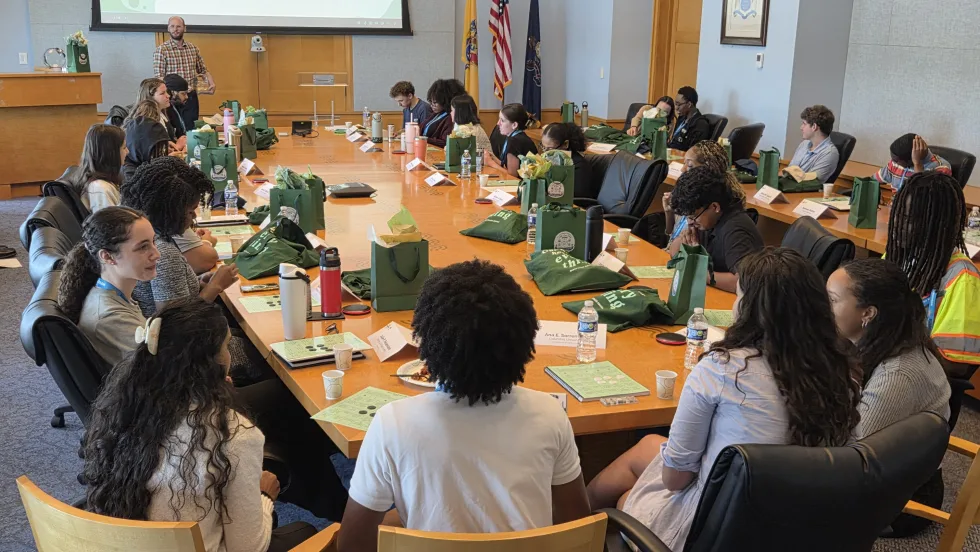
7 Ways to Build a Better Transit Internship Program
Lessons from DRPA/PATCO’s approach to creating a meaningful internship experience—and developing the next generation of transportation professionals.
Read More →
Scenes from APTA TRANSform & EXPO 2026
Transit leaders, manufacturers, and industry professionals gathered in Chicago to explore new technologies, share ideas, and discuss the future of public transportation.
Read More →