



Indy, Kansas City airport execs talk electric shuttle testing
Indianapolis, Kansas City officials agree that the vehicles are an ideal application for the shuttle services they provide.
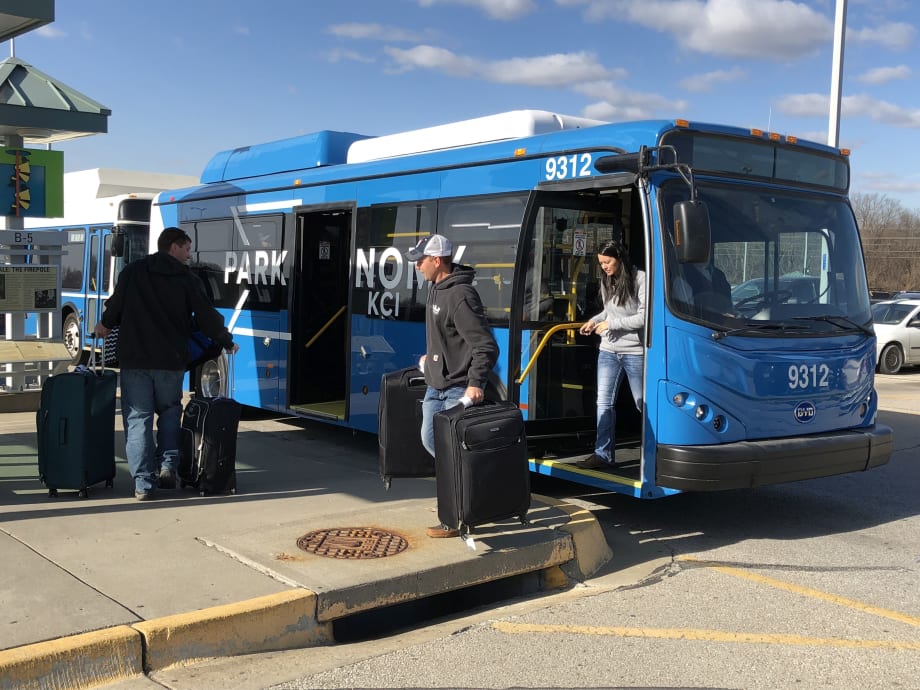
A couple of years ago, Kansas City and Indianapolis airports began using battery-electric buses on their routes, with Kansas City going with four vehicles from BYD.
BYD
A couple of years ago, Kansas City and Indianapolis airports began using battery-electric buses on their routes, with Kansas City going with four vehicles from BYD.
BYD
Although running shorter routes, a key challenge for airport shuttle providers is uptime, since they are typically providing services on a 24/7 basis.
“Uptime is definitely a consistent challenge in cold weather,” says Steven Wilson, director of parking at the Indianapolis Airport Authority. “To stay on top of it, it is imperative to focus on making sure the buses are serviced routinely and that we are consistently doing our scheduled preventative maintenance.”
Kenneth Williams, fleet manager at the Kansas City International Airport agrees that maintenance is key to keeping the vehicles operating.
“The main thing is I have tried to work with the technicians I have here and encourage them to be thorough,” he explains, adding that he meets with his team regularly to discuss issues and maintain an open dialogue.
“By keeping up with my team all the time, it ensures that I’m not only speaking to them when something is wrong,” Williams says. “When I do speak to them, it’s usually just a small issue that we have to address but they are always receptive.”
A couple of years ago, both airports began using battery-electric buses on their routes, with Kansas City going with four vehicles from BYD and Indianapolis adding nine from Complete Coach Works (CCW).
“The main reason we went with electric buses was an effort to increase our sustainability,” Wilson says. “We are trying to reduce our carbon footprint and also see some savings in diesel fuel and maintenance expenses.”
In Kansas City, Williams explains that while the airport has been running natural gas buses for 18 years he was able to convince the authority to try electric vehicles and has actually experienced some of the benefits that Wilson says Indianapolis is seeing.
“I don’t want to brag and tell you that the electric buses are better than our natural gas buses we were already running, but they are doing well,” he says. “The maintenance has been minimal and most of the problems I’ve had have been warranty work, so our team hasn’t had to do perform a whole lot of maintenance.”
While neither airport took the decision lightly, they both admittedly moved forward without much feedback from peers since they are among the first airports in the nation to use battery-electric buses.
“I believe we’re actually the first airport to run electric buses, so there wasn’t a lot of research out there, which was the scary part of making the move,” says Williams. “What I did instead was spend a lot of time riding buses, visiting suppliers, and seeing which of them were willing to bring a bus out for us to test drive. I really just wanted to make sure the numbers they were giving me were accurate.”
“We talked to other airports and did our research, but at that time not many airports were making the move to electric buses,” adds Wilson. “So, we leaned on IndyGo, since they recently went through the procurement process for all electric buses, and we researched their operations before we went ahead and made our purchase with CCW.”
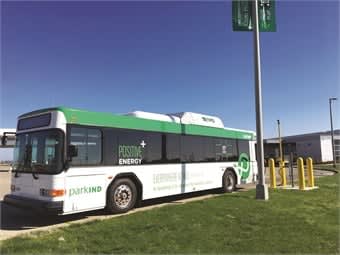
The Indianapolis Airport Authority currently operates nine all-electric Complete Coach Works buses on its shuttle routes.
Indianapolis Airport Authority
Performance, Challenges
With both airports now approaching year two of their electric bus usage, they agree that the vehicles are an ideal application for the shuttle services they provide.
“When you take these buses on a short airport route and the charge becomes depleted, you can easily get them back to the charging station. Operations with longer routes could have challenges getting off route and back to the charging stations before the charge is depleted,” says Wilson. “The shorter route makes the airport operation more conducive for electric vehicles over a longer transit route.”
Williams agrees with Wilson that electric buses have proven ideal for airport shuttle operations and adds that they have also benefitted passengers and drivers.
“Most people when they get off a plane, where it’s a louder experience, you can see them get on one of our electric buses and watch their anxiety level literally decrease because they are so quiet,” he says. “From a driver standpoint, driver fatigue is way down because you don’t have the same high vibration that you experience with conventional buses.”
Williams adds though, that one of Kansas City’s biggest issues has been getting drivers who want to operate the buses.
“These are smart buses, so our drivers have been a bit intimidated by them,” he says. “As they get more experience though, they become less intimidated and realize the benefits of driving an electric bus.”
While the passengers have enjoyed the smooth and quiet ride while on the road, Wilson says the biggest challenge Indianapolis has faced is issues with cold weather.
“We’ve gotten down to negative-degree weather this year and have had some challenges with our buses being operational in the severe cold,” he says. “The biggest issues have been keeping our interior cabins and the batteries warm.”
Wilson says the vehicles operate without a hitch in the warmer months and that CCW has been great in working with his team to help address the issues, with the authority addressing some of the cold weather challenges by upgrading their heating systems and adding seat warmers, as well as keeping the door by the driver closed unless using the ramp for an ADA passenger is necessary.
“Keeping the door shut the majority of the time helps us to stay away from getting those gusts of wind that whip through and take away a lot of our heat,” he says, adding that the cold weather also has caused an issue with the authority’s diesel bus fleet, with the fuel gelling up when temperatures drop.
Ultimately, Wilson believes the authority will be able to better combat the cold weather issues by moving its parked buses indoors.
“We fully believe that building a bus bay to store these electric buses in a climate-controlled area will resolve all of our issues with the cold weather,” he says, while adding that his number one piece of advice to other airports looking to get into electric vehicles would be to store them in a climate-controlled area.
Wilson also says that despite the challenges, he believes Indianapolis will overcome and continue moving forward toward an all-electric fleet.
As for Kansas City, Williams is expecting to add four more BYD buses in the short term and has also started to go electric with some of the other types of vehicles the airport operates.
“I often ask myself if I had the same opportunity would I do it again, and I definitely feel like I would,” he says. “I really envision us going all-electric; in fact I’ve already started buying some hybrid construction equipment and am looking into electric applications for some of our security vehicles.”
More Technology

From Hardware to Digital Partner: Luminator Charts Its Next Chapter
CEO Magnus Friberg discusses Luminator’s shift toward becoming a digital partner, the growing importance of software and interoperability, and how AI can help agencies improve operations and passenger experience.
Read More →
Beyond the Checklist: A Structured Approach to Transit Maintenance
Reliability-Centered Maintenance helps transit agencies move beyond routine checklists to focus limited resources on the assets and failures that have the greatest impact on safety, reliability, and service.
Read More →
NJ TRANSIT Advances Bus Technology Upgrades Across Statewide Fleet
More than 1,500 buses now feature upgraded technology designed to improve arrival predictions and provide free Wi-Fi, with deployment expected to reach nearly 2,000 buses by the end of 2026.
Read More →

Building a Flexible Path to Transit Electrification
John Hroncich discusses BAE Systems’ modular and scalable approach, lessons learned from decades of real-world operations, and how agencies can identify electrification strategies that fit their fleets.
Read More →
Biz Briefs: Alstom Lands Canadian Contract, LYT to Supply California TSP, and More
In METRO's latest installment, we take a look at recent news from Complete Coach Works, Beep, FlixBus, and more partnerships making headlines across the transportation sector.
Read More →
From Legacy Silos to Conversational Intelligence
What if transit leaders could ask any operational question and get a trusted answer in seconds? Conversational AI is transforming how agencies use their data.
Read More →
USDOT Announces Rail Vehicle Replacement Grants, Chattanooga AV Shuttle Funding
More than $191 million in federal funding will help three transit agencies replace aging rail vehicles and support a new autonomous shuttle service in Chattanooga.
Read More →
Bus Tech Talk: Keeping Transit Technicians Ahead of the Technology Curve
LA Metro’s Obed Mejia discusses technician training, evolving maintenance technology, fleet replacement, and strategies for getting the most out of today’s transit fleets.
Read More →
Biz Briefs: RIPTA Unveils New Frontrunners, Clevland RTA Adds New Siemens, and More
In METRO's latest installment, we take a look at recent news from Siemens, Prevost, Dodge, and more partnerships making headlines across the transportation sector.
Read More →
Why Simulating Pedestrian Movement Has Become Essential for Modern Rail Stations
Pedestrian microsimulation is helping rail planners identify bottlenecks, test station designs, and prepare complex transit hubs for growing passenger volumes.
Read More →