



Inventory Management: How Stock-Out Risks Drive Inefficient Transit Parts Programs
Overstocking to ensure rush hour demands are met leads to higher upfront overhead costs and increases obsolete inventory when fleets are retired.
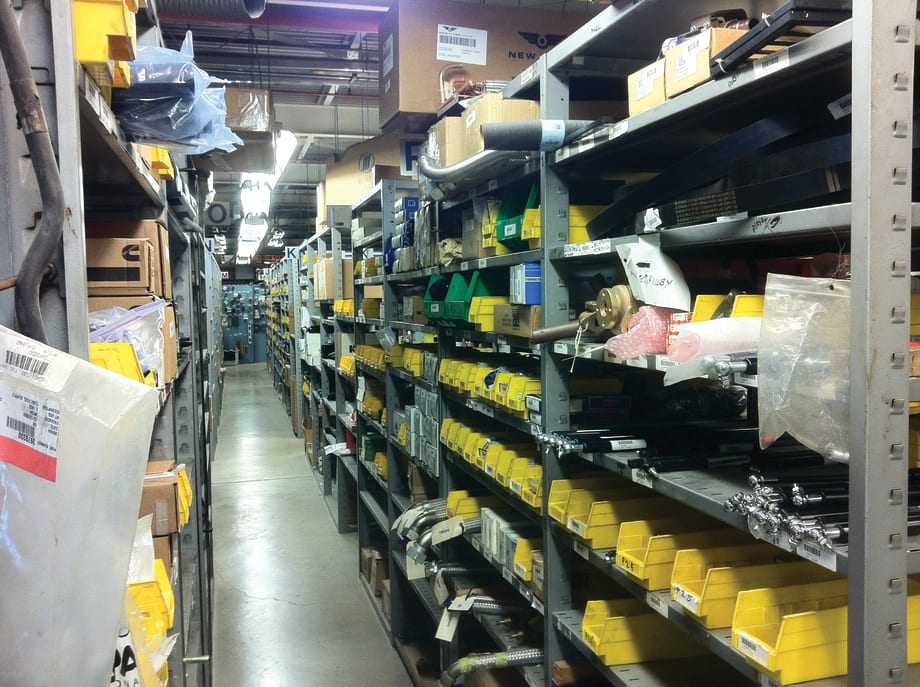
As transit operators strive to service daily ridership demands with fewer resources, fleet managers are increasingly stuck between a rock and a hard place. To meet peak morning and afternoon rush hour demand, it is common practice to overstock inventory to mitigate the stock-out risk and keep buses in service. However, a journey into the North American transit stockrooms reveals that the practices implemented to meet peak service demands can be very costly, especially in the context of parts inventory.
This article is part of a series that will explain the rationale and business process that Toronto, Ontario-based regional transportation agency, Metrolinx undertook to develop and implement a comprehensive Vendor Management Inventory (VMI) model to manage parts inventory in a timely and efficient manner on behalf of a consortium of Ontario-based transit systems.
Each fleet manager has developed his or her own approach to materials management. Yet, it is not uncommon for managers to overstock certain parts to avoid stock-outs in order to keep buses in service. On one hand, this may reduce parts procurement lead times, the need for spare fleet and negative reputation by ensuring rush hour demands are met. On the other hand, this can lead to higher upfront overhead cost and obsolete inventory when a fleet is retired.
Chad Saunders, supervisor of material management at Grand River Transit (Kitchener Waterloo, Ontario), says that his main goal "is to have enough inventory on hand to ensure that all buses meet peak schedule." This practice, known as the "just-in-case" inventory management, accumulates excessive parts in stockrooms despite low utilization rates. Thus, we commonly see annual inventory turnover of 1 to 1.5 whereas other businesses, such as those in manufacturing and private sector fleet support, experience annual inventory turnover rates of 10 to 12.
High inventory costs rarely go unnoticed within many transit organizations. Often, there is a tug-and-pull battle between finance, procurement and operations, each seeking to anchor their own strategy over the use of crucial resources. The result is an amalgamation of various suboptimal procurement methods, including numerous resource-consuming purchase orders, limited SKU RFPs and lowest bid daily price shopping. None of these approaches, however, enables an organization to establish long-term partnership opportunities with suppliers or benefit from purchasing economies. Moreover, finance departments may focus on a part's immediate line item cost as opposed to the true total cost of ownership (e.g., procurement cost, inventorying cost, obsolescence cost, etc.). The end result is often the gradual degradation of quality, lead time reliability, while inventory volumes continue to rise.
A more detailed survey of current procurement methods reveals the shortcomings of these approaches and brings to light why our industry desperately needs a new model of parts inventory management in these challenging times.
Daily Price Bid Approach
A daily price bid form lists the parts a transit operator will need in the coming week. This form is then sent to parts suppliers who have until the end of the next business day to respond with a price. This method ensures an immediate market comparison between suppliers that choose to bid.
However, the major drawback of the bid form approach is it does little to establish a long-term partnership with suppliers and offers only limited comparisons of price and lead times. The inefficiency of vendors holding inventory and guessing at what bid they might win, and the costs of responding to numerous requests for bids, generates extra costs that must be covered. Also, once stock has been used, the process is repeated, adding to operating costs. As many of the parts on the daily bid are fast moving or captive to a few suppliers, it is rare that the best value is achieved. Moreover, in the case of Grand River Transit, Saunders says that "when I'm notified of extensive lead times of 12 or more weeks, we increase orders just in case, as repairs tend to happen in cycles and another repair may be soon approaching. It's a judgment call that is primarily motivated by our need to decrease the stock-out risk."
[PAGEBREAK]
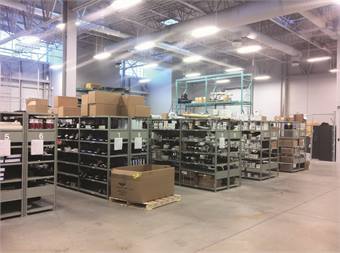
High inventory costs rarely go unnoticed within many transit organizations. Often, there is a tug-and-pull battle between finance, procurement and operations.
Blanket Purchase Order
Blanket purchase order agreements allow transit systems to qualify preferred parts suppliers based upon internal criteria. This gives the operational departments autonomy over the selection of preferred vendors. However, this practice limits dialogue to suppliers who are not necessarily incentivized to provide the lowest price. Again, lead-times associated with requesting shipment against the blanket purchase order and receiving it into stock continue to encourage fleet managers to overstock inventory due to the risk of not meeting peak pull out.
Limited SKU RFP
A limited SKU RFP attempts to carve out inventory based on the commoditization of parts used. These parts are pooled to find a supplier that can deliver the greatest value through a guarantee to deliver the specified parts over an extended period of time. This method does not guarantee short lead times but does provide quality assurances. As well, a limited SKU RFP practice eliminates certain forms of inventory that suppliers can bid on through other procurement methods. This further limits opportunities to obtain price discounts on other inventory-through-purchasing economies.
Many fleet managers argue that a combination of these methods has been effective in their operations. However, an analysis I carried out at Metrolinx revealed an average part price discrepancy among 10 transit systems in Southern Ontario of 36.2% for the same part percentage. Everyone felt confident they had gotten the best price on everything, but all 10 of the transits faced materially higher prices on a broad range of parts.
Parts suppliers are unlikely to complain. The above bidding practices present an opportunity for parts suppliers to build into their bid prices a premium in the magnitude of 15% to 30%. Moreover, many of the key suppliers see the transit parts industry as a secondary market. With more than 81, 677 conventional transit buses and 68,200 paratransit buses across North America, the combined parts spend for fleets is approximately $1 billion to $1.4 billion, a small fraction compared to the automotive and trucking parts aftermarket. As a result of these piecemeal procurement processes, there is little incentive for parts suppliers to develop lasting relationships. Rather, it is not uncommon for suppliers to develop superseding part series' to maintain profit margins. As such, the buying power of individual systems is further reduced and is held captive to the supplier community.
Current procurement practices may enable fleet managers to meet peak pull out demands, but they do so at a high price premium. Fleet managers, buyers and stock keepers must recognize that current inventory methods can result in significant overhead costs related to carrying excess inventory, issuing reoccurring procurements, and writing off obsolete parts. With the fear of stock outs driving significant waste and overinvestment in inventory in today's context of limited financial resources, a new solution is desperately needed.
In my next article I will share the business case underpinning the needed paradigm shift in transit parts inventory.
More Bus

New York MTA Plans Largest Bus Fleet Upgrade in More Than a Decade
The agency is seeking manufacturers for 650 new CNG buses to replace aging vehicles, improve reliability, and advance its broader fleet modernization strategy.
Read More →
Building a Flexible Path to Transit Electrification
John Hroncich discusses BAE Systems’ modular and scalable approach, lessons learned from decades of real-world operations, and how agencies can identify electrification strategies that fit their fleets.
Read More →
Bus Tech Talk: Keeping Transit Technicians Ahead of the Technology Curve
LA Metro’s Obed Mejia discusses technician training, evolving maintenance technology, fleet replacement, and strategies for getting the most out of today’s transit fleets.
Read More →
Biz Briefs: RIPTA Unveils New Frontrunners, Clevland RTA Adds New Siemens, and More
In METRO's latest installment, we take a look at recent news from Siemens, Prevost, Dodge, and more partnerships making headlines across the transportation sector.
Read More →
People Movement: Holly Arnold Joins Transdev and More
In this edition, we also cover recent appointments and announcements at Pace, CamTran, MCI, and more, showcasing the individuals helping to shape the future of transportation.
Read More →
The High Cost of Transit Buses: Industry Leaders Look to Procurement Reform
Transit leaders and policymakers examine how standardized bus designs, streamlined procurement, and predictable funding could help agencies stretch budgets and deliver better service.
Read More →
The Business Voice Behind Public Transportation
As chair of APTA’s Business Members Board of Governors, Ray Melleady explains how more than 850 business members are partnering with transit agencies to advance funding, innovation, and industry-wide collaboration.
Read More →
From Surviving to Thriving: Building Stronger Transportation Organizations
Bus Business Consultants founder Brian Dickson shares lessons on leadership, organizational health, and creating options for long-term success in a changing transportation industry.
Read More →
Finding the ‘Happy Medium’: Optimizing Maintenance Without Sacrificing Reliability
The key to maintenance optimization isn’t doing less work—it’s doing the right work at the right time on the right assets.
Read More →
LA Metro, City of West Hollywood, and Partners Advance Smarter Bus Lane Enforcement
The award-winning partnership combines AI-powered detection with human oversight to improve bus reliability, accessibility, and enforcement efficiency.
Read More →