



It all comes back to rail
Rail is an essential part of transit systems, and more funding is needed to keep rail projects on track.
Perhaps it’s appropriate that this issue, containing our annual Top 50 Rail Projects survey, directly precedes our special 100th anniversary issue. After all, back in 1904, the original predecessor to METRO was a rail publication called Electric Traction Weekly.
As the Top 50 rail survey (beginning on pg. 36) compiled by Associate Editor Janna Starcic suggests, we’ve come a long way in the past century. The amount of money spent annually on North America’s 50 largest capital rail projects is staggering. This year’s survey reports an estimated cost of more than $65 billion for current projects.
What’s more, a larger pot of funding is needed over the next several years to keep these projects in development and on track. One of the questions that we asked on this year’s survey is “What is the greatest challenge faced by your rail system?” It elicited a range of answers, but the most common response, as you might guess, was funding.
Digging for more funding
Whether it’s building a starter system, constructing an extension of an existing system or procuring rail vehicles, transit authorities are hard-pressed to keep projects moving forward because of tight budgets at the local, state and federal levels.
Here’s how one respondent described his dilemma: “In an environment of financial constraints and cost control, the challenges are to achieve the highest levels of safety and security and to complete significant capital project investments.”
The mention of safety and, especially, security brings up a good point. No longer can rail systems be designed simply for convenience and expediency. They must take into account the very real possibility that terrorists will someday target the system. In many cases, this will require a costly upgrade of the infrastructure and additional operating costs for passenger screening, surveillance and increased frequency of transit police patrols.
Meeting the demands of operating costs is a struggle for many rail systems. One agency reported a $70 million deficit in the operating budget for fiscal year 2005 and emphasized the need for additional state support: “Funding has been insufficient for a number of years as we are currently in a financial crisis that threatens our ability to operate safe and uninterrupted transportation services.”
Projects come to fruition
But the good news is that the majority of these projects will find the necessary funding and one day transport millions of passengers per year. If they’re lucky, they’ll run into another problem reported by some agencies: the need to expand the operation because of a lack of capacity. That generally means that the rail line is more popular than anticipated, which is the upside to poor prognostication.
Rail — whether it’s light, commuter or heavy — is an essential part of many transit systems across the country and has recently expanded its presence in Houston, Minneapolis and Little Rock, Ark. At press time, lawmakers on Capitol Hill were wrestling with the reauthorization of TEA 21 amid a veto threat from the White House. At stake are billions of dollars stretched over a six-year span.
If the reauthorization legislation hasn’t already been approved by the time you read this, please continue the effort to lobby your legislators. One hundred years from now the landscape of this country will be affected by decisions made today. Although none of us will be around to see those changes, this magazine very well could be.
Wouldn’t it be nice if METRO is still publishing stories about the great rail systems of North America in 2104?
A special thanks to all of those who took the time and effort to fill out our rail survey. Your participation is greatly appreciated.
More Management

Public Transit Conference Returning to GFX in 2027, Call for Papers Now Open
The Call for Papers is now open, allowing transit agency professionals and industry experts to help shape the PTC educational program by submitting session ideas for consideration.
Read More →
Indian River Transit’s Community-Focused Approach Earns National Recognition
Named APTA’s 2026 Outstanding Public Transportation System in its size category, Florida’s Indian River County transit system continues to grow ridership through fare-free service and a focus on evolving community needs.
Read More →
ENC Lands MATA Contract and More in Biz Briefs
In this edition of Biz Briefs, we spotlight the latest developments shaping the future of mobility.
Read More →

From Surviving to Thriving: Building Stronger Transportation Organizations
Bus Business Consultants founder Brian Dickson shares lessons on leadership, organizational health, and creating options for long-term success in a changing transportation industry.
Read More →
Everett Transit, Community Transit Outline Consolidation Agreement
The proposed agreement calls for a 50% increase in bus service in Everett, a new microtransit zone, continued paratransit service, and the transfer of Everett Transit operations to Community Transit.
Read More →
Strada360’s Steve Lassey on Turning Transit Data Into Better Decisions
From breaking down data silos to preparing for AI, Strada360 CEO Steve Lassey discusses how transit agencies can use technology to improve operations, customer information, and long-term decision-making.
Read More →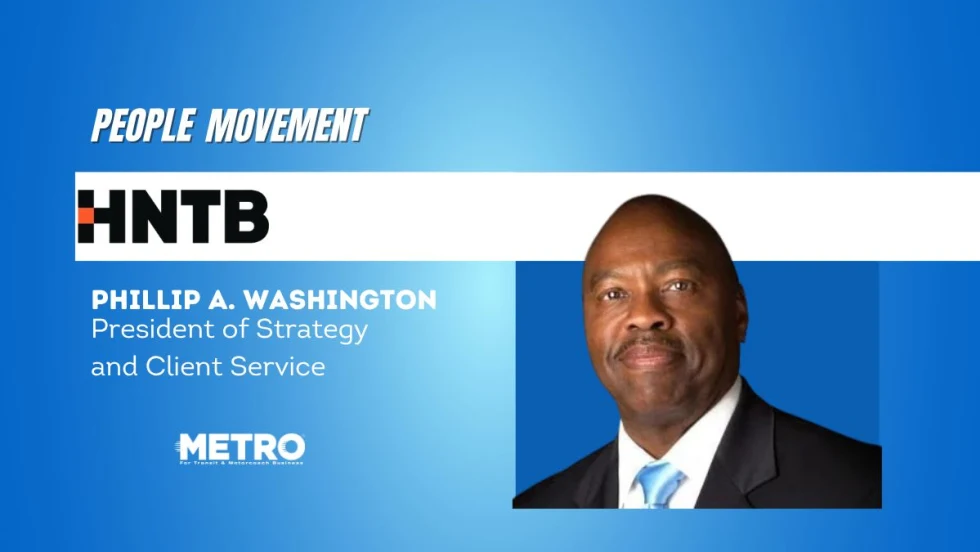
People Movement: Phil Washington Joins HNTB, Denver RTD Launches CEO Search, and More
In this edition, we also spotlight recent personnel moves at STV, the Eno Center for Transportation, and more, highlighting the people taking on new roles across the transportation industry.
Read More →
SEPTA Details Accelerate Vision for Transit System
The plan outlines investments in trolley modernization, new Metro and Regional Rail vehicles, accessible stations, and more frequent bus and rail service.
Read More →
FTA Ends Direct Oversight of MBTA Safety Actions
The federal agency closed its remaining special directive to the Massachusetts Department of Public Utilities following a safety review that began in 2022.
Read More →
Report: Transit Bus Manufacturing Supports 34,100 Jobs, $5.1B in GDP
The “Buses Mean Business” report examines the transit bus manufacturing industry’s economic footprint, supply chain, and rising demand for vehicle replacements.
Read More →