



Keys to Proper Spec'ing of Wheelchair Lifts
Bigger, heavier wheelchairs and the need for space have forced transit and motorcoach operators to reconfigure their specifications and go beyond ADA requirements.
When it comes time to spec a wheelchair lift for your transit or motorcoach system it's pretty basic: As long as your lift of choice complies with ADA regulations your job is done -- right? Actually, ADA regulations for wheelchair lifts are to be used as minimums, but there are extra considerations to think about beyond the ADA standards so that the lift you choose works best for your system. Many transportation personnel want to know how reliable or easy-to-maintain a lift is before they order it. Conducting research is the first way to determine which of the many ADA compliant wheelchair lifts on the market (see sidebar below) fits the bill. "Definitely it's important to research it beforehand," says Bill Rohrich, superintendent of maintenance for the Fargo (N.D.) Metropolitan Area Transit System, who finds dependability a key factor in lifts. "Normally what we'll do is check with other properties and see what kind of problems they are or aren't having," he says. "Normally other transit properties will let you know if they have a problem child or if they have a good unit." Factors to considerSize. Wheelchairs vary greatly in size, now more than ever. Because large power wheelchairs and scooters are becoming more common, it is important to spec a larger lift. ADA minimum standards require wheelchair lifts have a platform width of 30 inches and a length of 48 inches. Richard Wong, an attorney with the Federal Transit Administration (FTA) who is involved with implementing ADA standards, says he sees a trend toward larger, wider wheelchairs. "I guess they're going with the wider is better concept, like SUVs," Wong says. To oblige their customers preference for wider wheelchairs, the San Francisco MUNI specified for a wider lift platform, says Wong. "That would be fine for people in San Francisco, but there is no guarantee that those wheelchairs can be accommodated in the rest of the nation," he says. James Hillen, assistant maintenance administrator at the Regional Transportation Commission of Southern Nevada, agrees with the need to spec a wider lift. "We are finding more and more people have these personal mobility devices that are much bigger than the standard wheelchair," Hillen says. For some, spec'ing a wider lift may not be an option due to space considerations, says Val Fleming, Los Angeles area director of maintenance for Coach USA. "In the motorcoach industry we are cramped for space," he says. "You're not going to see us ordering double width lifts." Also in favor of a more compact lift is Dave Haymond, maintenance manager at Boise (Idaho) Urban Stages Transit. Haymond explains that large width lifts stored under the bus hinder maintenance personnel during routine maintenance like checking for leaks. "You have to drop the whole lift, which is time consuming and puts the bus out of service quite a bit longer," he says. Capacity. The ability of a wheelchair lift to bear a significant amount of weight is also an important factor for transportation personnel. Inadequate loading capacity is a problem encountered by many. The ADA requires a minimum design load of 600 pounds, but transportation personnel are finding it necessary to spec a higher capacity that will withstand the weight of motorized wheelchairs. "Now, with so many people going to motorized wheelchairs, weight is a real critical issue," says Mary Burke, finance manager for the Topeka (Kansas) Transit Authority. "Seven hundred pounds is probably the minimum you want to have," she says. Jack Jackson, maintenance supervisor for Geauga (Ohio) County Transit, finds that a heavier lift rating of 1,000 pounds is a good thing to do. "They just seem to be more substantial. The overall stability of the lift increases when it's built heavier," he says. Location. Where should the lift be placed? It's up to the individual transportation operation to decide whether lifts should be located in the front, rear, or, in the case of motorcoaches, in the luggage compartment. The ADA does not specify a location requirement for wheelchair lifts as long as it provides a clear path of travel to the securement location, says Wong. Bob Rost of the Minnesota Body and Equipment Co., a transportation specialist for school and commercial buses in Shakopee, Minn., created a comprehensive list of reasons why lifts should be placed in the front of the bus. Reasons include: the driver has a better view of wheelchair passengers at all times; the area between the axles and the front of the bus gets less bounce; when a rear door is opened it pulls in carbon monoxide from the tailpipe under certain wind conditions; and placing wheelchair riders in the rear of the bus may have undesirable social implications to some disabled riders. Boise's Haymond prefers the rear door location for lifts. "In the front area you have the farebox and other things which make it difficult for electric wheelchairs to negotiate the first turn," he says. "In rear door applications you have a wider area for chairs to turn." In the case of motorcoaches, luggage space is at a premium, which makes it an unfavorable location for lifts. "I know that a lot of people like the units that are stored inside the coach rather than in the luggage bay because they take up too much luggage space," says John Romero, shop foreman for Coach USA in Long Beach, Calif. Lifts vs. ramps Are low-floor buses equipped with ramps the wave of the future? Numerous transit operations seem to think so. Walter Jonchuk is superintendent of maintenance for Broward (Fla.) County Mass Transit, where they have used ramps since 1997. "I would say that lifts are old school and the biggest thing is they are a high maintenance item," says Jonchuk. "We find for the most part that ramps are much easier to work with." Jonchuk explains that ramps are easier to repair and troubleshoot because of their simpler design. Hillen agrees, adding that ramps provide ease of entry and allow for faster loading of passengers. Scott Hoover, operations manager for Boise (Idaho) Urban Stages, sees low-floor buses and ramps as a trend that is here to stay. "The low-floor ramp concept I think works very well for our community and our climate," says Hoover. "In the winter months the lifts can sometimes freeze up on you and the motorized parts don't move as quickly." The key factor to think about when you order a low-floor bus is to make sure that a wheelchair can maneuver between the two wheel wells, says Wong. "A low-floor bus is good for benign terrain," he says. "The low clearance doesn't give you enough room to get over snow drifts or clumps of ice." Low-floor buses are also not recommended for rural carriers travelling on unpaved roads. Wong has heard complaints from electric wheelchair users on the difficulties of maneuvering in a low-floor bus. "We tell them as long as the bus meets ADA standards and you can fit your wheelchair through, then they are in compliance," says Wong. "It is a local option whether to go low floor or high floor, ramp or lift." ***************************************** Advances in wheelchair lifts That age-old lament, "They don't make them like they used to," is actually a good thing when talking about wheelchair lifts. Val Fleming, Los Angeles area director of maintenance for Coach USA, remembers a time when an older model lift used to "flop down on the driver's head." Those days are long gone. The latest wheelchair lifts boast numerous technological advances and safety features like the newest ADA compliant models produced by Braun Corp., Ricon Corp., Maxon Mobility Products, Stewart & Stevenson Power Inc. and Lift-U. The Peak Lift is Braun's newest lift in its Hi-Line Series for the motorcoach industry. When stored on its side, the Peak Lift only occupies 16 inches of widthÑessential in motorcoaches where luggage space is at a premium. There are four models of the Peak Lift available. It has a maximum floor-to-ground travel of 73 inches and platform dimensions have a width of 30 1/8 inches and length of 51 1/8 inches. The new KlearVue ª K-2005 ADA is one of Ricon's latest wheelchair platform lifts. This model has a 32-inch platform width and 51 inch length. The KlearVueª has a unique platform design that folds in half into the upright position, giving passengers an unobstructed view and minimizing blind spots for the driver. Accidental deployment is prevented through Ricon's Sto-Locª technology. Ricon's patented interlocking occupant safety system was designed to prevent lift operation unless the belt is engaged. Maxon Mobility Products, with its WL-6A models, is another key player in the wheelchair lift market. The company offers four versions of this lift in varying dimensions. The largest version has 33 inches of usable platform width and 53 inches of length, with a floor-to-ground travel distance of 48 inches. The Maxon lift has features similar to Braun and Ricon's lifts, such as an inboard and outer roll stop that prevents the wheelchair from rolling while on the lift. Like the Ricon models, the WL-6A also has an occupant restraint system that must be latched in order for the lift cycle to begin. Stewart & Stevenson's BayLift for motorcoach applications is available in two models, which stow in 18 inches of the luggage bay. The BayLift has a maximum platform width of 30 inches and a maximum length of 48 inches with a vertical travel measuring 63 inches. Both models have a 600-pound lift capacity and include dual handrails. The Lift-U II wheelchair lift is Lift-U's step/platform onboard lift. In its stowed position the lift forms the steps of the bus, thereby maximizing space. The Lift-U II is equipped with handrails and has a passenger sensor that does not allow the steps to form when the platform is occupied. It has a maximum platform width of 36 inches and a maximum length of 54 inches. ******************************************* ADA pocket guide for motorcoach operators Easter Seals Project Action, in conjunction with the American Bus Association (ABA), created a 33-page customer service guide, ADA Training Program for Motorcoach Companies, to aid motorcoach operators in serving customers with disabilities. "We met with the ABA to develop, with their participation, a user-friendly guide that would provide members of the motorcoach industry with basic information on the ADA regulations," says Sharon Ransome Smith, Easter Seals communications manager. The pocket guide offers information on various topics, such as lift operation and maintenance, and discusses proper securement methods for the wheelchair and passenger. "Overwhelmingly, I think it has been positively received," says Ransome Smith of the pocket guide. "We are in the process of reprinting them now." The pocket guide can be downloaded from the Easter Seals Project Action Website at www.projectaction.org or you can call direct to order a bound copy at 202/347-3066.
More Management

Bus Tech Talk: Keeping Transit Technicians Ahead of the Technology Curve
In this episode of Bus Tech Talk, Complete Coach Works’ Business Development Manager Mark Hollenbeck and METRO’s Executive Editor Alex Roman sit down with Obed Mejia, Senior Technical Trainer for Bus Maintenance, at LA Metro to discuss how rapidly evolving bus technology is changing the maintenance shop — and the skills technicians need to keep pace.
Read More →
Michael Schneider Joins Paslay Group to Expand Transportation Practice
The longtime transportation executive will help Paslay Group grow its advisory and program management work across transit, highway, and other infrastructure sectors.
Read More →
People Movement: Connectpoint Expands Leadership Team, Stadler Names New Group CEO, and More
In this edition, we also spotlight recent personnel moves at Burns, UZURV, and more, highlighting the people taking on new roles across the transportation industry.
Read More →
More Than a Summer Job: Building the Next Generation of Transit Talent
The Delaware River Port Authority and PATCO have transformed their internship program into a hands-on professional development experience that introduces students to the breadth of transportation careers — and creates a pipeline for future employees.
Read More →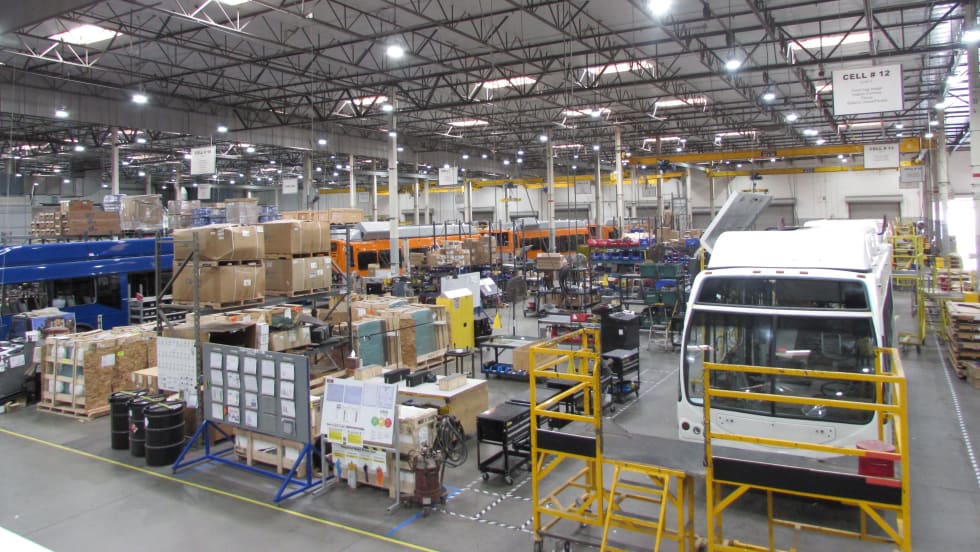
LA Metro Board Awards 220 Battery-Electric Bus Contract to ENC
The contract, which is the largest base award of battery-electric buses by a U.S. transit agency, will be built in Southern California, sustaining good jobs as LA prepares to welcome the world in 2028
Read More →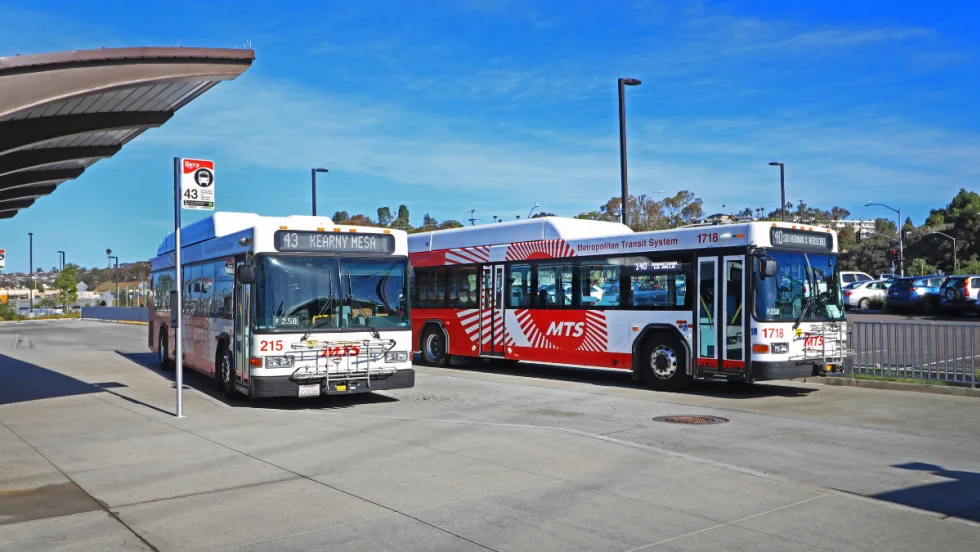
What’s Behind San Diego MTS’s Award-Winning Transit Strategy
Named one of APTA’s 2026 Outstanding Public Transportation Systems with 50 million or more annual passenger trips, California’s San Diego Metropolitan Transit System points to gains in ridership, safety, technology, and reliability as foundations of its success.
Read More →
Public Transit Conference Returning to GFX in 2027, Call for Papers Now Open
The Call for Papers is now open, allowing transit agency professionals and industry experts to help shape the PTC educational program by submitting session ideas for consideration.
Read More →
Indian River Transit’s Community-Focused Approach Earns National Recognition
Named APTA’s 2026 Outstanding Public Transportation System in its size category, Florida’s Indian River County transit system continues to grow ridership through fare-free service and a focus on evolving community needs.
Read More →
ENC Lands MATA Contract and More in Biz Briefs
In this edition of Biz Briefs, we spotlight the latest developments shaping the future of mobility.
Read More →From Surviving to Thriving: Building Stronger Transportation Organizations
Bus Business Consultants founder Brian Dickson shares lessons on leadership, organizational health, and creating options for long-term success in a changing transportation industry.
Read More →