




Trackless Rapid Transit: Hype or Viable Option?
The Expanding Role of Advisory in Transit Delivery
Garo Hovnanian explores how agencies can better navigate competing priorities, strengthen decision-making, and prepare for a future shaped by electrification and emerging mobility.
May 13, 2026

Garo Hovnanian, executive VP of advisory services at STV, works closely with agencies across North America to navigate these challenges.
Credit:
STV
4 min to read
- Garo Hovnanian discusses strategies for agencies to effectively balance competing priorities in transit delivery.
- Strengthening decision-making processes within agencies is highlighted as crucial for successful transit development.
- The article underscores the importance of preparing for future trends such as electrification and emerging mobility solutions.
*Summarized by AI
Transit agencies are under increasing pressure to modernize aging infrastructure, expand service, and adapt to rapidly evolving technologies, all while managing limited resources and growing complexity. In this environment, advisory services are playing a more critical role in helping agencies plan, prioritize, and deliver major capital programs.
Garo Hovnanian, executive VP of advisory services at STV, works closely with agencies across North America to navigate these challenges. In this Consultant Roundtable, Hovnanian speaks about the biggest hurdles facing transit providers today, how advisory services can bring clarity and efficiency to project delivery, and the strategies agencies can use to manage risk and prepare for a future shaped by electrification, resilience, and emerging mobility solutions.
Advisory Services and STV
Q: You lead advisory services at STV, working closely with agencies to develop strategy and deliver programs. What are the biggest challenges transit agencies face today when planning and executing large capital programs?
Hovnanian: Transit agencies are navigating a uniquely complex environment. They’re balancing the urgency of addressing infrastructure needs with expectations for modernization and expansion. At STV, our 2026 – 2028 Strategic Plan reinforces a local-first approach that helps us understand these complexities at a granular level in our local communities across North America.
Energy consumption and power demand are reshaping infrastructure across transportation and utilities, so STV is building on our existing strengths to expand into targeted areas, such as substations, transmission, electrification, grid resilience, and other power infrastructure that directly connect to our communities’ needs.
Q: Many transit agencies are managing aging infrastructure while also pursuing system expansion and modernization. How can advisory services help agencies prioritize investments and deliver projects more efficiently?
Hovnanian: Our clients are facing shifting expectations and more complexity. They need partners who can bring judgment and clarity, not just deliverables.
Transit agencies are balancing multiple priorities: providing safe, reliable service; managing fiscal health; modernizing and expanding; and supporting their workforce, and they must do all of that with finite capital, capacity, and time.
For agencies managing both backlog and growth, our role is to help them clearly understand tradeoffs, opportunities, and constraints across their entire portfolio. Effective advisory services bring structure, clarity, and confidence to projects at the moments that matter. But most importantly, they help agencies step back from individual projects and focus on the outcomes they’re working to achieve.
That means grounding decisions in data, scenario planning, and long-range strategy, so leaders can allocate resources to achieve the greatest community impact and move more efficiently from concept to completion. Often, this process leads agencies to refine or rescope projects to advance the outcomes they’ve committed to. That frees up capacity and ultimately delivers more of the right projects, not just more projects.
Risk Management and How Consultants Can Help Resilience
Q: Risk management has become a major focus for large transportation programs. What best practices are emerging to help agencies anticipate and manage risk throughout the project lifecycle?
Hovnanian: Our clients want speed, certainty, and modern delivery models. We’re seeing a strong shift toward more collaborative, transparent, and proactive risk management models that move toward shared accountability.
Governance models with shared incentives, such as progressive design-build or alternative billing structures, promote joint problem-solving and innovation. Equally important is bringing risk analysis upstream, well before procurement, so agencies can anticipate challenges and their implications, and build stronger delivery strategies. The most effective programs embed advisory services as a continuous practice.
The AEC industry is collecting more project data than ever before, but too often it’s relegated to backward-looking reporting rather than forward-looking decision-making. The strongest risk mitigation strategies leverage predictive insights to understand trends, identify emerging risks, and make smarter real-time decisions. It requires embedding high-quality data into projects from day one and, even more importantly, bringing in experts who can translate between those tools and the project environment, so agencies can see risks earlier and act on them faster.
Q: Looking ahead, how do you see advisory services evolving as transit agencies face new challenges, such as electrification, resilience planning, and emerging mobility technologies?
Hovnanian: Advisory services will increasingly serve as the connector between policy, planning, design, operations, and technology, enabling agencies to make implementable, future-ready decisions. Our role is to help agencies understand what’s changing, why it matters, and how to sequence decisions so their networks can evolve to meet shifting community needs.
As electrification and mobility technologies evolve, agencies are drawn into conversations about energy, digital systems, and long-term resilience. They’re negotiating for power availability for battery-electric fleets amidst rising data center presence. The pace and complexity of these shifts are moving faster than traditional planning cycles, which is why even the most capable agency can benefit from advisory perspectives that provide specialized technical depth and the ability to consider factors beyond the traditional bounds of transportation.
We’re mobilizing our experts to anticipate what their communities will need 10, 20, even 50 years from now. That includes guiding zero-emission fleet transitions, designing environmental shocks, and integrating new mobility tools into traditional networks that can flex with changing needs and unlock long-term community benefits.
Ultimately, our goal is to help agencies bring structure, foresight, and cross-disciplinary alignment to shape their future transportation networks.
Quick Answers
Transit agencies face the challenge of balancing competing priorities, such as maintaining current operations while investing in future technologies like electrification and new mobility solutions.
*Summarized by AI
Subscribe to Our Newsletter
More Management
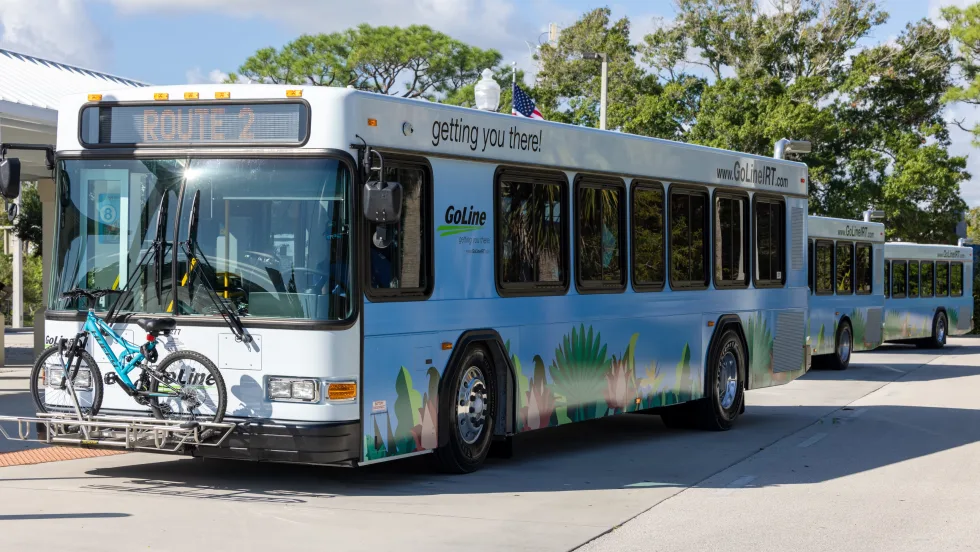
Indian River Transit’s Community-Focused Approach Earns National Recognition
Named APTA’s 2026 Outstanding Public Transportation System in its size category, Florida’s Indian River County transit system continues to grow ridership through fare-free service and a focus on evolving community needs.
Read More →
ENC Lands MATA Contract and More in Biz Briefs
In this edition of Biz Briefs, we spotlight the latest developments shaping the future of mobility.
Read More →
From Surviving to Thriving: Building Stronger Transportation Organizations
Bus Business Consultants founder Brian Dickson shares lessons on leadership, organizational health, and creating options for long-term success in a changing transportation industry.
Read More →

Everett Transit, Community Transit Outline Consolidation Agreement
The proposed agreement calls for a 50% increase in bus service in Everett, a new microtransit zone, continued paratransit service, and the transfer of Everett Transit operations to Community Transit.
Read More →
Strada360’s Steve Lassey on Turning Transit Data Into Better Decisions
From breaking down data silos to preparing for AI, Strada360 CEO Steve Lassey discusses how transit agencies can use technology to improve operations, customer information, and long-term decision-making.
Read More →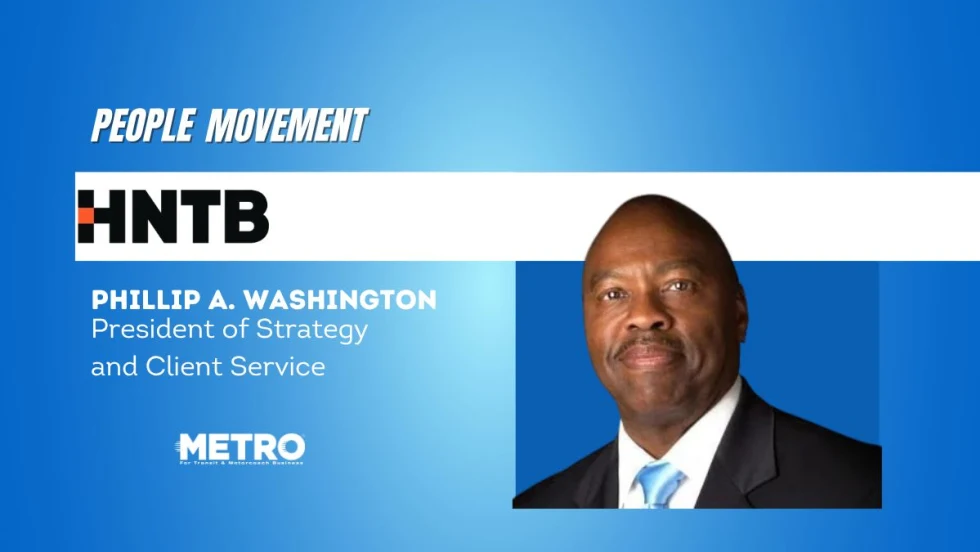
People Movement: Phil Washington Joins HNTB, Denver RTD Launches CEO Search, and More
In this edition, we also spotlight recent personnel moves at STV, the Eno Center for Transportation, and more, highlighting the people taking on new roles across the transportation industry.
Read More →
SEPTA Details Accelerate Vision for Transit System
The plan outlines investments in trolley modernization, new Metro and Regional Rail vehicles, accessible stations, and more frequent bus and rail service.
Read More →
FTA Ends Direct Oversight of MBTA Safety Actions
The federal agency closed its remaining special directive to the Massachusetts Department of Public Utilities following a safety review that began in 2022.
Read More →
Report: Transit Bus Manufacturing Supports 34,100 Jobs, $5.1B in GDP
The “Buses Mean Business” report examines the transit bus manufacturing industry’s economic footprint, supply chain, and rising demand for vehicle replacements.
Read More →
LIT Marks 10-Year Milestone at Annual Summit
Hosted by the COTA from September 10 to 13, the Summit carried the theme “Celebrating 10 Years of Excellence, Leadership, and Impact,” with every part of the program honoring the people, agencies, and partners who built LIT over its first decade.
Read More →