




Related Content: Report finds 62% of U.S. workers didn't apply for job due to commute
Report Examines Where Public Transit Delivers the Greatest Cost Advantage Over Driving
A new study found commuters in several major U.S. cities could save hundreds of dollars each month by taking public transit instead of driving, with Los Angeles ranking as the nation’s most expensive city for car commuters.
May 15, 2026
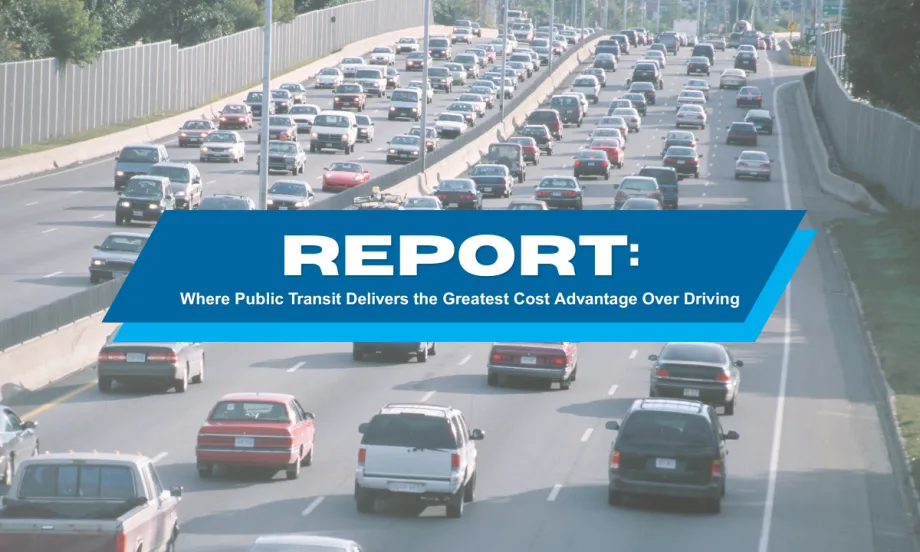
A new report found commuters in cities like Los Angeles and San Francisco could save hundreds of dollars per month by using public transit instead of driving as fuel, insurance and parking costs continue climbing.
Credit:
Metro Magazine
5 min to read
- Public transit systems offer significant cost savings compared to driving, especially in densely populated urban areas where infrastructure supports efficient commuting.
- The financial advantage of using public transportation varies by city and is influenced by factors such as fare prices, fuel costs, and parking fees.
- Investments in public transit can lead to broader economic benefits, including reduced traffic congestion and lower environmental impact.
*Summarized by AI
As commuting costs continue rising nationwide, a new analysis suggests workers in several major U.S. cities may be spending hundreds of dollars more each month than necessary by driving to work instead of using public transportation.
The April 2026 report, conducted by digital business card provider Wave Connect, examined commuting costs in 45 major U.S. metropolitan areas by comparing the monthly cost of driving — including fuel, insurance and parking — against the cost of unlimited public transit passes.
The findings show some of the country’s largest urban centers now carry substantial financial penalties for commuters who rely on personal vehicles, particularly in California, where high fuel prices, elevated insurance premiums and expensive downtown parking costs combined to produce the nation’s most expensive commuting markets.
Los Angeles ranked first overall, with the study estimating commuters spend an average of $841 per month driving to work, compared to $100 for an unlimited monthly transit pass. That creates a potential monthly savings of $741 for workers who switch from driving to public transportation.
San Francisco followed closely behind, where driving costs were estimated at $741 per month versus a $98 monthly transit pass, while San Diego and San Jose also placed among the top four most expensive cities for car commuters. Chicago rounded out the top five.
California Dominates the Rankings
California cities occupied six of the study’s top 10 positions, reflecting the combined impact of some of the nation’s highest gasoline prices, relatively long commute distances and elevated vehicle ownership costs.
According to the analysis, California commuters frequently face monthly insurance costs ranging from $250 to $350, while parking in major downtown areas can add another $200 to $300 per month.
Los Angeles posted the highest total commuting cost in the study, driven in part by the city’s 18.3-mile average one-way commute — the longest among the top-ranked metros. Meanwhile, San Francisco commuters faced some of the highest combined parking and insurance costs nationally, totaling approximately $600 per month before fuel expenses are even factored in.
San Diego ranked third overall despite offering one of the least expensive transit passes among major U.S. cities at $72 per month, while San Jose commuters faced some of the highest insurance costs in the study at roughly $310 monthly.
The concentration of California cities near the top of the rankings also highlights broader transportation challenges across sprawling metro regions where workers often travel long distances between residential areas and employment centers.
Parking Costs Emerged as a Major Driver of Expenses
While gasoline prices frequently dominate conversations around commuting affordability, the study found parking expenses were often among the largest contributors to total commuting costs in dense urban areas.
In Los Angeles and San Francisco, downtown parking costs were estimated at roughly $300 per month. Chicago commuters were projected to spend about $280 monthly on parking alone — more than double the city’s estimated monthly fuel cost of $110.
Seattle also ranked highly because of elevated parking and insurance expenses, which together exceeded $470 per month, despite shorter average commute distances than many other major cities.
The report suggests parking costs are frequently overlooked when commuters estimate the true cost of driving, particularly in large downtown employment centers where monthly garage rates continue increasing.
Top 10 Cities Where Driving Costs the Most Compared to Transit
City | Total Monthly Driving Cost | Monthly Transit Pass | Potential Monthly Savings |
|---|---|---|---|
Los Angeles | $841 | $100 | $741 |
San Francisco | $741 | $98 | $643 |
San Diego | $662 | $72 | $590 |
San Jose | $681 | $100 | $581 |
Chicago | $590 | $85 | $505 |
Seattle | $593 | $99 | $494 |
Miami | $591 | $112 | $479 |
Sacramento | $537 | $100 | $437 |
Philadelphia | $505 | $96 | $409 |
Fresno | $446 | $45 | $401 |
Several additional findings illustrated how different cost factors shaped rankings across cities.
Miami’s placement near the top of the list was heavily influenced by relatively high insurance premiums, estimated at approximately $280 per month. Fresno cracked the top 10 despite comparatively modest parking expenses because of California’s elevated fuel prices and insurance costs. Meanwhile, Boston ranked lower than some peer cities in part because of shorter average commute distances, which reduced overall fuel spending.
Study Examined Multiple Components of Commuting Costs
Researchers calculated monthly fuel costs using average one-way commute distances, 22 monthly workdays and an assumed fuel economy of 25 miles per gallon. Total monthly driving expenses combined fuel costs with estimated insurance premiums and downtown parking rates. Those figures were then compared against standard adult unlimited-ride transit passes for each metro area’s primary public transportation system.
The report relied on publicly available data from sources including AAA gas price averages, U.S. Census commuting data, Bankrate insurance estimates and local transit agency fare schedules.
Researchers noted the study focused specifically on the direct monthly cost comparison between driving and public transit and did not include additional vehicle ownership expenses such as maintenance, loan payments, registration fees or depreciation. The analysis also did not evaluate transit reliability, service frequency or commute time differences between driving and public transportation.
Those limitations are significant because transit accessibility varies substantially even within large metropolitan regions. While many downtown commuters may have viable rail or bus options, suburban workers in lower-density areas often have limited public transportation access or longer transit travel times.
Still, the findings underscore the growing financial pressure associated with commuting in many major U.S. cities as fuel prices, insurance premiums and urban parking rates continue climbing.
The report also arrives amid ongoing debates around return-to-office policies and transportation affordability, as more employers require workers to resume in-person schedules several days per week. For many households, commuting costs now represent one of the largest recurring monthly expenses outside housing.
Wave Connect founder and CEO George El-Hage said the research highlights how many workers underestimate the total cost of driving because they focus primarily on fuel prices rather than the broader cost of vehicle commuting.
According to the report, parking fees in some major downtowns now rival or exceed monthly fuel expenses, creating hidden costs that significantly increase the overall price of driving to work.
As cities continue investing in transit infrastructure and urban mobility programs, the study suggests cost savings may become an increasingly important factor influencing commuter transportation choices — particularly in high-cost metro areas where the financial gap between driving and transit continues widening.
Quick Answers
The cost advantage of public transit over driving is influenced by factors such as reduced fuel expenses, lower maintenance costs, parking fees associated with personal vehicles, and sometimes subsidized ticketing or passes for public transit users.
*Summarized by AI
More Management

Indian River Transit’s Community-Focused Approach Earns National Recognition
Named APTA’s 2026 Outstanding Public Transportation System in its size category, Florida’s Indian River County transit system continues to grow ridership through fare-free service and a focus on evolving community needs.
Read More →
ENC Lands MATA Contract and More in Biz Briefs
In this edition of Biz Briefs, we spotlight the latest developments shaping the future of mobility.
Read More →
From Surviving to Thriving: Building Stronger Transportation Organizations
Bus Business Consultants founder Brian Dickson shares lessons on leadership, organizational health, and creating options for long-term success in a changing transportation industry.
Read More →

Everett Transit, Community Transit Outline Consolidation Agreement
The proposed agreement calls for a 50% increase in bus service in Everett, a new microtransit zone, continued paratransit service, and the transfer of Everett Transit operations to Community Transit.
Read More →
Strada360’s Steve Lassey on Turning Transit Data Into Better Decisions
From breaking down data silos to preparing for AI, Strada360 CEO Steve Lassey discusses how transit agencies can use technology to improve operations, customer information, and long-term decision-making.
Read More →
People Movement: Phil Washington Joins HNTB, Denver RTD Launches CEO Search, and More
In this edition, we also spotlight recent personnel moves at STV, the Eno Center for Transportation, and more, highlighting the people taking on new roles across the transportation industry.
Read More →
SEPTA Details Accelerate Vision for Transit System
The plan outlines investments in trolley modernization, new Metro and Regional Rail vehicles, accessible stations, and more frequent bus and rail service.
Read More →
FTA Ends Direct Oversight of MBTA Safety Actions
The federal agency closed its remaining special directive to the Massachusetts Department of Public Utilities following a safety review that began in 2022.
Read More →
Report: Transit Bus Manufacturing Supports 34,100 Jobs, $5.1B in GDP
The “Buses Mean Business” report examines the transit bus manufacturing industry’s economic footprint, supply chain, and rising demand for vehicle replacements.
Read More →
LIT Marks 10-Year Milestone at Annual Summit
Hosted by the COTA from September 10 to 13, the Summit carried the theme “Celebrating 10 Years of Excellence, Leadership, and Impact,” with every part of the program honoring the people, agencies, and partners who built LIT over its first decade.
Read More →