



Knuckling down on buckling up
The debate swirls over whether transit bus drivers should wear seat belts.
Should transit bus operators wear their seat belts? Depends on who you ask.
Citing safety concerns, the Metropolitan Transportation Authority (MTA) in Los Angeles is threatening to get tough on bus operators who don’t buckle up. The MTA tried to implement a mandatory seat belt policy as of Jan. 1, 2005, but the United Transportation Union was able to derail the action, at least until an arbitrator rules in March.
The MTA’s concern about seat belt usage has grown in the wake of accidents involving unbuckled drivers who fell from their seats and lost control of their vehicles. It cited three such mishaps in 2004. In 1996, an MTA bus crash involving an operator who fell from his seat resulted in two passenger deaths and seven injuries and ended in a lawsuit settlement of more than $2.3 million.
Some operators aren’t convinced
Many MTA bus operators resist the idea of wearing their seat belts. Some say the restraints don’t fit properly. Others insist that wearing the belts would make it difficult for them to assist mobility-impaired people on and off the bus. Still others say the belts reduce their reach, making it difficult to adjust mirrors or to reach two-way radios.
Strangely, many operators argue that they’re less safe when they buckle up. They contend that a belted operator is more vulnerable in an attack. But John Fabian, a safety consultant and expert witness who also happens to be chief investigator for the New York State Public Transportation Safety Board, says assaults of operators are much rarer than crashes in which unbelted operators lose control of the vehicle because they’re thrown from their seats. “You can’t protect yourself or your passengers if you’re thrown from your seat,” he says. In addition, he says, “Bus drivers aren’t generally fighters anyway.”
Like MTA, Dallas Area Rapid Transit (DART) does not have federal or state laws requiring seat belt usage, but does have an agency policy requiring their use. “And I can’t recall any resistance from our bus operators,” says Victor Burke, DART’s executive vice president.
Salem-Keizer Transit in Oregon also has a seat belt requirement. “In general, the operators use them,” says Alan Puderbaugh, director of transit services. “We occasionally find operators who don’t, and they are warned. There have been no accidents as a result of not using seat belts.”
Meanwhile, the insurance industry recommends buckling up. Paul Berne, vice president of claims at Lancer Insurance, says there are two key reasons. In most states, regulators require seat belt usage. Non-compliance can lead to problems, especially in claims and lawsuits.
“In conjunction with that, in the event of a collision, a belted driver is more likely to remain in a position wherein he or she can maintain control over the vehicle,” Berne says.
Gordon Berberich, safety officer for Calgary Transit in Alberta, says the provincial government doesn’t have a must-wear seat belt policy, but operators generally do. “It’s surprising how many of our operators do wear them and will book the unit if the seat belt has a problem,” he says.
Unbuckled drivers heighten risk
Operators who don’t wear their seat belts are risking too much — their own safety, the safety of their passengers and the safety of other motorists and pedestrians. It’s clear that all transit agencies should require seat belt usage, whether or not it’s mandated by state law. And they also need to enforce this requirement, as much as feasible.
More Management

Indian River Transit’s Community-Focused Approach Earns National Recognition
Named APTA’s 2026 Outstanding Public Transportation System in its size category, Florida’s Indian River County transit system continues to grow ridership through fare-free service and a focus on evolving community needs.
Read More →
ENC Lands MATA Contract and More in Biz Briefs
In this edition of Biz Briefs, we spotlight the latest developments shaping the future of mobility.
Read More →
From Surviving to Thriving: Building Stronger Transportation Organizations
Bus Business Consultants founder Brian Dickson shares lessons on leadership, organizational health, and creating options for long-term success in a changing transportation industry.
Read More →

Everett Transit, Community Transit Outline Consolidation Agreement
The proposed agreement calls for a 50% increase in bus service in Everett, a new microtransit zone, continued paratransit service, and the transfer of Everett Transit operations to Community Transit.
Read More →
Strada360’s Steve Lassey on Turning Transit Data Into Better Decisions
From breaking down data silos to preparing for AI, Strada360 CEO Steve Lassey discusses how transit agencies can use technology to improve operations, customer information, and long-term decision-making.
Read More →
People Movement: Phil Washington Joins HNTB, Denver RTD Launches CEO Search, and More
In this edition, we also spotlight recent personnel moves at STV, the Eno Center for Transportation, and more, highlighting the people taking on new roles across the transportation industry.
Read More →
SEPTA Details Accelerate Vision for Transit System
The plan outlines investments in trolley modernization, new Metro and Regional Rail vehicles, accessible stations, and more frequent bus and rail service.
Read More →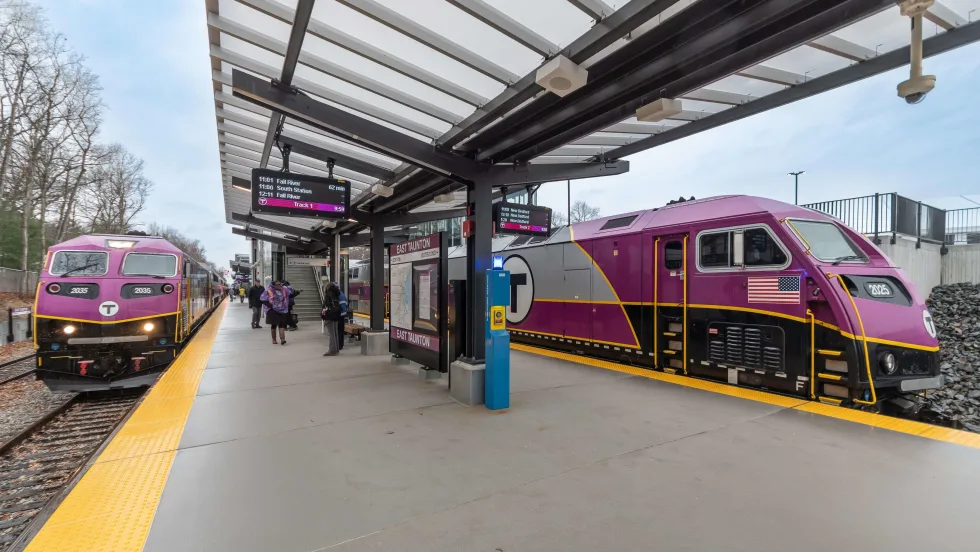
FTA Ends Direct Oversight of MBTA Safety Actions
The federal agency closed its remaining special directive to the Massachusetts Department of Public Utilities following a safety review that began in 2022.
Read More →
Report: Transit Bus Manufacturing Supports 34,100 Jobs, $5.1B in GDP
The “Buses Mean Business” report examines the transit bus manufacturing industry’s economic footprint, supply chain, and rising demand for vehicle replacements.
Read More →
LIT Marks 10-Year Milestone at Annual Summit
Hosted by the COTA from September 10 to 13, the Summit carried the theme “Celebrating 10 Years of Excellence, Leadership, and Impact,” with every part of the program honoring the people, agencies, and partners who built LIT over its first decade.
Read More →