



Louisville’s TARC Charges Toward the Future with Green Fleet Upgrades
The agency, which celebrated its 40th year, marked the milestone with numerous changes, including the addition of 10 all-electric buses and 60 replacement buses, a new trip planner, and a new fare collection system set to launch this year.

City of Louisville, Ky.
I
City of Louisville, Ky.
n November, Louisville, Ky.’s Transit Authority of River City (TARC) marked its 40th year, and the agency is celebrating with a host of changes, including the addition of 10 all-electric buses and 60 replacement buses, a trip planner, and a new fare collection system set to launch this year.
At the helm for half of the agency’s 40 years, Executive Director J. Barry Barker has seen the system not only grow, but more importantly, maintain its popularity and stature in the community.
“TARC’s perception in the community has always been strong and has continued to strengthen,” Barker says. “By and large, the feedback we get is people like what we do, even the folks who never get on the bus.”
Agency overview
In Nov. 1974, Jefferson County voters approved the first and only referendum to fund public transportation. The approved referendum provided .02% of occupational tax revenues for TARC, or $2 for every $1,000 earned. The tax generates about $45 million a year and remains TARC’s primary operating funding source.
Since that vote, TARC has provided 638 million rides across 390 million miles, with 70% of its 50,000 daily trips taking people to work or school.
“Our mission statement has stayed the same, and to simply paraphrase it, ‘it’s by the provision of transportation opportunities, we will enhance the economic, environmental and social well-being of the Louisville community,’” Barker says. “So in what has come to be known as the triple bottom line, we are concerned about economics and economic development, but also about the environment and the quality of life.”
With a 310-vehicle fleet, TARC buses travel on 41 routes in Jefferson, Oldham and Bullitt counties in Kentucky and Clark and Floyd counties in Indiana.
Beginning in 2000, TARC formed a partnership with the University of Louisville (U of L), enabling students, staff and employees to ride TARC’s buses for free.
“The university was looking to make better use of their land on campus, so they moved parking down to where the stadium was, which brought up the need for buses to connect parking to the campus,” Barker explains. “Our interest was a broader one, which was attracting the total university community. We ended up with an agreement with the university that provided buses running by the stadium, and they paid a per-student fee so that their IDs were as good as a transit pass. We have modified that over the years, dependent on our cost and their ridership levels.”
TARC has since used that model to create similar partnerships with the Louisville Metro Government, UPS and Fortune 500 company Humana.
“It’s their story, not ours, but Humana was able to recruit employees, specifically IT types, to work there because they saw the fact that their ID was as good as a transit pass as evidence that they were going to work for a green corporation,” Barker says.
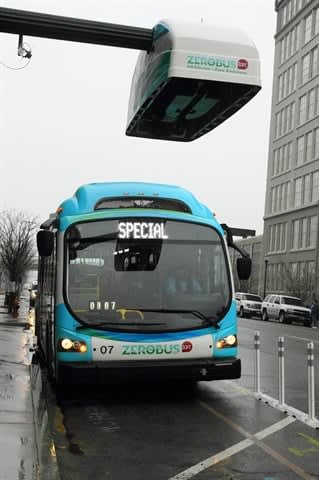
The new ZeroBus fleet, which includes 10 vehicles and two on-route charging stations, totaled an $11 million investment paid for through federal, state and local funds.
Zero emission fleet
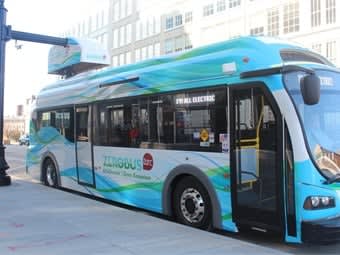
As part of its commitment to be more green, TARC recently replaced its Toonerville II trolleys, its highest polluting vehicles, with 10 Proterra all-electric buses, dubbed by the agency as the “ZeroBus.”
Like the trolleys, ZeroBus rides are fare-free on routes along the Main, Market and Fourth street corridors. The vehicles, which launched service in January, feature free onboard Wi-Fi and run every 10 to 18 minutes, depending on the time of day.
“There was some nostalgia involved with getting rid of our old green trolleys, but we were able to take our most polluting vehicles, specifically out of our downtown area, and replace them with what is now our cleanest vehicle, which creates zero emissions,” Barker says.
The new ZeroBus fleet, which includes 10 vehicles and two on-route charging stations, totaled an $11 million investment. Funding for the project included $4.4 million from the Federal Transit Administration’s Clean Fuels Program grant, $4.4 million from Kentucky in federal Congestion Mitigation and Air Quality program funds, and $500,000 from Metro Louisville.
In addition to removing the trolleys, the five oldest of which combined to emit a total of about 1,135 pounds of carbon monoxide a year, and now generating zero emissions, TARC expects the buses to save them thousands of dollars a year in lower operating costs and fuel savings. The agency also now boasts the second-largest fleet of Proterra buses in the nation.
The ZeroBus recharges in just a few minutes along the route while passengers load and unload at a charging stop. Each time a ZeroBus pulls up to a charging stop, it automatically connects to an overhead, high-capacity charger. Charging stops are on the south side of Market Street, between Eighth and Ninth streets, and on the west side of South Third Street, between York and Breckinridge streets.
“The reason we located the charger on the far south end of the route is so that we can conceivably continue going in that direction in stages along Fourth Street, which would travel to the university, Churchill Downs, the fairgrounds, and ultimately, the airport,” Barker says about the possibility that TARC expands all-electric bus usage.
System upgrades
The ZeroBuses aren’t the only new additions to TARC’s fleet. The agency has also currently added 60 new replacement buses, including 11 hybrid-electric and 28 clean diesel buses, as well as 21 eTran Gillig “commuter coaches.”
The eTran coaches join 10 eTran buses already in service on trips traveling to downtown Louisville from Indiana. The agency purchased the vehicles, valued at $9.5 million, using funding allocated by the Kentucky Transportation Cabinet and the Indiana Department of Transportation as part of the Ohio River Bridges Project.
The vehicles include free Wi-Fi, 110-volt outlets, overhead luggage racks and reading lights. Over the next four years, the agency’s eTran program will result in a more environmentally-friendly fleet, upgrades to bus stops, new Park-and-Ride locations, adjustments to routes and improved communications technology, according to the agency.

J. Barry Barker
TARC also recently debuted a new mobile website that includes trip planning software, powered by Google, mobile-friendly maps and schedules, and news on rider alerts.
“I think [these changes] are about constantly trying to figure out what we can do to make transit work a bit better for folks,” says Barker, who adds that due to the positive reaction the agency will be expanding Wi-Fi from 20% of its fleet to 100%.
Down the road, TARC is set to ditch its old ticket system and launch a new fare collection system this year, allowing passengers to save time with “Tap and go” smart card technology from Lecip.
“What we are trying to do is offer it in a number of different ways to make it as customer friendly as possible,” Barker says. “We are working not only with our current transit pass partners, but also with the school system, to essentially be able to utilize the cards to make the world go around a little bit better.”
Finally, with 40 years between referendums to fund TARC, the agency is exploring the idea of asking the public for more funding through the LIFT initiative, which would ask the community to vote on a 1% sales tax to fund a number of initiatives, including public transportation projects.
“It would require a constitutional amendment, but the way it works, and a number of cities have got this, including Denver and Oklahoma City, is we go to the voters with a slate of projects that would be completed over the next five years,” Barker explains. “If we were successful, it would give us some capital dollars for special projects and replacing buses, as well as help protect our operating dollars. A key benefit that makes transit attractive in a referendum like this would be the federal match, which gives you a five to one escalation in revenue.”
More Bus

Brian Dickson on Building Stronger, More Resilient Transportation Organizations
Bus Business Consultants Founder Brian Dickson discusses the leadership principles, operational discipline, and strategic planning that separate transportation companies positioned for long-term success from those stuck in survival mode.
Read More →
LA Metro Breaks Ground on Vermont BRT Project
The 12.4-mile corridor is projected to serve 66,200 daily riders, reduce travel times by up to 24%, and create the nation's busiest bus rapid transit corridor.
Read More →
Roman Cornell on ABC Companies’ Evolution and the Future of Passenger Transportation
The company’s CEO discusses carrying forward a third-generation family legacy, ABC’s continued evolution in passenger transportation, support for increasingly complex fleets, and how technology and continued investment could help operators improve uptime.
Read More →
VIA Bus Ridership Grows 10.1% Through August 2026
San Antonio's VIA Metropolitan Transit reported the highest bus ridership growth among major Texas transit systems. Federal Transit Administration data ranked it second among the nation's 50 largest transit systems.
Read More →
LA Metro September Ridership Climbs 3.9%, Led by Rail Growth
The agency recorded more than 27.2 million boardings, with rail ridership increasing 12.4% year over year and the D Line posting the largest gains.
Read More →
Frontrunner Bus Group Introduces XF Low-Floor Bus with Enhanced Accessibility
The new mid-sized bus features a full flat-floor design, eight-inch curbside step-in height, and zero-entry rear ramp to improve passenger access and operational flexibility.
Read More →
Scenes from APTA TRANSform & EXPO 2026
Transit leaders, manufacturers, and industry professionals gathered in Chicago to explore new technologies, share ideas, and discuss the future of public transportation.
Read More →
More Than a Summer Job: Building the Next Generation of Transit Talent
The Delaware River Port Authority and PATCO have transformed their internship program into a hands-on professional development experience that introduces students to the breadth of transportation careers — and creates a pipeline for future employees.
Read More →
LA Metro Board Awards 220 Battery-Electric Bus Contract to ENC
The contract, which is the largest base award of battery-electric buses by a U.S. transit agency, will be built in Southern California, sustaining good jobs as LA prepares to welcome the world in 2028
Read More →
Public Transit Conference Returning to GFX in 2027, Call for Papers Now Open
The Call for Papers is now open, allowing transit agency professionals and industry experts to help shape the PTC educational program by submitting session ideas for consideration.
Read More →