



Maglev Trains Are the Swiftest, But Will They Win the Race?
As Shanghai prepares to launch the first commercial maglev train service, hopes are high that a U.S. maglev project will get off the ground soon. Will Shanghai fuel a maglev revolution?

On New Year’s Eve 2002, a maglev train in Shanghai, China, reached a peak speed of 267 mph on its maiden voyage, visibly impressing two important passengers — Chinese Prime Minister Zhu Rongji and German Chancellor Gerhard Schroder. But the event barely registered on a wider scale. After all, Shanghai is a world away from the United States, where maglev trains are generally considered a highly expensive, virtually untested technology. But that perspective may shift dramatically in the next several years. Later this year or early next year, Shanghai’s maglev train system is scheduled to go into revenue service. Initially, the fleet will consist of three five-section trains that each can carry up to 574 passengers. The trains are manufactured by Transrapid — a joint venture of Siemens, ThyssenKrupp and Transrapid International. In its first year of operation, the maglev trains are expected to carry 10 million passengers between the city center and Shanghai’s Pudong International Airport, a distance of 19 miles. The trip is anticipated to take eight minutes, a significant savings for travelers who now spend approximately 45 minutes getting to or from the airport by bus or taxi during rush-hour traffic. According to Transrapid officials, the trains will run in each direction with a frequency of 10 minutes. The company says the trains will travel comfortably at 270 mph, with acceleration and deceleration capabilities far superior to traditional high-speed trains. Because the train glides above the guideway, the company refers to the ride as a “ground-level flight.” Starts and stops are called “take-offs” and “landings.” Success on the horizon? However, the success of the world’s first commercial maglev project will depend on its actual performance, not its marketing expertise. And that success, or lack thereof, will likely bolster or diminish the chances that another such project will be launched in the near future. Several maglev train systems are being considered for corridors in the United States. The top prospects are in Pennsylvania and Maryland. Those projects are being scrutinized by the U.S. Department of Transportation through the Federal Railroad Administration (FRA) as part of the Magnetic Levitation Deployment Program. Under TEA 21 (Transportation Equity Act for the 21st Century), $950 million in federal support was authorized for a maglev demonstration project. But only one project can receive the funding, and a decision hasn’t been made on whether it will be the Pennsylvania project or the one in Maryland. Pennsylvania’s pitch In Pennsylvania, maglev project sponsors are promoting a 47-mile, four-station line linking Pittsburgh Airport to Pittsburgh and its eastern suburbs. The project is backed by a coalition of state and local agencies, including the Pennsylvania Department of Transportation and the Port Authority of Allegheny County. The project sponsor is MaglevInc. In addition to reducing congestion within the metropolitan Pittsburgh region, the project sponsors hope to develop precision fabrication technology that can be used to build maglev guideways for other U.S. projects. Reducing travel time is another goal. As in Shanghai, the proposed Pennsylvania maglev system could reduce a 45-minute auto or taxi trip to just eight minutes between downtown Pittsburgh and the airport. The planned top speed is 260 mph with an average speed of 110 mph. The capital cost of the Pennsylvania project is $2.7 billion (or $57 million a mile), with anticipated federal support of $1.6 billion. The rest of the funding would come from state and local grants ($575 million) and tax-exempt revenue bonds and private equity ($525 million). According to the proposal by project sponsor MaglevInc., the first 19-mile segment of the system would begin revenue operation by late 2008. Full service would be initiated by the end of 2009. Maryland’s big plan In Maryland, a 40-mile project is being considered that would link the Camden Yard sports venue in Baltimore to Baltimore-Washington International Airport to Union Station in Washington, D.C. If successful, the project, which was started in 1994, could help the area win a bid for the 2012 Summer Olympics. The project is sponsored by the Maryland Mass Transit Administration in conjunction with the city and county of Baltimore and the District of Columbia. The expected capital cost of this project is $2.8 billion, or about $75 million per mile. Financing would come through federal grants and loans ($1.6 billion), state and local funds ($500 million) and tax-exempt bonds and private sources ($700 million). Supporters say the project would reduce travel time between downtown Baltimore and D.C. to about 20 minutes. Currently, the trip takes about an hour by car or 40 to 60 minutes by train. Under the proposal, construction would begin in 2005 and revenue service would commence in 2010. Expected ridership in the first year is 12.9 million (35,500 trips per day). Although the system is designed to stand alone, project officials say it could become a successor to Amtrak’s Acela service along the Northeast Corridor. With a maglev system, the travel time between D.C. and New York could be reduced to 90 minutes. For either of these projects to get the nod, they will have to meet several criteria. The trains would have to be able to reach speeds of 240 mph. In addition, the project would require significant public/private partnerships and need to show that operating revenue would exceed operating and maintenance costs. The FRA was expected to choose a winner of the competition this year, but sources say it’s unlikely that will happen. Rather, the decision may come from Congress, with a push for one project in the West and one in the East. The Pennsylvania proposal enjoys the enthusiastic support of Sen. Arlen Spector, a member of the Senate Transportation Appropriations Subcommittee, making it a strong contender to win the race in the East. The West, however, is still up for grabs. Best of the rest Projects that didn’t make the FRA’s final cut are not out of the running for eventual implementation. Transrapid officials say a proposed maglev project connecting Las Vegas and Primm (at the Nevada-California border) has been “coming on strong in the past two years.” That 42-mile system would connect a site near Las Vegas’ McCarren Airport to the stateline along heavily traveled Interstate 15. Talks about this maglev corridor have been going on since the late 1970s. “This would be a terrific demonstration project,” says one Transrapid official. Because environmental concerns are few along this corridor, which runs through the Mojave Desert, gaining regulatory compliance would not be as difficult as in more densely populated areas. Speaking of densely populated areas, another maglev project that’s in the early stages is an 85-mile system in greater Los Angeles that would connect Los Angeles International Airport to downtown to Ontario Airport to Riverside. Preconstruction planning is being undertaken by the Southern California Association of Governments. But that project is competing for attention and funding with the California High Speed Rail Authority (CHSRA), which has opted in the past year for more traditional high-speed rail technology for its ambitious plan to connect Los Angeles and San Francisco with a 700-mile double-track rail system that can support cruising speeds of 200 mph. Rod Diridon, chair of the CHSRA board, says the specs for the system call for a standard-gauge, electrically powered train. This obviously excludes maglev systems, much to the disappointment of Transrapid. Diridon says the project is expected to cost between $25 billion and $33 billion, making it one of the single largest public works projects in history. The authority is currently pursuing an earmark in the reauthorization of TEA 21 for $300 million to complete engineering and to conduct early right-of-way protection. The authority is in the final year of the federally required program-level environmental clearance. If all goes according to plan, construction would begin by the end of 2006 and the system would begin operation in 2012. “The real question is how quickly we can do the roughly 50 to 60 miles of tunnels that would be required in various parts of the project,” Diridon says. In 2000, voters in Florida approved a constitutional amendment that mandates the construction of a high-speed rail system that links the state’s five largest urban areas. To that end, state lawmakers enacted the Florida High Speed Rail Authority Act, which created a nine-member authority. The act also requires that the first segment of the system be developed and operated between St. Petersburg, Tampa and Orlando. Bids for the project were submitted in mid-February, but Transrapid chose not to submit one, saying say the state hasn’t allocated enough money to get true high-speed rail, at least along the first 90-mile corridor. A leading contender for the rail vehicle bid is the JetTrain, a product of Bombardier Transportation and Fluor Corp. Powered by a Pratt & Whitney jet engine, the JetTrain can travel at sustained speeds of 150 mph and has better acceleration and braking patterns than conventional diesel locomotives. “And unlike most high-speed rail systems developed around the world, the JetTrain does not require expensive electrification,” says Lecia Stewart, vice president of high-speed rail for Bombardier Transportation North America. Despite the opportunities lost in the California and Florida high-speed rail projects, Transrapid believes that interest in maglev projects is growing. Inquiries have been received from officials in Texas and Washington state and from as far away as Australia. Political challenges For any of the maglev projects to get off the ground, support first needs to be garnered at the local and state levels, not an easy task given the budget difficulties being experienced by many states. Support at the project level can be strong, but diverse political agendas at the higher levels tends to water down support. When the project gets to the governors and state DOTs, that’s when the competing demands have to be sorted out. Initial capital cost is one of the crucial hurdles that maglev technology faces. “Disinformation campaigns” against maglev systems exaggerate the cost differences, according to Transrapid officials. They say it’s only 5% to 10% cheaper to build a top-of-the-line steel-wheel high-speed system than a maglev system. Moreover, maglev proponents say the revenue potential is greater because higher speeds reduce trip times and attract significantly more riders. Meanwhile, the cost efficiencies become apparent after the maglev system is put into revenue service. Transrapid officials estimate that maintenance and operational costs will be 20% to 40% cheaper than a traditional high-speed rail system, partially because maglev guideways don’t suffer the wear and tear experienced by the tracks of traditional high-speed rail systems. To build support for domestic maglev projects, the United States Maglev Coalition was formed in February. It chose former Bethlehem Steel executive Richard Cochran as it president. “Maglev is the linchpin of future travel in America,” he says. “The convergence of excessive highway congestion, unacceptable pollution levels and a national over-reliance on foreign oil is a compelling set of circumstances for America to finally pursue this safe, high-speed and low-maintenance mode of transportation.”
More Rail
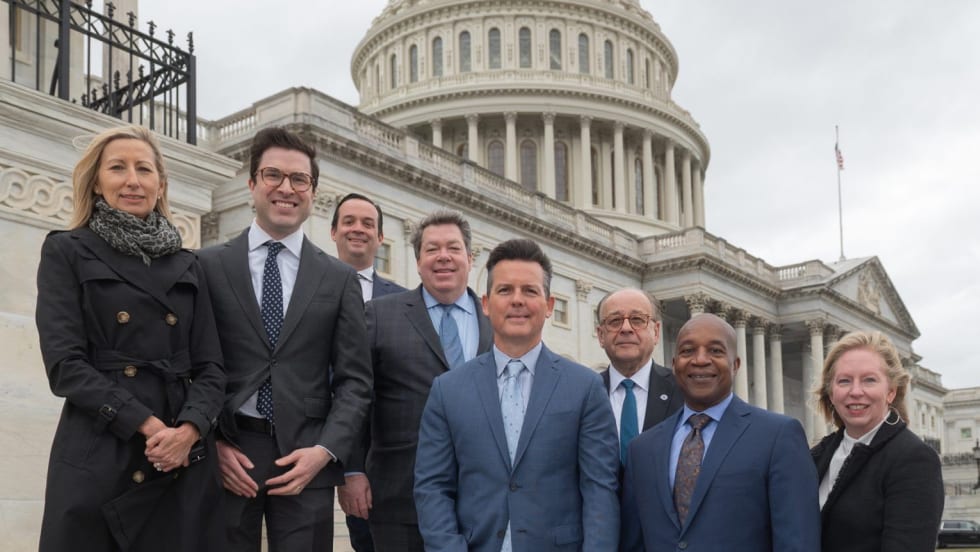
The Business Voice Behind Public Transportation
As chair of APTA’s Business Members Board of Governors, Ray Melleady explains how more than 850 business members are partnering with transit agencies to advance funding, innovation, and industry-wide collaboration.
Read More →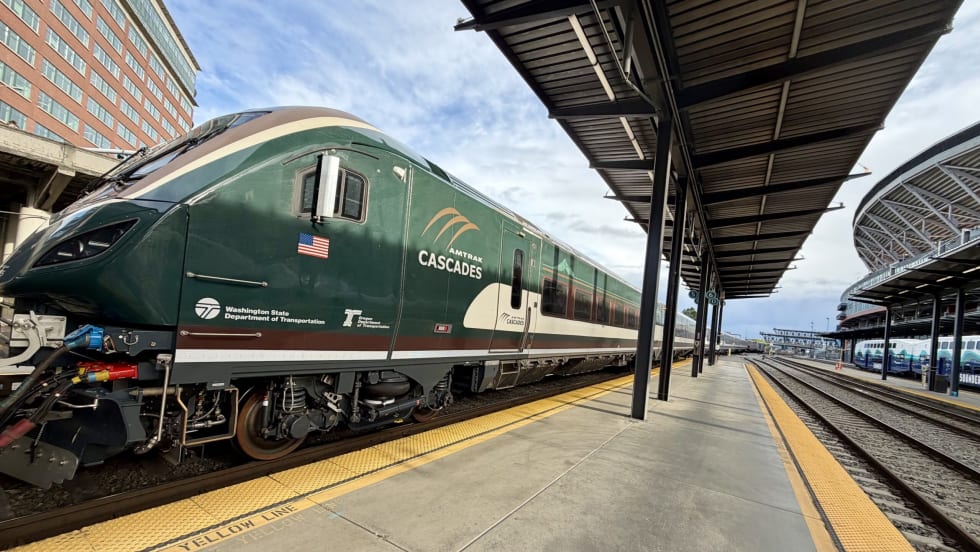
FRA Announces $5.3B in Rail Investments, Including $2B for Amtrak
Funding will support grade-crossing improvements, infrastructure upgrades, and new Amtrak equipment in 23 states.
Read More →
Finding the ‘Happy Medium’: Optimizing Maintenance Without Sacrificing Reliability
The key to maintenance optimization isn’t doing less work—it’s doing the right work at the right time on the right assets.
Read More →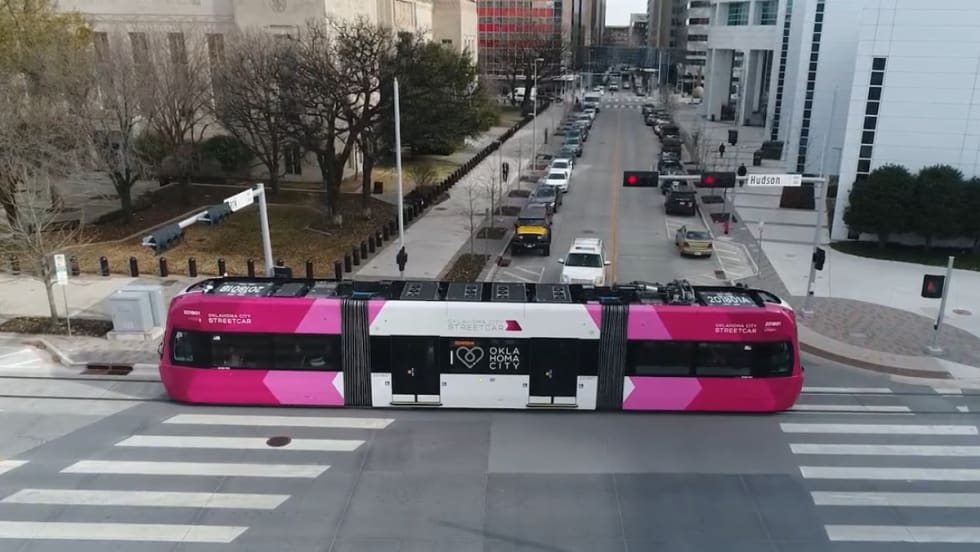
OKC Streetcar Makes Zero-Fare Service Permanent
Ridership increased an average of 71% compared with the same period a year earlier during the fare-free pilot.
Read More →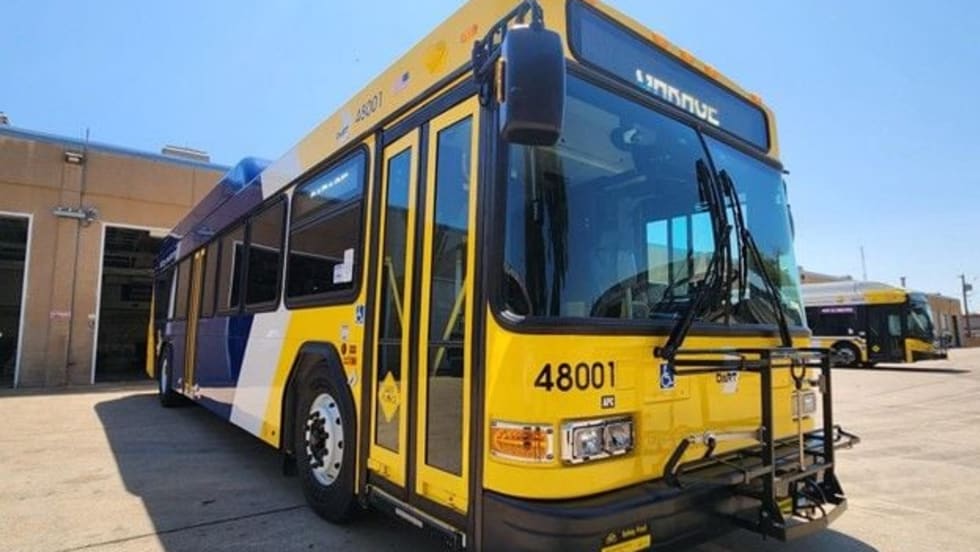
DART Customer Satisfaction Reaches Six-Year High
Overall satisfaction rose to 74.9%, while the agency’s Net Promoter Score reached a record 33.7.
Read More →
How DART's GoPass Is Redefining Regional Mobility
Serving 14 transit agencies, GoPass simplifies multimodal travel by allowing riders to plan, pay for, and manage an entire trip through one app.
Read More →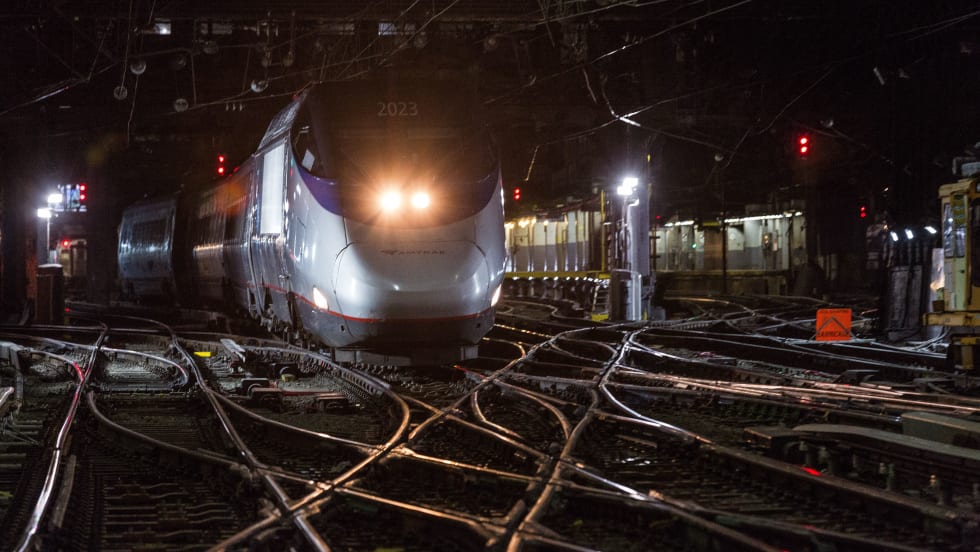
Amtrak Board Advances Plan to Restructure Organization, Seeks Public Input
The proposal, developed by Amtrak management and approved by the board for further consideration, is intended to modernize the organization's structure while improving accountability, operational efficiency, and customer service.
Read More →
Biz Briefs: STV teams with Amtrak, Motorcoach Operators Boost Fleet and Land Contracts, and More
From manufacturers and suppliers to transit agencies and motorcoach operators, these updates offer a snapshot of the projects, partnerships and business moves driving the industry forward.
Read More →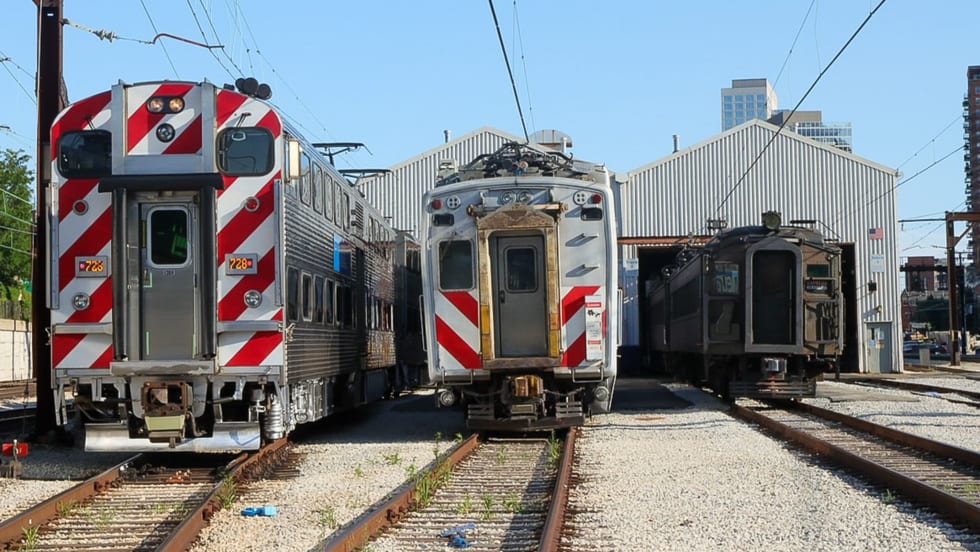
Metra Celebrates 100 Years of Electric Rail, Looks to the Future
The event was also a celebration of recent reforms to public transportation in the Chicago area, changes that could be as transformative in the future as the major civic achievement a century ago, said officials.
Read More →
LA Metro Marks Banner Year, Sets Ambitious Goals for New Fiscal Year
Incoming LA Metro Board Chair and Los Angeles Mayor Karen Bass joined outgoing Board Chair Fernando Dutra and LA Metro CEO Stephanie Wiggins to review accomplishments from fiscal year 2026, which included the opening of new rail extensions, advancement of major transit projects, expanded safety programs, and new rider amenities.
Read More →