



Making trains safer through advanced communication networks
Communications networks that railway operators have depended on for decades are quickly becoming obsolete and increasingily difficult to maintain and/or replace.

Nokia

Nokia
A recent fatal railway accident in Bavaria, Germany is once again highlighting the need for implementing technologies that can help to eliminate accidents, particularly those resulting from human error. Similar tragic accidents also took place in the U.S. and Europe in 2015.While these incidents are comparatively rare, railway operators have the potential to reduce the loss of life dramatically, and perhaps altogether, through technological advancements.
In the U.S., a train signaling/safety technology called Positive Train Control (PTC) is in the process of being deployed on rail networks throughout the country. Implementation of PTC can save lives, protect railway infrastructure and improve the reputation of the railway industry.
How? PTC can automatically trigger emergency brakes when certain conditions occur — such as a train exceeding the speed limit on a particular length of track or moving through a switch in the wrong direction, which could result in two trains operating on the same track — leading to train-on-train collisions.
For a variety of reasons, however, the deadline for PTC implementation has been extended and the rollout of this technology has been sluggish and spotty. Estimates indicate that by the end of 2015, only 18% of the 62,364 route miles in the U.S. had been equipped with PTC, only 76% of 34,360 required wayside interface units and 67% of the 4,069 needed wireless stations had been installed, much less made operational
However, railway operators could benefit from the modernization of their communications infrastructure, a key element of PTC deployment, in ways far beyond accident avoidance.
The Need to Modernize
As is the case with virtually every industry, the variety and complexity of the applications and services that rail operators rely on is growing. Many mission-critical applications such as PTC require very low latency, fast recovery, high resiliency and high security. Other applications, such as CCTV and on-train infotainment systems, are very bandwidth-intensive. Together, the need to support this wide variety of applications places substantial demands on the communications network with the expectation that these demands will continue to expand well into the future.
PTC is just one of many applications that fall into this “mission-critical” category and additional applications will continue to emerge as the industry evolves and new regulations come into play. In the face of these pressures, a more robust and efficient network becomes a necessity. At a minimum, railway operators need to increase the available bandwidth on their networks. By doing so, it becomes possible for them to transition away from the multi-network paradigm — where each application has its own network — to a common, converged infrastructure that can support all of the operators’ services at once.
Today, it is not only possible, but preferable to move all operational services onto a single network, which can also support typical enterprise services such as email, Intranets, HR systems and more. This provides the added benefit of reducing the cost associated with introducing new applications as well as makes it simpler and more cost-efficient to support legacy services.
This evolution is more or less inevitable. The communications networks that railway operators have depended on for years, decades in fact, are quickly becoming obsolete and increasingly difficult to maintain and/or replace. These networks, based on time-division multiplexing (TDM) technology, don’t have the capability to support IP-based applications, which are the foundation for today’s technology.
Communication networks
As a result, railway operators, and many other organizations that rely on mission-critical communications networks, are increasingly turning to Internet Protocol/Multi-Protocol Label Switching (IP/MPLS) technology as the foundation for such mission-critical networks. The reasons for this are manifold. Perhaps most important, however, is the fact that IP/MPLS networks are extremely reliable. Additionally, these networks have a variety of advanced features built right in to them, including Fast Reroute (FRR), Nonstop Routing (NSR), Link Aggregation Group (LAG) and Nonstop Services (NSS).
Railway operators need to be able to rely on their networks, both for the safety of their passengers and freight as well as the efficiency of their operations — and IP/MPLS technology has proven to be resilient under relatively extreme conditions. IP/MPLS also addresses another key requirement for railway operators by supporting “traffic segregation,” where different types of data traffic each have their own IP stream and so mission-critical traffic such as that for PTC, and less critical traffic like passenger information, don’t intermingle.
It is also important to note that the IP routers at the heart of these IP/MPLS networks can support a wide variety of interface cards for legacy services, helping to ensure maximum flexibility for railway operators as their needs evolve.
To be clear, though, IP/MPLS is not tomorrow’s technology (although it will be able to support railway operators’ communications requirements far into the future). In fact, many railway operators in the U.S. have already modernized their communications networks, including some of the country’s largest Class 1 railroads, to (at least in part) support PTC.
Safety, efficiency
These operators have upgraded their communications networks to maintain their leadership position in the field by helping to ensure safety and improve efficiency. As mentioned, the benefits of a modern communications network based on IP/MPLS extend beyond support for PTC to include important operational capabilities such as Advanced Train Control, highway crossing monitor systems, remote video, data telemetry for automatic equipment identification and hot box detectors, improved two-way radio between dispatchers and vehicles, vehicle tracking, VHF radio and video protection and emergency communications, as well as a wide variety of less critical business applications.
While this kind of modernization project is substantial in scope, it need not be a complete renovation. In many cases, elements such as newer IP-based microwave radios, which are typically a key component of the data transport infrastructure for networks of this type, can actually be integrated into operators’ existing network infrastructure, helping avoid a “rip and replace” type of scenario, while also offering substantial potential cost savings.
As important, each of the legacy services that are transitioned to the new network can benefit from guaranteed quality of service (QoS) capabilities built into the network. IP/MPLS technology actually separates traffic so that each critical application has its own path on the IP network and that the data flows never mix, offering exceptionally high performance and resilience.
Train control applications such as PTC are key to guaranteeing the safety of rail operations. To implement PTC, or any other train control system, a communications network to interconnect all the wayside equipment and radio base stations to the control center and the train control back-end system is mandatory.
Rail operators have the choice to either implement a mission-critical communication network dedicated to train control and other mission-critical applications or to take the opportunity to implement a future-proof, multi-service IP/MPLS network able to support mission-critical services (like PTC) in addition to other operational and bandwidth intensive applications like CCTV, multimedia passenger information and passenger Internet, as well as more typical business IT services used by their employees. By choosing to implement an IP/MPLS network, operators can substantially reduce the total cost of network ownership, simplify its operations and be fully prepared for all emerging and future requirements.
Thierry Sens is marketing director, transportation, for Nokia
(This article originally appeared in April 2016)
More Security and Safety

Transit Agencies Highlight Safety Gains at National Summit
Leaders from 15 major transit systems shared crime-reduction results and safety initiatives while discussing the role of continued federal support.
Read More →
DART Launches Major Security, Fare Enforcement Initiative
The 90-day demonstration will deploy coordinated security teams at five light rail stations while testing controlled access and gathering data to guide future investments.
Read More →
RTD Launches NextRide App to Consolidate Trip Planning, Fares, Security Reporting
The app expands on RTD’s existing NextRide web application and allows customers to view real-time vehicle locations and service alerts, purchase and store digital fares, and access customer support.
Read More →

TAPTCO Updates OSHA Compliance Training for Transit Maintenance Operations
The revamped program addresses 26 OSHA standards for maintenance facilities, with TAPTCO pointing to training, documentation, and everyday shop hazards as continuing challenges for transit operations.
Read More →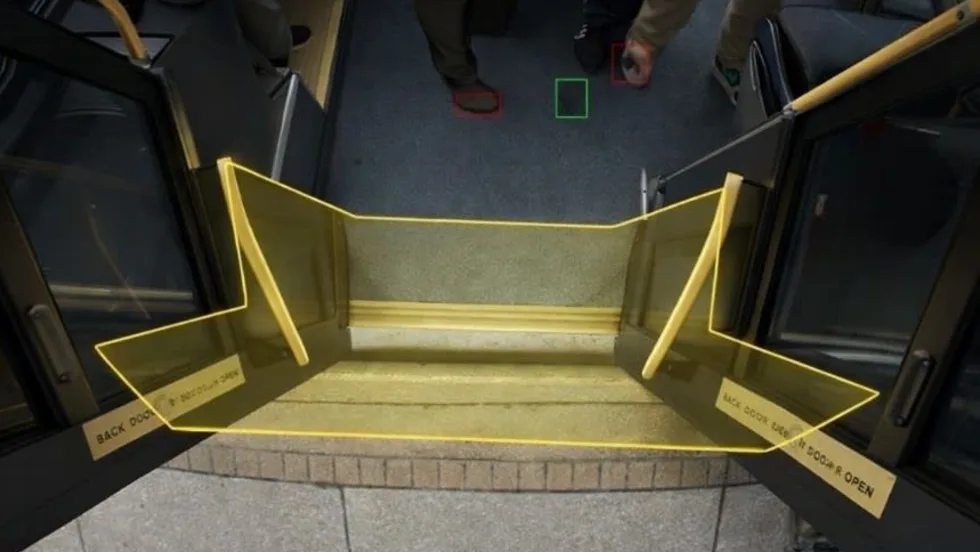
How VaporVision Adds Value to Transit Door Systems
Wabtec engineers explain how the system improves doorway detection, strengthens diagnostics and gives transit agencies and OEMs greater operating flexibility.
Read More →
FRA Announces $5.3B in Rail Investments, Including $2B for Amtrak
Funding will support grade-crossing improvements, infrastructure upgrades, and new Amtrak equipment in 23 states.
Read More →
Chicago, Maryland Expand Non-Law-Enforcement Safety, Rider Support
The CTA and MTA are launching new programs aimed at de-escalation, crisis response, rider assistance, and greater transparency.
Read More →
LA Metro, City of West Hollywood, and Partners Advance Smarter Bus Lane Enforcement
The award-winning partnership combines AI-powered detection with human oversight to improve bus reliability, accessibility, and enforcement efficiency.
Read More →
LA Metro Reports 57% Decline in Homelessness on Transit System Since 2024
The agency's latest homelessness count offers new data on how care-based services and cross-sector partnerships can complement traditional transit security strategies.
Read More →
FTA Launches 'Transit Moves America' Dashboard to Highlight Agency Safety and Performance
The online dashboard transforms National Transit Database information into a public-facing resource that allows users to compare transit agencies on key operational and safety metrics.
Read More →