



Modern Buses Get Nostalgic
A growing demand for old-fashioned trolleybuses is a result of the increased ridership they bring.
Buses may not always make consumers aware of public transportation options. Even a splashy paint job may not do much good. So how can riding the bus become a desirable choice for getting around? Turn the mundane bus into an old-fashioned trolley and watch ridership increase, according to several manufacturers of these modern “antiques.” “Trolleys can double the ridership of buses, so it’s an expanding market,” says Nancy Muñoz, president of Specialty Vehicles in Huntington Beach, Calif. Even though the engines, transmissions and frames — and maintenance requirements — are the same as those used in ordinary buses, riders view trolleys as a special experience. “They’re different and fun to ride,” Muñoz says. “It’s a nostalgic vehicle. People love them.” Reba Malone, vice president of marketing at Chance Coach in Wichita, Kan., says uniqueness is a major reason behind the growing demand for trolleybuses. “People who won’t ride a bus will ride a trolley,” she says. “I see it here in San Antonio [Texas]. Trolleys increase ridership, and that’s the name of the game.” Just slapping a different body on a bus frame doesn’t make it a trolley, as these historic-looking vehicles have their own unique touches, artistic features and personalities. When trolley makers discuss their products, the phrase “attention to detail” gets a major workout. Rick Ward, sales and marketing director of Cable Car Classics in Heraldsburg, Calif., describes the craftsmanship that goes into a modern trolleybus. “We use solid wood, brass and old-fashioned fixtures,” he says. “We have our own metal shop, mechanics and window shop.” Not all trolleys are alike, as Ward explains. “There’s kind of an East Coast or Midwestern look, and there’s the West Coast look,” he says. “The West Coast look has the hourglass shape, the brass bell and bench seat. It’s like the San Francisco cable car, which started in 1873.” Trolleys tend to be smaller than full-sized buses. The most popular length is 28 feet, which means seating capacity for 22 to 28 persons, depending on accessibility and equipment for handicapped passengers. “The under-30 foot trolleys can go places where buses can’t go,” says Jody Perez, president of Trolley Enterprises in Deerfield Beach, Fla. “They make public transportation available to more people. Our trolleys are in 30 states and four countries.” While large models are available, they lack some of the old-time look of the 28-footers. “Trolleys don’t look very realistic if they get much larger than 28 feet,” says Jerry Blair, executive director of the Indiana County Transit Authority in Indiana, Pa. Inside and out Cable trolleys may look like relics from the past, but current engines and transmissions are installed in each vehicle. Lower-priced buses come with a diesel powerplant (the Cummins 5.9 liter is a popular choice), but transit operators can get as sophisticated and high-tech as they desire. Trolleys are also powered by liquid propane and compressed natural gas. Diesel/electric hybrids offer lower emissions, and a trolley’s engine can get downright futuristic. “We could build a fuel cell trolley, but it’ll be quite pricey,” Ward says. “We can do anything you want. In the last few weeks, I’ve gotten several customers who are very serious about doing hybrid electric trolleys.” Veteran trolley builder Perez says that non-diesel engines are becoming a popular option for municipal transit operations. “We’re getting questioned quite a bit about alternate fuels lately,” he says. “It’s going to take a great deal of the market share away from diesel. A lot of that has to do with funds that are available from the federal government and cities wanting low emissions in their business districts.” Interior design and ambience is just as important as exterior authenticity. Modern padded seats are out of place in trolleys that are supposed to look as if they belong in the Roaring ’20s. That means trolley manufacturers install old-fashioned wooden seats and benches in their vehicles. In some cases, mahogany from the Philippines or solid red oak is used in trolleybuses. In for the short haul While wooden seats give trolley riders a chance to feel as if they have stepped back into history, it also limits the use of these vehicles to short-haul duty. “We have three trolley routes and nine trolleys we operate downtown,” says Terry Lee Scott, director of Sun Metro Area Rapid Transit in El Paso, Texas. Even though the system has a trolley route that goes north from downtown to the University of Texas-El Paso, those authentic wooden benches aren’t suited for long trips. “We have an older, working-class population that is highly transit dependent, so we’re putting cushions on the seats,” Scott says. “The trolleys are very effective. People like parking for free and riding the trolleys around downtown for a quarter.” El Paso is a steadily growing city of 600,000 located on the Mexican border. With a large blue-collar population that earns modest wages and numerous visitors from northern Mexico, affordable public transportation is a high priority and the role of trolleybuses is growing. “We’re building the Union Plaza Transit Terminal, and we’ll be expanding to 18 trolleys,” Scott says. “A lot of our passengers live and work on both sides of the border. About 55% of our riders come from Mexico.” The popularity of trolleybuses isn’t limited to larger cities. These vehicles are also a hit in rural areas, according to Indiana County’s Blair. “We have two trolleys,” he says. “We got the first one in 1994 and the second one in 1997.” Blair wasn’t enthusiastic about trolleys at first, but his views have changed dramatically. “I was the ultimate skeptic,” he admits. “We had a couple of board members who had seen trolleys and supported them. They’re wildly popular. I have never been more surprised in my life. Trolleys have given us more visibility than any single thing we’ve done. I’ve become a believer.” The trolleys are used throughout Indiana County, which has a population of 90,000 scattered across 855 square miles. “We run them randomly on bus routes,” Blair says. “I expected senior citizens and older people to be attracted to trolleys, but kids really like them. We certainly roll up the miles on them.” Such historic-looking vehicles seem appropriate in the birthplace and hometown of all-American actor Jimmy Stewart. “There is clearly a nostalgia angle,” Blair says. “With coal having died a slow death in western Pennsylvania, people like a little nostalgia.” When wooden seats are cushioned, trolleys can even pull occasional long-distance duty. “The senior citizens in the county took a trolley to Harrisburg [the state capital] to lobby for some of the tobacco settlement money,” Blair says. “That’s 185 miles each way. The air suspension makes it comfortable.” Even college students are attracted to trolleys. “We get a lot of student ridership from Indiana University of Pennsylvania on Thursday, Friday and Saturday,” Blair says. Entrepreneurial spirit Trolleybuses aren’t limited to public sector usage, as they can be profitable for entrepreneurs. Perez also operates a 37-vehicle fleet of trolleys, and he finds that demand for charters is growing. “We do 40 to 50 charters a week — cruise ships, tours, weddings, bar mitzvahs, grand openings and boat shows,” he says. “The passengers love the nostalgia. Trolleys are as American as Mom’s apple pie.” Even with the cost of craftsmanship and artwork, trolleys are competitively priced with standard buses. “Even though there’s a lot of creativity and different designs and options, most of the trolleys we sell are well within the price range of regular buses,” says Specialty’s Muñoz. In addition to increasing ridership and awareness of public transit, trolley builders say that a well-built vehicle with the look and feel of yesteryear sells itself. “The first trolley is the one you sell,” Perez says. “They call in the orders after that. Customers love them, and they buy more.”
More Management

Bus Tech Talk: Keeping Transit Technicians Ahead of the Technology Curve
In this episode of Bus Tech Talk, Complete Coach Works’ Business Development Manager Mark Hollenbeck and METRO’s Executive Editor Alex Roman sit down with Obed Mejia, Senior Technical Trainer for Bus Maintenance, at LA Metro to discuss how rapidly evolving bus technology is changing the maintenance shop — and the skills technicians need to keep pace.
Read More →
Michael Schneider Joins Paslay Group to Expand Transportation Practice
The longtime transportation executive will help Paslay Group grow its advisory and program management work across transit, highway, and other infrastructure sectors.
Read More →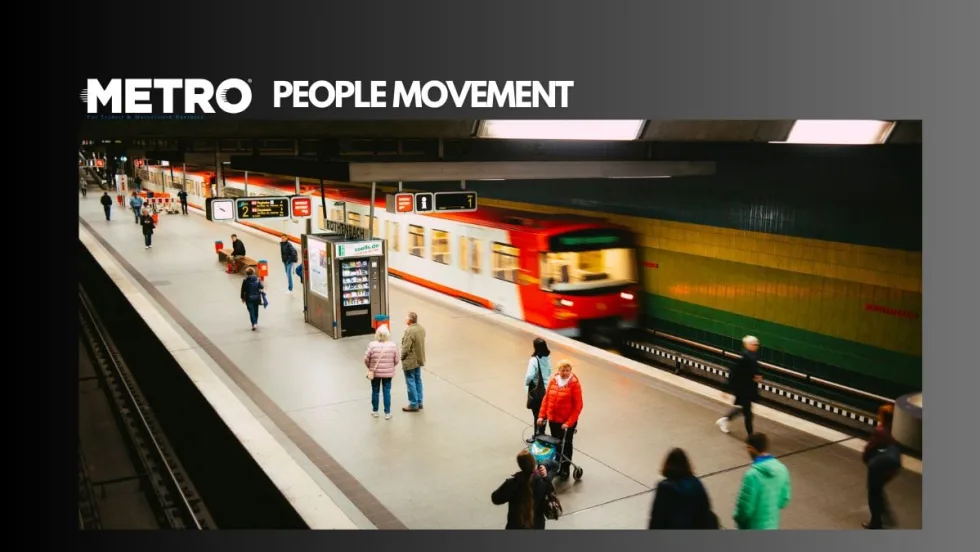
People Movement: Connectpoint Expands Leadership Team, Stadler Names New Group CEO, and More
In this edition, we also spotlight recent personnel moves at Burns, UZURV, and more, highlighting the people taking on new roles across the transportation industry.
Read More →
More Than a Summer Job: Building the Next Generation of Transit Talent
The Delaware River Port Authority and PATCO have transformed their internship program into a hands-on professional development experience that introduces students to the breadth of transportation careers — and creates a pipeline for future employees.
Read More →
LA Metro Board Awards 220 Battery-Electric Bus Contract to ENC
The contract, which is the largest base award of battery-electric buses by a U.S. transit agency, will be built in Southern California, sustaining good jobs as LA prepares to welcome the world in 2028
Read More →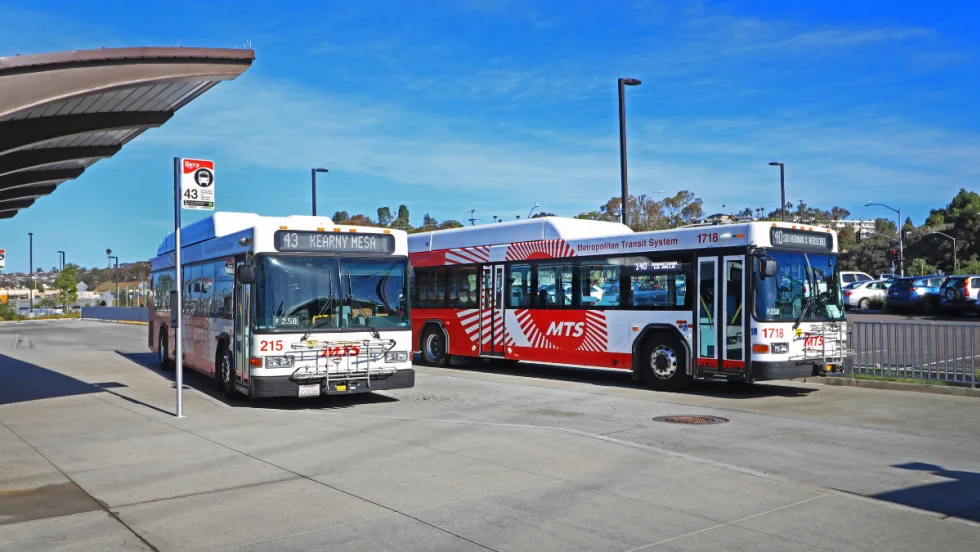
What’s Behind San Diego MTS’s Award-Winning Transit Strategy
Named one of APTA’s 2026 Outstanding Public Transportation Systems with 50 million or more annual passenger trips, California’s San Diego Metropolitan Transit System points to gains in ridership, safety, technology, and reliability as foundations of its success.
Read More →
Public Transit Conference Returning to GFX in 2027, Call for Papers Now Open
The Call for Papers is now open, allowing transit agency professionals and industry experts to help shape the PTC educational program by submitting session ideas for consideration.
Read More →
Indian River Transit’s Community-Focused Approach Earns National Recognition
Named APTA’s 2026 Outstanding Public Transportation System in its size category, Florida’s Indian River County transit system continues to grow ridership through fare-free service and a focus on evolving community needs.
Read More →
ENC Lands MATA Contract and More in Biz Briefs
In this edition of Biz Briefs, we spotlight the latest developments shaping the future of mobility.
Read More →From Surviving to Thriving: Building Stronger Transportation Organizations
Bus Business Consultants founder Brian Dickson shares lessons on leadership, organizational health, and creating options for long-term success in a changing transportation industry.
Read More →