



More Than a Trend: Transit Agencies Address Equity in Own Organizations, Communities
Public transit agencies emphasized the importance of equity during the COVID-19 pandemic, and now they’re taking action to have it show in their own organizations and local communities.
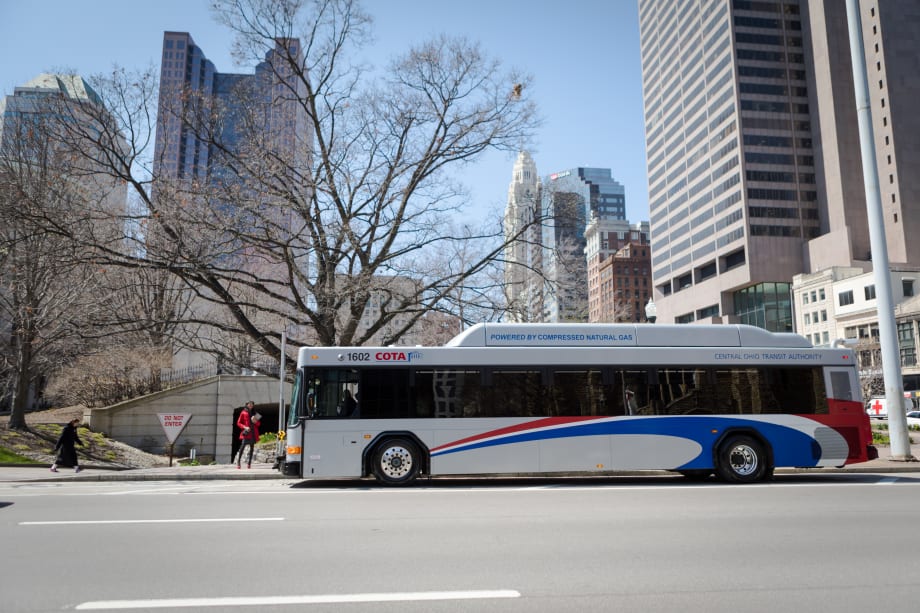
COTA launched its first-ever strategic plan in 2019, which is a five-year blueprint for creating an equitable and inclusive organization for its employees, customers, and the community.
COTA
Transit agencies are finding out what happens within their communities when the organizations emphasize equity.
Equity has become more at the center of public transportation conversations since the COVID-19 pandemic.
Agencies have noticed that starting the conversation is only the beginning.
Public transit leaders share how to put equity policies in place within their organizations and how those policies grow into initiatives that reflect back into the communities they serve.
The Role of Equity in Public Transportation
Matthew C. Tucker, executive director at Oceanside, Calif.’s North County Transit District (NCTD), defines equity’s role in public transportation and its evolution with the public transit industry.
“The definitions of equity and inclusivity are evolving and, for public transportation, must include language services, physical access for those differently abled, and routes that serve the needs of riders,” Tucker says. “The essential nature of public transportation has been highlighted during the COVID‐19 pandemic as the tool in our transportation toolbox that remains open and available, supporting access, equity, and opportunity for all.”
Equity has entered the forefront of conversation for transit agencies, especially since the COVID-19 pandemic.
Chicago Transit Authority (CTA) President Dorval R. Carter Jr. also says equitable policies and practices in public transportation have been more evident than during the pandemic.
“Equity in public transportation is a significant part of the national conversation many transit agencies, including the Chicago Transit Authority, are having more frequently than ever before,” says Carter Jr., CTA president. “In fact, our industry has reached a tipping point, where public transit, social activism and a new focus by many political leaders, like our own Mayor Lori Lightfoot on equity, diversity and inclusion — especially in urban areas — is demanding a new normal that places the needs of our most vulnerable and transit‐dependent customers at the forefront of this discussion.”
For Central Ohio Transit Authority’s (COTA) Chief Equity Officer Monica Jones, leaders cannot be afraid to ask the tough questions:
Does your company accurately represent the community?
Are the demographics of your organization reflective of the city and/or county demographics?
What are issues in the community that the organization could provide resources to address including volunteer opportunities for employees, internship opportunities for entry-level positions, sponsorship for youth programs, etc.?
“The conversation begins with acknowledgement that, historically, not all groups of people have had the same access to transportation based on race, gender, religion, location, etc.,” says Jones. “Transportation historically has been impacted by racism and discrimination, and for equity to be paramount in improving access for all, we have to admit that our current state of transportation is reflective of past policies and mindsets rooted in systemic oppression.”

Equity has entered the forefront of conversation for transit agencies, especially since theCOVID-19 pandemic.
COTA
Emphasizing Equity Within an Organization
Some agencies are putting equity in the spotlight for public policy conversations.
“Now, more than at any time in our history, we are engaging with the community to ensure decisions are made with a focus on the people we serve,” Carter Jr. says. “We know that every dollar we spend, every investment we make, and every decision we execute impacts our riders and the communities we serve.”
One way to emphasize equity within an organization is through education, according to the NCTD’s Tucker.
“All organizations should and must educate and emphasize the importance of equity and inclusivity,” Tucker says.
He also says the starting point is making sure the organization has the appropriate policies, procedures, and staffing. This will ensure that the hiring process welcomes people to the application process and that the outcomes from the hiring process create a workforce at all levels that reflects that diversity within the community.
“Another key area of emphasis must be advocacy by key stakeholders, like the CEO, for diversity and inclusivity and how it fosters a stronger and more resilient team,” Tucker says. “The conversations and actions related to equity and inclusivity need to be more focused on how we go forward together.”
Commitment to equity starts at the top, according to Jones.
“Organizations can create senior level positions with robust budgets to support and focus on equity, diversity, and inclusion within the company,” says Jones. “Organizations can seek out professional services by EDI specialists who create strategic EDI plans for companies who are committed to equity, diversity, and inclusion.
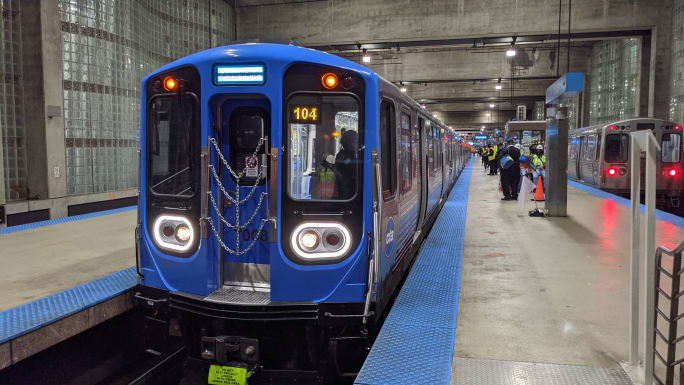
Some agencies, such as the Chicago Transit Authority, are putting equity in the spotlight for public policy conversations.
CTA
Best Practices to Achieve Equity
Practices for achieving equity are still being put into place within some transit agencies and they are still materializing.
Jones keeps seven examples of workplace equity practices on her desk:
Make job descriptions accessible
Skills-based hiring
Provide inclusive incentives
Provide equitable access for all employees
Empower your employees
Ensure equitable benefits
Re-evaluate your equity practices
“Equity in a workplace means everyone receives respectful and dignified treatment,” Jones explains. “There’s a transparency to cause and effect, and everyone knows what to expect in terms of consequences and rewards. When equity exists, people have full access to opportunities and a pathway to economic and social prosperity.”
The NCTD is in the process of updating its strategic plan and a key element is incorporating diversity, equity, and inclusivity as a core value of the organization, according to Tucker.
Tucker served as the vice chair for the American Public Transportation Association’s (APTA) Diversity, Equity, and Inclusion Program.
“The best practices moving forward will be related to how we can uplift people who possess the knowledge, skills, and abilities to do the job but may need support, training, or coaching to be able to seize a future opportunity,” Tucker says.
NCTD is actively participating in the APTA’s Diversity, Equity, and Inclusion Program and is using it as a framework to explore a formal program that includes pipelines to non‐traditional candidates.
APTA recently launched its two-year Diversity, Equity, and Inclusion pilot program to engage and support members in their racial equity efforts, according to the association.
Carter Jr. shares his belief behind the best practice of achieving equity, and the agency is already seeing a positive impact.
“I believe that building a diverse leadership team and staff is important. If leaders don’t create a space for different views and opinions, they can become myopic in their approach,” Carter Jr. says. “My first concern has always been to create an environment where diverse views are heard and respected.”
Carter Jr. established CTA’s Diversity and Inclusion Committee at the executive level after he became president.
This committee allows for discussion, coordination, and implementation of organizational changes and special initiatives in one place.
Another example of how CTA engages its staff on equity issues is through its new Innovation Group, which pursues opportunities through technology to make transit more accessible, more customer‐friendly, and more available to a broader customer base.
COTA launched its first-ever strategic plan in 2019, which is a five-year blueprint for creating an equitable and inclusive organization for its employees, customers, and the community.
Three years later, the organization’s leadership is currently more than 60% women and minorities, and its director level positions are more than 50% women and minorities.

One way to emphasize equity within an organization is through education, according to the NCTD’s Matthew Tucker.
NCTD
How Equity Reflects in the Community
These agencies have seen how their equity practices have reflected within the community.
One example of the expression of equity into the community from CTA is the $2.3 billion Red Line Extension project, or RLE.
The Red Line is the most heavily traveled rail line in CTA’s system, operating 24/7, and serves as the backbone to our rail system.
“RLE will extend the Red Line on Chicago’s Far South Side by 5.6 miles into poor and minority communities, creating more than just valuable transit connections, but also improve connections to jobs, schools, medical, housing and other vital resources,” Carter Jr. says. “This is perhaps the most important project I will work on during my time as president.”
In 2019, Carter Jr. directed CTA’s staff to budget $310 million for preliminary engineering and design work for RLE, which the community rightly saw as a statement of commitment to getting that project done.
COTA launched its Digital Fare Payment System, which now ensures every customer gets the best price for his/her/their transit needs on its coaches.
“For the first time, any customer who uses this new system will never pay more than $4.50 a day or $62 a month,” says Jones. “We have also made it easy to travel by making one $2 fare valid for 2 hours, regardless of direction or how many lines you travel on. It is taking the confusion out of transit travel.”
COTA says it’s also investing in a vehicle maintenance intern program, which will provide high school students with paid internships where they learn mechanical skills and are eligible for full-time jobs upon graduation.
NCTD recently launched a pilot program with Lyft, Uber, and TripShot to provide discounted first- and last-mile connections for commuters.
The pilot gives riders a $7.50 credit toward trips to or from the Sorrento Valley or Carlsbad Poinsettia COASTER Stations within defined geographic zones, according to the agency.
While NCTD is implementing programs to address the equity issue in public transportation, Tucker says lack of inclusivity impacts organizational performance to provide services to the community.
“An organization that practices equity and inclusivity will have advocates that reflect all facets of the community and will better equip the organization in making decisions that foster equity, economic prosperity, and well‐being especially as it relates to funding priorities and service improvements,” says Tucker.
Tucker further highlights the importance of listening when talking about equity and inclusion in public transportation.
“The last couple of years have brought the U.S. to an inflection point, as it relates to justice, equity, and inclusion,” Tucker says. “It is important that we talk to each other and listen and respect the opinions of each other and develop a sustainable approach to achieving justice, equity, and inclusion for all. Diversity, equity, and inclusion is at the core of building stronger and more sustainable communities and an America that lives up to her ideals.”
More Management

METRO Opens Submissions for 2026 Motorcoach Awards
Nominations are now being accepted for METRO Magazine’s Operator of the Year and Innovative Operator of the Year awards.
Read More →
New York MTA Advances Final Contract for Second Avenue Subway Expansion
Contract Four is the largest in the Second Avenue Subway Phase 2 project and includes construction of station infrastructure, tracks, and signals for the subway expansion, MTA officials said. Work on Contract Four will begin in 2027.
Read More →
Transit Agencies Highlight Safety Gains at National Summit
Leaders from 15 major transit systems shared crime-reduction results and safety initiatives while discussing the role of continued federal support.
Read More →

NITA Names New Leadership, Expands Reduced-Fare Program at First Board Meeting
The new regional transit authority appointed its first board chair and interim executive director while extending reduced fares across CTA, Metra, and Pace for eligible riders.
Read More →
Beyond the Checklist: A Structured Approach to Transit Maintenance
Reliability-Centered Maintenance helps transit agencies move beyond routine checklists to focus limited resources on the assets and failures that have the greatest impact on safety, reliability, and service.
Read More →
APTA 2026 Nominating Committee Selects Leadership Slate, Names Chair and Vice Chair Nominees
Leadership changes will help shape the association’s priorities and its representation of the transportation industry during the 2026–2027 term.
Read More →
DART Launches Major Security, Fare Enforcement Initiative
The 90-day demonstration will deploy coordinated security teams at five light rail stations while testing controlled access and gathering data to guide future investments.
Read More →
Advancing Fare Collection Through Technology and Innovation
Learn about delivering 1300 gates at 91 stations while managing fare evasion. Explore the large scale deployment, solution customization and real-world results that affect the region. Prepare for deployment in your region now.
Read More →
Game Day in Motion: Moving Millions During the 2026 World Cup
Between packed transit stations and team motorcoaches, see how agencies and operators across North America tackled the transportation demands of the 2026 FIFA World Cup.
Read More →
Surface Transportation Extension Averts Shutdown, Leaves Transit Funding Gap
The stopgap keeps federal transportation programs moving, but missing advance funding could complicate the transit and rail projects agencies are planning next.
Read More →