



Motorcoach Industry Stabilized as it Looks Ahead with IIJA in Place
The head of the United Motorcoach Association and American Bus Association discuss the impact the new legislation will have on the private sector.
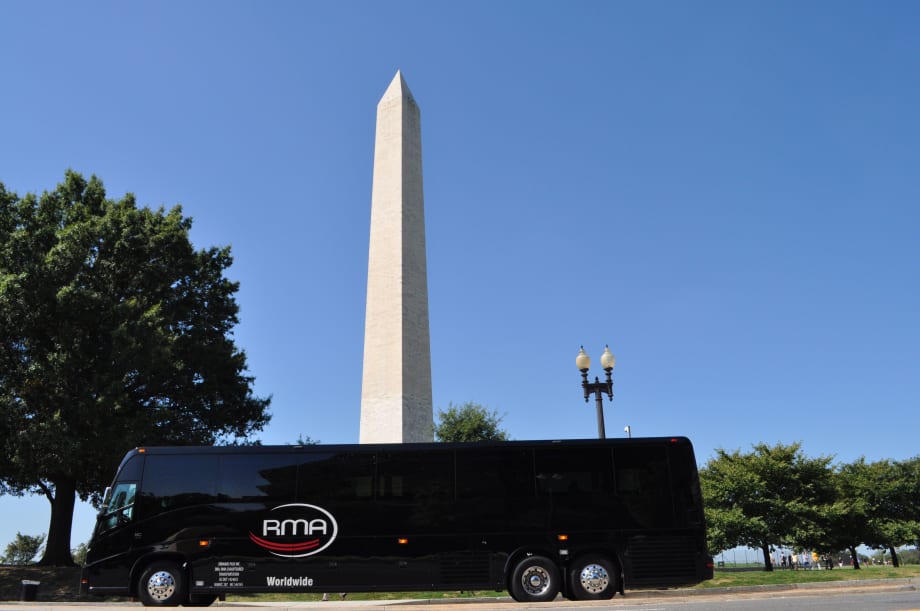
From the reauthorization of federal highway, transit, motor carrier, and vehicle safety programs to preserving the motorcoach fuel tax exemption and more, the legislation is a step in the right direction to help companies get back on their feet during the COVID-19 pandemic.
MCI
The Infrastructure Investment and Jobs Act (IIJA) recently signed by President Joe Biden includes many points of interest to companies that own and operate motorcoaches. From the reauthorization of federal highway, transit, motor carrier, and vehicle safety programs to preserving the motorcoach fuel tax exemption and more, the legislation is a step in the right direction to help companies get back on their feet during the COVID-19 pandemic.
METRO reached out to the presidents of the associations working hard to keep motorcoach operators informed for their take on important aspects of the bill.
Why Does IIJA Matter?
First, it’s important to break down why motorcoach companies need to be aware of what this bill does for them. Peter Pantuso, president and CEO of the American Bus Association (ABA), stated having a solid five-year surface transportation funding bill in place with more than $500 billion in new money to make infrastructure — roads and bridges — a priority will certainly have an impact on those in an industry where people making a living off getting people where they need to go all over the country.
Scott Michael, president and CEO of the United Motorcoach Association (UMA), agrees and underscores that those in the motorcoach industry rely on a robust highway network to transport customers to their destinations.
“Five years of minimal mandates will allow technologies to improve and evolve as market conditions dictate as opposed to being driven by excessive mandatory requirements. Also, it seems likely the charter service rule will remain safe for the time being and permit the pandemic-stricken bus and motorcoach industry the opportunity to recover with a whole market intact,” he comments.
Facing Other Possible Mandates
When asked if any other limited mandates might be coming down the pipeline, Michael says he believes the current bill was drafted in a truly bipartisan manner and seemed to avoid nearly all possible mandates.
“We hope the administration continues in that vein as they implement the key parts of this bill,” he notes. “So far, they seem to be recognizing the industry needs time to recover, and any new mandates would hurt that recovery.”
Pantuso says even if more mandates are brought forward by Congress or the administration, the ABA will work to make certain new regulations do not limit the ability of the industry to operate successfully.
“Our number one priority is providing safe, affordable transportation. We believe it would be inappropriate to impose mandates, especially those that do not impact an industry that operates safely and is environmentally friendly by removing cars from the roads,” he clarifies.
Fuel-Tax Exemption
While the ABA was hoping to achieve a full fuel tax exemption for motorcoach operators (as with public transit and school bus operators), it was unfortunately not included. However, the current partial rebate goes a long way in helping the private motorcoach industry remain competitive with public transport.
“Coming out of the pandemic, every little bit of savings helps, and the fuel-tax exemption does help,” Pantuso said.
Michael elaborated that the partial fuel-tax exemption is generally reflected in the overall cost of every passenger ticket or group charter.
“Nearly everyone, from school groups on a field trip to rock stars on their way to their next concert, uses motorcoaches for their practicality and affordability. Considering global warming and the pursuit of green technology, motorcoaches move more people per gallon of fuel, so it only makes sense to recognize this and provide every incentive to keep costs low for this more efficient way to travel,” he explains.
Maintaining a Level Playing Field
Because public transit systems typically receive generous federal subsidies for capital costs such as buses and facilities, preserving the current charter service rule is huge for the motorcoach industry. Those in the private sector do not receive such help and must recover costs through fares.
“Since public transit systems do not incur these costs, they would be able to compete unfairly,” says Michael. “Congress must consider the taxpayer as well. Taxpayers generally support subsidizing public transit to furnish local scheduled route service. Allowing those subsidized operations to also operate charters increases the taxpayer burden for repair and maintenance cost and can shorten the life of the equipment.”
Thanks to the efforts of both the UMA and ABA, the charter service rule is indeed maintained in the IIJA.
“We must make sure private motorcoach operators are allowed to compete for business against public transit agencies — doing so will ensure the private industry survives, and the federal government isn’t burdened with subsidizing additional public transit,” Pantuso comments.
Assisting EVs
For operations dealing with school buses, the bill makes funding available for electric vehicles (EVs). As federal, state, and local mandates geared toward fleet electrification are seemingly emerging every other week, this is good news. However, Pantuso notes getting more electric buses into the school transportation system will require additional subsidies.
“This operating environment where the distances are short and the vehicles return to the garage one or two times each day will likely support an electric application once the infrastructure is in place,” he says.
Michael also said whether operated directly by a school district or private contractor, school bus service takes a big bite out of the education budget.
“The current cost of EVs makes the low-NOx emitting diesel, propane, or CNG much more attractive unless the acquisition is subsidized. It’s possible a future subsidy could be applied to private operators to expand the use of that technology until the acquisition cost moderates,” he explains.
Tolling Woes
In the last surface transportation bill, certain tolling authorities were directed to afford equal treatment to private sector over-the-road buses as they provide public transit. In general, tolling authorities were something less than cooperative, according to Michael. Thankfully, the new infrastructure bill requires tolling authorities to report any special arrangements with public transit in 90 days after passage of the bill.
“Tolling authorities that failed to comply with the Fixing America’s Surface Transportation (FAST) Act may find themselves owing refunds to private over-the-road bus companies going back to December 2015,” he says.
Pantuso stated the ABA also worked hard to ensure the tolling provisions the ABA secured in the past remained and were strengthened.
“It will now be easier to ensure private motorcoaches are treated the same as public transit when it comes to tolling on federally funded roads,” he says.
Moving Forward
As for next steps, naturally, the industry is trying to bounce back to pre-pandemic levels of service while also maintaining safe, clean vehicles and affordable prices. Another challenge that remains is adapting to a driver and mechanic shortage, according to Pantuso.
The UMA will continue to seek a Coronavirus Economic Relief for Transportation Services (CERTS) refill that will help stabilize the industry, along with legislation to address the taxable status of the CERTS funds.
“At the end of 2019, pre-COVID, there were nearly 3,000 interstate/intrastate for hire motorcoach companies in the U.S. At the end of November, the FMCSA database indicates there are now under 1,500 registered motorcoach companies,” Michael says.
The goal now is to assist companies that want to return to the industry as well as encourage new entrants.
“Of course, it is critical regulatory authorities avoid new and burdensome regulations. Nothing quells the expansion of new entrants in the bus and motorcoach industry like excessive regulations. That impact is borne disproportionately by small fleet operations,” he adds.
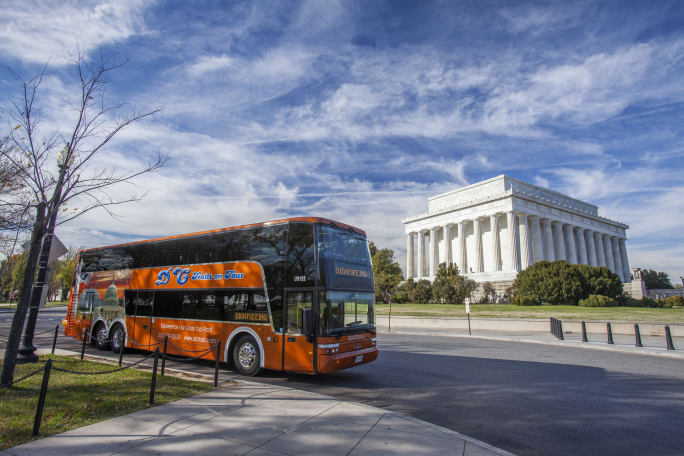
The motorcoach industry is trying to bounce back to pre-pandemic levels of service while also maintaining safe, clean vehicles and affordable prices.
DC Trails
Hot Points
Here’s what Michael and Pantuso had to say about these often-discussed aspects of the bill:
Lack of unfunded safety mandates - Pantuso: The motorcoach industry is very safety conscious, and we work closely with the DOT when any safety issues do arise.
Michael: Overall, we were pleased with the absence of unfunded safety mandates like we have seen in the past, beginning with the absence of a requirement to raise liability limits. Additionally, it was a positive sign that the bill ignored attempts to mandate CDLs for nine to 15 passenger vehicles, state inspection programs supplanting the current law for companies to perform their own annual inspections, and mandatory obstructive sleep apnea testing.
Fuel tax exemption - Pantuso: Although we are pleased the partial exemption remains in place, we were hopeful Congress would consider restoring the full exemption considering the important role the motorcoach industry plays in supporting climate change goals.
Michael: While we would have preferred Congress restore the motorcoach industry’s full exemption from diesel tax, we appreciate the bill did not tamper with the current partial exemption that recognizes the value motorcoaches bring in reducing wear and tear on the highway system and reducing the traveling public’s carbon footprint.
Charter service rule - Pantuso: The preservation of the charter rule was a priority for ABA and the industry. Private motorcoach provides a safe and economical means of transportation for all Americans, without the need for public subsidy. However, modifying the charter rule would result in unfair government-subsidized competition, and eventually add even more to the federal debt by broadening the need for increased federal subsidies to transits.
Michael: We were very concerned when the House passed their version of the surface transportation bill that would have liberalized the current charter service protections. Fortunately, the Senate ignored that bill and retained the existing provision in the final bill that passed both Houses and was signed by President Biden.
More Motorcoach

METRO Opens Submissions for 2026 Motorcoach Awards
Nominations are now being accepted for METRO Magazine’s Operator of the Year and Innovative Operator of the Year awards.
Read More →
Biz Briefs: Alstom Lands Canadian Contract, LYT to Supply California TSP, and More
In METRO's latest installment, we take a look at recent news from Complete Coach Works, Beep, FlixBus, and more partnerships making headlines across the transportation sector.
Read More →
Biz Briefs: RIPTA Unveils New Frontrunners, Clevland RTA Adds New Siemens, and More
In METRO's latest installment, we take a look at recent news from Siemens, Prevost, Dodge, and more partnerships making headlines across the transportation sector.
Read More →
People Movement: Holly Arnold Joins Transdev and More
In this edition, we also cover recent appointments and announcements at Pace, CamTran, MCI, and more, showcasing the individuals helping to shape the future of transportation.
Read More →
ABA Report: Motorcoach Travel Generates $161.6B Economic Impact
The 2025 analysis finds motorcoach travel supported nearly 900,000 jobs and generated $28 billion in federal, state, and local taxes.
Read More →
CharterUP’s Armir Harris on Technology, AI, and the Future of Group Mobility
In a recent episode of METROspectives, CharterUP Founder/CEO Armir Harris discussed the company’s evolution from an online charter bus marketplace into a technology platform supporting public- and private-sector mobility and much more.
Read More →
People Movement: ABC Names John Walsh as Chief Commercial Officer
In this edition, METRO also covers recent appointments and announcements at the DART, STV, and more, showcasing the individuals helping to shape the future of transportation.
Read More →
From Surviving to Thriving: Building Stronger Transportation Organizations
Bus Business Consultants founder Brian Dickson shares lessons on leadership, organizational health, and creating options for long-term success in a changing transportation industry.
Read More →
Biz Briefs: Luminator Marks Milestone and More
From manufacturers and suppliers to transit agencies and motorcoach operators, these updates offer a snapshot of the projects, partnerships and business moves driving the industry forward.
Read More →
ABAF Study Reveals Growing Insurance Crisis for Motorcoach Operators
Preliminary findings show 98% of operators faced premium increases over the past five years, while shrinking insurer participation is putting added pressure on businesses and customers.
Read More →