



New Jersey Transit Digs Deep for Project Success
The agency is investing $420 million in ARRA funding on several capital projects including the Mass Transit Tunnel, a new transit center, signal improvements, rail line interlocking and bus shelters.
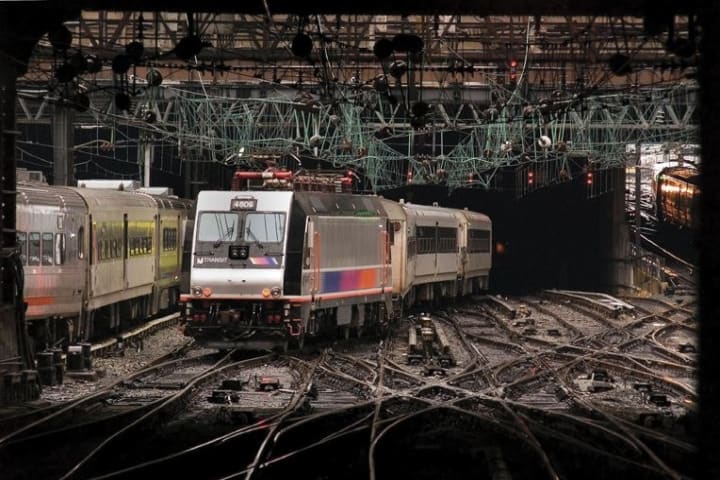
[IMAGE]MET6njtransit.jpg[/IMAGE]New Jersey Transit (NJ Transit) is the third-largest transit system in the country, providing more than 895,000 weekday trips on 240 bus routes, three light rail lines and 11 commuter rail lines. Like most other transit agencies across the nation, NJ Transit faces a budget deficit, compounded by the fact that its state support was cut by around $60 million dollars. Despite this setback, the agency expects to achieve what numerous systems have not: balance its budget without having to resort to fare hikes or major service cuts.
Closing the gap
NJ Transit Executive Director Richard Sarles says the agency will balance its budget by cutting administrative expenses by $22.5 million to partly offset the shortfall, as well as benefit from federal funds made available from the U.S. Department of Transportation.
Sarles says that the agency has reduced administrative costs to an all-time low with expenses now accounting for only eight cents out of every operating dollar, with a full 92 cents going to service delivery. He also noted that the agency is more cost effective than its peer agencies on a cost-per-passenger-mile basis.
"We have worked hard with the Governor and our Board to ensure that we will be able to operate rail, bus and light rail services without any major service cuts and without a fare increase this year," Sarles says.
NJ Transit eliminated 140 jobs this year through attrition and early retirement and instituted both hiring and wage freezes for non-agreement employees. It also expects significant savings in FY10 from a dependent health benefit audit, reduced marketing expenses, and cutbacks in printing and customer service call center hours, made possible through technology that allows customers to get more information online. "We've gone to other electronic means to communicate with our customers, using text messages and the Web," Sarles says, adding that doing so enabled the agency to reduce the number of timetables it prints.
NJ Transit also is proposing a $1.3 billion capital program focused on safety and state of good repair investments, as well as expansion projects. Some of the capital projects include: new transit buses; design of a new Portal Bridge on the Northeast Corridor; continuation of projects such as Northern Branch and Lackawanna Cut-off to Andover; the Passaic-Bergen rail project and the state's signature project - the Mass Transit Tunnel (MTT).
[PAGEBREAK]Mass Transit Tunnel
The nearly 3.5-mile tunnel - also known as the ARC (Access to the Region's Core) Project - has been in the planning stages "since the beginning of the last decade," says Sarles. "The Northeast Corridor into Manhattan is congested. Any little hiccup will cause delays," Sarles says of the current tunnel. "Because it is a choke point in the system."
The existing 100-year-old commuter rail tunnel under the Hudson River has only two tracks that are pushed to their functional limits each rush hour with NJ Transit and Amtrak trains. The $8.7 billion MTT project will add two new single-track tunnels under the Hudson River, construction of two new tracks in the Meadowlands and an expansion of Penn Station New York under 34th Street, including direct connections to NYC subways at 8th, 7th and 6th avenues, as well as PATH trains.
Slated for completion in 2017, the tunnel will more than double peak capacity from 23 trains per hour to 48. The project will also create one-seat (direct) commutes to New York for NJ Transit customers on seven commuter rail lines - Main/Bergen County, Port Jervis, Pascack Valley, Montclair-Boonton west of Montclair State University, Morris & Essex west of Dover, Raritan Valley and North Jersey Coast south of Long Branch, as well as future rail expansion lines.
Doubling commuter rail capacity between New Jersey and New York will also allow improved rail service within New Jersey itself. These improvements will reduce roadway congestion with tens of thousands of additional transfer-free passenger trips each day and generate 6,000 jobs annually during construction until project completion.
The mobility benefits of the MTT will also result in 44,000 permanent jobs being created once the tunnel is in service, according to Sarles. Construction will create $4 billion in new personal income and $10 billion in gross regional product.
With the tunnel project creating capacity to serve thousands of additional customers, the NJ Transit commuter rail system will provide more than 254,000 trips each weekday to and from New York in the year 2030, an increase of 46 percent above current levels. This added capacity is expected to eliminate more than 22,000 automobile trips each day - reducing automobile usage by nearly 600,000 vehicle miles per day and relieving pressure on congested roadways, bridges and tunnels.
Digging deep
A standout of the tunnel project design is the aforementioned tri-level 34th street station expansion of New York's Penn Station, situated 155 feet below ground in Manhattan. According to Sarles, a 200-foot wide trench was opened in Manhattan when the original Penn Station was built in 1908. "You can't do that anymore, you have to get down underneath it."
Today, tunnel engineers must carefully thread their way around existing building foundations, utilities and subway lines, says Sarles. Additionally, the geology of the area surrounding the new station prevents raising the station elevation.
"From a safety viewpoint, we meet all the modern standards," says Sarles responding to whether passengers will be able to evacuate quickly during an emergency. The station will feature full-width, high-speed escalators and wide platforms.
While the MTT project is seen as a boon to the region, some passenger advocates have been critical of the fact that it doesn't connect to New York's Grand Central Station. "In my view, spending nearly $9 billion dollars to get across to Penn Station is a good first chunk," says Sarles, adding that the plans for the top-level tunnel tracks are designed so that they can extend eastward. This allows for the option of connecting to Grand Central in the future, or, as some have offered, the tracks should connect directly to the new Second Avenue Subway, he says.
Despite his critics, Sarles is jubilant over the fact that the agency is in the process of awarding its first rail tunnel contract for construction of the Tonnelle Avenue underpass. "We have also gone out for the first design-build contract for the tunnel boring project in Manhattan," he says. "We will break ground and start construction this summer."
[PAGEBREAK]Stimulus Funding
Federal stimulus funding ($130 million) will go toward the Mass Transit Tunnel project. Stimulus dollars are also enabling NJ Transit to accelerate more than a dozen key capital projects that will create and preserve jobs. The agency is investing more than $420 million provided by the American Recovery and Reinvestment Act (ARRA) in transit projects that will build system capacity, extend accessibility and ensure service reliability. Projects include the Pennsauken Transit Center, connecting the River Line with the Atlantic City Rail Line. Funded projects will also include signal improvements on the River Line. "We are going to cab signals away from wayside signals," Sarles says. "That's the first step for us on the way to positive train control."
The Hudson Bergen Light Rail Line, has "grown by leaps and bounds," showing double-digit growth, says Sarles, so the agency is creating a new interlocking to increase service on the core portion of the system, which involves the construction of additional track, switches, catenary and signals at a cost of $15 million.
Other system enhancements include expanding parking at Edison Rail Station by adding approximately 475 spaces in a surface lot on the outbound side of the Northeast Corridor; an area with known demand. NJ Transit will also purchase minibuses for a jitney service in Atlantic City, which is part of the agency's private carrier program, as well as install bus shelters system-wide.
Multi-Level Vehicles
Last August, NJ Transit's board of directors approved the purchase of 50 additional Multilevel vehicles (MLV) to help with increased ridership demand. The Multilevel coach, manufactured by Bombardier Transportation, features upper and lower seating levels, as well as a spacious intermediate level at each end of the cars. The purchase brings the agency's total number to 329 of the MLVs (approximate cost per car is $1.82 million). "These double-deckers have been a real hit with customers," says Sarles.
The design of the vehicles incorporated input from a focus group of customers and NJ Transit mechanics. "This is the first time we used customer and employee input for a vehicle," says Sarles.
The state-of-the-art, stainless steel Multilevel coach offers new levels of capacity, comfort and convenience. Each Multilevel coach has 15 percent to 30 percent more seating capacity than a typical single-level car, yet is specially designed to meet the infrastructure constraints of certain rail networks, such as those posed by tunnels.
In service since 2006, the Multilevel coach provides a two-by-two seating configuration that eliminates the middle seat found on many single-level vehicles. According to Sarles, customers in the focus group were definite about their dislike for the middle seat option. Other comfort features include specially designed seats with improved lumbar support as well as more leg room, knee room and seat width than found in conventional coaches.
Large side doors located at the intermediate level provide accessibility from both high and low level platforms, and wider aisles facilitate passenger boarding and alighting. Automated public address systems and LED destination screens keep passengers informed.
Bus Services
The city of Newark, N.J., has an extensive bus network, with a major route - Springfield Avenue - connecting to Penn Station, making it the perfect candidate for service enhancement. In April 2008, NJ Transit launched the state's first "premium" local bus service - Go Bus - along this route. The limited-stop express service features newly branded buses, easily identifiable bus stops with improved lighting and passenger information displays, and upgraded onboard amenities. "We saw this as an opportunity to introduce BRT-type service - a first baby step," says Sarles.
Following the success of the express service, the agency recently broke ground on $1.3 million expansion of the GO Bus initiative, which will include the installation of new bus shelters and traffic technology along the busy Bloomfield Avenue corridor in the Township of Bloomfield and the city of Newark. "[The service] will speed up the customer's ride by about 10, 15, 20 minutes over what they see today," says Sarles
More Bus

People Movement: Dan Dipert Coaches Adds Third-Generation Leader, Keolis Names New Valley Metro VP/GM, and More
In this edition, we also cover recent appointments and announcements at the Wabtec, SilverRide, HNTB, and more, showcasing the individuals helping to shape the future of transportation.
Read More →
New York MTA Plans Largest Bus Fleet Upgrade in More Than a Decade
The agency is seeking manufacturers for 650 new CNG buses to replace aging vehicles, improve reliability, and advance its broader fleet modernization strategy.
Read More →
Building a Flexible Path to Transit Electrification
John Hroncich discusses BAE Systems’ modular and scalable approach, lessons learned from decades of real-world operations, and how agencies can identify electrification strategies that fit their fleets.
Read More →
Bus Tech Talk: Keeping Transit Technicians Ahead of the Technology Curve
LA Metro’s Obed Mejia discusses technician training, evolving maintenance technology, fleet replacement, and strategies for getting the most out of today’s transit fleets.
Read More →
Biz Briefs: RIPTA Unveils New Frontrunners, Clevland RTA Adds New Siemens, and More
In METRO's latest installment, we take a look at recent news from Siemens, Prevost, Dodge, and more partnerships making headlines across the transportation sector.
Read More →
People Movement: Holly Arnold Joins Transdev and More
In this edition, we also cover recent appointments and announcements at Pace, CamTran, MCI, and more, showcasing the individuals helping to shape the future of transportation.
Read More →
The High Cost of Transit Buses: Industry Leaders Look to Procurement Reform
Transit leaders and policymakers examine how standardized bus designs, streamlined procurement, and predictable funding could help agencies stretch budgets and deliver better service.
Read More →
The Business Voice Behind Public Transportation
As chair of APTA’s Business Members Board of Governors, Ray Melleady explains how more than 850 business members are partnering with transit agencies to advance funding, innovation, and industry-wide collaboration.
Read More →
From Surviving to Thriving: Building Stronger Transportation Organizations
Bus Business Consultants founder Brian Dickson shares lessons on leadership, organizational health, and creating options for long-term success in a changing transportation industry.
Read More →
Finding the ‘Happy Medium’: Optimizing Maintenance Without Sacrificing Reliability
The key to maintenance optimization isn’t doing less work—it’s doing the right work at the right time on the right assets.
Read More →