



Positive Train Control Implementation Signals Challenges Ahead
In addition to meeting the Dec. 31, 2015 deadline, rail operations are faced with cost issues, project deferrals and ensuring interoperability between systems.
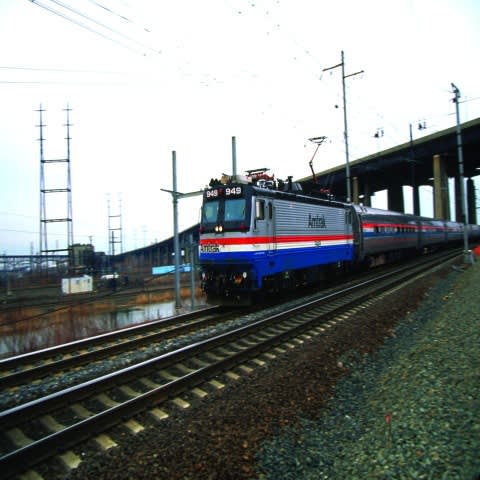
[IMAGE]Amtrak-1.jpg[/IMAGE]Despite having reached a milestone by submitting their positive train control (PTC) implementation plans to the FRA by the April 16, 2010 deadline, the rail community still has a long road ahead in terms of what they have to accomplish. But, the end of that road, a Dec. 31, 2015 deadline for installation, is approaching rapidly.
This story will focus on the technology as well as the challenges rail systems face, such as costs and interoperability.
Breaking it down
According to the FRA, the Rail Safety Improvement Act of 2008 (RSIA) requires that certain railroads implement PTC to prevent train-to-train collisions on certain rail lines by the end of 2015. The FRA states that the technology is also capable of preventing: over-speed derailments; casualties or injuries to roadway workers (e.g., maintenance-of-way workers, bridge workers, signal maintainers) operating within their limits of authority as a result of unauthorized incursion by a train; and train movements through a switch left in the wrong position.
PTC is intended to become an integral part of the signaling and train control system on the mandated railroads, says Paul Mosier, rail and transit operations planning manager for Parsons Brinckerhoff (PB). "The objective of applying PTC is to ensure that you have a system in place that would provide a high level of confidence, almost a fail-safe level of confidence, for train separation," he says.
Today, train separation is highly dependent on the locomotive engineer, the operator, and their compliance with the operating rules and what the operating rules instruct them to do based on the indication that they see on the signal. "It's no different from you or me driving our car," Mosier says. "The burden of safety in terms of the operation of the train and stopping the train in today's world is largely on the shoulders of the operator of the train."
PTC will essentially remove the human intervention factor from the equation of making sure that trains stay safely separated. The system will constantly update itself as to the location of the train, with respect to a slower speed indication or a stop indication coming up ahead, and it will be calculating what the safe braking distance is to get to that point, Mosier says. "If the train violates the speed that would allow it to either slow down or come to a stop at the point ahead, then the system takes over and will automatically slow the train down or stop it."
With this technology, the signal blocks are now integrated in the train control system, which conforms to a braking distance that is congruous with a human operator. Another attribute that will change is the lengths of the signal blocks. "Those signal blocks will have to be lengthened, so you'll have an additional margin of safety," Mosier says.
Interoperability
Beyond the challenge of meeting the deadlines, Mosier says that field installation will also be an issue. "But, many [rail systems] have already gotten well into the process with procurement, they've been interacting with the vendors that provide the technology, they've been interacting with the contractors that can do the installation."
For rail entities that share track, ensuring interoperability — between the different technologies and systems that may be employed — is key. "Because at the end of the day, it's almost a systems integration challenge to be certain that a system that works on a Norfolk Southern is capable of moving locomotives and cars that would be coming onto their system from CSX, for example," Mosier says. "The same could be said of the cars from BNSF and Union Pacific, because the railroads have track rights where they can operate on each other's tracks, so compatibility has been a priority for the rail systems."
Interoperability will also play a role in the PTC project PB has undertaken for California commuter rail line Caltrain. The company is the technical lead for ensuring interoperability between the train control system (CBOSS) being developed by the Peninsula Corridor Joint Powers Board to meet the 2008 PTC mandate and the PTC systems being deployed by Union Pacific and Caltrain's tenant operators. PB is providing the project manager and project engineer, as well as operations, signal engineering resources and system safety support to the project.
The project is intended to provide all passenger trains operating on Caltrain's San Francisco peninsula with in-cab equipment and also supported a successful waiver application to the FRA for the operation of lightweight electrical multiple unit rolling stock, Mosier says. CBOSS will also support run-time improvements and improve the operation and safety of the 64 highway- and pedestrian-grade crossings currently in operation.
Other possible PTC projects in the works include the development of a PTC system simulation. "There have been some discussions to do a simulation of a conceptual design for a part of a rail system, with the attributes of PTC versus the fixed-block type of signaling system that is out there today," Mosier says. "The models are built from anything from preliminary engineering detail drawings to as-built drawings for existing infrastructure, and that includes the tracks and the switches.
"The results are probably as close as you can get to replicate the performance of a rail network without actually being out on the railroad," Mosier says. Typically, these models are used to test future service levels to determine what modifications need to be made in the infrastructure to provide capacity for growth and those sorts of things, he adds.
[PAGEBREAK]Costs, project deferral
Howard R. Permut, president of New York-based Metro North Railroad spoke at the recent American Public Transportation Association (APTA) Rail Conference in Vancouver, B.C., on the hurdles his system faces to meet the PTC mandates. Cost was cited as a key issue. Metro-North has estimated that the cost to install PTC is about $350 million, while their sister system Long Island Railroad is estimating their cost to be about $325 million.
"It will require the deferral of critical projects for Metro North. We have bridge issues, we have issues with power and substations and systems," Permut says. Some critical projects mentioned include Connecticut-based catenary and shop facilities that are 100 years old.
With the funding crisis in New York and the extra cost and lack of funding for PTC, Permut says, "We've really hit a perfect storm in terms of funding availability."
New York's Metropolitan Transportation Authority, with Metro-North and Long Island being a part of that, has an estimated budget shortfall of $800 million, due to a number of factors — the main one being the loss of tax revenues, Permut says. "We have significant concerns that there will be operating budget impacts anytime you put in a system of this magnitude. There will be a need to maintain it on vehicles as well as on the right of way."
Lack of adequate time to meet the impending deadline is also a challenge at the forefront for Metro-North/LIRR. "We basically are facing an immediate decision on the design and implementation of exactly what we are going to do," Permut says. "We will not have sufficient time for review or consideration of alternatives and testing." He also worries about not getting the best opportunity for cost-effective procurements.
One of the "high-risk critical path items" that needs to be addressed is the need for interoperability agreements. "We do need agreements with all the freight carriers who operate over us as well as Amtrak. That will take some time to make that happen. We don't know how long because it's a negotiation," Permut says.
Radio spectrum, reliability
Another issue the rail operation faces is the lack of radio spectrum — a significant issue in New York. Both rail systems are partnering to obtain the needed radio spectrum in their service territory. "We are now in the midst of trying to buy a spectrum," Permut says. "We, along with some of the other railroads, will be approaching the FCC (Federal Communications Commission) and trying to get some assistance from them in getting the necessary spectrum. Until that happens, we have stopped some of our design work."
In terms of the suppliers and integrators of the technology, Permut cites concern about whether the companies would be able to meet the overall market needs. "We are not quite sure what their production capabilities are; we're not sure who's going to take what risks," he says.
Permut also cites concern about the potential effect on customer service, in terms of on-time performance and reliability. "Metro-North runs a very reliable service, we're very proud of the fact that we run our trains over 98 percent on time. We are now going to get another system that could fail," he says.
In terms of what would help Metro-North and LIRR reach "the ultimate safety goal of PTC," Permut says an extension of time would allow them to explore different cost-effective alternatives and spread the funding needs around, which would minimize the deferral of critical state-of-good-repair projects.
Clearly, funding is a major issue, Permut says, and systems are looking for increased federal financial support for publically owned systems. "What needs to be part of the dialogue as we go to Washington is that these are actions that are needed now. People think 2015 is a long ways away. The fact is, the decisions are being made in 2010 and 2011 and, if there's a relief in 2014, it's not going to help in any major way because we will be well on our way to installing potentially old, outdated technologies."
[PAGEBREAK]Alstom to equip Amtrak PTC interface expansion
In a significant step toward meeting the federal mandates for PTC, Amtrak awarded Alstom a product order in June for wayside interface units (WIUs) — required to support positive train control. "This is actually the first public bid WIU/PTC award," says Steve Zwart, Alstom's customer director, PTC.
The Alstom product is a "microWIU", which is installed along the side of the tracks and is connected to existing track equipment (signal lamps, switches and interlockings). The cost of the contract totals an estimated $750,000, with deliveries beginning in October.
The WIUs gather information from track equipment, such as signal status (signal being on/off, switch pointing left/right, etc.) and makes this information known to the rest of the PTC system, according to Zwart. This information allows enforcement of safe operation of the train. The information gathered by the WIU can be transmitted by radio or ethernet to the train or the control center (or both).
The WIU supports "the PTC solution" — in use by Amtrak for the past 10 years - called ACSES (advanced civil speed enforcement system). The ACSES system, which equips a portion of the northeast corridor, was developed by Alstom, installed in 2000 and upgraded in 2005.
Amtrak needs to extend its ACSES system — currently on 400 miles of its track - an additional 1,200 miles and needs to install the WIUs as a part of this process. During this expansion, the WIUs will be added to the infrastructure in place of the original encoders that were used with ACSES. "These WIUs are effectively the new product that provides the functionality the encoder used to," Zwart says.
In addition to the ACSES PTC interface, the WIUs support ITC (interoperable train control) specifications, Zwart says.
More Rail

New York MTA Advances Final Contract for Second Avenue Subway Expansion
Contract Four is the largest in the Second Avenue Subway Phase 2 project and includes construction of station infrastructure, tracks, and signals for the subway expansion, MTA officials said. Work on Contract Four will begin in 2027.
Read More →
San Diego MTS Breaks Monthly Trolley Ridership Record
Agency officials said July’s ridership indicates MTS’s continued recovery from the pandemic.
Read More →
Report Examines NJ TRANSIT Reliability, Funding Challenges
The Garden State Initiative analysis examines the roles of Amtrak infrastructure, fleet management, and agency operations while recommending a more performance-based approach to improving reliability.
Read More →
Stadler, CapMetro Sign Long-Term Rail Fleet Support Agreement
Beginning in 2027, Stadler will provide on-site technical expertise, spare parts support, training, and obsolescence management to help extend the reliability and longevity of CapMetro’s GTW fleet.
Read More →
Biz Briefs: Alstom Lands Canadian Contract, LYT to Supply California TSP, and More
In METRO's latest installment, we take a look at recent news from Complete Coach Works, Beep, FlixBus, and more partnerships making headlines across the transportation sector.
Read More →
CATS Gold Line Marks 5 Years of Service, 2.8M Passenger Trips
With a six-mile expansion planned, the Charlotte streetcar is positioned to connect more neighborhoods and major transit hubs across the region.
Read More →
Why Simulating Pedestrian Movement Has Become Essential for Modern Rail Stations
Pedestrian microsimulation is helping rail planners identify bottlenecks, test station designs, and prepare complex transit hubs for growing passenger volumes.
Read More →
Amtrak Begins Major Construction at New York’s Sunnyside Yard
The new maintenance facility will support Amtrak’s Airo trainsets while improving maintenance efficiency and turnaround times in New York.
Read More →
Chicago Leaders Unveil Plans for O’Hare Airport Express Train
The privately developed project would offer a 15-minute trip between downtown and O’Hare’s Terminal 2, with trains operating every 15 minutes on a dedicated track. The service would use battery-electric trains and three existing freight rail rights-of-way.
Read More →
OCTA Maps Out 30-Year Strategy to Protect Coastal Rail Corridor
The draft feasibility report identifies strategies to protect the coastal rail line for decades as the agency continues near-term stabilization and sand placement efforts.
Read More →