



Protecting Your Investment in Air Disc Brakes
The more fleets realize the benefits of ADBs, the more important it becomes for them to maximize these advantages over the life of the brake and get the most out of their investment in the technology.
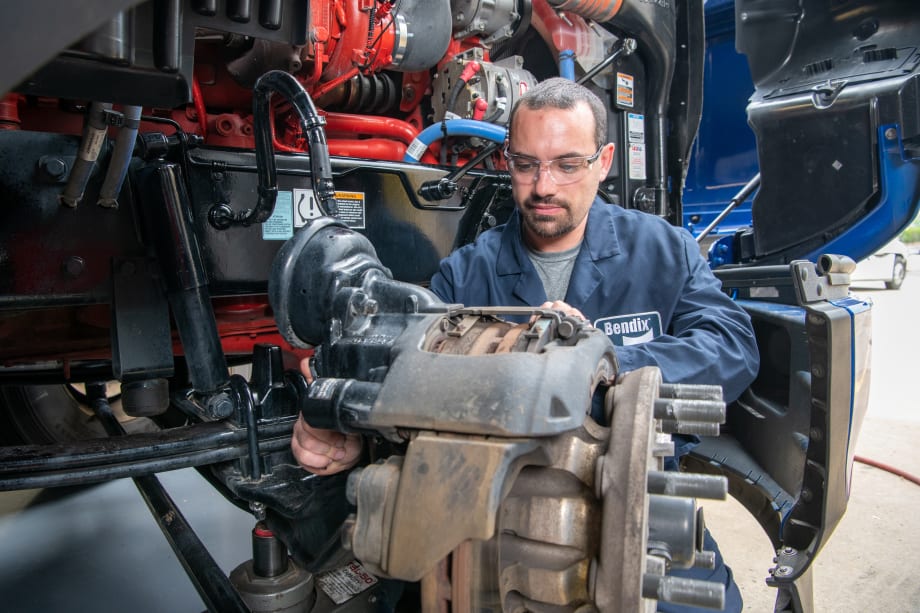
The more fleets realize the benefits of ADBs, the more important it becomes for them to maximize these advantages over the life of the brake and get the most out of their investment in the technology.
Photos courtesy Bendix
From shorter stopping distances to reduced maintenance time, an investment in air disc brakes pays off in several ways, both on the road and in the shop. And over the past decade, the North American transit bus and motorcoach markets have — like the wider commercial vehicle industry — seen adoption and standard positioning of air disc brakes (ADBs) increase significantly. The trend is likely to continue as advanced driver assistance systems such as full stability and collision mitigation become more commonplace, and the understanding that it makes sense to support them with ADBs grows.
The more fleets realize the benefits of ADBs, the more important it becomes for them to maximize these advantages over the life of the brake and get the most out of their investment in the technology. Fortunately, maintaining ADBs to ensure they perform at their full potential is a straightforward matter of knowing some basic facts, paying attention to your brakes, and making good choices when it comes to replacement parts.
The Friction Couple and Replacement Pads
When the brake pads clamp against the rotor during a brake application, the contact slows the wheel-end and generates heat energy that the rotor stores and dissipates. (They do this more quickly than drum brakes, by the way, which is why ADBs don’t experience the phenomenon of “brake fade,” the diminishing performance of a drum brake as it heats up.) In an air disc brake, the pairing of the brake pads and rotor is referred to as the friction couple.
To achieve the ideal friction couple, the rotors and pads are designed and engineered specifically for each other. From the physical design and metallurgy of a rotor to the proprietary friction material in a brake pad, there are many complex variables that determine how these components will perform when they come together to stop a vehicle.
When an original equipment manufacturer like Bendix can determine exactly what goes into both the rotor and brake pad individually, they can be engineered to optimize torque output — the actual stopping force provided to slow the wheel-end — and wear optimally together. You’ll see better performance, longer service life, and less downtime if you maintain the friction couple on your air disc brake system.
This matters because designing specific pads to wear at a rate with some equivalence to the rotor protects rotor life and helps ensure a quality friction couple. The wrong pad, for instance, may last longer but wear out the rotor faster.
As ADBs have gained market acceptance, pad friction has evolved to account for varying fleet factors, including application and duty cycle. When it comes time to replace ADB pads, some aftermarket pads have been shown to increase stopping distances compared to OE friction, and not all aftermarket friction will meet FMVSS-121 requirements in effect at the time of a vehicle’s manufacture. We always recommend the use of like-for-like components to maintain the original manufacturer’s braking performance levels, and we have created frictions to meet a range of needs, including managing the high temperatures generated in applications with repeated, frequent brake usage.
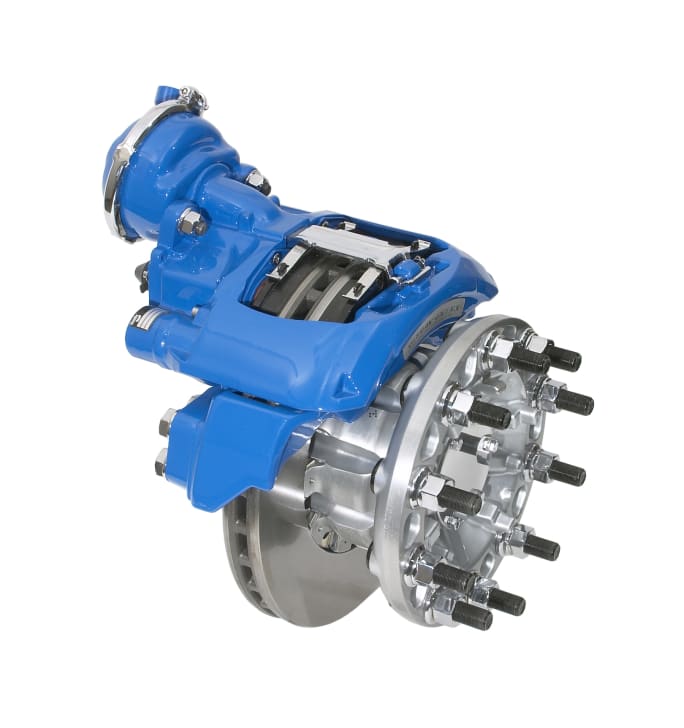
Over the past decade, the North American transit bus and motorcoach markets have – like the wider commercial vehicle industry – seen adoption and standard positioning of air disc brakes increase significantly.
Maintenance and Monitoring Matters
A watchful eye for friction wear is at the heart of ADB preventive maintenance. Air disc brakes are lubricated for life and don’t need grease fittings or oil spray, meaning fleets should focus on replacing the pads when they near end of life, before they can damage the rotor.
While a visual check of pads is an effective way to determine remaining service life, new technologies enable a more proactive stance. For example, Bendix offers air disc brake pad wear sensing technology. The system includes sensors mounted to the ADB pads that detect when pad thickness is approaching replacement condition. The system optimizes pad replacement maintenance schedules to maximize pad life and help prevent expensive rotor damage.
At the point when the pad wear sensor is triggered, either the ECU (electronic control unit) or the Bendix® Trailer ABS (TABS) unit on the trailer will detect the worn sensor and record and broadcast a Diagnostic Trouble Code (DTC). If the unit is equipped with telematics, the fleet can be notified that pad replacement is needed. At the time of notification, sufficient pad life remains to enable the fleet to schedule replacement service before it’s an emergency situation or there is any damage to components.
Supporting Future Safety
We’ve seen where this is going for a while: Since 2005, Bendix has produced more than 4 million of its Bendix® ADB22X® air disc brakes at its wheel-end manufacturing operation in Bowling Green, Ky. And Bendix, the North American leader in the development and manufacture of active safety, air management, and braking system technologies for commercial vehicles, is a part of Munich, Germany-based Knorr-Bremse, the global leader in air disc brake production at more than 45 million and counting.
Three of the leading full-line North American school bus manufacturers — Blue Bird Corporation, IC Bus from Navistar, and Thomas Built Buses – offer Bendix ADBs on their vehicles, as does Motor Coach Industries (MCI), the leading intercity coach manufacturer in the U.S. and Canada.
And because air disc brake performance and life affect the effectiveness of higher-level safety technologies like full-stability, collision mitigation, and systems yet to come, keeping ADBs in peak operating condition for as long as possible plays an important role in any fleet’s safety efforts.
Mark Holley is Director of Marketing and Customer Solutions – Wheel-End, Bendix Commercial Vehicle Systems LLC.
More Technology

From Hardware to Digital Partner: Luminator Charts Its Next Chapter
CEO Magnus Friberg discusses Luminator’s shift toward becoming a digital partner, the growing importance of software and interoperability, and how AI can help agencies improve operations and passenger experience.
Read More →
Beyond the Checklist: A Structured Approach to Transit Maintenance
Reliability-Centered Maintenance helps transit agencies move beyond routine checklists to focus limited resources on the assets and failures that have the greatest impact on safety, reliability, and service.
Read More →
NJ TRANSIT Advances Bus Technology Upgrades Across Statewide Fleet
More than 1,500 buses now feature upgraded technology designed to improve arrival predictions and provide free Wi-Fi, with deployment expected to reach nearly 2,000 buses by the end of 2026.
Read More →

Building a Flexible Path to Transit Electrification
John Hroncich discusses BAE Systems’ modular and scalable approach, lessons learned from decades of real-world operations, and how agencies can identify electrification strategies that fit their fleets.
Read More →
Biz Briefs: Alstom Lands Canadian Contract, LYT to Supply California TSP, and More
In METRO's latest installment, we take a look at recent news from Complete Coach Works, Beep, FlixBus, and more partnerships making headlines across the transportation sector.
Read More →
From Legacy Silos to Conversational Intelligence
What if transit leaders could ask any operational question and get a trusted answer in seconds? Conversational AI is transforming how agencies use their data.
Read More →
USDOT Announces Rail Vehicle Replacement Grants, Chattanooga AV Shuttle Funding
More than $191 million in federal funding will help three transit agencies replace aging rail vehicles and support a new autonomous shuttle service in Chattanooga.
Read More →
Bus Tech Talk: Keeping Transit Technicians Ahead of the Technology Curve
LA Metro’s Obed Mejia discusses technician training, evolving maintenance technology, fleet replacement, and strategies for getting the most out of today’s transit fleets.
Read More →
Biz Briefs: RIPTA Unveils New Frontrunners, Clevland RTA Adds New Siemens, and More
In METRO's latest installment, we take a look at recent news from Siemens, Prevost, Dodge, and more partnerships making headlines across the transportation sector.
Read More →
Why Simulating Pedestrian Movement Has Become Essential for Modern Rail Stations
Pedestrian microsimulation is helping rail planners identify bottlenecks, test station designs, and prepare complex transit hubs for growing passenger volumes.
Read More →