



Rail Execs Agree on National IT Agenda
U.S. rail executives help develop a rail information technology agenda to better integrate technology into their transit agencies.
Transit operations are information driven, and cost-effective integrated information systems are essential in meeting the growing demand for public transit services. Those two major points helped rail transit executives develop a Rail Transit National Information Technology (IT) Agenda at last year’s inaugural Information Technology Leadership Forum (ITLF). Participants recognized many obstacles must be overcome to successfully implement major new IT initiatives and found that the agenda, aligned with a progressive strategic business model, would help them plan, promote and achieve IT success. The forum, hosted by HSQ Technology, was developed to examine the changing role of information technology in the rail transit industry. To understand the potential role for IT in rail transit, HSQ commissioned the Competitive Advantage Group to research rail transit executive leadership perspectives. The research took place from December 1999 through March 2000, with 35 interviews conducted with senior transit management personnel, including GMs, executive directors, directors of operations, chief financial officers, chief technology/information officers and systems engineering managers/directors. They represented a geographic cross section of heavy rail, light rail and commuter rail agencies. The project indicated that industry executives felt a need to share their ideas, frustrations and success stories. It also found that the transit industry would benefit from the development of a common understanding of the value of IT, as well as a shared vision of how IT could cost effectively serve the needs of the rail transit industry. The ITLF was developed in response to that need. David Warwick, group manager of systems engineering at San Francisco’s Bay Area Rapid Transit District (BART), says that the rail transit industry is most certainly information driven. “Clearly, we collect a lot of data and use it to schedule trains. Currently, BART has approximately 350,000 riders daily, but in order to be proactive, we can benefit greatly by using information technology to prevent delays for our patrons,” Warwick says. Benefits of IT The executive research participants acknowledged that IT could improve service, operations and maintenance. Further, they agreed that having more and better data available faster, including real-time, would be beneficial in reducing operating costs, improving human resource management and enhancing the overall public perceptions and relations. “If we had data to assess potential failure, we could re-size trains and put resources into areas that need more service. One bad car can take the whole train out of service. If we knew ahead of time there was a problem, we could replace that car and there would be no delays,” Warwick says. “In addition, if the problem with the car were a minor element, it would be corrected immediately. Information is a very valuable tool. With information technology, we can determine if a train route needs to be terminated and we can improve the ability to sustain service.” Ralph Menzano, chief information officer at the Southeastern Pennsylvania Transportation Authority (SEPTA), says effective IT deployment can lead to progressive “paradigm busting.” Good information can change the way in which problems are perceived and solutions conceived. Strategic use of IT can be a catalyst for changes that move an agency to a more responsive and effective business model, he says. It can also be useful in identifying and implementing process improvements. For instance, SEPTA justified investment in maintenance and a parts inventory management information system on the strength that it would be able to reduce the time vehicles are out of action for routine and repair service. The system streamlines service work order processing, work assignments and parts procurement and delivery, reducing wasted labor and speeding the return of the vehicle into operation. The ultimate effect of a relatively modest investment in IT is to improve maintenance efficiency and avoid capital costs through greater utilization of existing capital assets, Menzano says. IT opportunities The participants in the executive research and the ITLF identified a number of opportunities in rail transit for strategic IT deployment, including:
Automated revenue data collection and fare collection.
Real-time operations monitoring and control.
On-time performance monitoring.
Interactive passenger information systems.
Computer-aided service restoration.
Automated incident management.
Enterprise-wide/industry-wide information sharing.
Real-time information data integration and access.
Executive information systems.
Telework.
Distance learning. Obstacles to implementing IT Participating executives saw a lack of executive level understanding and strategic vision of IT opportunities, based on the understanding of long-term payback and “what works and what doesn’t,” as major obstacles to successful IT implementation in rail transit. One of the major challenges identified by the executives is the complexity and difficulty of aligning all levels of government with a common understanding of transit problems and the agency’s IT vision. “If information technology is going to work in the rail industry, then we all have to be in accord when it comes to the big issues,” Warwick says. “It might be difficult to agree on all points, but success depends on it.” Executives identified the following as obstacles of successful IT deployment:
Lack of strategic vision.
Lack of understanding as to what is possible.
Failure to integrate business and technical planning.
Lack of data to measure value, demonstrate IT investment payback.
Difficulties transitioning to new technology.
Resistance to change (work rules, ingrained culture).
Slow, unresponsive procurement process.
Lack of capital funding for IT deployment.
Competing political agendas and priorities.
Long-term investment.
Shortage of qualified IT personnel, difficulties obtaining more. ITLF participants generally agreed that IT is often minimally addressed by agencies’ strategic master plans. That was attributed to the fact that transit agency planning focuses primarily on grant-funded program development. Since IT initiatives have not been significantly grant funded, IT planning becomes secondary in the strategic planning process. Also, some transit executives view IT as a commodity that can be purchased in a box any time it is required, so strategic IT planning is not necessary. Although the Transportation Equity Act for the 21st Century increased federal funding for transportation, there is great competition for these funds. The competition exists nationally and regionally among transit agencies and transportation modes and internally within agencies among competing projects. “It is clear that there is frustration over the lack of funding for information technology from the government. There is also a lack of understanding of information technology and how you can integrate information technology to meet the public’s needs,” says one executive. Outlook for the future Public and political pressures are causing transit agencies to reassess their priorities and seek new ways to meet transportation demands and overcome the challenges. The executive research participants identified major changes and trends in the rail transit industry that they predicted would affect their organizations in the coming months. Most executives cited an increased demand and support for growth of rail transit. Specifically, light rail is expected to grow significantly through line extensions, new line additions and new systems development. Aging infrastructure renewal and/or replacement is one of the major challenges facing the rail industry, according to the executives. Technology, including IT, was seen as an important part of the solutions that are needed. There is no free ride, however. To commit resources, transit managers must be convinced of the long-term payback of any investment, which ultimately must translate into lower costs and increased ridership and revenues. “We can improve the quality of service for our patrons and more,” Warwick says. “Information technology can benefit us by being able to offer service of superior value, which is primarily service without delays.” To better serve, transit agencies need to understand more clearly the requirements of their customers. That can be accomplished by more community outreach and implementing new services. Currently, fare collection technologies, such as smart cards or debit cards, are being studied by many agencies and implemented by some. The cards can aid by making transit use convenient and assist in the collection of ridership information. Such systems also provide agencies with more and better information about customer needs and travel patterns. Onboard passenger counting is also being used to gather data on ridership patterns. Such automation reduces data collection costs and improves the quality and quantity of data collected. Safety enhancement role The rail executives most often cited safety as a primary concern in rail transit, and they look to IT to help improve the safety of operations. Agencies are implementing new federal safety regulations and are expecting more regulations to follow. Standardized safety practices and the use of technology to reduce accidents need to be implemented. While a clear vision of IT’s role in safety improvement is not well developed within the industry, there is a general perception among transit executives that IT can enhance management oversight. Call to action The ITLF concluded with a call to action that centered on promoting an industry driven Rail Transit National IT Agenda. The mission of the agenda is to promote a common understanding of the value and role of IT in rail transit. ITLF participants recommended continuing the forum as a vehicle for focusing industry dialogue and the development of a white paper representing the percep-tions and conclusions of the initial ITLF participants to be distributed to transit agency GMs. Warwick, Menzano and Chris Sorensen (HSQ) were selected as co-chairs of the ITLF. HSQ Technology is preparing and distributing the white paper and is currently developing a non-commercial Website (now found at www.hsq.com) to provide an on-line forum for industry discussion of the National IT Agenda issues. By joining forces and working together toward the same goals, the executives agreed they could assist one another in overcoming common obstacles, and realized the opportunities that IT opens up to rail transit in America. ****************************************** Research finds IT important to transit To understand the potential role for information technology in rail transit, HSQ Technology commissioned a group to research rail transit executive leadership perspectives. Interviews with 35 senior transit management personnel found the following:
Ninety percent of the executives interviewed expect information technology to play a major role in the future of their agencies and the industry.
Senior executives in particular stressed the importance of forming a strategic information technology vision aligned with a strategic business plan, and of having technically savvy business leadership to define this vision and drive implementation.
While overall transit funding increased, there is more competition for available funds. To win funding, transit infrastructure renewal and growth projects must show a long-term payback in terms of improved service, increased revenues and reduced costs.
Federal and state governments direct policy and funding priorities. However, transit planning and funding decisions are increasingly made at a regional level. A major challenge for transit executives moving forward is coordinating and aligning regional, state and federal agencies with their agencies’ strategic vision.
Safety was cited as a top priority and information technology is expected to play a role in enhancing safety.
The information technology most cited by executives is to provide real-time information to passengers at stations and on board trains.
Other high-priority information technology needs expressed are real-time information for rail operations management and enterprise-wide integration of all information systems and databases.
There is an increasing shortage of qualified personnel, and a growing problem of finding and training people to work in the transit environment.
Seventy-four percent of the executives indicated a need for an industry forum and process whereby rail transit leaders can share ideas, gain knowledge and benefit from lessons learned by other industry executives.
More Rail

The Business Voice Behind Public Transportation
As chair of APTA’s Business Members Board of Governors, Ray Melleady explains how more than 850 business members are partnering with transit agencies to advance funding, innovation, and industry-wide collaboration.
Read More →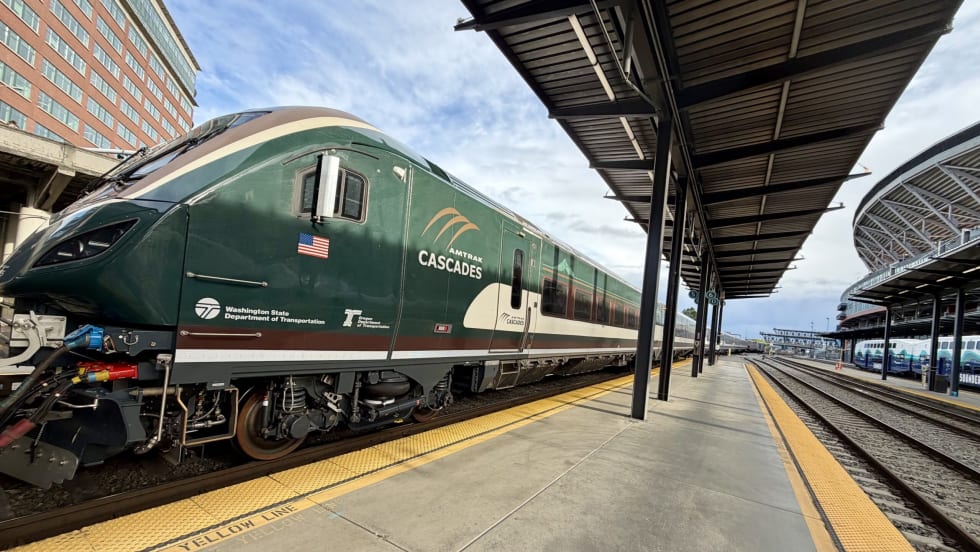
FRA Announces $5.3B in Rail Investments, Including $2B for Amtrak
Funding will support grade-crossing improvements, infrastructure upgrades, and new Amtrak equipment in 23 states.
Read More →
Finding the ‘Happy Medium’: Optimizing Maintenance Without Sacrificing Reliability
The key to maintenance optimization isn’t doing less work—it’s doing the right work at the right time on the right assets.
Read More →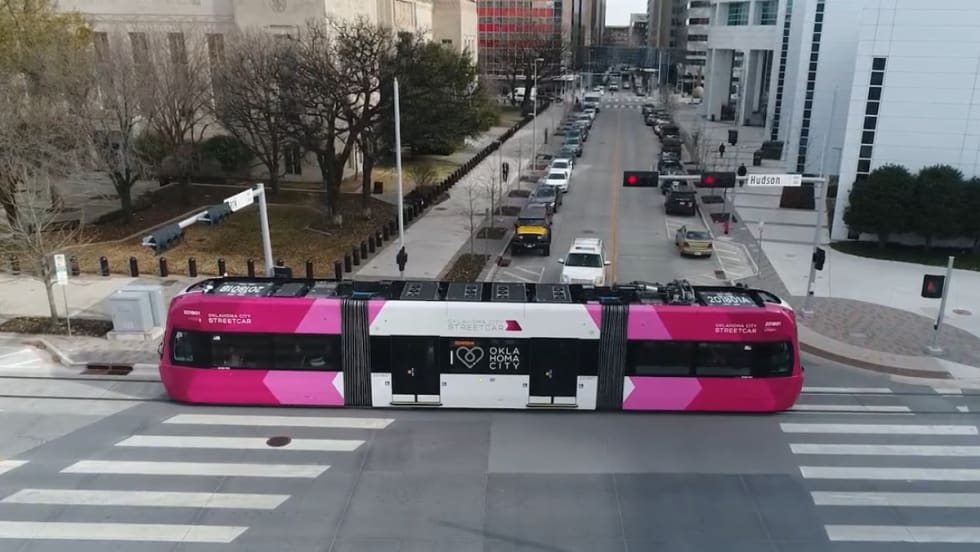
OKC Streetcar Makes Zero-Fare Service Permanent
Ridership increased an average of 71% compared with the same period a year earlier during the fare-free pilot.
Read More →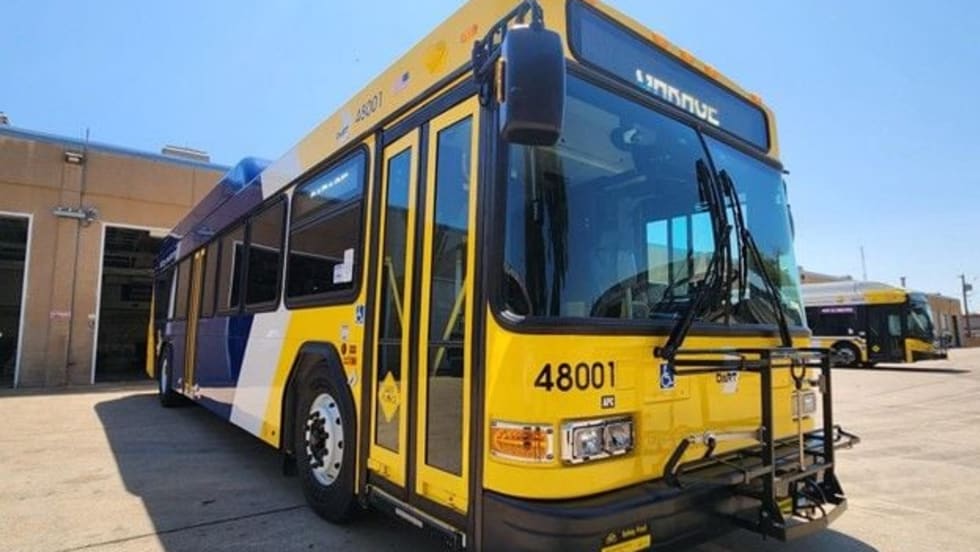
DART Customer Satisfaction Reaches Six-Year High
Overall satisfaction rose to 74.9%, while the agency’s Net Promoter Score reached a record 33.7.
Read More →
How DART's GoPass Is Redefining Regional Mobility
Serving 14 transit agencies, GoPass simplifies multimodal travel by allowing riders to plan, pay for, and manage an entire trip through one app.
Read More →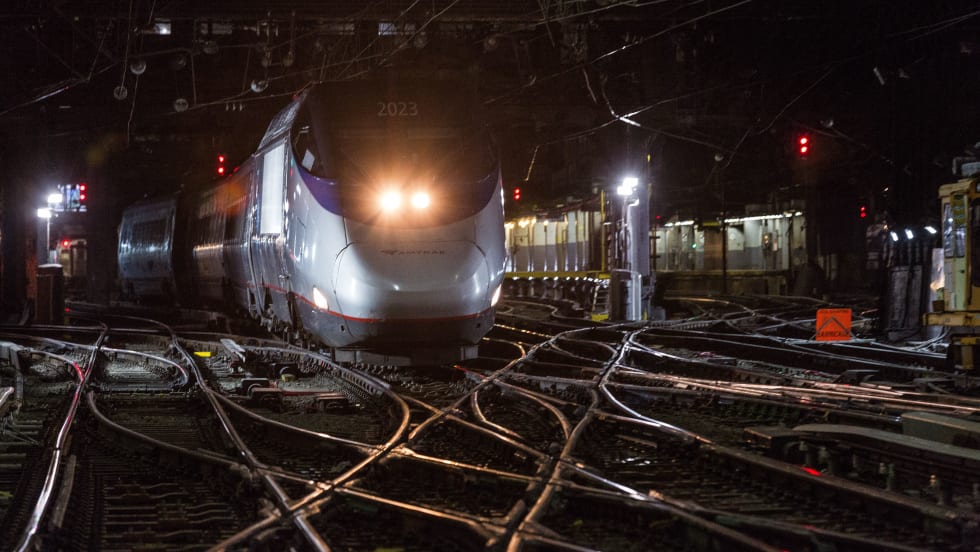
Amtrak Board Advances Plan to Restructure Organization, Seeks Public Input
The proposal, developed by Amtrak management and approved by the board for further consideration, is intended to modernize the organization's structure while improving accountability, operational efficiency, and customer service.
Read More →
Biz Briefs: STV teams with Amtrak, Motorcoach Operators Boost Fleet and Land Contracts, and More
From manufacturers and suppliers to transit agencies and motorcoach operators, these updates offer a snapshot of the projects, partnerships and business moves driving the industry forward.
Read More →
Metra Celebrates 100 Years of Electric Rail, Looks to the Future
The event was also a celebration of recent reforms to public transportation in the Chicago area, changes that could be as transformative in the future as the major civic achievement a century ago, said officials.
Read More →
LA Metro Marks Banner Year, Sets Ambitious Goals for New Fiscal Year
Incoming LA Metro Board Chair and Los Angeles Mayor Karen Bass joined outgoing Board Chair Fernando Dutra and LA Metro CEO Stephanie Wiggins to review accomplishments from fiscal year 2026, which included the opening of new rail extensions, advancement of major transit projects, expanded safety programs, and new rider amenities.
Read More →