



Raising Light Rail in Arizona
Phoenix, Tempe and Mesa have combined forces in an ambitious plan to bring light rail to the Arizona desert. Groundbreaking on the 20-mile route is expected later this year.
After several years of planning and coordination, light rail is blooming in the Arizona desert. Construction is set to begin this spring on a light rail line that will initially connect the downtowns of Phoenix and Tempe and will later connect to Mesa. Dec. 16, 2006, is the target date for opening of the line. And optimism is high. “Will I be doing my 2006 Christmas shopping using light rail? You better believe it,” says Skip Rimsza, mayor of Phoenix and chair of Valley Metro Rail (VMR), the nonprofit corporation that oversees design, construction and operation of the starter line for Phoenix, Tempe, Mesa and Glendale. When the starter line is completed, it will span 20 miles with 27 stations and connect Phoenix, Tempe and Mesa (see map on pg. 74). Although a board member of Valley Metro Rail, the city of Glendale will not be included in the starter line. The light rail line, called the Central Phoenix/East Valley Light Rail Project, is expected to help relieve congestion along choked traffic arteries. The Phoenix metropolitan area is one of the fastest-growing areas in the country and has suffered from increasing traffic congestion exacerbated by road construction on many highways. Although it has not yet obtained a full funding grant agreement (FFGA) from the Federal Transit Administration (FTA), the project received a New Starts project rating of “highly recommended” and received approval last July to advance to the final design stage, a critical milestone. The FFGA is expected this fall, with the feds to provide an expected $600 million. “We have traveled thousands of steps to get here, and we only have one more to go,” Rimsza says. Coordination is key What has made the development of this light rail line so challenging is the coordination of the project. Rather than having a regional funding source, three cities Ñ Phoenix, Tempe and Mesa Ñ are supplying their own funding for the project. “ The fact that we didn’t have a regional entity, that we’re a consortium of cities, created some unique challenges, but also created some good opportunities,” says Wulf Grote, assistant executive director of Valley Metro Rail. “Because the funding comes from the individual cities, we’ve found that the cities are strongly committed to the project and are actually very supportive of trying to move the project forward and not to create obstacles.” Grote says one of the biggest early challenges of the project was determining what the community really wanted. “And then putting together a plan that reflected their desires,” he says. “That was a challenge that went on for several years. I think we’ve overcome that challenge. We have a very supportive community and our ratings are very high.” Municipalities marry The key to getting the project this far down the pipeline has been linking the rail destinies of Phoenix, Tempe and Mesa and convincing residents of the three cities that an investment in a rail system will improve their collective qualities of life. Tempe got the ball rolling by successfully passing a transit sales tax referendum in the mid-1990s. According to the FTA’s New Starts 2003 annual report, the city will use this sales tax revenue to issue bonds to finance its share of the capital project costs. In 2000, Phoenix voters passed a sales tax referendum that increased the local sales tax rate by 0.4%, all of which will be dedicated to transit development, said Valley Metro Rail spokeswoman Daina Mann. Meanwhile, Mesa has included the proposed project in its capital improvements program, but concerns about shortfalls in sales tax revenue are persistent. A 20-year business plan suggests that the city will have to sell more bonds than expected to cover the upfront costs until federal matching funds are available. Mesa’s portion of the line extends only 1.1 miles into the city. Breakdown of contributions Here’s the breakdown of capital funding contributions for the initial 20-mile segment:
New Starts funding — $591.7 million (50%)
Federal Highway Administration flexible funds — $19.1 million (1.6%)
City of Phoenix — $379.1 million (32.0%)
City of Tempe — $165.1 million (14.0%)
City of Mesa — $28.4 million (2.4%) The fact that lawmakers on Capitol Hill are still laboring over the reauthorization of TEA 21 should not jeopardize the project’s chances. “We’re hoping that we’re far enough along that we won’t be affected,” Grote says. “We’re waiting anxiously to see what happens when President Bush’s budget comes out. At this point, we’re expecting to be listed in that budget.” Grote says the project has already received approximately $46 million in New Starts funding and is expecting $13 million more in Bush’s budget. “We have a solid relationship with the FTA, and are doing well on an annual appropriations basis,” he says. Other cities are planning to join in the light rail project once the starter line is complete. Glendale passed a transportation referendum in 2001 that included a light rail extension from Phoenix to downtown Glendale. In addition, Scottsdale has identified a high-capacity transit corridor that could be served by light rail. Hurdles still remain But there’s still much to be done on the existing plan. Right-of-way needs to be acquired in all three cities for the 20-mile in-street alignment, construction needs to get off on the right foot later this year and future funding needs to be secured, especially for planned extensions. At press time, the Arizona state legislature was considering withholding until 2011 funding for extensions to the light rail project. Those monies are included in a $15.8 billion transportation spending plan that’s linked to an extension of Maricopa County’s half-cent transportation sales tax for another 20 years. The current half-cent sales tax expires in 2005. The revised plan would provide $2 billion for light rail development but would delay funding for the second phase of the project until 2011, which some lawmakers believe would give the public time to see if the 20-mile starter line meets expectations. The plan could be placed on the countywide ballot in May, but lawmakers could also choose to delay the vote until the November general election. New leader appointed To help lead the development of the project, the Valley Metro Rail Board hired Richard J. Simonetta as the program’s CEO. Simonetta, a former CEO of the Metropolitan Atlanta Rapid Transit Authority (MARTA) and most recently a principal consultant for PB Consult, started his tenure in early January. “I’m confident that he’s the right person to make the light rail project a success,” says Keno Hawker, mayor of Mesa. Simonetta was the chief executive of MARTA during the 1996 Summer Olympics in Atlanta. He’s also been general manager of the Central Ohio Transit Authority in Columbus and the Ann Arbor Transportation Authority in Michigan. “The valley’s light rail project is the envy of transit agencies nationwide,” Simonetta says. “I look forward to continuing the success they have worked so hard to achieve.” Nuts and bolts But what about specific details of the equipment and operation? Per the specifications, each rail car will be 93 feet long and can be linked into a three-car train with a comfortable capacity of 450 passengers and a total capacity of 600. The maximum length of the train is determined by the length of a city block, which is 280 feet in the Phoenix area. According to Metro officials, planned hours of operation will be 5 a.m. to 1 a.m. seven days a week and planned frequency will be 10 to 15 minutes during peak periods and 20 to 30 minutes during off-peak periods. Estimated travel time for one end of the line to the other is one hour.
What’s in a name?
Finding the right name for the new rail system provided an opportunity for Valley Metro Rail officials to involve the community. A name-the-train campaign drew more than 7,000 entries and 3,000 unique names. Of those entries, nine were named finalists by the Valley Metro Rail Board. The winner, Metro, was announced in December by Phoenix Mayor Skip Rimsza, the chair of the rail board. “Light rail is the community’ plan, and the community said they liked Metro,” Rimsza said. “In fact, it was the No. 1 name submitted in our naming contest.” The first person to submit the Metro name, Ben Bethel of Phoenix, received a VIP pass on the inaugural train and a one-year pass on the system when it opens
More Management
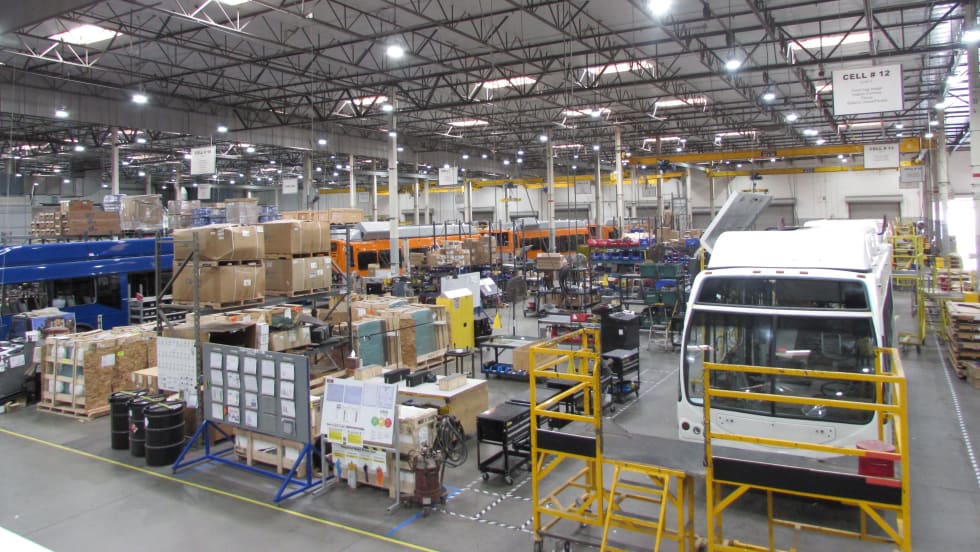
LA Metro Board Awards 220 Battery-Electric Bus Contract to ENC
The contract, which is the largest base award of battery-electric buses by a U.S. transit agency, will be built in Southern California, sustaining good jobs as LA prepares to welcome the world in 2028
Read More →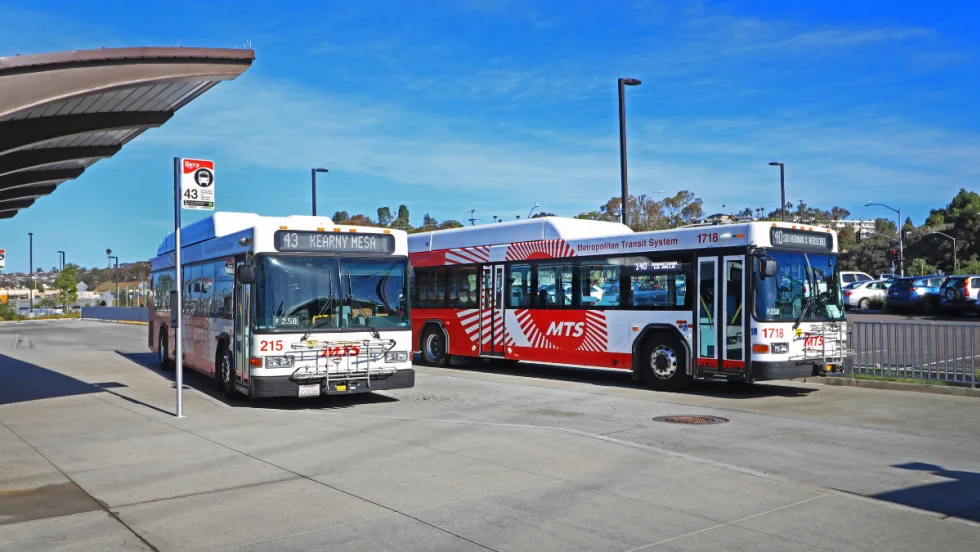
What’s Behind San Diego MTS’s Award-Winning Transit Strategy
Named one of APTA’s 2026 Outstanding Public Transportation Systems with 50 million or more annual passenger trips, California’s San Diego Metropolitan Transit System points to gains in ridership, safety, technology, and reliability as foundations of its success.
Read More →
Public Transit Conference Returning to GFX in 2027, Call for Papers Now Open
The Call for Papers is now open, allowing transit agency professionals and industry experts to help shape the PTC educational program by submitting session ideas for consideration.
Read More →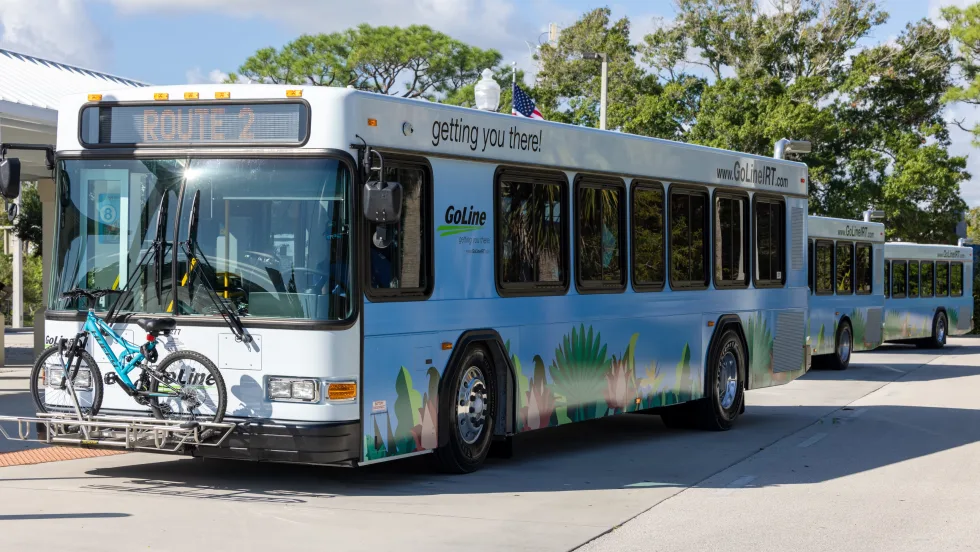
Indian River Transit’s Community-Focused Approach Earns National Recognition
Named APTA’s 2026 Outstanding Public Transportation System in its size category, Florida’s Indian River County transit system continues to grow ridership through fare-free service and a focus on evolving community needs.
Read More →
ENC Lands MATA Contract and More in Biz Briefs
In this edition of Biz Briefs, we spotlight the latest developments shaping the future of mobility.
Read More →
From Surviving to Thriving: Building Stronger Transportation Organizations
Bus Business Consultants founder Brian Dickson shares lessons on leadership, organizational health, and creating options for long-term success in a changing transportation industry.
Read More →
Everett Transit, Community Transit Outline Consolidation Agreement
The proposed agreement calls for a 50% increase in bus service in Everett, a new microtransit zone, continued paratransit service, and the transfer of Everett Transit operations to Community Transit.
Read More →
Strada360’s Steve Lassey on Turning Transit Data Into Better Decisions
From breaking down data silos to preparing for AI, Strada360 CEO Steve Lassey discusses how transit agencies can use technology to improve operations, customer information, and long-term decision-making.
Read More →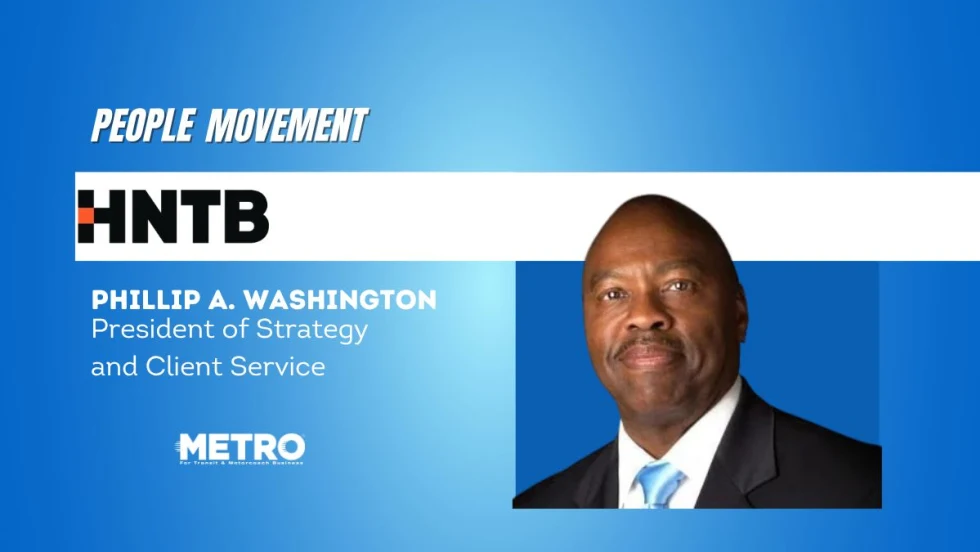
People Movement: Phil Washington Joins HNTB, Denver RTD Launches CEO Search, and More
In this edition, we also spotlight recent personnel moves at STV, the Eno Center for Transportation, and more, highlighting the people taking on new roles across the transportation industry.
Read More →
SEPTA Details Accelerate Vision for Transit System
The plan outlines investments in trolley modernization, new Metro and Regional Rail vehicles, accessible stations, and more frequent bus and rail service.
Read More →