



Resurrecting L.A.'s Subway to the Sea
A 20-year-old ban that effectively halted plans for a subway from downtown Los Angeles to the Pacific Ocean is close to being lifted, freeing the congested metropolis to have its Westside subway.

Los Angeles has made some headway in the effort to build a “subway to the sea,” which would extend the Metro Red Line from downtown to the Pacific Ocean via Wilshire Blvd. This would provide a vital connection between downtown Los Angeles and Santa Monica and alleviate traffic in the most congested city in the nation according to Texas Transportation Institute standards.
On Sept. 12, 2007, the Senate approved a bill that repeals an old ban on using federal monies for subway tunneling in the Wilshire Corridor.
“Today’s vote by the Senate brings us one step closer to bringing the long-awaited expansion of the Metro Red Line closer to reality,” Sen. Diane Feinstein, (D-Calif.) said. “It’s time to give the commuters of Los Angeles relief from the severe gridlock they face every day.”
The 1985 ban had been pushed through Congress by Rep. Henry Waxman, (D-Los Angeles), who deemed tunneling dangerous after a methane gas explosion at a local clothing store in the area.
But the issue came back onto the radar a few years ago, and the L.A. City Council passed a motion in 2004 to request a repeal of the ban. Then in 2005, the board of the Los Angeles County Metropolitan Transportation Authority (MTA) voted to renew discussions about the Wilshire subway. Later that year, L.A. Mayor Antonio Villaraigosa and Waxman convened an APTA peer review panel to reassess the possibility of tunneling in the methane gas area. The panel determined that tunneling in the Wilshire Corridor could be done safely. Convinced, Waxman put language into HR 4653 to lift the ban, and the bill was passed in the House in Sept. 2006.
Before the bill can be brought to the President for his signature, it must be reconciled with the House in conference and approved by an up-or-down vote by both congressional chambers.
Villaraigosa, who coined the name “subway to the sea,” said the Wilshire Blvd. corridor is the most-used corridor in Los Angeles for east-west traffic from downtown to the Westside, according to news reports. Villaraigosa believes the subway to the sea would be one of the most well-traveled transit systems in the nation.
Another Westside subway supporter is Denny Zane, former mayor of Santa Monica and executive director of the Subway to the Sea Coalition, a nonprofit group that is building support for the subway’s development and funding.
“Of all the options, the Wilshire subway will have the greatest impact on congestion on the Westside and downtown, carrying twice the number of passengers as the current Wilshire bus system from downtown to the coast in Santa Monica in half the time,” Zane says. Along with the traffic relief, Zane says the subway would stimulate economic and housing development along the Wilshire corridor.
MTA conducting study
Anticipating a green light from the federal government, MTA is moving forward with a re-evaluation of the public transit needs on the Westside, a requisite step before any decisions are made.
“We had always been prohibited from studying any type of subway configuration out there,” said Rick Jager, senior communications representative for MTA. “We’re beginning the process of studying so that if money were to become available, and the Board as a whole wants to move forward, at least we’ve started that process.”
The Westside Extension Transit Corridor Study is looking at subway, light rail and bus modes as well as different alignments and segment lengths. All modes are equally viable at this point, according to Jager. The agency is considering two main alignments. The 13-mile Wilshire Blvd. route would start at the station on Wilshire and Western Ave. and end in downtown Santa Monica. The other alignment would be further north and roughly follow Santa Monica Blvd.
The study is expected to be completed by June 2008, and then the board will likely decide whether or not this project will be included in the MTA’s long range plan.
Funding hurdle
The problem of funding remains the biggest obstacle to getting this subway built. The MTA estimates that it will cost roughly $4 billion. And it will have to compete with all the other transit projects in the works.
“L.A. County has at least $30 billion in responsible transit projects on the list of highest performing options, and only $4 billion identified to pay for it,” Zane says.
To make matters worse, Zev Yaro¬slavksy, an L.A. County Board of Supervisors member, spearheaded a measure in 1998 to prohibit the use of local sales tax dollars for subway construction. The measure passed.
The hope is that the federal government will help foot the bill for the subway. “With this language lifted on the federal side, hopefully we would go back to the federal government and see if they would fund a portion of the project,” says Jager.
Project History
Wilshire Boulevard is one of Los Angeles’ main thoroughfares and a vital artery for east-west traffic through the county. The corridor is densely populated and crosses several major business and cultural centers, including Downtown Los Angeles, Koreatown, Miracle Mile, Beverly Hills, Century City, Westwood and Santa Monica.
The city has considered a Wilshire subway since the 1980s. When voters passed Proposition A in 1980, which set aside a half-cent sales tax to help cover the cost of a regional transit system, a Wilshire subway from downtown to Fairfax Ave. was included in the plan. But other lines took precedence, funds ran short and opposition grew from Westside residents who didn’t want a transit system bringing in unwanted ‘outsiders.’
While the Los Angeles County Metropolitan Transportation Authority continued to build subways in the ‘90s, Rep. Henry Waxman’s legislation blocked the Wilshire subway — the Metro Red Line — at Western Ave. The final segment of the Red Line, which heads north and connects to North Hollywood and the San Fernando Valley, was built in 2000. The Wilshire segment to Western Ave. was renamed the “Purple Line.”
More Management

ENC Lands MATA Contract and More in Biz Briefs
In this edition of Biz Briefs, we spotlight the latest developments shaping the future of mobility.
Read More →
From Surviving to Thriving: Building Stronger Transportation Organizations
Bus Business Consultants founder Brian Dickson shares lessons on leadership, organizational health, and creating options for long-term success in a changing transportation industry.
Read More →
Everett Transit, Community Transit Outline Consolidation Agreement
The proposed agreement calls for a 50% increase in bus service in Everett, a new microtransit zone, continued paratransit service, and the transfer of Everett Transit operations to Community Transit.
Read More →
Strada360’s Steve Lassey on Turning Transit Data Into Better Decisions
From breaking down data silos to preparing for AI, Strada360 CEO Steve Lassey discusses how transit agencies can use technology to improve operations, customer information, and long-term decision-making.
Read More →
People Movement: Phil Washington Joins HNTB, Denver RTD Launches CEO Search, and More
In this edition, we also spotlight recent personnel moves at STV, the Eno Center for Transportation, and more, highlighting the people taking on new roles across the transportation industry.
Read More →
SEPTA Details Accelerate Vision for Transit System
The plan outlines investments in trolley modernization, new Metro and Regional Rail vehicles, accessible stations, and more frequent bus and rail service.
Read More →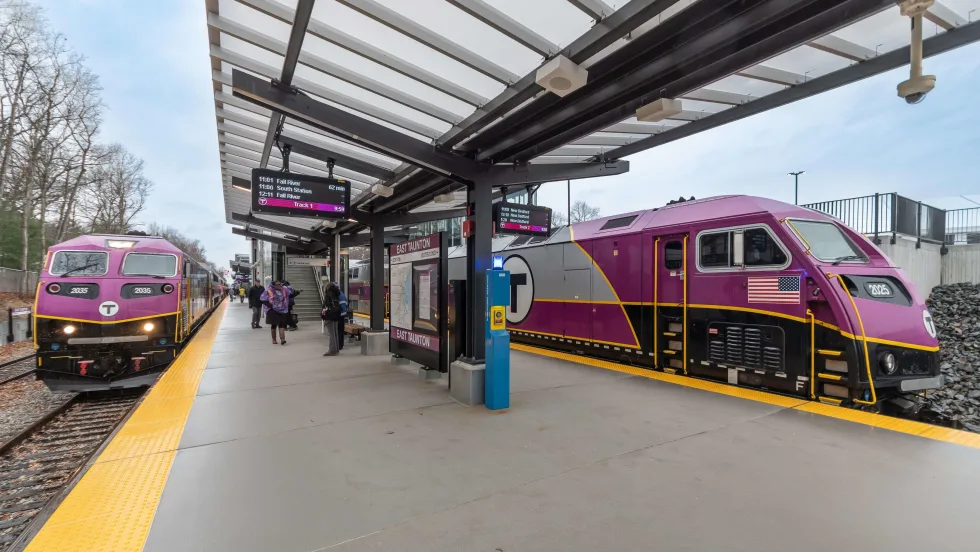
FTA Ends Direct Oversight of MBTA Safety Actions
The federal agency closed its remaining special directive to the Massachusetts Department of Public Utilities following a safety review that began in 2022.
Read More →
Report: Transit Bus Manufacturing Supports 34,100 Jobs, $5.1B in GDP
The “Buses Mean Business” report examines the transit bus manufacturing industry’s economic footprint, supply chain, and rising demand for vehicle replacements.
Read More →
LIT Marks 10-Year Milestone at Annual Summit
Hosted by the COTA from September 10 to 13, the Summit carried the theme “Celebrating 10 Years of Excellence, Leadership, and Impact,” with every part of the program honoring the people, agencies, and partners who built LIT over its first decade.
Read More →
People Movement: Dan Dipert Coaches Adds Third-Generation Leader, Keolis Names New Valley Metro VP/GM, and More
In this edition, we also cover recent appointments and announcements at the Wabtec, SilverRide, HNTB, and more, showcasing the individuals helping to shape the future of transportation.
Read More →