



Riding a bus of a different color
Opportunity has magically appeared at the doorstep of transit agencies operating routes in the vicinity of these transportationally-challenged schools.
Thousands, possibly hundreds of thousands, of elementary, middle and high school students could soon be losing their rides in the morning and afternoon — provided by the venerable yellow school bus — due to revenue shortfalls at school districts around the country. As an ancillary service, transportation is often one of the first departments targeted by school boards when spending cuts need to be made. The rationale is simple: Keep the budget ax from hitting anything in the classroom. After all, what’s a couple of buses compared to the services of a teacher or administrator? Whether or not you agree with this cost-cutting strategy isn’t important, at least not for this discussion. What’s important is that Opportunity (yes, a capital O) has magically appeared at the doorstep of transit agencies operating routes in the vicinity of these transportationally-challenged schools (no, transportationally isn’t a real word). Your bus can fill the gap Imagine, thousands of schoolchildren who can no longer ride a yellow bus to and from school. A bus of a different color can serve the same purpose. Although its routes might not be as geographically convenient or as attuned to bell times as those of its yellow cousin, a transit bus in many cases can provide the transportation service no longer funded by the school district. I would love to see transit agencies aggressively pursue these displaced, backpack-toting, Walkman-wearing, “whatever”-expounding youngsters because the alternative is that they will practice one or more of the following methods of getting to and from school: walking, bicycling, skateboarding, cadging a ride from their parents, siblings or friends, or, worse yet, hitchhiking. None of these options is as safe as riding one of your buses. In effect, you can save lives. School buses and transit buses are among the safest vehicles on the road. When children and teenagers are forced to use other means for school transportation, their chances of being seriously injured or killed skyrocket. So, when you provide a service no longer provided by the school district, you are not only increasing ridership and reducing rush-hour traffic congestion (most displaced passengers cadge rides from their parents), you are protecting America’s youth. Yes, I know, some of these backpack-toting, etc., youngsters are a nuisance to other passengers on the bus, especially in the afternoon. It may serve you well to offer behavior-management training to your operators. Generally, however, the real trouble-makers are few and can be handled with a warning about losing their riding privilege. Stay tuned It’s important that transit agencies closely track the budget dealings of school boards in their areas. When a school board wants to cut its transportation costs, it often will extend the walking distance by, say, a half-mile. For elementary school students, this generally means that they will have to reside at least 11/2 miles from school to receive bus service. For middle and high schoolers, they’ll have to live 21/2 miles away. On a districtwide basis, the extra half-mile can eliminate service to hundreds of students depending on the size and geography of the school system. If you should hear of these types of budget cuts coming to your area, it would be a good idea to contact the school superintendent immediately. Maybe you can set up an agreement with the school district to offer subsidized weekly or monthly passes to the displaced students. Or, at the very least, maybe the district would be willing to send copies of your route maps and schedules to the affected families. I’ll bet the parents would be more than happy to put their kids on a transit bus, especially if the alternative is having to chauffeur them to and from school every day.
More Management
People Movement: Connectpoint Expands Leadership Team, Stadler Names New Group CEO, and More
In this edition, we also spotlight recent personnel moves at Burns, UZURV, and more, highlighting the people taking on new roles across the transportation industry.
Read More →
More Than a Summer Job: Building the Next Generation of Transit Talent
The Delaware River Port Authority and PATCO have transformed their internship program into a hands-on professional development experience that introduces students to the breadth of transportation careers — and creates a pipeline for future employees.
Read More →
LA Metro Board Awards 220 Battery-Electric Bus Contract to ENC
The contract, which is the largest base award of battery-electric buses by a U.S. transit agency, will be built in Southern California, sustaining good jobs as LA prepares to welcome the world in 2028
Read More →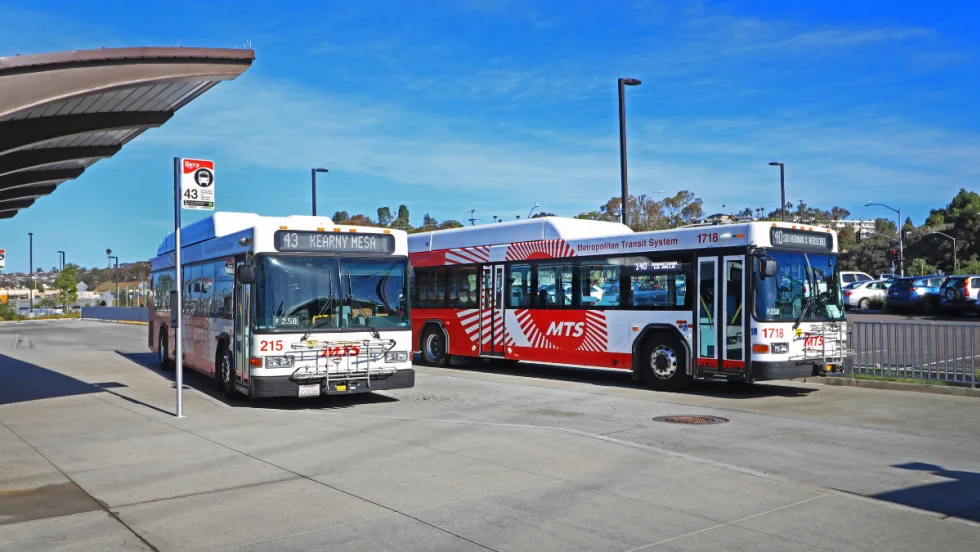
What’s Behind San Diego MTS’s Award-Winning Transit Strategy
Named one of APTA’s 2026 Outstanding Public Transportation Systems with 50 million or more annual passenger trips, California’s San Diego Metropolitan Transit System points to gains in ridership, safety, technology, and reliability as foundations of its success.
Read More →
Public Transit Conference Returning to GFX in 2027, Call for Papers Now Open
The Call for Papers is now open, allowing transit agency professionals and industry experts to help shape the PTC educational program by submitting session ideas for consideration.
Read More →
Indian River Transit’s Community-Focused Approach Earns National Recognition
Named APTA’s 2026 Outstanding Public Transportation System in its size category, Florida’s Indian River County transit system continues to grow ridership through fare-free service and a focus on evolving community needs.
Read More →
ENC Lands MATA Contract and More in Biz Briefs
In this edition of Biz Briefs, we spotlight the latest developments shaping the future of mobility.
Read More →
From Surviving to Thriving: Building Stronger Transportation Organizations
Bus Business Consultants founder Brian Dickson shares lessons on leadership, organizational health, and creating options for long-term success in a changing transportation industry.
Read More →
Everett Transit, Community Transit Outline Consolidation Agreement
The proposed agreement calls for a 50% increase in bus service in Everett, a new microtransit zone, continued paratransit service, and the transfer of Everett Transit operations to Community Transit.
Read More →
Strada360’s Steve Lassey on Turning Transit Data Into Better Decisions
From breaking down data silos to preparing for AI, Strada360 CEO Steve Lassey discusses how transit agencies can use technology to improve operations, customer information, and long-term decision-making.
Read More →