



SEPTA Looks to Past Experience to Develop Papal Visit Service Plan
Over a year of planning by SEPTA was put into action during the Papal Visit. Initial estimates of 1.5 million attendees — up to 800,000 of which were expected to utilize SEPTA — prompted the authority and its partner agencies to craft a comprehensive transportation plan.
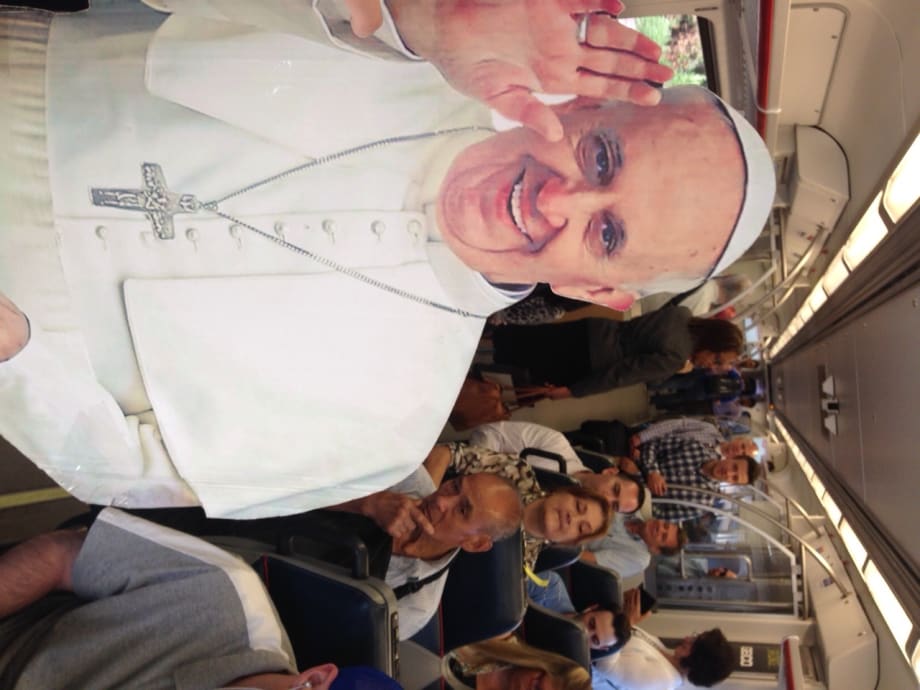
Earlier this summer, SEPTA’s marketing team did a “PopUpPope” promotion, where they took pictures of a Pope cutout posed at different stations and on trains and buses to help promote travel on the system during the Papal Visit.
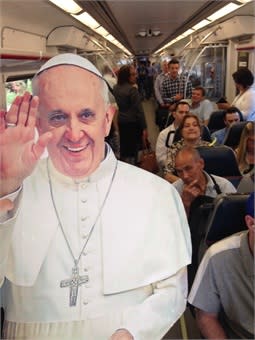
Earlier this summer, SEPTA’s marketing team did a “PopUpPope” promotion, where they took pictures of a Pope cutout posed at different stations and on trains and buses to help promote travel on the system during the Papal Visit.
The Southeastern Pennsylvania Transportation Authority (SEPTA) played a key role in welcoming the world to Philadelphia for the visit of Pope Francis in late September. SEPTA was set to more than double capacity on most rail services and bolster some bus routes to accommodate crowds attending the triennial World Meeting of Families — the world’s largest Catholic gathering of families.
Over a year of planning by SEPTA was put into action during the Papal Visit. Initial estimates of 1.5 million attendees — up to 800,000 of which were expected to utilize SEPTA — prompted the authority and its partner agencies to craft a comprehensive transportation plan. And while this plan needed to accommodate visitors, it also had to make sure its regular riders, and their everyday commuting needs, were taken into account.
“SEPTA will make adjustments to key parts of its system to increase capacity and provide enhanced service for riders,” said SEPTA GM Joseph M. Casey of the plan. “SEPTA is doing everything possible to make public transportation convenient and efficient during the Papal Visit.”
Though it is considered by many to be an unprecedented event — for the Philadelphia Region, and possibly North America — SEPTA looked to its experience with the 2008 Phillies World Series Championship Parade when developing its service plan.
During the Phillies parade, an estimated one million people flocked to Center City Philadelphia on Oct. 31, 2008, and the majority used transit. SEPTA operated on a regular weekday schedule, and parts of the system, including the commuter Regional Rail network, were overwhelmed. In a period of just a few hours, the transit system experienced ridership numbers that would normally be recorded over the course of an entire day.
So when SEPTA began drafting it’s Papal Plan, it focused on adding capacity by providing direct Regional Rail service from select, key outlying stations. Where on a normal day, SEPTA operates to-and-from approximately 150 outlying Regional Rail stations, for the weekend of the Papal Visit, that number was set to be reduced to 18.
At the same time, SEPTA was expecting to be able to nearly triple passenger capacity by running express service from the selected outlying Regional Rail stations to Center City every half-hour on the mornings of the events. Riders reserved spots on these trains with special $10 One Day Regional Rail Papal Passes, which allows them to select one of the open stations and an inbound travel time of 5:30 a.m. to 8:30 a.m. or 8:30 a.m. to noon for each day. Post-event outbound express service was then set to run back to these stations.
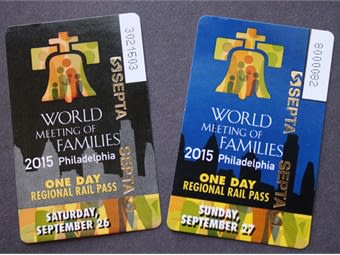
SEPTA closely coordinated with partners, such as the City of Philadelphia and municipalities in the towns where train stations will be open, to ensure the safety and security of riders and residents. The agency also worked with its partners to secure additional parking, however, the authority encouraged attendees to be dropped off at a station due to the limited numbers of parking spaces at commuter rail lots.
Subway operations were also streamlined to accommodate the increased crowds, with 22 selected stations open on the Market-Frankford and Broad Street Lines. Trolley and bus service was slated to continue throughout the Papal Visit, with adjustments as necessary for road closures. A number of major bus routes, including those that provide connecting service to SEPTA’s subways and Regional Rail lines, were to operate with higher frequency — running on weekday schedules, rather than the usual Saturday-and-Sunday timetables — to give riders more options for getting around during the event.
For most travelers, SEPTA stations in Center City will provide the closest access to the Papal Visit event venues. All rail drop-off stations are located within what has been dubbed the “Francis Festival Grounds.” A walk of less than two miles will get SEPTA riders to most Papal Visit activities.
SEPTA’s enhanced service plan, with increased capacity, provides room for those who wish to attend the festivities or need to travel into the Center City area for work that weekend.
More Management

Indian River Transit’s Community-Focused Approach Earns National Recognition
Named APTA’s 2026 Outstanding Public Transportation System in its size category, Florida’s Indian River County transit system continues to grow ridership through fare-free service and a focus on evolving community needs.
Read More →
ENC Lands MATA Contract and More in Biz Briefs
In this edition of Biz Briefs, we spotlight the latest developments shaping the future of mobility.
Read More →
From Surviving to Thriving: Building Stronger Transportation Organizations
Bus Business Consultants founder Brian Dickson shares lessons on leadership, organizational health, and creating options for long-term success in a changing transportation industry.
Read More →

Everett Transit, Community Transit Outline Consolidation Agreement
The proposed agreement calls for a 50% increase in bus service in Everett, a new microtransit zone, continued paratransit service, and the transfer of Everett Transit operations to Community Transit.
Read More →
Strada360’s Steve Lassey on Turning Transit Data Into Better Decisions
From breaking down data silos to preparing for AI, Strada360 CEO Steve Lassey discusses how transit agencies can use technology to improve operations, customer information, and long-term decision-making.
Read More →
People Movement: Phil Washington Joins HNTB, Denver RTD Launches CEO Search, and More
In this edition, we also spotlight recent personnel moves at STV, the Eno Center for Transportation, and more, highlighting the people taking on new roles across the transportation industry.
Read More →
SEPTA Details Accelerate Vision for Transit System
The plan outlines investments in trolley modernization, new Metro and Regional Rail vehicles, accessible stations, and more frequent bus and rail service.
Read More →
FTA Ends Direct Oversight of MBTA Safety Actions
The federal agency closed its remaining special directive to the Massachusetts Department of Public Utilities following a safety review that began in 2022.
Read More →
Report: Transit Bus Manufacturing Supports 34,100 Jobs, $5.1B in GDP
The “Buses Mean Business” report examines the transit bus manufacturing industry’s economic footprint, supply chain, and rising demand for vehicle replacements.
Read More →
LIT Marks 10-Year Milestone at Annual Summit
Hosted by the COTA from September 10 to 13, the Summit carried the theme “Celebrating 10 Years of Excellence, Leadership, and Impact,” with every part of the program honoring the people, agencies, and partners who built LIT over its first decade.
Read More →