




Keep Reading: Snapshots from the Arrowhead Transit RideSmart 2025 Launch
Arrowhead Transit Rolls Out Rider App to Modernize Rural Service
The new mobile booking platform and backend system aim to streamline operations, improve communication, and better serve riders across a 20,000-square-mile region.
May 5, 2026
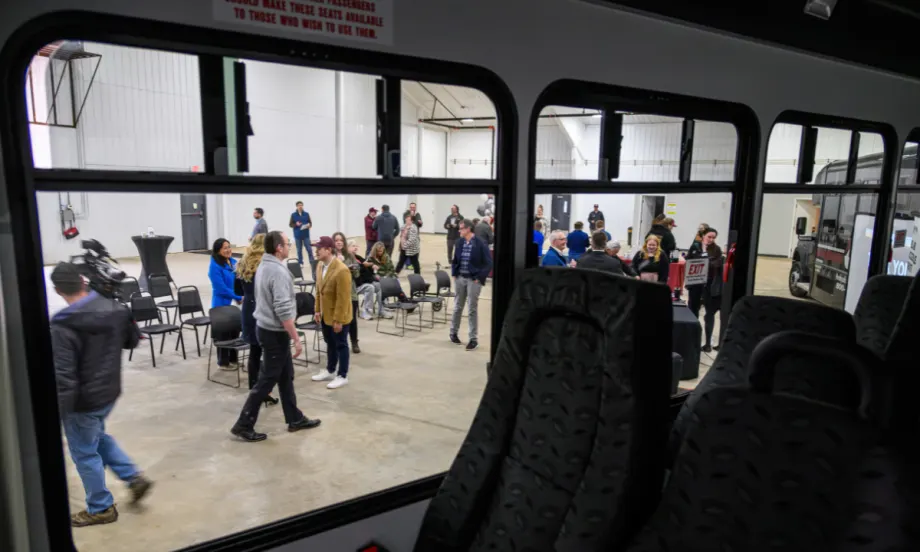
Arrowhead Transit's new system is designed to make the service more responsive to how riders actually use it.
Credit:
Arrowhead Transit
2 min to read
In rural transit, a missed ride isn’t just an inconvenience. Arrowhead Transit officially launched its new rider app and transit management software system on May 4, marking a significant shift in how northeastern Minnesota's public transportation network schedules trips, communicates with drivers, and serves riders across a region that covers more than 20,000 square miles.
A public celebration and ribbon-cutting were held on Monday morning at the Arrowhead Transit facility in Hibbing, Minnesota.
Arrowhead Transit serves 10 counties, providing more than 500,000 rides annually with a fleet of more than 120 vehicles and a workforce of more than 150 staff, including union employees and professionals. According to an agency release, it is the largest rural public transit system in Minnesota and one of the largest in the United States.
The new Arrowhead Transit app allows riders to book trips from their phone, schedule rides in advance, track their bus in real time, and receive trip notifications and updates. Riders who prefer calling in can still do so.
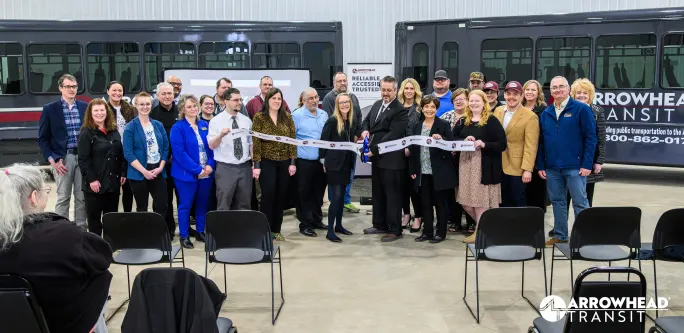
Arrowhead Transit held a public celebration and ribbon-cutting on Monday, May 4, at the agency's facility in Hibbing, Minnesota.
Credit:
Arrowhead Transit
Designed for How Riders Actually Travel
The app is powered through Arrowhead Transit's partnership with The Routing Company and the Pingo platform, which also supports the agency's internal scheduling and dispatch operations.
On the operations side, the new system gives dispatchers and drivers better tools for scheduling and routing, improves communication across the network, and helps the agency collect more detailed data on how riders move through the region. According to the agency, that data will be used to report service information to MnDOT and to guide future decisions about routes, timing, and coverage based on real travel patterns.
“This is about improving how people access transportation in rural communities and making our system easier to use in everyday life,” said Brandon Nurmi, director of Arrowhead Transit. “We serve a large region, and we know transportation is not optional for many of our riders. It is how people get to work, appointments, school, and stay connected to their communities.”
“Rural transit operates differently than metro transit,” the company wrote. Urban systems are often built around fixed routes and high-density corridors. Rural transit has to be built around people, distance, and access, matching service to communities spread across hundreds of miles, where a missed ride can mean a missed appointment or a lost shift.
Arrowhead Transit's new system is designed to make the service more responsive to how riders actually use it.
“When operations run smoother, our riders feel it,” said Sandra Wheelecor, assistant director, operations, Arrowhead Transit. “This system gives our dispatchers and drivers better tools, helps us schedule more efficiently, and creates a better experience for the people who depend on us.”
More Management
Utilimarc Launches SmartReplace to Optimize Fleet Replacement Decisions
AI-powered SmartReplace helps fleets prioritize vehicle replacements, model budget scenarios, and build more defensible long-term strategies.
Read More →
APTA Honors 2026 Award Winners, Hall of Fame Inductees at TRANSform & EXPO
Innovations in autonomous and zero-emission transportation, standout transit systems, and industry leadership took center stage among this year's honorees.
Read More →
7 Ways to Build a Better Transit Internship Program
Lessons from DRPA/PATCO’s approach to creating a meaningful internship experience—and developing the next generation of transportation professionals.
Read More →
Scenes from APTA TRANSform & EXPO 2026
Transit leaders, manufacturers, and industry professionals gathered in Chicago to explore new technologies, share ideas, and discuss the future of public transportation.
Read More →
Building Stronger Leaders, More Resilient Transit Teams
Dr. Carol Parker Walsh discusses leadership development, employee retention, workplace culture, and preparing transit’s workforce for AI and automation.
Read More →
APTA 2026 TRANSform & EXPO Kicks Off in Chicago
After 45 years, APTA returns to Chicago with a focus on next-generation fleets, AI, connected transit networks, and the funding strategies shaping public transportation’s future.
Read More →
New York MTA Warns Federal Tariffs Could Add $1 Billion to Rolling Stock Costs
The agency said tariffs on specialized imported components could reduce the purchasing power of its $23 billion investment in new subway cars, railcars, and buses.
Read More →
From the Show Floor: What Happened at APTA TRANSform & EXPO 2026
See the latest product launches, partnerships, technology updates, and transit industry announcements from APTA TRANSform & EXPO in Chicago.
Read More →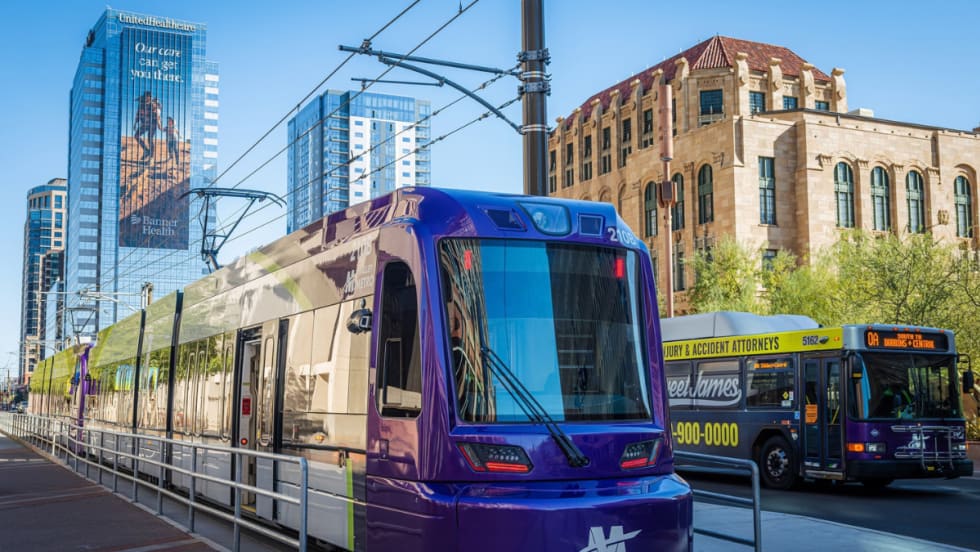
How Valley Metro Is Balancing Transit Growth With the Rider Experience
The APTA award-winning agency is pairing rapid system expansion with investments in workforce, safety, technology, and the fundamentals of transit service.
Read More →
Bus Tech Talk: Keeping Transit Technicians Ahead of the Technology Curve
In this episode of Bus Tech Talk, Complete Coach Works’ Business Development Manager Mark Hollenbeck and METRO’s Executive Editor Alex Roman sit down with Obed Mejia, Senior Technical Trainer for Bus Maintenance, at LA Metro to discuss how rapidly evolving bus technology is changing the maintenance shop — and the skills technicians need to keep pace.
Read More →