



Step by Step: Designing and Building Accessible Bus Stops
Conducting an assessment of your existing stops, identifying needed improvements, designing a consistent look-and-feel for your system of stops and shelters, budgeting, and developing an implementation plan are other important steps in the process toward more accessible public transportation.
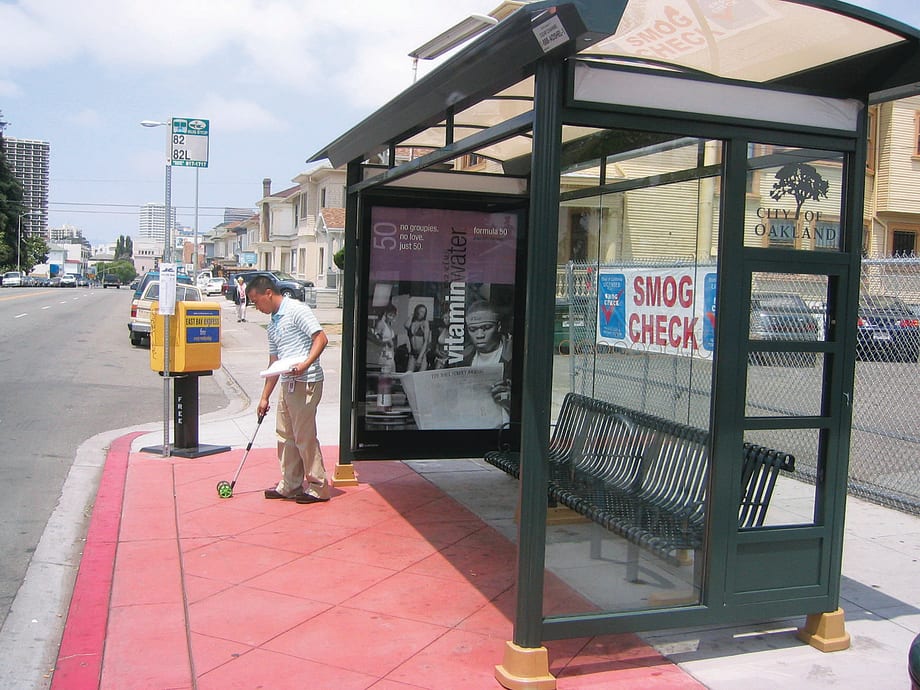
A transit agency official measures the distance between the edge of a shelter and the curb, using a measuring wheel, to determine if enough clearance is available for riders who use wheelchairs to board and alight the bus.
A transit agency official measures the distance between the edge of a shelter and the curb, using a measuring wheel, to determine if enough clearance is available for riders who use wheelchairs to board and alight the bus.
Accessible transit stop design is based on three key elements: barrier-free design, wayfinding to help passengers reach the stop, and safety. These elements take into account the needs of all potential transit users, not just people with physical disabilities. This brief article provides an overview of the federal accessibility standards that must be met when constructing bus stops and the guidelines that improve accessibility above Americans with Disabilities Act minimum requirements. Let’s get started by taking a look at the standards and guidelines and then move on to how these requirements are implemented to construct transit stops that are both functional and pleasant for transit passengers.
Defining Guidelines
The Americans with Disabilities Act (ADA) is where it all begins. U.S. Department of Transportation ADA requirements related to public transportation services, including bus stops and stations, are the minimum standards that must be met to comply with federal law. ADA requirements pertain to surfaces, clearances from curbs and roadways, cross slopes, and accessible connections to streets, sidewalks, and pedestrian paths. The U.S. Access Board publishes ADA Accessibility Guidelines (ADAAG). The guidelines can be used to implement the ADA requirements related to design and construction. The Public Rights-of-Way Accessibility Guidelines (PROWAG) are currently in draft form and address pedestrian access to sidewalks and streets, including crosswalks, curb ramps, street furnishings (e.g, benches), pedestrian signals, parking, and other components of public rights-of-way.
Accessible design means that a transit system has complied with ADA laws, regulations, and state or local building codes. Once the ADA requirements are met, then universal design (UD) should be considered. UD provides a higher level of access for people with disabilities but also accommodates the needs of everyone — children, older adults, women, and men. Classic examples of the general population benefiting from UD include a parent pushing a baby stroller or a traveler using a curb ramp while pulling luggage. The Toolkit for the Assessment of Bus Stop Accessibility and Safety provides examples of how minimum requirements are met and how UD can be considered for the various aspects of transit stops, such as boarding areas, shelters, and lighting.

Indirect lighting illuminates the shelter and sidewalk in New York City. The shelter is constructed with glass panels on all four sides, providing good visibility and better security.
Accessibility Elements
Once compliance requirements are understood, it’s time to incorporate the three elements of good design. Barrier-free design means that a person should be able to reach a stop unimpeded. Outdoor elements (e.g., utility poles, signage, and newspaper boxes) should not cause obstructions. Grade-level changes between sidewalks and stop platforms should be avoided when possible. Surfaces should be slip-resistant, and seating should be available. Stop features should take the local climate into consideration, protecting against intense sun, rain, wind, or snow.
Wayfinding involves personal interaction with one’s environment. It helps people determine their location, their destination, and helps them develop a plan for traveling from point A to point B. Wayfinding can include signage, tactile cues and landmarks (e.g., landscaping, contrast colors, garbage & recycling containers, street art), sound, and light. Wayfinding improves safety around bus stops and also provides logical orientation from pedestrian pathways to bus boarding and alighting areas.
Safety and Warning aspects are important to transit riders of all ages and genders. Bus stops should have good ergonomics and wayfinding elements. Benches, vending boxes, and planters should not impede movement or block views. Good lighting and visibility are essential for passengers, bus drivers, and nearby pedestrians. Any existing hazards should be designated with markings, signs, or higher lighting levels. Shrubbery and trees should be trimmed for both horizontal and vertical clearance. Advertising should not block a rider’s view of oncoming traffic.
Conducting an assessment of your existing stops, identifying needed improvements, designing a consistent look-and-feel for your system of stops and shelters, budgeting, and developing an implementation plan are other important steps in the process toward more accessible public transportation.
Conclusion
The elements discussed here are the tip of the iceberg when it comes to planning for accessible bus stops. Conducting an assessment of your existing stops, identifying needed improvements, designing a consistent look-and-feel for your system of stops and shelters, budgeting, and developing an implementation plan are other important steps in the process toward more accessible public transportation. To learn more, the following resources are recent publications and toolkits for transportation professionals:
APTA Recommended Practice Guide: Bus Rapid Transit Stations and Stops
Effective Snow Removal for Pathways and Transit Stops
TCRP Synthesis Report 117: Better On-Street Bus Stops
Toolkit for the Assessment of Bus Stop Accessibility and Safety
Rachel Beyerle is the communications director for Easterseals Project Action Consulting.
More Paratransit

Frontrunner Bus Group Introduces XF Low-Floor Bus with Enhanced Accessibility
The new mid-sized bus features a full flat-floor design, eight-inch curbside step-in height, and zero-entry rear ramp to improve passenger access and operational flexibility.
Read More →
Scenes from APTA TRANSform & EXPO 2026
Transit leaders, manufacturers, and industry professionals gathered in Chicago to explore new technologies, share ideas, and discuss the future of public transportation.
Read More →
Indian River Transit’s Community-Focused Approach Earns National Recognition
Named APTA’s 2026 Outstanding Public Transportation System in its size category, Florida’s Indian River County transit system continues to grow ridership through fare-free service and a focus on evolving community needs.
Read More →
Everett Transit, Community Transit Outline Consolidation Agreement
The proposed agreement calls for a 50% increase in bus service in Everett, a new microtransit zone, continued paratransit service, and the transfer of Everett Transit operations to Community Transit.
Read More →
Driving Smarter Paratransit
John Hanlon shares how AlphaRoute is leveraging AI-powered technology to help paratransit providers optimize operations, support frontline staff, and enhance the rider experience.
Read More →
People Movement: Dan Dipert Coaches Adds Third-Generation Leader, Keolis Names New Valley Metro VP/GM, and More
In this edition, we also cover recent appointments and announcements at the Wabtec, SilverRide, HNTB, and more, showcasing the individuals helping to shape the future of transportation.
Read More →
Biz Briefs: RIPTA Unveils New Frontrunners, Clevland RTA Adds New Siemens, and More
In METRO's latest installment, we take a look at recent news from Siemens, Prevost, Dodge, and more partnerships making headlines across the transportation sector.
Read More →
King County Metro Makes ADA Paratransit Easier to Navigate
METRO's Innovative Solutions Award winner replaces complex service-area descriptions with an accessible, interactive map that puts paratransit information directly in customers’ hands.
Read More →
Jacksonville’s NAVI Project Charts a New Course for Autonomous Public Transportation
Through its NAVI program, JTA is showing how autonomous vehicles, intelligent infrastructure, and coordinated operations can work together to deliver everyday public transportation.
Read More →
Driving Smarter Paratransit
John Hanlon shares how AlphaRoute is leveraging AI-powered technology to help paratransit providers optimize operations, support frontline staff, and enhance the rider experience.
Read More →